
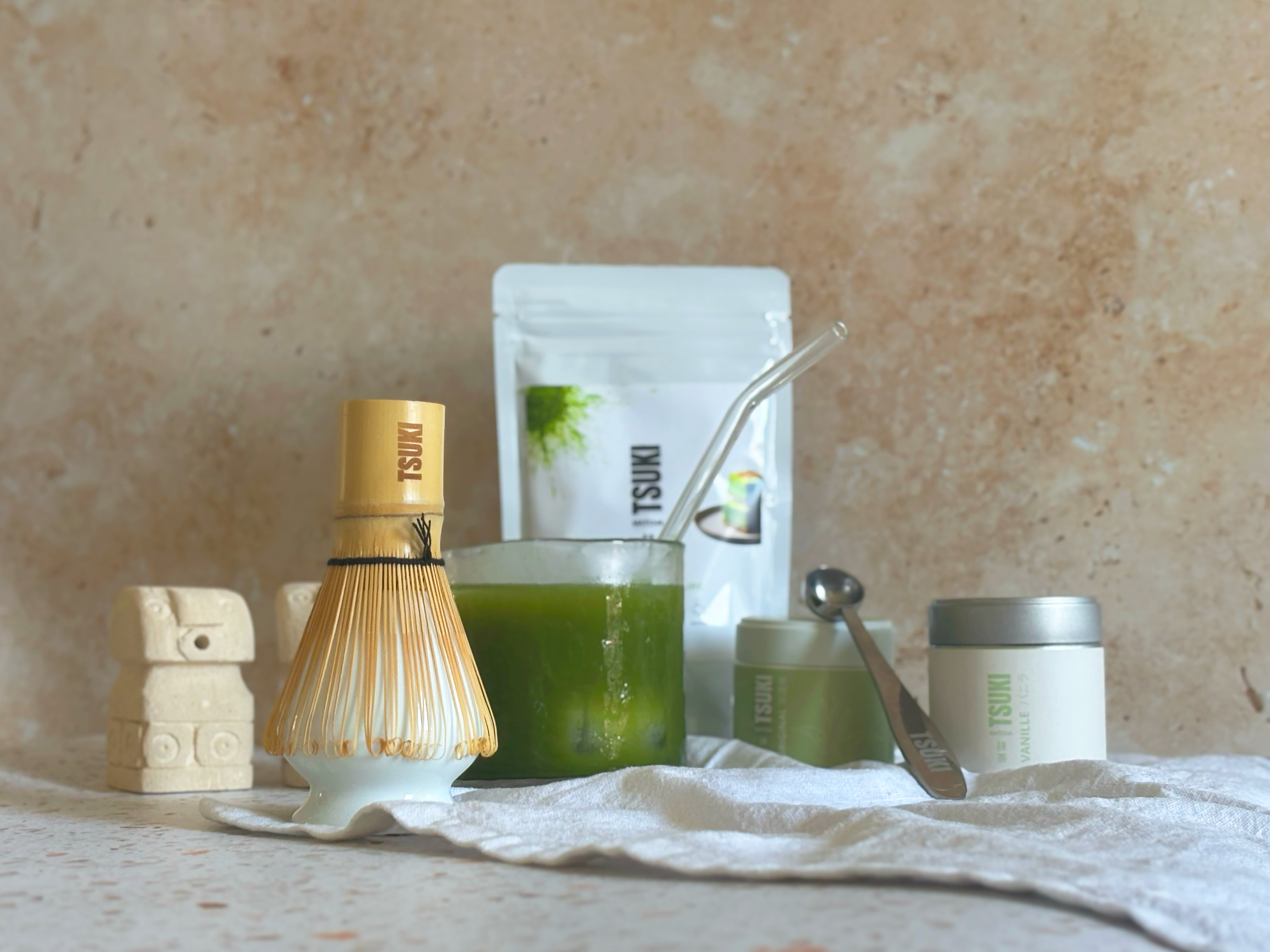

Adding matcha to your coffee shop menu: the ultimate guide
Matcha is taking over coffee shops and restaurants in France in 2026.
From Bordeaux to Paris, establishments that add it to their menu are seeing strong demand and a loyal customer base.
If you are a café manager, restaurateur, or pastry chef and are wondering if matcha is relevant for your business, this guide provides concrete answers: market trends, drinks to offer, necessary equipment, startup budget, and profitability.
Why matcha is an opportunity in 2026
Matcha is no longer a passing trend. Google searches for matcha in France have doubled since 2020. On TikTok, matcha videos have exceeded 2 billion views.
The Halles Metro white paper on restaurant trends ranks matcha among the "health and wellness" ingredients influencing consumer choices in 2026.

On the ground, the signals are just as clear. Coffee shops entirely dedicated to matcha are opening in major French cities. Existing establishments that add a matcha latte to their menu see this drink quickly climb into their top 5 sales. Matcha attracts a premium clientele, concerned about their health, willing to pay 5 to 6 € for a quality drink and naturally inclined to share their experience on social media.
The typical matcha customer profile: 25-45 years old, urban, health-conscious, often already looking for alternatives to coffee. This is a high-value clientele, who returns regularly and often orders an accompaniment (pastry, snack) with their drink. Offering matcha means capturing a rapidly growing market segment without cannibalizing your existing coffee offering.
What drinks to offer
No need to offer ten recipes from the start.

An effective matcha menu starts with three essential drinks.
Matcha latte (hot and iced)
This is the star drink, representing 80% of matcha sales in cafés. A shot of matcha whisked in a little hot water, topped with frothed hot milk (or cold milk and ice cubes for the iced version).

A matcha latte can be prepared in less than a minute and offers a gross margin of €4.50 to €5.50 per drink for a material cost of approximately €0.45.
Pure matcha (usucha)
For connoisseur customers. Matcha whisked in hot water, served in a bowl. Simpler to prepare, even better margin (no milk).

This option reinforces your premium positioning and differentiates your establishment from those that only offer lattes.
Iced or blended matcha
Essential in summer. Matcha whisked over ice or blended with milk and ice cubes.

This is the most visual drink (the vivid green on ice is very photogenic) and often the most shared on social media by your customers.
As an extension (phase 2)
Once matcha is established in your customers' habits, you can expand with seasonal variations (strawberry matcha in summer, vanilla matcha in winter), matcha pastry creations, or a dirty matcha (matcha + espresso) for customers who want the best of both worlds.
What equipment and matcha to choose
Essential equipment
You don't need to invest in expensive specific equipment.

Here's the bare minimum to get started.
An electric whisk (milk frother). The most practical for fast service. It dissolves matcha in 15 seconds directly in the cup or pitcher. You may already have one in your coffee equipment. Cost: €10 to €30.
A fine sieve. To sift matcha before use and avoid clumps. A small kitchen sieve is sufficient. Cost: €5.
A precision scale. To consistently dose matcha (1.5 to 2g per drink). Consistent dosing ensures the same taste in every cup. Cost: €15 to €25.
A milk pitcher. To froth milk with your steam wand if you have one, or to serve cold milk for iced versions. You probably already have one.
Total equipment investment: €30 to €60. That's it. No dedicated machine, no long training. If you know how to make a coffee latte, you'll know how to make a matcha latte after five minutes of learning.
Choosing matcha
This is the most important decision. Matcha is the central ingredient of the drink. Its quality directly determines your customers' satisfaction and your reputation.

For lattes and drinks, a premium or ceremonial grade matcha is essential. Culinary matcha will result in a bitter, dull latte that will disappoint your customers. The cost difference between culinary and premium matcha is only €0.30 per cup, but the impact on perceived quality is considerable.
For pastries and cooking, a culinary grade matcha is sufficient. Its robust profile withstands cooking, and its cost per kilo is optimized.
How much does it cost to get started?
Here's a realistic budget to launch a matcha offering in your establishment.
| Item | Estimated Cost |
|---|---|
| Matcha (3 kg to start) | €345 to €825 excluding tax depending on grade |
| Equipment (whisk, sieve, scale) | €30 to €60 |
| Team training | €0 (tutorials + supplier support) |
| Communication (chalkboard, menu, social media) | €50 to €200 |
| Total startup | €400 to €1000 excluding tax |
With an average selling price of €5.50 per matcha latte and a material cost of €0.45, each kilo of matcha generates a gross margin of approximately €3,000 (from 600 lattes). Your initial investment will be recouped within the first few weeks.
The article calculate the profitability of matcha offers detailed simulations based on daily sales volume.

At TSUKI, we support professionals in this process. We send free samples of our two professional references (SR 1st Flush matcha for drinks at €275/kg excluding tax, OGJ C10 matcha for cooking at €115/kg excluding tax) so you can test in real-world conditions before ordering. The minimum order quantity is 3 kg. Request your free samples here.
FAQ: launching matcha in your establishment
Do you need to train your team to prepare matcha?
Preparing a matcha latte is simpler than an espresso. The technique can be learned in five minutes: sift, measure, whisk, add milk. Most suppliers offer guidance to get started. At TSUKI, we are available to advise on dosages and best practices.
Will matcha cannibalize my coffee sales?
No. Matcha attracts a different customer profile: people looking for an alternative to coffee, not a replacement. Establishments that offer both generally see an increase in overall average check, as matcha brings additional customers without reducing coffee sales.
How long does matcha last once opened?
In an airtight container, away from light and heat, matcha retains its qualities for two to three months after opening. In professional use, one kilo is generally consumed in one to two weeks, which is well within the optimal freshness window.
Can I offer matcha on a terrace or for quick service?
Absolutely. A matcha latte can be prepared in less than a minute. The iced version is even faster (no milk frothing required). It's a drink perfectly suited for quick service and takeout.
What is the selling price for a matcha latte?
The average selling price in France is between €5 and €6.50, depending on the establishment's positioning and the city. With a material cost of around €0.45, the gross margin is excellent. Position your matcha latte at the same price or slightly above your cappuccino to reflect its premium positioning.
How to test before committing?
Ask your future supplier for free samples. Prepare a few lattes in real conditions, have your team and some regular customers taste them. Evaluate the color, taste, and ease of preparation. If the feedback is positive, place your first order. At TSUKI, samples are free and responses are guaranteed within 24 hours.
Ready to get started? Request your free samples and join over 30 establishments that have already chosen TSUKI matcha.


