
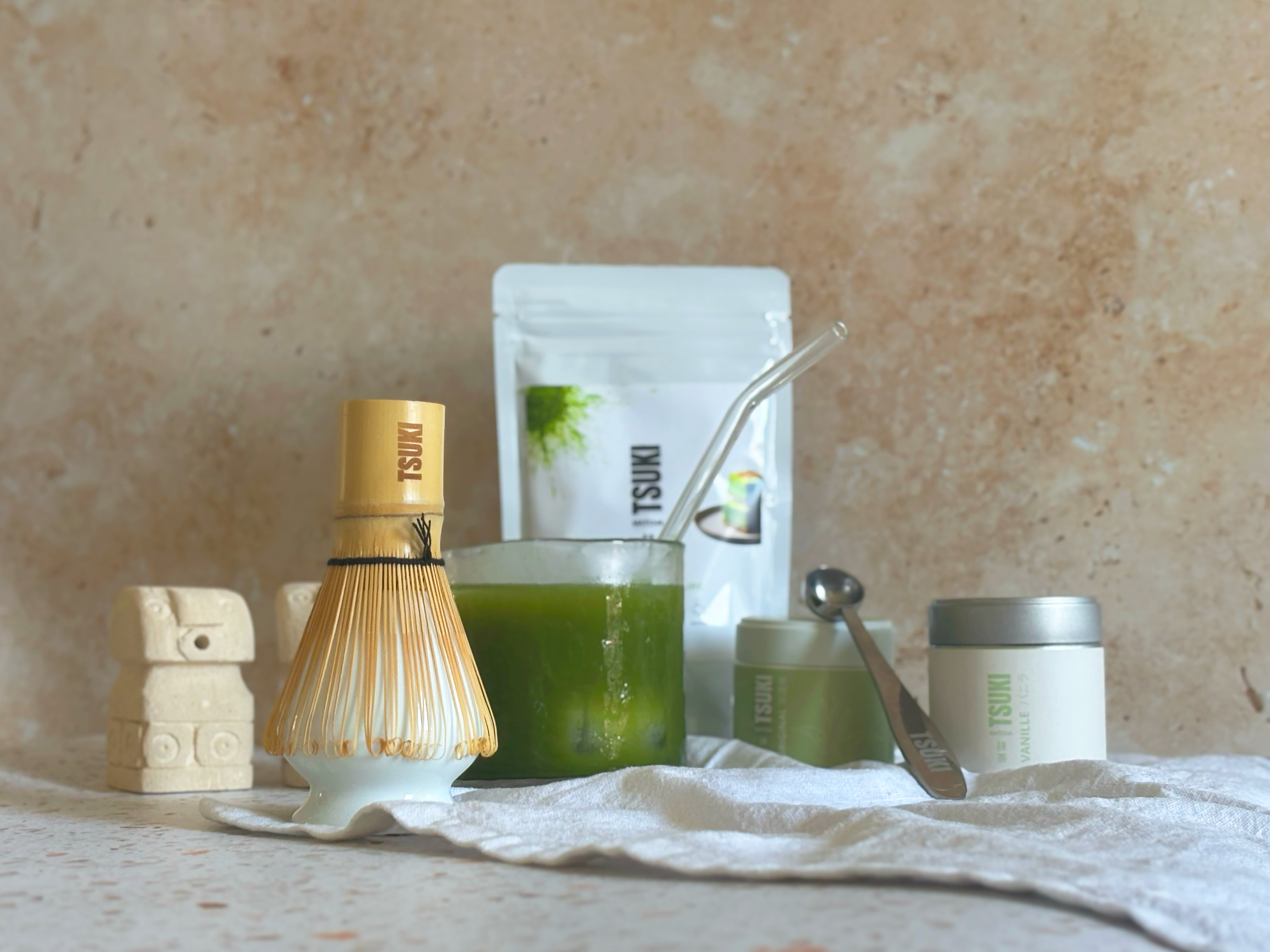

Best way to prepare matcha tea at home (complete guide)
The complete guide to mastering the art of matcha, simply
Making perfect matcha tea at home isn't about talent, it's about method. With the right techniques, quality products, and a few essential guidelines, it's possible to master matcha tea preparation at home.
This complete guide is designed to accompany you step-by-step, whether you're new to matcha or looking to refine your ritual. From traditional preparation to matcha lattes, including choosing accessories and mistakes to avoid, you'll find all the keys to successful everyday matcha here.

What is matcha and why is its preparation essential?
Matcha is a finely ground Japanese green tea. Unlike infused teas, you consume the entire leaf, which explains both its aromatic intensity and nutritional richness.
This particularity implies a specific preparation, with particular accessories. Water that is too hot, incorrect dosage, or insufficient mixing can alter the taste and texture. When well prepared, matcha reveals a vegetal sweetness, a controlled slight bitterness, and a delicate foam.
Essentials for preparing matcha tea
Before you begin, it's important to have the right tools. There's no need to overdo it, but certain accessories really make a difference.
Matcha
The quality of the matcha is paramount. A well-sourced matcha offers an intense green color, a fine texture, and a balanced taste. At TSUKI, our matchas are selected for their consistency, fineness, and ability to adapt equally well to traditional preparation, lattes, and recipes.
The bamboo whisk (chasen)
Essential for achieving a light and homogeneous foam. Its flexible prongs help dissolve the powder without clumps. You can also opt for an electric whisk.
The matcha bowl (chawan)
A wide bowl facilitates whisk movement and ensures smoother preparation.
The measuring spoon
It allows you to precisely measure the amount of matcha for consistent results.
The traditional method for preparing matcha
Step 1: heat the water
Use filtered or low-mineralized water, heated to around 70-80 °C. Water that is too hot will make the matcha bitter.
Step 2: measure the matcha
Take 1 to 2 grams of matcha, about one measuring spoon, and place the powder in your bowl.
Step 3: add water
Pour about 60 to 70 ml of hot water over the matcha.
Step 4: whisk
Using the bamboo whisk, whisk vigorously in an M or W motion. Within about thirty seconds, a fine, creamy foam should appear.
Discover our guide to caring for your Chasen whisk ❤️
Your matcha is ready to be enjoyed as is.
How to prepare a matcha latte at home
The matcha latte is a softer and more accessible version, ideal for daily consumption.
First, prepare your matcha according to the traditional method, then add the milk of your choice*, hot or cold depending on your preference.
*Discover our complete guide to choosing the right milk for your matcha
Plant-based milks, such as oat or almond, provide a creamy texture and naturally balance the bitterness of matcha.

Which matcha to choose depending on its use?
Not all matchas are intended for the same use.
A ceremonial matcha or versatile matcha (with a flavor) is ideal for pure consumption with water.
A quality culinary matcha is perfect for lattes, smoothies, and recipes, as it retains its aromas even when mixed with other ingredients.
At Tsuki Matcha, we have designed our range to meet these different uses, without compromising on quality.
Common mistakes to avoid
- Using water that is too hot is the most common mistake.
- Whisking incorrectly leads to clumps and an unpleasant texture.
- Over-dosing the powder can make the drink too intense or bitter.
- Using low-quality matcha directly impacts the final taste.
Correcting these points is often enough to completely transform the experience.
Integrating matcha into your daily life
Matcha is not limited to a hot drink. It can be consumed in the morning for gentle and sustained energy, as an iced latte in summer, or incorporated into sweet and savory recipes.
It's a modular ritual that adapts to seasons and desires, while retaining its benefits.
Matcha has many other benefits.
FAQ – Everything you need to know to make your matcha at home
What is the ideal water temperature for matcha?
Between 70 and 80 °C. Water that is too hot alters the flavors and increases bitterness.
Can you prepare matcha without a bamboo whisk?
Yes, but the result will be less foamy. A milk frother or a shaker can help in a pinch.
How much matcha should you consume per day?
Generally, 1 to 2 servings per day are sufficient to enjoy its benefits.
Why is my matcha bitter?
This can be due to water that is too hot, over-dosing, or matcha of insufficient quality.
Can matcha be prepared in advance?
It is best to consume it immediately to preserve its aromas and foam.
The matcha ritual according to TSUKI
Preparing perfect matcha at home is first and foremost about taking your time. A simple gesture, a moment for yourself, a conscious break in the rhythm of daily life.
With carefully chosen products and a mastered method, matcha becomes more than just a drink.
It becomes a ritual ❤️


