
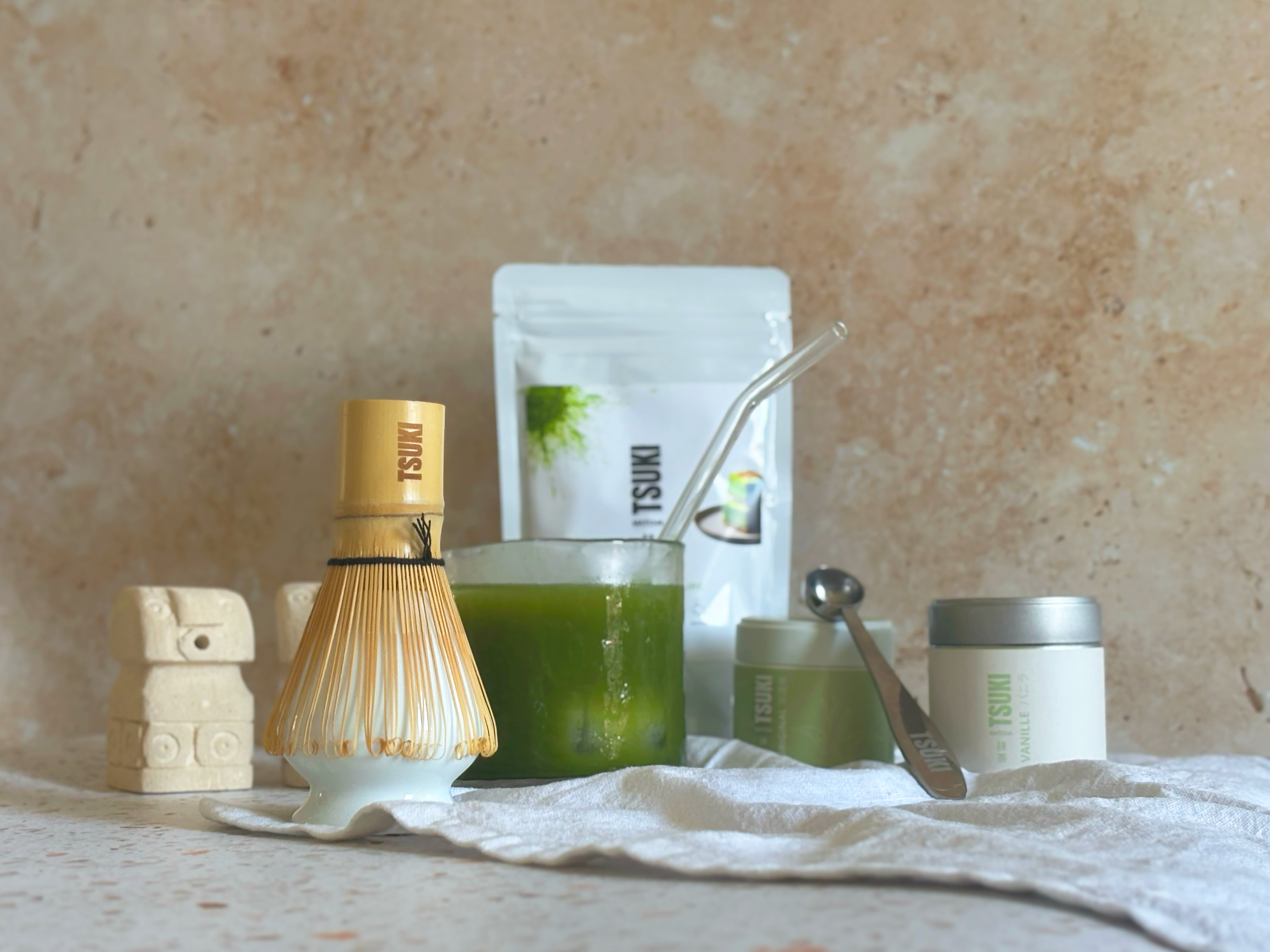

The history of matcha: origins, Japanese culture, and traditions
Matcha, this vibrant and aromatic green tea powder, has a rich and fascinating history spanning several centuries. Originating in China, where tea was discovered over 5,000 years ago, matcha was later introduced to Japan by Buddhist monks in the 12th century.
But how did this humble tea leaf become an icon of Japanese culture and a symbol of health and well-being around the world?
From Chinese origins to Japanese matcha boom
Before becoming a symbol of Japanese culture, matcha had its roots in China. As early as the Tang dynasty, green tea leaves were steamed and then ground into a powder, an ancient method that foreshadowed modern matcha.
It was in Japan, from the 12th century onwards, that this practice evolved, perfected, and became firmly established in customs.
Some regions, such as Shizuoka, still play a key role in the production of high-quality matcha today, perpetuating a know-how passed down from generation to generation.
Matcha and Zen Buddhism: focus and mindfulness
The introduction of matcha to Japan is inseparable from Zen Buddhism. Monks consumed this green tea powder to stay awake and focused during long meditation sessions.
The unique combination of natural caffeine and L-theanine promotes a state of calm alertness, perfectly aligned with the principles of Zen. This philosophy of mindfulness is still found today in Japanese concepts like Ichigo Ichie, which invites us to fully savor every moment.
The tea ceremony: a codified ritual around matcha
Over the centuries, matcha became the heart of the Japanese tea ceremony, a precise ritual where every gesture has meaning. Preparing and serving matcha is not just about tasting, but about an art of living based on harmony, respect, purity, and tranquility.

The texture, foam, and even the umami flavor of matcha are at the center of this unique sensory experience, which continues to influence how matcha is prepared today.
Of course, depending on the cultivar, your matcha will have a different taste and texture.
Matcha in Japanese culture: aesthetics and philosophy
Far beyond a drink, matcha deeply permeates Japanese culture. It is found in art, gastronomy, and even in certain aesthetic philosophies, such as Kintsugi, which celebrates the beauty of imperfection.

Matcha embodies this worldview where simplicity, authenticity, and long-term values are cherished. This approach explains why matcha remains intimately linked to Japanese traditions, despite its global success.
From ancient ritual to global phenomenon
In recent decades, matcha has largely crossed Japan's borders. Appreciated for its nutritional benefits, unique taste, and versatility, it is found in matcha lattes as well as in sweet and savory recipes.

This global success, however, comes with a major challenge: the quality and storage of matcha. Understanding its origin, production methods, and how to store it ensures that all its properties are preserved, from field to cup.
FAQ - History and culture of matcha
Is matcha of Chinese or Japanese origin?
Matcha originated in China, but it was in Japan that it was perfected and became a central element of culture and the tea ceremony.
Why is matcha linked to Zen Buddhism?
Zen monks used matcha to promote concentration and alertness during meditation, thanks to its gentle and prolonged energizing effects.
Is the tea ceremony still practiced today?
Yes, the traditional matcha ceremony is still practiced in Japan and continues to influence how matcha is prepared and consumed worldwide.
How is matcha different from other green teas?
Unlike infused teas, matcha involves consuming the entire leaf in powdered form, which explains its richness in nutrients and its characteristic umami taste.


