
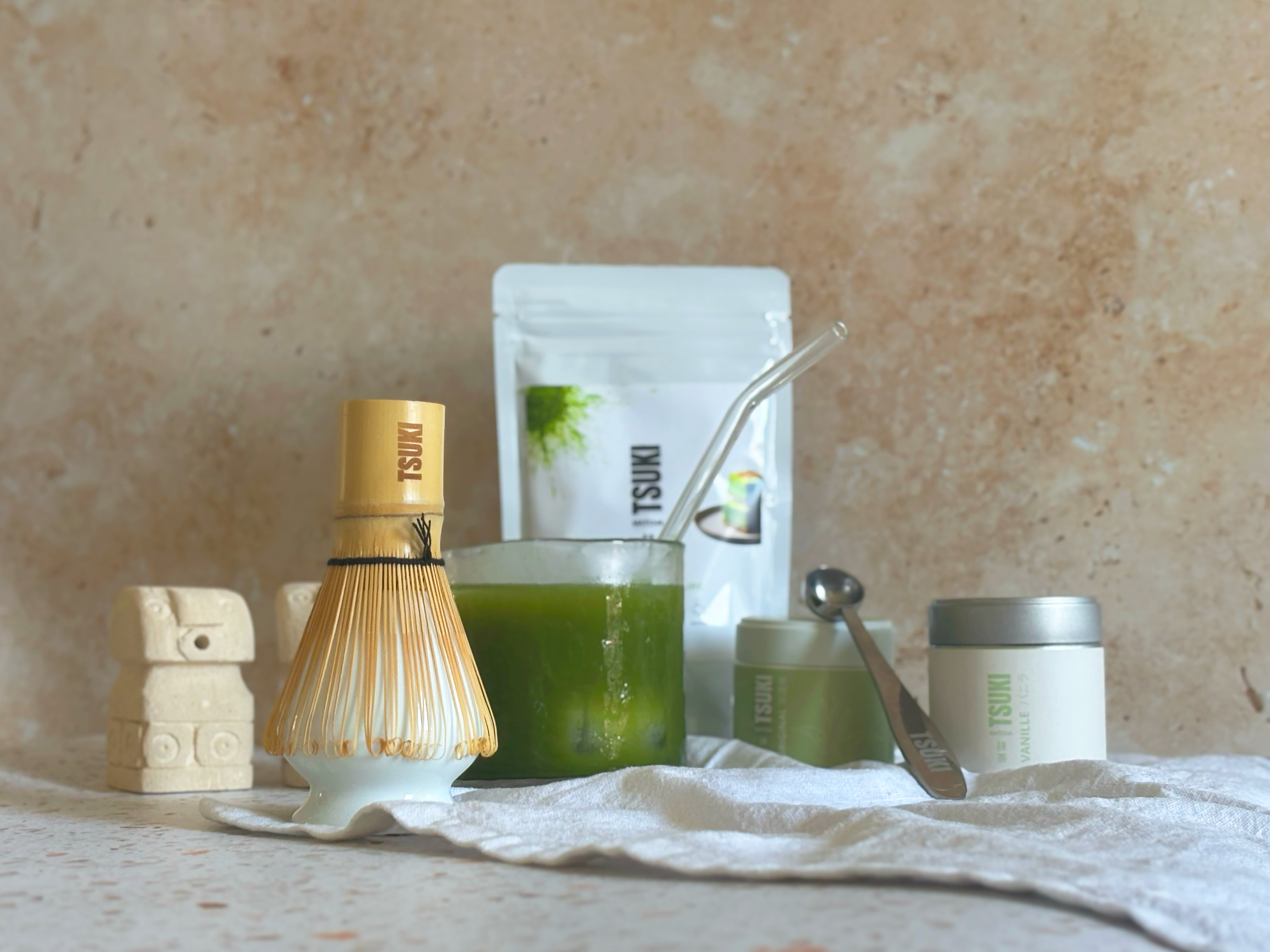

How to choose good matcha: a complete guide to recognizing quality
Choosing a good matcha may seem simple at first glance. However, with differences in grade, origin, production, and quality, it's easy to get lost.
Not all matchas are created equal. Which matcha should you buy? The color, taste, powder fineness, cultivation method, and even the place of purchase profoundly influence the in-cup experience.
In this guide, we explain how to choose your matcha, recognize quality matcha, understand the differences between grades, choose according to your use, and buy with confidence.

What is good matcha?
Good matcha is first recognized visually. Its color should be bright, vibrant green. A dull or yellowish hue can indicate oxidation or inferior quality.
The texture must be extremely fine, almost silky. Matcha is a powder ground very slowly using a stone mill. If it appears grainy or sandy, it is not a high-end product.

In terms of taste, quality matcha presents a subtle balance between vegetal sweetness and slight bitterness. It should not be aggressive or excessively bitter.
But to fully understand the differences, it's important to look at the grades.
The different grades of matcha: ceremonial or culinary?
Not all matchas are intended for the same use.
Ceremonial grade is made from the youngest and most tender leaves. It offers a fine texture, a delicate taste, and controlled bitterness. It is ideal for enjoying pure, with just hot water.
Culinary grade, on the other hand, is designed for recipes, lattes, or pastries. Its taste is more pronounced to ensure it remains present when mixed with other ingredients.
To precisely understand the difference between these two categories, consult our detailed guide: Ceremonial vs Culinary Grade.
Organic or conventional matcha: which should you prioritize?
Since matcha is a powder made from finely ground whole leaves, everything present on the leaf is consumed.
This is why the cultivation method is essential.
Organic matcha limits exposure to pesticides and better respects soil balance.
However, in Japan, some producers work with highly regulated traditional methods without necessarily having international certification.
The importance of origin and expertise
The origin of matcha plays a crucial role in its quality. Climate conditions, terroir, shading duration before harvest, and grinding method directly influence the aromatic richness and nutrient concentration.

Matcha produced according to traditional Japanese methods guarantees better taste stability and consistent quality.
How to recognize poor quality matcha?
Some signs are unmistakable:
• dull or khaki color (a very bad sign)
• very bitter and astringent taste
• coarse texture
• lack of origin information
• unusually low price

Quality matcha requires time, precision, and genuine expertise. If it is sold at a price significantly lower than the market while promising ceremonial quality, it's important to be cautious.
Discover our guide to the best matchas in France in 2026 for more information on the best matchas in France.
Where to buy your matcha: store, cafe, or online?
The place of purchase often influences the freshness and transparency of the product.
In some cafes, matcha can be stored for a long time before use. Turnover is not always optimal.
Buying online often provides access to more information on origin, grade, production method, and storage conditions.

Which matcha to choose based on your use?
The choice primarily depends on your intention.
If you wish to discover matcha in its purest form, opt for a ceremonial grade.
For lattes, smoothies, or pastries, a well-selected culinary grade will offer an excellent balance of taste and intensity.
The key is to adapt the grade to your use rather than seeking a universal product. And adapt the format according to your consumption.
In summary: essential criteria for choosing good matcha
To choose quality matcha, remember these elements:
• vibrant green color
• very fine texture
• clearly indicated origin
• grade suitable for your use
• transparent production method

Taking the time to understand these criteria not only improves your tasting experience but also allows you to invest in an authentic and sustainable product.
FAQ - How to choose good matcha
How to recognize good matcha?
Good matcha is recognized by its vibrant, bright green color, its very fine and silky texture, as well as its balanced taste, which is both vegetal, slightly umami, and not overly bitter. A dull or yellowish hue, a grainy powder, or excessive bitterness are often signs of inferior quality.
What is the difference between ceremonial matcha and culinary matcha?
Ceremonial matcha is meant to be drunk pure, with water. It offers a finer texture and a milder taste.
Culinary matcha, on the other hand, is designed for recipes and lattes. It has a more intense flavor to maintain its presence when mixed with other ingredients.
To understand the differences in detail, consult our guide on matcha grades.
Should you choose organic matcha?
Organic matcha guarantees the absence of synthetic pesticides and a more environmentally friendly cultivation. This can be an important criterion, especially because the whole leaf is consumed. To go further, discover our article on organic vs. conventional matcha.
Which origin should you prioritize for quality matcha?
Japan remains the global benchmark for high-quality matcha. Regions like Shizuoka or Uji are renowned for their expertise and ideal climatic conditions. Origin directly influences taste, fineness, and richness in active compounds.
Where to buy good matcha?
It is preferable to buy your matcha from a specialized brand that clearly specifies the origin, grade, and production methods. At Tsuki Matcha, freshness and packaging also play an essential role in the final quality of our matchas.


