
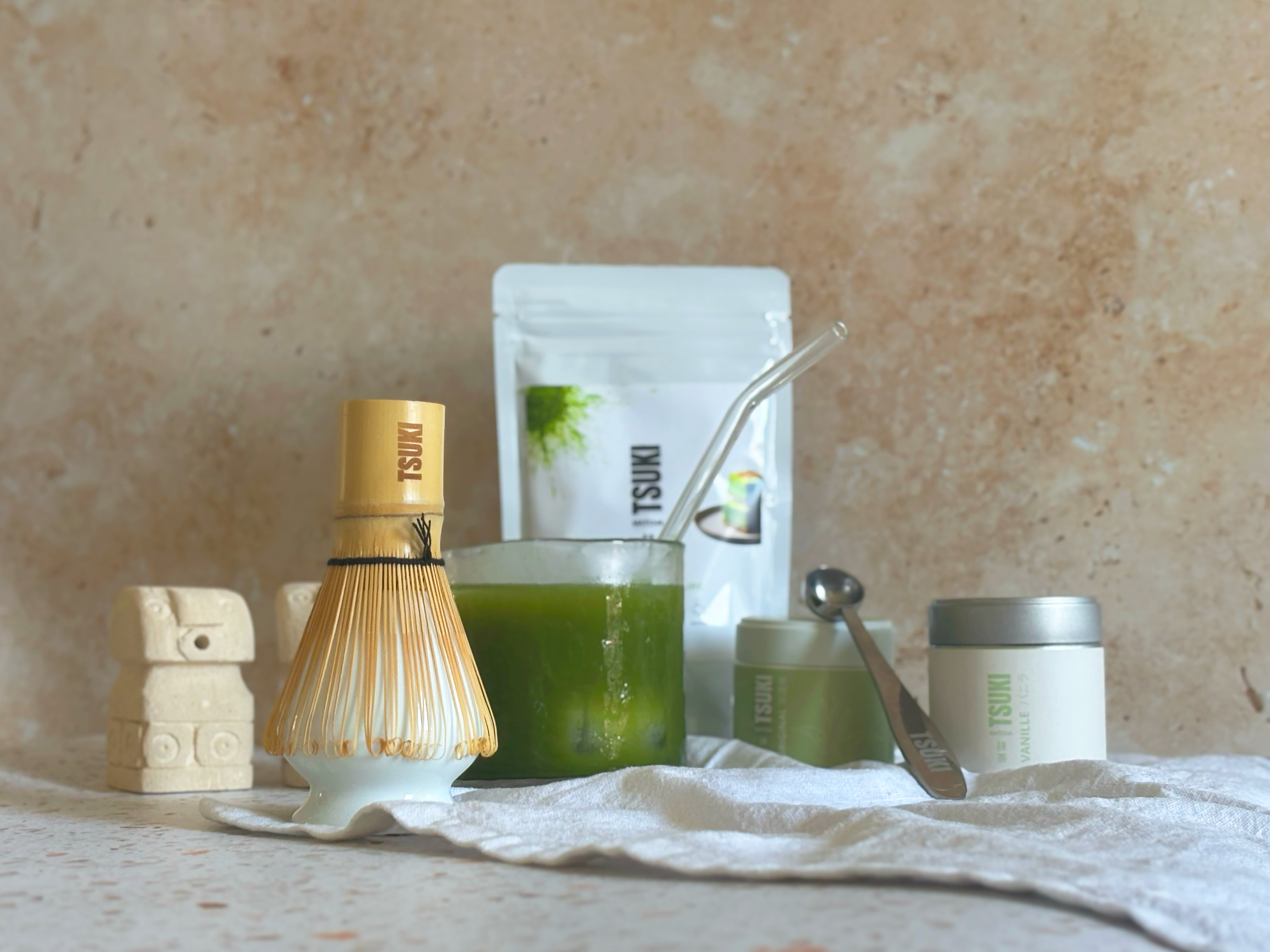
Everything about Matcha

Dive into the world of matcha: benefits, origins, recipes, and daily tips.

Matcha is much more than just a drink. This fine Japanese green tea powder, made from shaded leaves and then finely stone-ground, embodies both a millennia-old tradition and a modern superfood with multiple benefits. Consumed for centuries in Japan, particularly as part of the tea ceremony, matcha is now popular for its unique taste, nutritional richness, and gentle, sustained energy.

Rich in antioxidants, catechins, and L-theanine, Japanese matcha is known for supporting concentration, metabolism, inner balance, and daily vitality. Whether you want to discover its benefits, understand its origin, learn how to prepare it correctly, or explore creative recipes, here you will find all the keys to integrate matcha into your routine.

From traditional usucha matcha to modern lattes, from storage tips to rituals inspired by Japanese culture, this collection guides you step-by-step to understand, choose, and fully enjoy matcha in all its forms.

Matcha Kagoshima : terroir volcanique, cultivars et caractéristiques - Tsuki Matcha

Matcha Kagoshima : terroir volcanique, cultivars et caractéristiques

on Jul 27 2026
Kagoshima, deuxième région productrice de thé du Japon, donne un matcha rond et umami grâce à son sol volcanique. Terroir, cultivars et critères de choix.
Comment créer sa matcha station à la maison - Tsuki Matcha

Comment créer sa matcha station à la maison

on Jul 24 2026
Créez votre matcha station à la maison : accessoires indispensables, organisation de l'espace et conservation de la poudre pour un rituel réussi chaque jour.
Verveine : bienfaits, préparation et comparatif avec le matcha - Tsuki Matcha

Verveine : bienfaits, préparation et comparatif avec le matcha

on Jul 24 2026
La verveine est une infusion sans caféine, apaisante et digestive. Découvrez ses bienfaits, sa préparation idéale et ce qui la distingue vraiment du matcha.
Matcha antioxydant : catéchines, EGCG et pouvoir protecteur de la poudre verte - Tsuki Matcha

Matcha antioxydant : catéchines, EGCG et pouvoir protecteur de la poudre verte

on Jul 24 2026
Le matcha compte parmi les boissons les plus riches en antioxydants. Zoom sur les catéchines et l'EGCG, pourquoi la poudre verte en concentre autant et comment en profiter chaque jour sans excès.
Pourquoi le matcha devient plus cher en 2026 ? - Tsuki Matcha

Pourquoi le matcha devient plus cher en 2026 ?

on Jul 17 2026
Prix du matcha en hausse en 2026 : pénurie de tencha, demande mondiale et climat. Les causes et comment bien acheter son matcha.
Quel matcha choisir pour un latte sans amertume ? - Tsuki Matcha

Quel matcha choisir pour un latte sans amertume ?

on Jul 17 2026
Quel matcha pour un latte sans amertume ? Les critères pour choisir une poudre douce et crémeuse et réussir un matcha latte rond.
KitKat matcha : le chocolat vert japonais et ce qu'il révèle du vrai matcha - Tsuki Matcha

KitKat matcha : le chocolat vert japonais et ce qu'il révèle du vrai matcha

on Jul 17 2026
Le KitKat matcha au thé vert d'Uji fascine le monde entier. Origine, goût, versions et différences avec un vrai matcha de cérémonie : le guide complet.
Matcha et enfants : à partir de quel âge peut-on en donner ? - Tsuki Matcha

Matcha et enfants : à partir de quel âge peut-on en donner ?

on Jul 16 2026
Un enfant peut-il boire du matcha ? Âge conseillé, rôle de la caféine et précautions simples pour proposer le matcha aux plus jeunes en toute sérénité.
Collagène et acide hyaluronique : le duo peau et le rôle du matcha - Tsuki Matcha

Collagène et acide hyaluronique : le duo peau et le rôle du matcha

on Jul 16 2026
Collagène et acide hyaluronique forment le duo d'une peau ferme et repulpée. On explique leurs rôles, pourquoi ils déclinent avec l'âge, et comment les antioxydants du matcha aident à protéger la peau au quotidien.
Matcha et allaitement : peut-on boire du matcha en allaitant ? - Tsuki Matcha

Matcha et allaitement : peut-on boire du matcha en allaitant ?

on Jul 16 2026
Peut-on boire du matcha pendant l'allaitement ? Oui, avec modération : découvrez la quantité conseillée, le bon timing autour des tétées et les précautions à connaître.
Matcha japonais : pourquoi le meilleur matcha vient du Japon et comment le reconnaître - Tsuki Matcha

Matcha japonais : pourquoi le meilleur matcha vient du Japon et comment le reconnaître

on Jul 15 2026
Le matcha japonais reste la référence mondiale. Origine, régions, différence avec le matcha chinois et repères concrets pour reconnaître un vrai matcha du Japon.
Prix du matcha : combien coûte un bon matcha et comment bien l'acheter - Tsuki Matcha

Prix du matcha : combien coûte un bon matcha et comment bien l'acheter

on Jul 15 2026
Prix du matcha : pourquoi un tel écart de tarif d'une boîte à l'autre ? On situe le prix d'un bon matcha, on explique ce qui le justifie, et comment payer le juste prix sans se tromper.
Matcha violet, bleu et rose : que valent vraiment les matchas colorés ? - Tsuki Matcha

Matcha violet, bleu et rose : que valent vraiment les matchas colorés ?

on Jul 15 2026
Matcha violet, bleu, rose : ces poudres colorées envahissent les réseaux, mais aucune n'est du thé. On vous explique ce qu'elles sont vraiment et comment repérer un vrai matcha vert de qualité.
Le shincha : origine, bienfaits et comparatif avec le matcha - Tsuki Matcha

Le shincha : origine, bienfaits et comparatif avec le matcha

on Jul 14 2026
Le shincha est le premier thé vert japonais de l'année, récolté au printemps. Découvrez son origine, ses bienfaits et ce qui le distingue vraiment du matcha.
Kabusecha : origine, bienfaits et comparatif avec le matcha - Tsuki Matcha

Kabusecha : origine, bienfaits et comparatif avec le matcha

on Jul 13 2026
Le kabusecha est un thé vert japonais ombré, à mi-chemin entre le sencha et le gyokuro. Découvrez son origine, ses bienfaits et ce qui le distingue vraiment du matcha.
Wabi-sabi : l'esthétique japonaise de l'imperfection et son lien avec le rituel du matcha - Tsuki Matcha

Wabi-sabi : l'esthétique japonaise de l'imperfection et son lien avec le rituel du matcha

on Jul 10 2026
Le wabi-sabi célèbre la beauté de l'imperfection et du temps qui passe. Découvrez comment cette esthétique japonaise nourrit le rituel du matcha, du chawan aux gestes.
Matcha d'Uji : origine, histoire et savoir-faire de la région de Kyoto - Tsuki Matcha

Matcha d'Uji : origine, histoire et savoir-faire de la région de Kyoto

on Jul 10 2026
Uji, dans la préfecture de Kyoto, est le berceau du matcha japonais. Origine, histoire, savoir-faire d'ombrage et de broyage au tencha, et ce qui distingue le goût du matcha d'Uji.
Matcha et tension artérielle : le matcha fait-il monter ou baisser la tension ? - Tsuki Matcha

Matcha et tension artérielle : le matcha fait-il monter ou baisser la tension ?

on Jul 10 2026
Le matcha agit-il sur la tension artérielle ? Riche en catéchines, il soutient une meilleure souplesse des vaisseaux, tandis que sa caféine reste modérée par la L-théanine. Bienfaits, science et conseils pour bien le consommer.
Matcha et cholestérol : bienfaits et effets sur le taux de cholestérol - Tsuki Matcha

Matcha et cholestérol : bienfaits et effets sur le taux de cholestérol

on Jul 10 2026
Le matcha agit-il sur le cholestérol ? Riche en catéchines, le thé vert japonais peut soutenir un meilleur profil lipidique. Bienfaits, science et conseils pour bien le consommer.
Thé oolong (thé bleu) : origine, bienfaits et comparatif avec le matcha - Tsuki Matcha

Thé oolong (thé bleu) : origine, bienfaits et comparatif avec le matcha

on Jul 09 2026
Le thé oolong, ou thé bleu, est un thé semi-oxydé entre thé vert et thé noir. Origine, bienfaits, préparation et comparatif avec le matcha pour bien choisir.

Showing 20/142

Matcha tea

Originally from China, matcha has become a major tradition in Japan, particularly through the tea ceremony. Buddhist monks already used it to accompany their meditation.

Its three specific characteristics

It's a powdered green tea that is whisked, not steeped. It offers powerful benefits because the entire leaf is consumed, and it can also be used as an ingredient in cooking, in drinks as well as in recipes.

How do you prepare matcha tea?

Preparing matcha tea is not just about mixing a powder with hot water.

This Japanese ritual relies on a few precise steps that reveal all the subtlety of matcha: water at the right temperature, sifted powder, and energetic whisking for a light and creamy foam.

To do this, we recommend choosing our Original matcha or Vanilla matcha.

In just a few minutes, you can transform your break into a true moment of calm and concentration.

With quality matcha and the right accessories, preparing your matcha at home becomes a simple, daily pleasure.

100% Japanese matcha, cultivated with respect and expertise

All our matchas come from the Yabukita cultivar, known for its aromatic quality and rich umami.

The tea leaves are harvested in the Shizuoka and Kagoshima regions, renowned for their exceptional tea plantations.

The benefits of matcha tea ❤️

An exceptional concentration of antioxidants

One of the main benefits of matcha is its remarkable richness in antioxidants, particularly catechins like EGCG. Unlike infused tea, matcha is consumed as a fine powder, meaning the entire leaf is ingested. This peculiarity gives it a much higher concentration of polyphenols than classic green tea. These compounds help protect cells against oxidative stress and contribute to the overall proper functioning of the body.

A gentle and steady energy

Matcha naturally contains caffeine, but its effect is very different from that of coffee. Thanks to the presence of L-theanine, an amino acid developed during leaf shading, the energy is gradual and long-lasting. The result: stimulation without excessive nervousness or a sudden crash. This unique balance promotes concentration, creativity, and mental clarity.

Immune system support

Rich in essential vitamins and minerals such as potassium, magnesium, and zinc, matcha fits perfectly into a balanced routine. Its nutritional density makes it an interesting ally for supporting natural defenses, especially during seasonal changes.

An ally for the skin

Thanks to its high content of antioxidants, matcha helps combat the effects of oxidative stress on the skin. By protecting cells from free radicals, it helps preserve skin elasticity and maintain a radiant complexion. Its richness in chlorophyll also reinforces this "natural glow" dimension.

A partner in a weight management journey

Matcha is often associated with an active routine. Some studies suggest that catechins, especially EGCG, may support metabolism as part of a healthy lifestyle. It is not a miracle product, but an interesting supplement when combined with a balanced diet and regular physical activity.

A balance between relaxation and stimulation

The unique combination of caffeine and L-theanine provides a dual effect: it is both stimulating and soothing. This harmony explains why matcha was historically consumed by Buddhist monks during meditation. It promotes a state of calm alertness, conducive to refocusing and well-being.

An alkalizing and anti-inflammatory tea

Matcha naturally fits into a plant-rich diet. Its composition helps support acid-base balance and contributes to a holistic approach aimed at reducing chronic inflammation associated with modern lifestyles.