
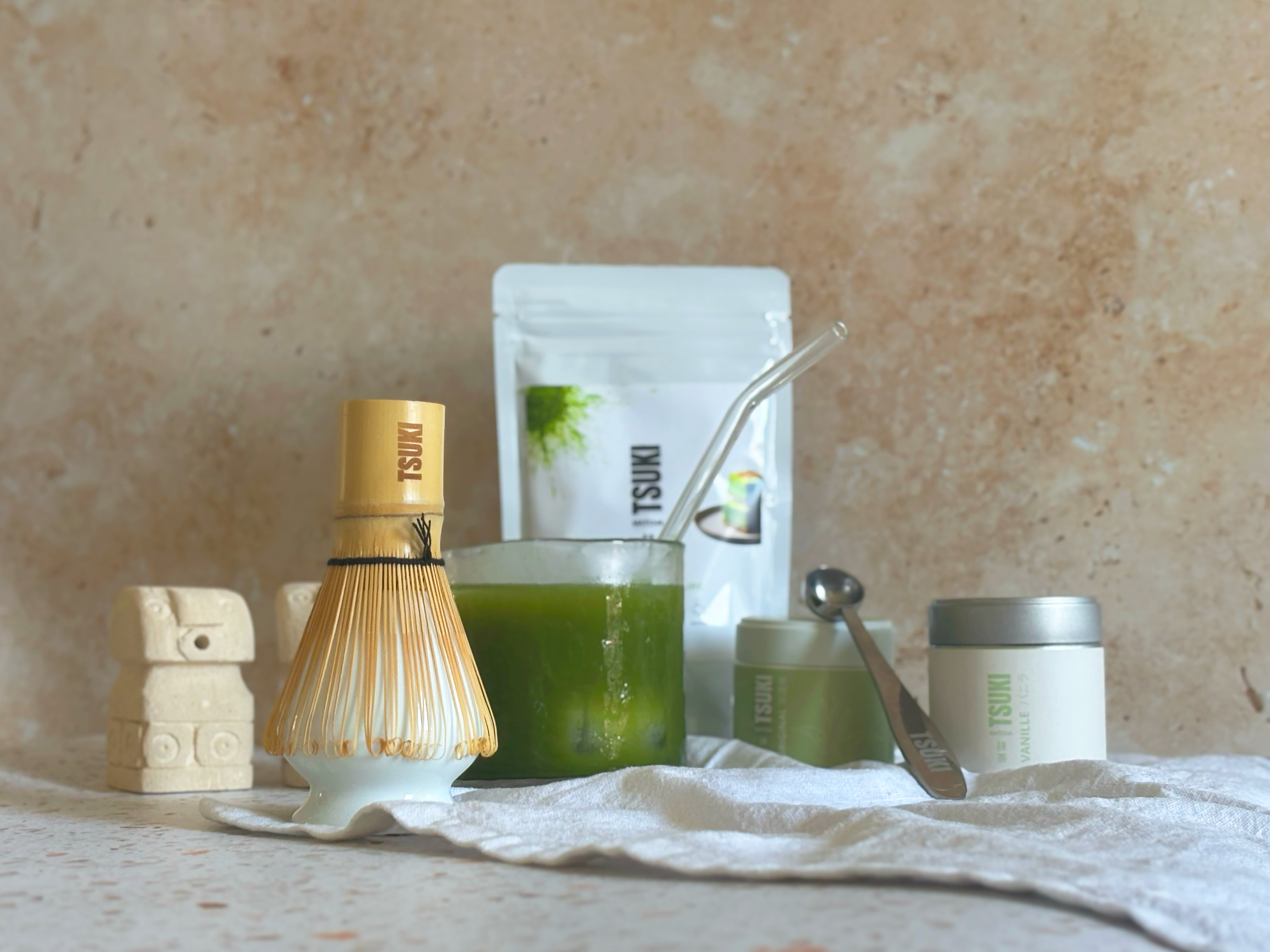

The Benefits of Matcha: Energy, Focus, and Health Explained
Matcha is much more than just a Japanese green tea. Consumed for nearly a thousand years in Japan, first by Buddhist monks, then by samurai warriors and Zen elites, it is now recognized by modern science for an impressive range of physical and mental benefits.
Thanks to its exceptional richness in antioxidants, L-theanine, chlorophyll, and concentrated bioactive compounds, matcha stands out as one of the most complete beverages for supporting energy, concentration, serenity, and longevity.
In summary: matcha acts as a powerful antioxidant, offers gentle and stable energy, supports concentration and stress management, aids metabolism, and easily integrates into a daily wellness routine.
What exactly is matcha?
Matcha is a Japanese green tea ground into an extremely fine powder. This characteristic changes everything. Unlike loose-leaf teas that are infused and then discarded, matcha is consumed entirely: the powder is dissolved in water or milk, and all the leaf's molecules are present in the cup.

This complete consumption explains why a cup of matcha provides as many active compounds as several cups of classic green tea. Studies on bioavailability show that the concentration of EGCG, the main antioxidant in green tea, can be up to 137 times higher in a cup of matcha compared to an infused green tea.
The other unique feature of matcha is shading. Three weeks before harvest, the tea plants are covered with tarps that reduce sunlight by 70 to 90%. Deprived of light, the plant massively increases its production of chlorophyll, L-theanine, and certain amino acids.

This is precisely what distinguishes matcha from ordinary green tea and explains its intense green color.
The longer the shading, the more matcha chlorophyll accumulates in the leaves, which is immediately visible in the intense green color of the powder.
A powerful natural antioxidant
Matcha is one of the most concentrated food sources of antioxidants in the world. Its richness comes mainly from catechins, a family of polyphenols, of which epigallocatechin-3-gallate (EGCG) accounts for up to 60% of the total.
Antioxidants play an essential role in protecting cells against oxidative stress, a phenomenon linked to aging, chronic inflammation, and many imbalances. The EGCG in matcha is studied for its protective effects on the cardiovascular system, brain, and skin.

The ORAC index, which measures a food's antioxidant capacity, places matcha among the most concentrated products in the world, ahead of açai berries, dark chocolate, or blueberries. This density makes matcha an interesting natural supplement to support the body's defense mechanisms.
Did you know that a cup of matcha contains as many antioxidants as approximately 10 cups of classic infused green tea? This is a direct consequence of consuming the entire leaf in powder form.
Gentle and sustained energy, without jitters
One of the most appreciated benefits of matcha is the quality of energy it provides. Where coffee triggers a rapid caffeine spike followed by a crash, matcha releases its energy gradually, over 3 to 6 hours.
This difference is explained by the simultaneous presence of caffeine and L-theanine. L-theanine is an amino acid almost exclusive to tea, particularly concentrated in matcha due to shading. It slows down caffeine absorption and increases alpha brain wave activity, associated with a state of relaxed alertness.
Concretely, you experience the alertness of coffee without its drawbacks: no jitters, no palpitations, no midday crash. It is this quality of effect, brought about by matcha's L-theanine, that leads so many former coffee drinkers to transition without regret.
In precise figures, a cup of matcha provides between 30 and 70 mg of caffeine depending on the dose and grade, compared to 80 to 100 mg for coffee and 20 to 30 mg for classic green tea.

Detailed benefits of matcha
1. Mental concentration and productivity
The combination of caffeine and L-theanine produces a remarkable effect on cognitive functions. Several clinical studies have documented improved task speed, accuracy, and sustained attention after matcha consumption, compared to caffeine alone or placebo.
This property makes matcha the drink of choice for people engaged in intense cognitive work: students during exams, developers, creatives, knowledge workers. Concentration is deeper, mental fatigue is pushed back, without the feeling of agitation that coffee can cause.
The effects of matcha on concentration are today among the most well-documented benefits by research.
2. Preserved beauty and youth
The antioxidants in matcha act as natural support against cellular aging. They neutralize free radicals responsible for signs of aging and protect the skin from external aggressions (UV, pollution, oxidative stress).
This action results in brighter skin, a more even complexion, and preserved elasticity in the long term. Effects on hair are also documented: better resistance of the hair fiber, support for the scalp.
Matcha can also be used topically: matcha-based face masks, natural lotions, scrubs. Combined with a well-thought-out routine, it becomes a complete beauty ally, both as a drink and for external application.
3. Metabolism and support for weight loss
Matcha is not a miracle product, but clinical studies show a real effect on metabolism. Catechins combined with caffeine slightly increase thermogenesis (heat production) and fat oxidation, especially during physical exercise.
A meta-analysis published in the International Journal of Obesity estimated the effect at approximately 100 extra calories burned per day with regular consumption of catechins at the level found in matcha. This is modest in isolation, but significant over time and within a balanced lifestyle framework.
Beyond the direct metabolic effect, matcha helps better manage cravings thanks to the stable energy it provides. Fewer energy slumps, fewer fatigue spells, fewer sweet temptations throughout the day.
4. A natural ally against stress
L-theanine in matcha directly affects stress regulation. Several studies have measured a reduction in salivary cortisol, the stress hormone, after L-theanine intake equivalent to 2 cups of matcha.
This effect does not cause drowsiness: L-theanine soothes without sedating, making it an ideal ally for intense days, periods of professional pressure, or transient anxiety. This is one of the big differences with coffee, which can, on the contrary, worsen anxiety in sensitive individuals.
This mechanism between matcha and cortisol is now sufficiently documented to be considered a real and reproducible effect.
5. Support for digestion and the microbiota
The polyphenols in matcha act as moderate prebiotics: they nourish certain beneficial bacteria in the gut microbiota, particularly Bifidobacterium and Lactobacillus. This action contributes to a favorable intestinal balance, especially useful in a modern dietary context where the microbiota is often disrupted.
Catechins also have anti-inflammatory effects on the digestive lining, which can benefit people suffering from mild intestinal inflammation or minor functional disorders. More sensitive individuals can adapt the dose, timing, and preparation to enjoy the benefits of matcha without intestinal discomfort, as explained in the precautions related to digestion.
6. Immune system support
Matcha's exceptional concentration of antioxidants, combined with the natural antibacterial and antiviral properties of catechins, contributes to better support for the body's natural defenses.
Several studies have shown that EGCG inhibits the proliferation of certain viruses and bacteria in vitro. Without making it a medicine, matcha can therefore be part of a global immune support strategy, especially during winter or periods of increased fatigue.
7. Sports performance and recovery
Many athletes incorporate matcha into their routine. Caffeine stimulates available energy during exertion, L-theanine maintains concentration, and catechins accelerate muscle recovery by reducing post-exercise inflammation.
Taken 30 to 45 minutes before a workout, matcha acts as a natural pre-workout, without the nervous peaks of commercial energy drinks. It's an interesting option for yoga, running, cycling, or endurance sports.
How to maximize the benefits of matcha
Matcha quality first and foremost
Not all matchas are created equal. The concentration of bioactive compounds depends directly on several parameters: Japanese origin, prolonged shading, adapted cultivar (especially Yabukita), ceremonial or premium grade, stone-ground.

Low-grade matcha, poorly shaded or of dubious origin, contains much lower proportions of L-theanine, chlorophyll, and catechins. It will also be more bitter and less pleasant to drink daily. Premium Japanese matcha remains the best guarantee to obtain all the benefits described here.
The right daily dosage
The ideal dose is 1 to 2 cups per day, or the equivalent of 1.5 to 4 g of powder. It is in this range that the benefits are maximal and the risks of undesirable effects are almost nil. Beyond 3 cups, the marginal benefits decrease, and caffeine-related effects increase.
The amount of matcha to consume per day varies according to profile, timing, and objectives, but remains within this range for the vast majority of adults.
The right time of day
Morning and early afternoon are the best times. Matcha consumed after 4 PM can disrupt sleep in individuals sensitive to caffeine. Always after or with a meal to avoid digestive irritation, never on an empty stomach.
Preparation
Water at 70-80°C (never boiling), a good bamboo whisk, precise dosing: three simple elements that make all the difference in the resulting cup. Traditional preparation preserves all active molecules, which express preparations do not always guarantee.
Precautions and at-risk profiles
Matcha is very well tolerated in the vast majority of cases. A few precautions should be noted: pregnant women (caffeine limit of 200 mg/day), people taking anticoagulants, thyroid treatments, or those with significant caffeine sensitivity. Knowing the possible side effects of matcha allows for peaceful consumption without sacrificing benefits.
For those who want to go further, what research truly demonstrates and what still falls under marketing are distinguished in a purely scientific approach to the benefits of matcha according to clinical studies.
FAQ - The benefits of matcha
Can you drink matcha every day?
Yes, matcha can absolutely be consumed daily. The ideal dose is between 1 and 2 cups per day, or 1.5 to 4 g of powder. It is in this range that the benefits are maximal and side effects are almost non-existent.
How to fully enjoy the benefits of matcha?
Three factors matter: product quality (Japanese origin, ceremonial or premium grade, stone-ground), preparation method (water at 70-80°C, bamboo whisk, precise dosing), and regularity of consumption. The benefits of matcha accumulate over time, not from a single isolated cup.
Why choose quality Japanese matcha?
Quality matcha is recognized by its vibrant green color (a sign of high chlorophyll concentration), its rounded taste with a characteristic umami note, and its Japanese origin. Chinese or Indonesian matchas are generally less shaded, less concentrated in L-theanine, and more bitter.
Can matcha replace coffee?
For many people, yes, with excellent results. Matcha provides comparable but more stable energy, without peaks or crashes, and without the jitters of coffee. The transition often happens naturally within one or two weeks, starting with one cup in the morning.
What are the benefits of matcha for the skin?
The antioxidants in matcha protect skin cells from aging, support skin radiance, and reduce inflammation. These effects are observable after several weeks of regular consumption. Matcha can also be used topically for targeted beauty routines.
How long before feeling the benefits of matcha?
The effect on energy and concentration is felt from the first cup, within 30 to 60 minutes. Benefits related to stress and sleep appear within a few days. Antioxidant and metabolic effects require several weeks of regular consumption to be measurable.
Can matcha help you sleep better?
Indirectly, yes: by reducing stress and cortisol thanks to L-theanine, matcha can facilitate falling asleep, provided it is consumed in the first half of the day. Drinking matcha after 4 PM can, on the contrary, disrupt sleep in individuals sensitive to caffeine.
Matcha or mate: what's the difference?
These two drinks with almost identical names are often confused. However, everything separates them: matcha is a Japanese green tea derived from Camellia sinensis, ground into powder. Mate is a South American infusion derived from Ilex paraguariensis. The taste, preparation, effects, and active compounds are completely different.

Want to try matcha to experience these benefits yourself? Discover TSUKI's ceremonial grade matcha collection and experience the daily feeling of gentle, focused, and sustained energy.


