
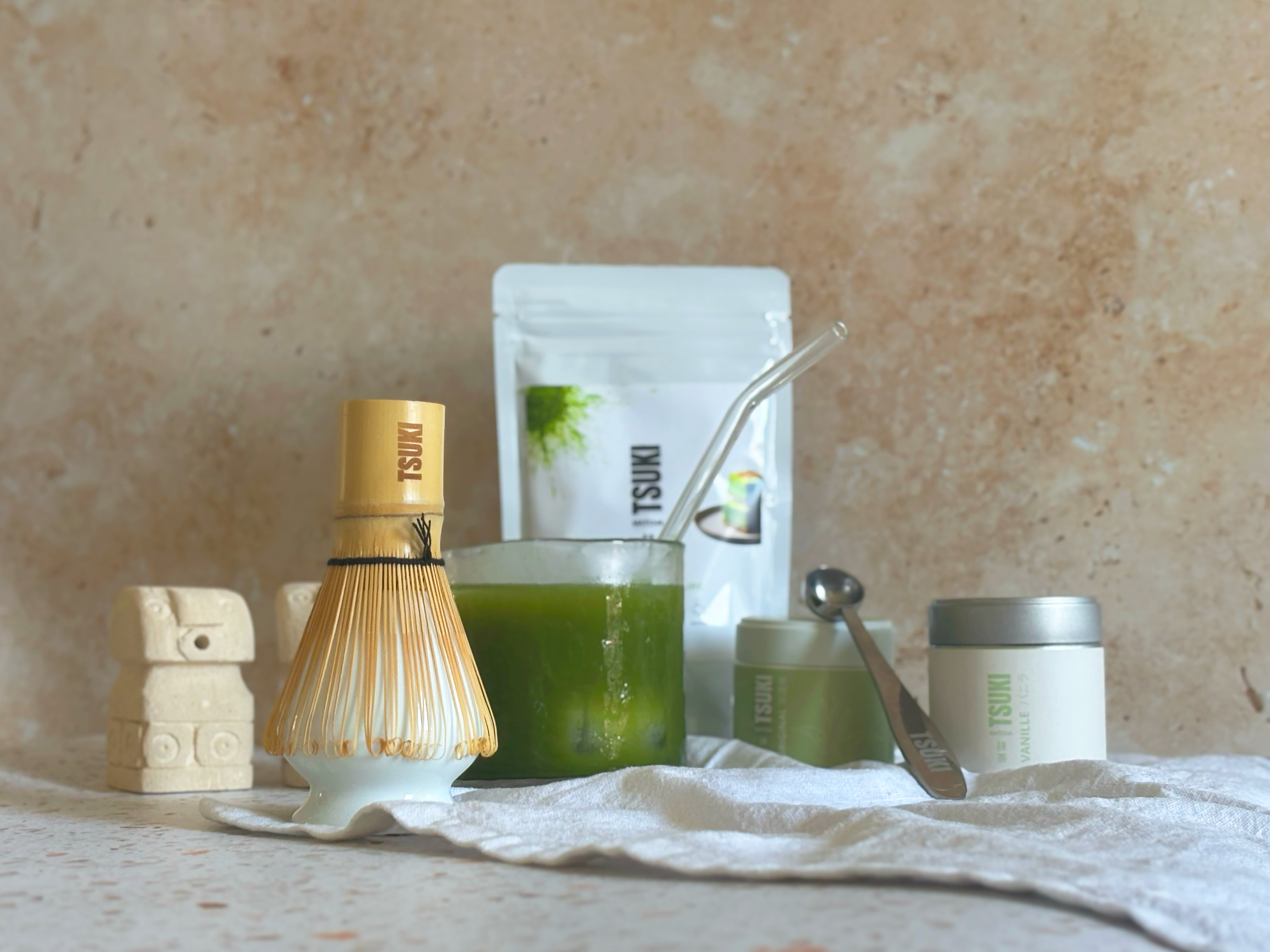

Drinking matcha every day: good idea or too much?
A matcha every morning is a ritual that millions of Japanese people have practiced for centuries. But is it really a good idea to drink matcha every day? What are the effects on energy, skin, and metabolism?
At what time of day? And how many cups are too many?
This article answers all these questions to help you find your rhythm.
The daily effects of matcha
The benefits of matcha don't manifest in just one cup. Consistency makes all the difference.

Here's what daily consumption produces over the weeks.
Week 1: energy changes
The first noticeable effect is the change in energy quality. If you replace your coffee with matcha, you'll notice that the boost is less abrupt but longer-lasting. No 9 AM peak followed by an 11 AM crash. Energy rises gently, stabilizes, and gradually declines by late morning. This is the combined effect of caffeine and L-theanine, transforming a nervous stimulant into calm cognitive support.
Weeks 2-4: concentration sets in
L-theanine, when consumed regularly, promotes the production of alpha waves in the brain. Many daily matcha drinkers report improved focus, less mental dispersion, and a sense of clarity that becomes a new normal. It's not a dramatic effect; it's a fine-tuning that is most noticeable when you stop drinking matcha for a few days.
Over the months: cumulative effects
Matcha's antioxidants (catechins, EGCG) work over the long term. Their action against oxidative stress is gradual and cumulative. Studies on Japanese populations consuming green tea show associations with better cardiovascular health, a slightly more active metabolism, and slowed cellular aging. These effects are measured not in days but in months and years of regular consumption.
How many cups per day
The right amount depends on your sensitivity to caffeine and your goals.

1 cup per day (1.5-2g). The minimum to feel the effects. Ideal for beginners, people sensitive to caffeine, or those who also drink coffee during the day. One cup provides about 60-70 mg of caffeine and a good dose of L-theanine and antioxidants.
2 cups per day (3-4g). The most common rhythm among regular drinkers. One in the morning, one in the early afternoon. This dosage seems to offer the best balance between benefits and comfort. About 120-140 mg of caffeine, well below the 400 mg threshold recommended by European health authorities.
3 cups per day (5-6g). The enthusiast's rhythm. Antioxidant intake is maximized. Caffeine reaches 180-210 mg, which remains reasonable if you don't consume other caffeine sources. Beyond 3 cups, diminishing returns set in, and the risk of side effects (insomnia, irritability) increases.
Our article on the benefits and harms of matcha details precautions for pregnant individuals, those with anemia, or those on anticoagulant treatment.
The best time to drink matcha
In the morning (7 AM-9 AM): the ideal time
Morning matcha replaces or complements coffee with more stable energy. Taken after a light snack (a fruit, a slice of toast), it is well tolerated by the stomach and starts the day with clear concentration.

This is when most daily drinkers have their first cup.
Early afternoon (1 PM-2 PM): the second wind
The post-lunch slump is the perfect time for a second matcha. L-theanine combats drowsiness without the jitters of coffee. A matcha latte with oat milk in the early afternoon has become the ritual for many workers seeking to stay productive without nervousness.
Before exercise (30-60 min before)
Matcha's caffeine improves physical performance (endurance, strength), and L-theanine maintains concentration during exercise. Matcha taken 30 to 60 minutes before training is an effective natural pre-workout.
Avoid in the evening (after 4 PM)
Caffeine's half-life is 4 to 6 hours. Matcha at 5 PM can still disrupt your sleep at 11 PM. If you want a warm ritual in the evening, opt for herbal tea or hojicha (roasted Japanese tea, almost caffeine-free).
What daily drinkers say
The experience of regular matcha drinkers reveals recurring patterns.
"I quit coffee effortlessly." The coffee → matcha transition is the most frequent. Most former coffee drinkers report no longer needing coffee once they've settled into their matcha routine. The energy is different: less explosive, but more reliable and without a crash.
"My skin has changed." Matcha's antioxidants (EGCG, chlorophyll) act on skin tone and radiance over the medium term. Many daily drinkers note visible improvement after 4 to 6 weeks, especially those who replace coffee (which slightly dehydrates) with matcha.
"It's become a ritual, not just a drink." The act of sifting, whisking, and mindful drinking transforms matcha into a moment of pause during the day. This ritualistic dimension is often cited as the reason people maintain their matcha habit long-term, well beyond the stimulating effect.
"I feel the difference when I stop." A few days without matcha are enough to notice a return to more irregular energy, less sharp concentration, and sometimes a less radiant complexion. This contrast confirms that the daily effects of matcha are real, even if subtle day-to-day.
FAQ: daily matcha
Does daily matcha create dependence?
Caffeine can create a slight physical dependence (headaches if stopped abruptly), similar to coffee or tea. This is not specific to matcha. Gradually reducing rather than stopping suddenly avoids any discomfort. "Dependence" on matcha is primarily a pleasant habit, not an addiction.
Does matcha every day make you lose weight?
Matcha can modestly contribute to weight management due to its effect on metabolism and fat oxidation. But it doesn't cause weight loss on its own. It's a complement to a balanced diet and physical activity, not a substitute.
Can I alternate matcha and coffee?
Yes. Many people drink matcha in the morning and coffee after lunch, or vice versa. The important thing is to monitor your total caffeine intake (stay under 400 mg/day) and listen to your body. Both drinks have their advantages and are perfectly compatible.
Is daily matcha good for the skin?
Matcha's antioxidants (EGCG, chlorophyll) protect skin cells against oxidative stress. Daily consumption over several weeks can contribute to a brighter complexion and more resilient skin. The effect is gradual and subtle, not instantaneous.
Do I need to take breaks from drinking matcha?
It's not necessary from a health perspective. Japanese populations consume green tea daily for decades without interruption. If you want to reduce your caffeine tolerance (to feel the stimulating effect more), a 5 to 7-day break can be helpful, but it's not mandatory.
What matcha should I choose for daily use?
A ceremonial grade matcha is the best choice for daily consumption as a beverage. Its smoothness and umami profile make each cup enjoyable, even without sugar. Culinary matcha would be too bitter for daily use and would quickly discourage the habit.
Ready to make matcha your daily ritual? Our ceremonial grade matchas are designed to be drunk every day: smooth, without bitterness, rich in L-theanine.


