
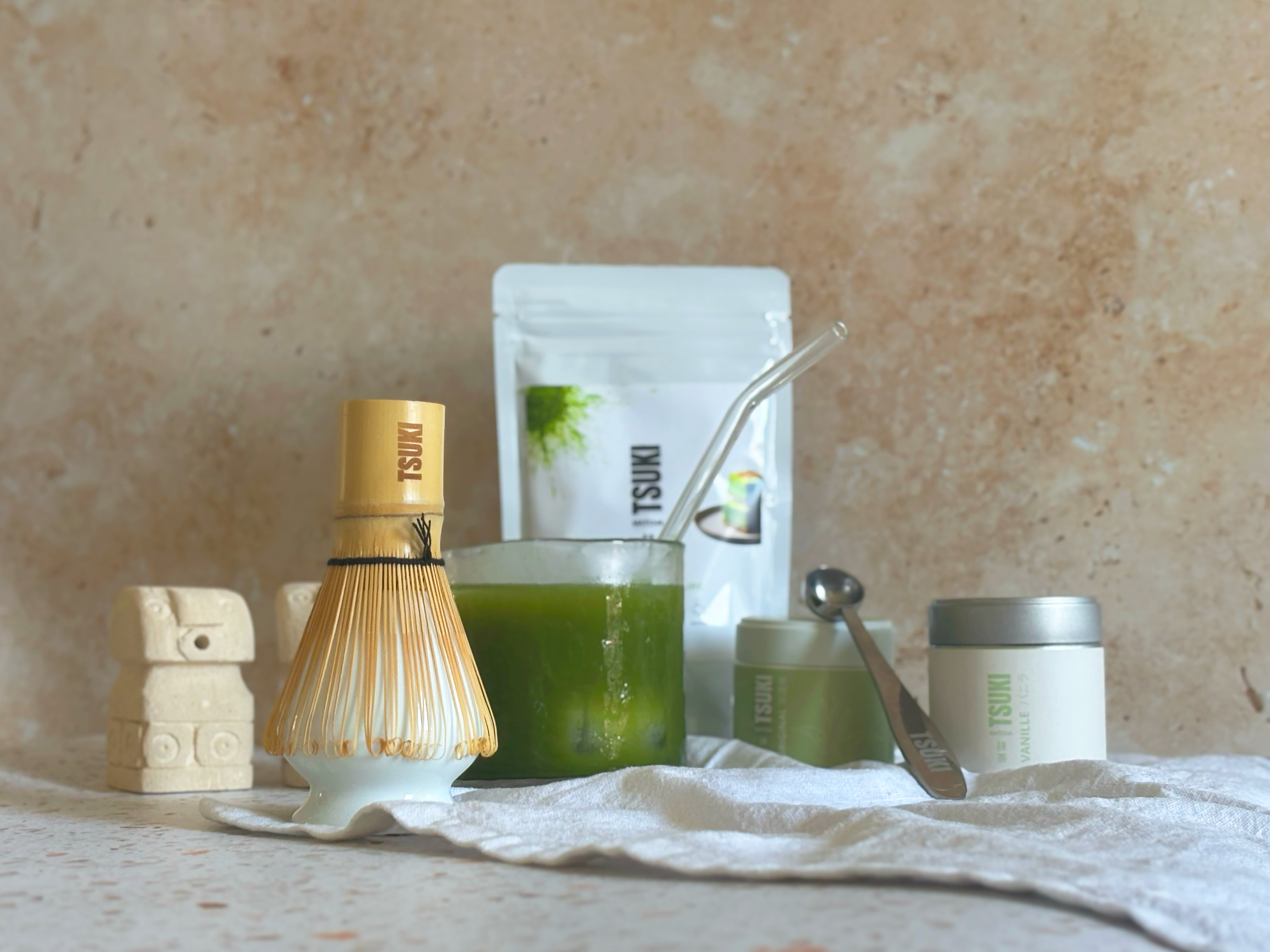

Kintsugi: the Japanese art of highlighting cracks and imperfections
Kintsugi: The beauty of cracks and the art of accepting imperfection
In Japanese culture, beauty does not lie in absolute perfection. It reveals itself in impermanence, in the passage of time, in the marks left by life.
This vision is embodied in the art of Kintsugi, an ancestral technique that involves repairing broken ceramics with lacquer sprinkled with gold powder.
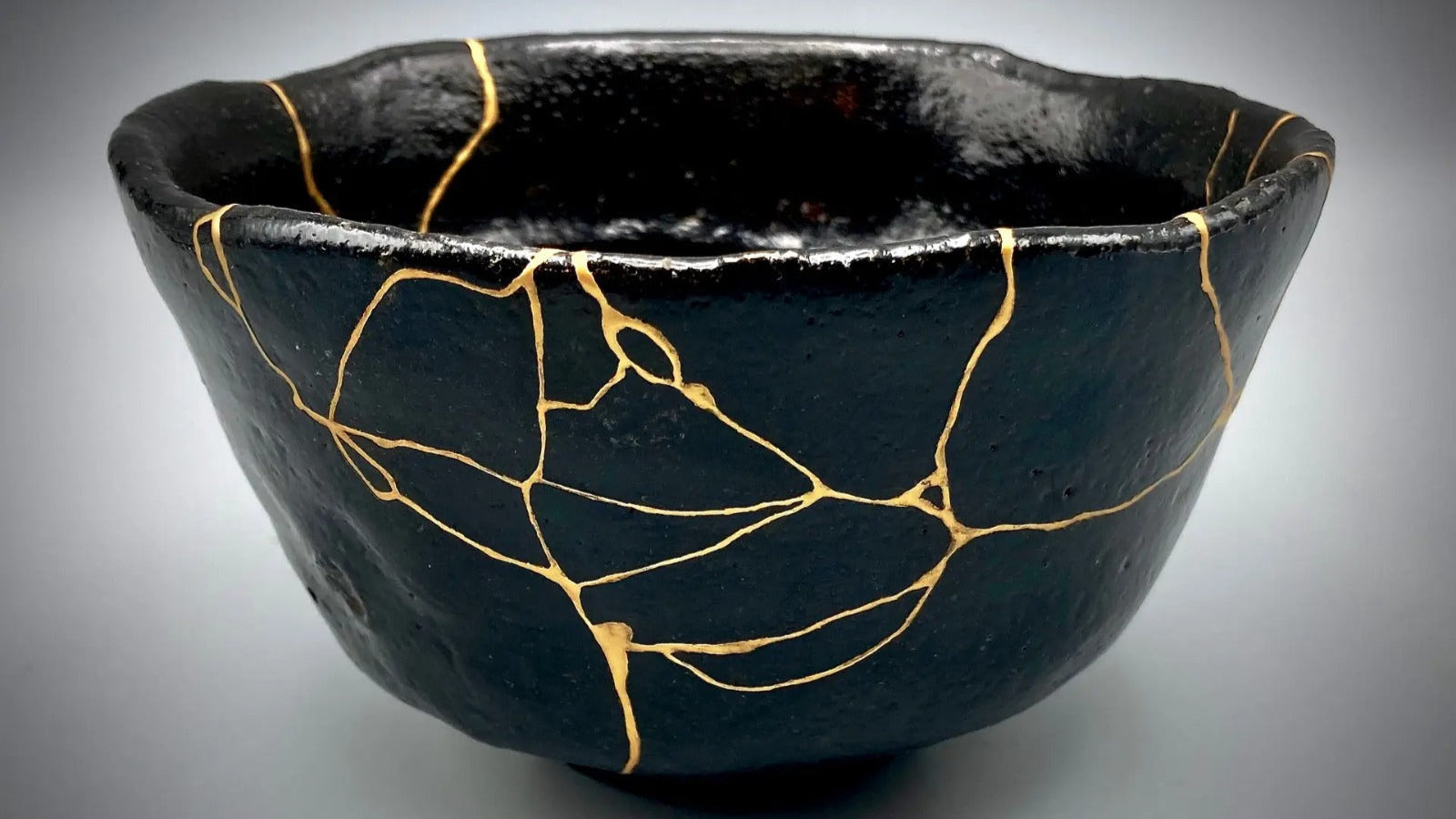
Rather than concealing cracks, Kintsugi highlights them. The break becomes a central element of the aesthetic. The repaired object is not hidden: it is transformed, enriched, sublimated.
This art is deeply linked to the Japanese philosophy of wabi-sabi, which celebrates simplicity, irregularity and impermanence. It also finds a natural echo in the history of matcha.
Kintsugi and the matcha tea ceremony
In the Japanese tea tradition, the bowls used to prepare matcha are not always uniform or perfect. Some have irregularities, variations in texture, and sometimes even visible repairs.
A bowl repaired using the Kintsugi technique is not considered damaged. It is respected for its history. It bears witness to time, use and continuity.
In Chado, the Way of Tea, the object is not a simple tool. It participates in the ritual. It dialogues with the present moment. This vision aligns with the principle of Ichigo Ichie, according to which each encounter is unique and will never be reproduced identically.
The bowl, the whisk, the stand – each element carries a symbolic dimension. Harmony arises from the relationship between these elements, not from their perfection.
Wabi Sabi: the aesthetic of imperfection
Kintsugi cannot be understood without mentioning wabi-sabi. This Japanese aesthetic is based on three fundamental ideas:
Impermanence
Nothing is fixed. Everything evolves, transforms, ages.
Imperfection
Irregularities are natural. They are part of the very essence of things.
Simplicity
Beauty is found in authenticity and sobriety.
A matcha bowl with imperfect lines, a textured surface, a slightly irregular shade: all elements that embody this sensibility. This approach is part of the fascinating history of matcha and how it has integrated into Japanese culture over the centuries.
The mismatched matcha set in Japanese tradition
In Japan, the lack of uniformity in tea utensils is not accidental. It reflects several deep cultural principles.

Each object has its own identity.
Each piece can come from a different artisan, a different era, a different context.
Harmony arises from the coexistence of distinct elements.
The ensemble is not meant to be symmetrical but to dialogue.
Emotional value takes precedence over perfect aesthetics.
A repaired, patinated, time-worn bowl can have more value than a new object.
This approach invites us to slow down and observe. It transforms matcha preparation into a contemplative experience.
A European interpretation of harmony
In Europe, aesthetics are often based on different codes. Uniformity, visual coherence, and formal balance play a central role.
A matching set is perceived as elegant and structuring.
Symmetry is reassuring.
Coherence creates a sense of order.
These differences are not opposites. They simply reflect distinct cultural sensibilities.
Two visions, one intention
Kintsugi teaches us that a crack can become beautiful. Wabi-sabi reminds us that nothing is permanent. The matcha ceremony teaches us to honor the present moment.
Whether repaired, imperfect, uniform, or harmonized, the essential remains the gesture.
To prepare a bowl of matcha is to accept the moment as it is. It is to recognize that each experience is unique. It is to integrate, even unconsciously, this Japanese wisdom into daily life.

Through matcha, these philosophies become accessible. They are no longer abstract concepts but lived sensations.


