

Matcha in Japanese Culture: More Than Just a Drink
Matcha: A Green Elixir at the Heart of Japanese Culture
Matcha, the finely ground green tea powder, is far more than just a beverage in Japan. It is a central pillar of Japanese culture, permeating daily life, from the tea ceremony to cuisine, art, and even spirituality. Exploring matcha is to dive into a millennia-old tradition rich in history and symbolism.
History and Origin of Matcha
The story of matcha dates back centuries. Introduced to Japan from China in the 12th century, it quickly gained popularity among Zen Buddhist monks, who valued its stimulating yet calming properties, aiding meditation. The tea ceremony, formalized in the 15th century, elevated matcha to an art form, transforming its consumption into a sensory and spiritual experience.
The Tea Ceremony: An Ancestral Art
The tea ceremony, or chado (茶道, “the way of tea”), is a complex and refined ritual where every gesture carries meaning. The preparation of matcha—from selecting the water to whisking the powder with a chasen (bamboo whisk)—is a true artistic performance. This moment of sharing, imbued with calm and serenity, fosters a connection with oneself and others.
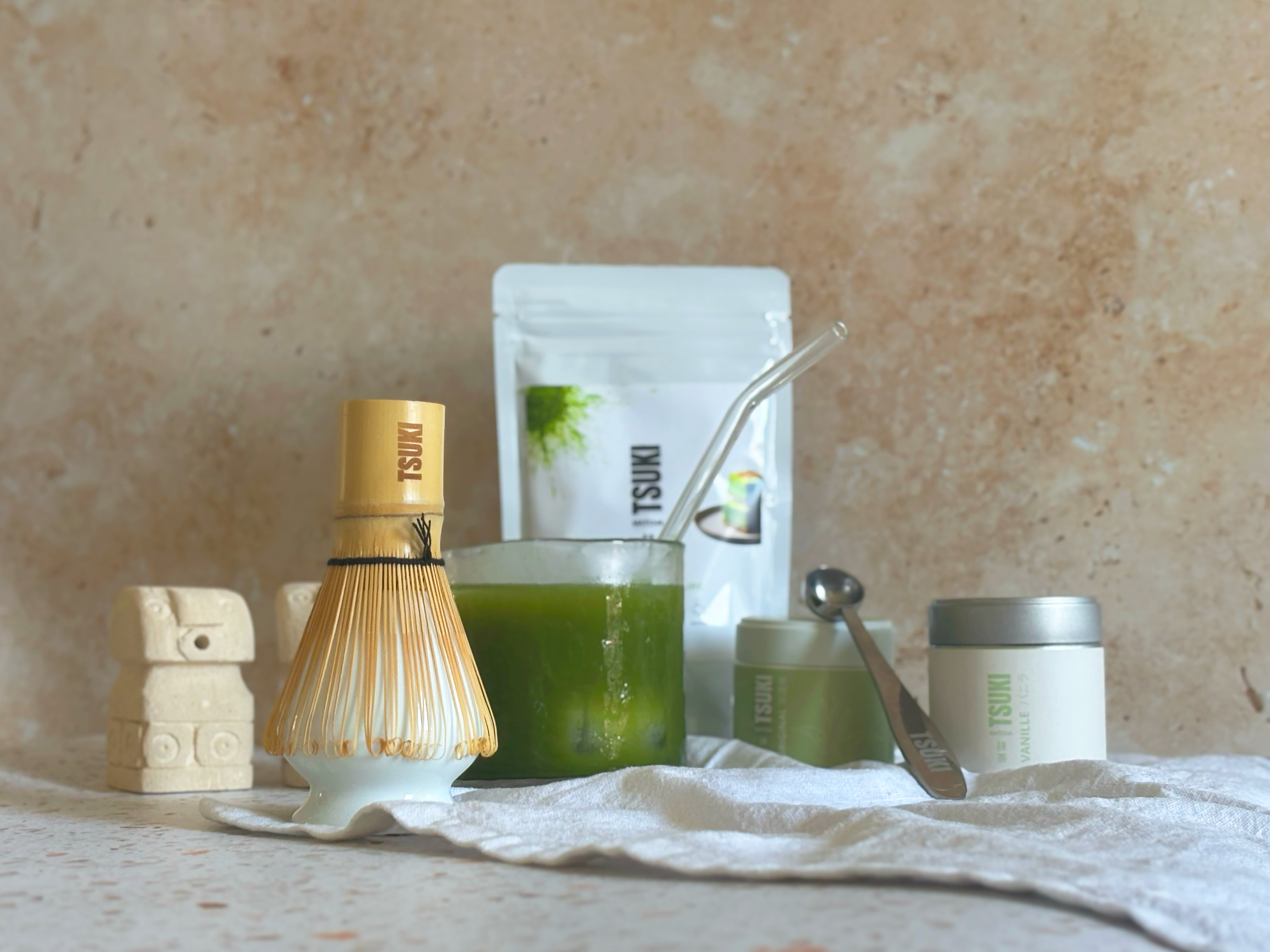
At TSUKI, our Organic Original Matcha is ideal for this traditional practice. With its fine texture and vibrant color, it perfectly embodies the purity of matcha in its most authentic form.
Matcha Beyond the Ceremony: Cuisine and Wellness
Beyond the tea ceremony, matcha is ubiquitous in Japanese cuisine. It is found in traditional sweets like mochi, daifuku, and wagashi, as well as in savory dishes. Its vibrant color and unique flavor add originality and sophistication to culinary creations.
• Pastries: Cakes, muffins, ice creams, chocolates… matcha offers endless possibilities.
• Beverages: Lattes, smoothies, cocktails… its versatility is remarkable.
• Savory Dishes: Matcha can flavor sauces, soups, and even main courses.
TSUKI’s Organic Culinary Matcha is perfect for exploring this creative dimension in cooking. Whether in desserts like cakes, muffins, or ice creams, or in savory dishes like sauces and soups, it adds unparalleled richness to your recipes.
Matcha’s health benefits are also widely recognized. Rich in antioxidants, it helps strengthen the immune system, enhance focus, and promote relaxation.
Matcha: A Symbol of Tradition and Modernity
Today, matcha has transcended Japan’s borders to captivate the world. Its popularity continues to grow, particularly among tea enthusiasts and health-conscious consumers. It perfectly exemplifies the ability of Japanese tradition to adapt to modernity while preserving its authenticity and cultural richness.
At TSUKI, we offer both an Organic Original Matcha of ceremonial grade for tea ceremony enthusiasts and matcha latte lovers, as well as an Organic Culinary Matcha for those who want to innovate in the kitchen. Additionally, our Matcha Vanilla is the ideal choice for a smoother, more indulgent experience.
Matcha is far more than a drink—it is a true symbol of Japanese culture, a millennia-old tradition that continues to fascinate and inspire. Discovering matcha is embarking on a sensory and spiritual journey, an invitation to explore an ancestral art and a rich, captivating culture.


