
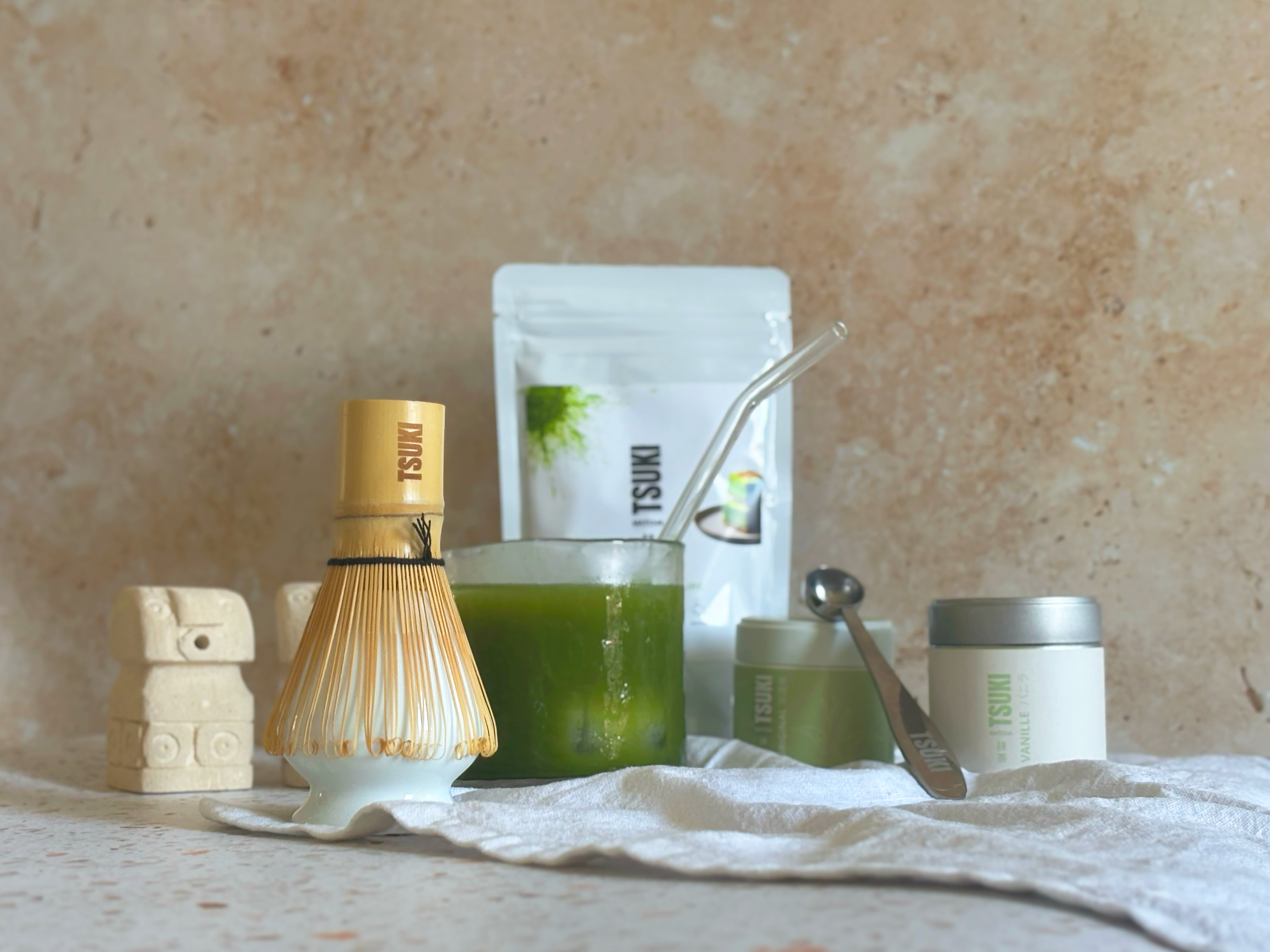

Collagen and hyaluronic acid: the skin duo and the role of matcha
Collagen and hyaluronic acid are the two pillars of supple, plump skin. They are often confused, yet they play different and complementary roles. Here's what each truly does, why they decline with age, how to support them daily, and where matcha fits into this routine thanks to its antioxidants.
When we talk about firm, bouncy skin, two words constantly come up: collagen and hyaluronic acid. Serums, supplements, and creams make them their main selling point. Yet, few people know precisely what each of these molecules does, and even fewer how to protect them from within. Understanding this duo allows for making more useful choices for one's skin, without being guided solely by marketing.
Collagen and hyaluronic acid: what's the difference?
Collagen is a structural protein. It forms a kind of framework in the dermis, the deep layer of the skin. It provides firmness, support, and resistance. You can imagine it like the frame of a mattress: it's the springs that maintain the structure.
Hyaluronic acid, on the other hand, is a molecule that retains water. It can hold up to a thousand times its weight in water and acts like a sponge in the dermis. This is what gives the plump, smooth, and hydrated effect. To continue the mattress analogy, hyaluronic acid would be the soft padding that fills the space between the springs.
The two work together. Skin rich in collagen maintains its integrity over time, while skin well-hydrated by hyaluronic acid appears smooth and plump. One without the other is not enough: it's the duo that creates the look of youthful skin.
Hyaluronic acid or collagen: which one to choose?
The question comes up often, but it's a bit of a trick. The two don't serve the same function, so it's not really about choosing one over the other. The right approach is to identify what your skin needs most.
If the skin lacks firmness and shows developing fine lines, collagen is the structural lever. If it feels tight, looks dull, or is dehydrated, hyaluronic acid acts more directly on comfort and the immediate plumping effect. In practice, most effective routines combine collagen support with hydration.
| Criterion | Collagen | Hyaluronic Acid |
|---|---|---|
| Main Role | Firmness and structure | Hydration and bounce |
| Nature | Structural protein | Water-retaining molecule |
| Perceived effect | More toned skin over time | Smoother, plumper skin more quickly |
| Decline with age | Gradual decline from age 25 | Significant decrease after age 40 |
Why this duo declines with age
The body naturally produces collagen and hyaluronic acid. The problem is that this production slows down over time. Collagen synthesis begins to gradually decrease from the late twenties, at a rate of about one percent per year. The skin then loses a little of its firmness each year, without us immediately noticing.
Hyaluronic acid follows the same trend, with a more pronounced decrease after forty. The skin retains less water, appearing thinner and less supple. Added to this are factors that accelerate the process: sun exposure, smoking, stress, lack of sleep, and a diet poor in antioxidants.
This last point is important. A large part of skin aging comes from oxidative stress, i.e., the action of free radicals that damage cells and degrade supporting fibers. This is precisely where a diet rich in antioxidants comes into play, and where matcha becomes interesting.
Where matcha comes in
Matcha contains neither collagen nor hyaluronic acid. Its benefit lies elsewhere, and it is twofold. First, it is one of the most concentrated sources of catechins, a family of antioxidants. The most studied is EGCG, present in large quantities because the entire leaf, reduced to powder, is consumed, not just an infusion.
These antioxidants help neutralize free radicals responsible for oxidative stress. By limiting this stress, they help protect the collagen fibers already present in the skin, rather than allowing them to degrade prematurely. This is a logic of protection, not production: matcha does not add collagen, it helps preserve what the skin already has. This mechanism is among the most documented effects of matcha on skin radiance and protection.
Matcha's second benefit lies in its place in a routine. Replacing an acidic coffee or a sugary drink with matcha means reducing factors that tire the skin while providing protective compounds. It's this daily consistency that matters, much more than a one-off action.

How to support collagen and hyaluronic acid daily
No miracle molecule can replace a regular healthy lifestyle. The most effective levers are simple and accumulate over time.
On the plate, proteins provide the amino acids necessary for collagen synthesis. Vitamin C plays a key role in this production; it's found in citrus fruits, kiwi, peppers, and many vegetables. Foods rich in water and antioxidants support hydration and limit oxidative stress. Regular consumption of matcha falls into this category, alongside a coherent beauty routine.
Regarding habits, sun protection remains the most cost-effective measure against skin aging, as the sun directly degrades collagen. Sufficient sleep, good hydration, and limiting tobacco complete the picture. These actions are worth far more than any isolated active ingredient.
For those who enjoy combining pleasure and care, preparing a matcha enriched with collagen and its benefits allows for combining hydration, antioxidants, and protein intake in one drink.
Integrating matcha into a beauty routine
The simplest way is to make matcha a daily ritual. A cup in the morning or early afternoon provides antioxidants while offering stable energy, without the peak and crash of coffee. This regularity is what makes matcha's place in a beauty routine truly useful in the long run.
The quality of the powder matters. A ceremonial grade matcha, with a bright, vibrant green, concentrates more catechins than a dull, lower-quality powder. For daily consumption focused on well-being, it's better to opt for a carefully selected powder, such as those from the TSUKI premium matcha collection from Japan.
Finally, it's important to remember that skin care happens both inside and out. Matcha, proteins, vitamin C, and sun protection work together. It's this global, patient approach that yields visible results, well described in what science truly says about the benefits of matcha supported by studies.
Frequently Asked Questions
Does matcha contain collagen or hyaluronic acid?
No. Matcha does not provide collagen or hyaluronic acid. Its benefit comes from its antioxidants, particularly catechins, which help limit oxidative stress and thus protect the collagen fibers already present in the skin.
Should I choose between collagen and hyaluronic acid?
It's not really a choice, as both have different and complementary roles. Collagen supports firmness, while hyaluronic acid provides hydration and bounce. Well-maintained skin relies on both simultaneously.
At what age does collagen decrease?
Collagen production begins to slow down from the late twenties, at a rate of about one percent per year. Hyaluronic acid decreases more significantly after forty. That's why a protective routine makes sense from early adulthood.
Is drinking matcha enough for beautiful skin?
No, no single drink is enough on its own. Matcha is an ally in a holistic approach that includes a balanced diet, good hydration, sun protection, and sufficient sleep. It's the consistency of the whole that makes the difference.
How much matcha per day to reap the benefits?
One to two cups per day is a good guideline to enjoy the antioxidants while maintaining a reasonable caffeine intake. Consistency over the long term is key, not the occasional quantity.
In summary
Collagen provides structure, hyaluronic acid provides hydration, and age causes both to decline. You don't produce these molecules with a drink, but you can act on what damages them. By providing antioxidants that limit oxidative stress, matcha helps preserve the skin's capital, provided it is integrated into a coherent and regular routine.

Want to make matcha a true daily wellness ritual? Discover the TSUKI premium matcha collection from Japan to create the drink that will complement your routine.


