
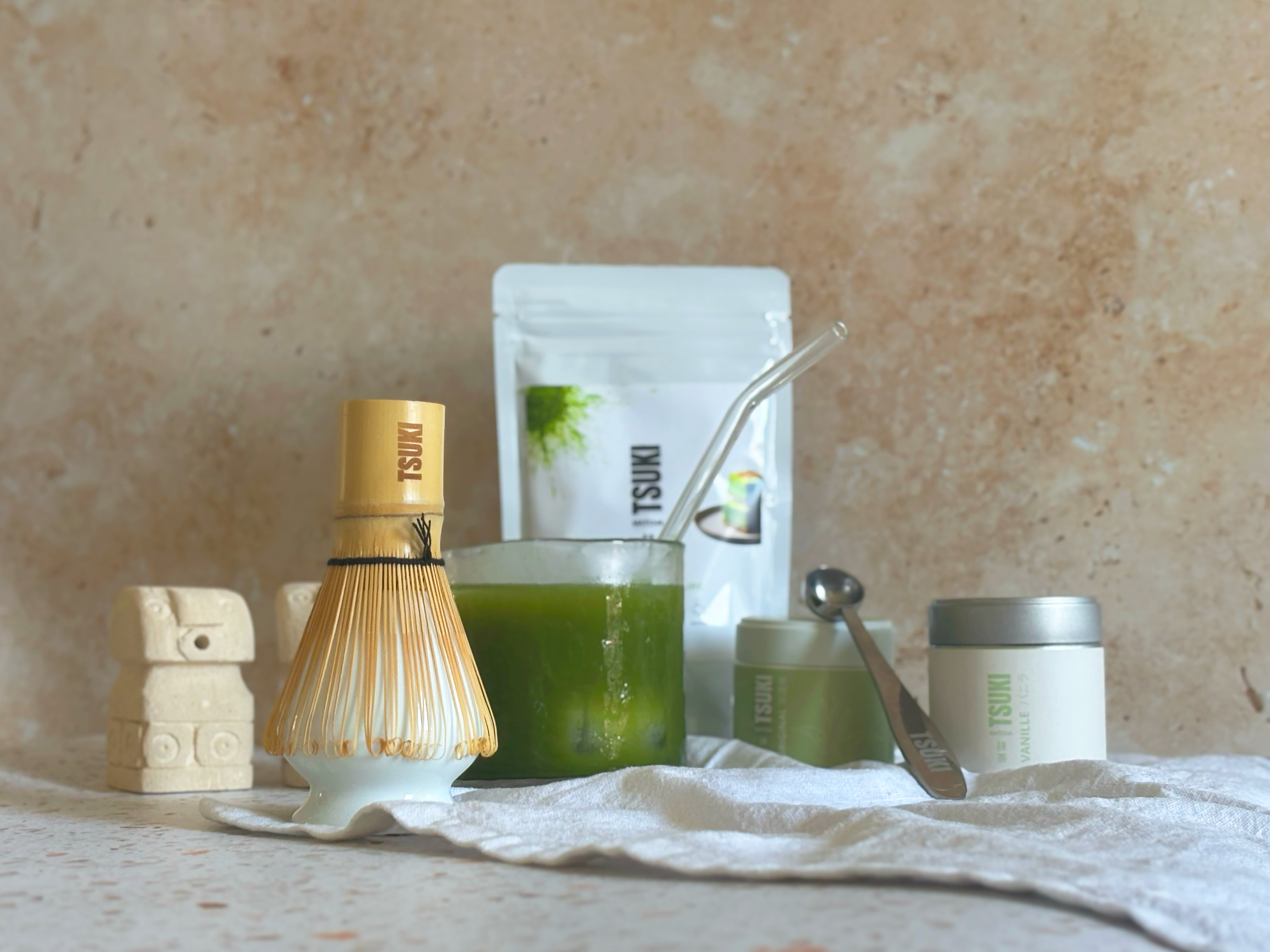

Matcha dosage: how much powder per cup?
Matcha dosage: how much powder per cup?
Too much powder and matcha becomes bitter, too little and it loses all its flavor. The right dosage is based on a few simple guidelines, to be adjusted depending on whether you're preparing a traditional tea, a thick koicha, or a gourmet latte. Here's the amount of matcha to aim for per cup, how to measure it without a scale, and the mistakes that spoil the result.
The question always comes up when you're starting out: how much matcha should you really put in a cup? The answer mainly depends on the type of drink you want to achieve. However, a reliable base exists, and it allows you to succeed from the very first preparation.
How much matcha per cup: the basic rule
For a classic matcha tea, the reference is 2 grams of powder per cup, which is equivalent to a level to slightly heaped teaspoon. This amount corresponds to an individual bowl and results in a balanced drink, neither too light nor too concentrated.
Two grams is also the dosage that best highlights a quality matcha. With a fine and vibrant powder, this dose is enough to obtain a dense foam and a full flavor. A good homemade matcha, well prepared, relies as much on the dosage as on the whisking technique.
If you're new to it, start with 1.5 grams, taste, then adjust. The dosage is not fixed: it depends on your sensitivity to bitterness and the intensity you're looking for.
Dosing matcha according to the type of preparation
The same bag of powder is not dosed in the same way depending on the drink. A light tea, a thick tea, and a latte do not have the same concentration or the same volume of water. The table below summarizes the guidelines to keep in mind.
| Preparation | Matcha quantity | Water | Result |
|---|---|---|---|
| Usucha (light tea) | 2 g (1 tsp) | 70 ml at 80 °C | Foamy, daily |
| Koicha (thick tea) | 4 g (2 tsp) | 40 ml at 80 °C | Creamy, intense |
| Matcha latte | 2 to 3 g | 30 ml + 150 ml milk | Sweet, creamy |
Usucha, the light daily tea
This is the most common preparation. Two grams of matcha for 70 ml of hot water results in a fine, airy tea that's easy to drink every day. This is the ideal dosage to get used to the taste of matcha without being overwhelmed by bitterness.
Koicha, the thick and concentrated tea
Koicha doubles the dose of powder for a third less water. The result is an almost syrupy texture, reserved for the softest ceremonial matchas. These two ways of preparing, between light tea and thick Japanese tea, completely change the taste experience from the same powder.
Matcha latte, the gourmet dosage
For a latte, keep 2 to 3 grams of matcha but reduce the water to 30 ml to form a smooth paste, before adding the milk. Since milk naturally softens the taste, a slightly more generous dose prevents the matcha from disappearing behind the creaminess. Successfully making a homemade matcha latte without a machine primarily depends on this good balance between powder, water, and milk.
How to measure the right dosage without making mistakes
Three methods allow for precise dosing, from the most traditional to the most exact.
The chashaku, the small bamboo spoon, remains the reference tool. A well-filled spoon contains approximately 1 gram of powder: two chashaku are therefore sufficient for a classic cup. Choosing and using the right chashaku measuring spoon makes the dosage consistent from one cup to the next.
A regular teaspoon also works: level, it provides about 2 grams. It's a practical reference when you don't have a dedicated accessory at hand. Finally, a precision scale remains the most reliable solution for those who want to reproduce exactly the same taste, especially in koicha where the margin of error is small.
Regardless of the method, remember to sift the powder before dosing. Matcha clumps easily, and a scoop of compact powder contains more material than a scoop of aerated powder.
Adapt the dosage to your taste and your matcha
The ideal dosage is not a single value. It depends on the grade of your powder, your tolerance to bitterness, and the time of day. Ceremonial matcha can handle higher doses without becoming harsh, whereas a more basic matcha benefits from remaining light.
Flavored matchas also change the game. For an already flavored powder, you can aim for a slightly more generous dose so that the flavor remains present under the milk. A vanilla matcha, for example, retains a natural roundness even at 3 grams, making it an ideal base for sweet lattes.

Powder, water, and temperature ratio: the trio that makes all the difference
Powder dosage alone is not enough: it's its ratio to water that defines the final concentration. The same 2 grams will produce a bland tea in 150 ml of water and a strong tea in 40 ml. Respecting the water volume associated with each preparation is therefore as important as weighing the powder.
Temperature is equally important. Above 80 °C, water extracts more bitterness, which gives the impression of having overdosed when the problem comes from the heat. Water around 75 to 80 °C preserves sweetness and umami. Mastering these settings is part of the basics for preparing matcha tea step-by-step without unpleasant surprises.
Dosing errors to avoid
The first mistake is to eyeball the dosage directly from the bag. Without a reference, you almost always pour too much, and bitterness takes over. A level spoon is more reliable than an estimate.
The second mistake is to increase the dose to enhance the taste when the tea seems bland. Often, the problem doesn't come from the quantity but from whisking or temperature. Poorly emulsified matcha seems flat, even when well-dosed. The right technique with the bamboo matcha whisk awakens the flavor without needing to add more powder.
Finally, keeping the same dose when switching from a tea to a latte often leads to disappointment. Milk masks the matcha: underdosing a latte results in drinking slightly tinted milk. Adapting the quantity to each drink, as reminded by the guidelines for drinking matcha hot, cold or as a latte, remains the key to a consistent result.
Frequently asked questions about matcha dosage
How many grams of matcha for one cup?
Count 2 grams of powder for a classic cup of light tea, which is about one level teaspoon or two chashaku scoops. Go up to 4 grams for a thick koicha.
How many scoops of matcha per cup?
A level teaspoon provides about 2 grams, the right dose for one cup. With a bamboo chashaku, count two well-filled scoops, as each contains about 1 gram.
What is the matcha dosage for a latte?
Aim for 2 to 3 grams of matcha, diluted in 30 ml of hot water before adding about 150 ml of milk. Milk softens the taste, so a slightly higher dose than a simple tea keeps the flavor prominent.
Why is my matcha too bitter?
Three possible causes: too high a dose, water too hot above 80°C, or a basic quality powder. Reduce the quantity, lower the temperature, and prefer a ceremonial grade to restore sweetness.
Can you dose matcha without a scale?
Yes, a level teaspoon or a chashaku scoop is sufficient for daily use. A scale becomes particularly useful for koicha, where the margin of error is small and the result is very sensitive to the dose.
How many cups with 30 grams of matcha?
At 2 grams per cup, a 30-gram bag allows you to prepare about 15 teas. Daily use therefore lasts approximately two weeks with one cup per day.

Want to dose matcha to perfection? Discover our collection of ceremonial matchas, and for precise dosing with each cup, the chashaku measuring spoon remains the ideal ally.


