
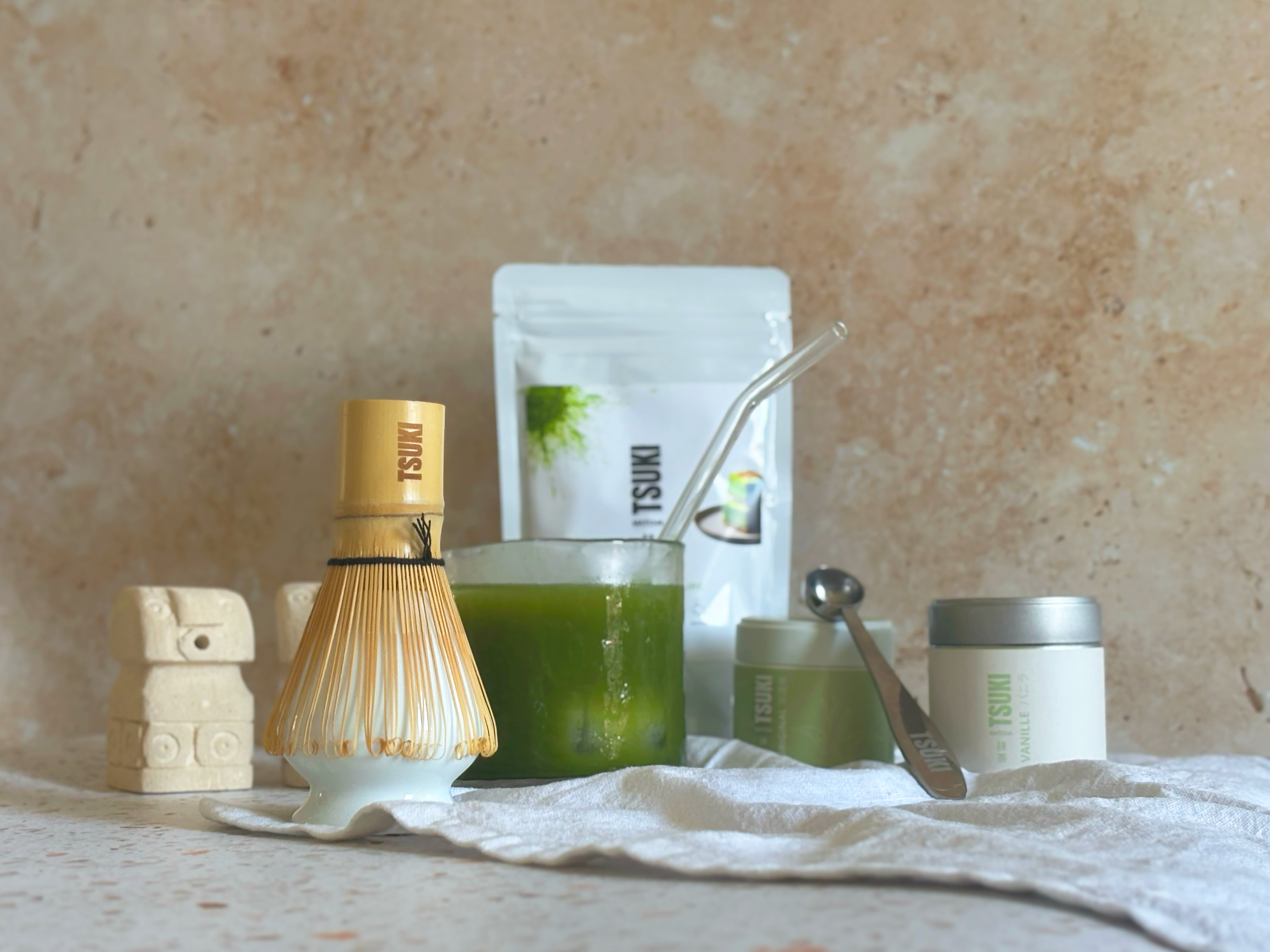

Japanese Haiku and the Matcha Ritual: The Poetry of the Moment
Seventeen syllables to capture a fleeting moment, a steaming bowl of matcha savored in silence. Haiku and the Japanese tea ritual share a common philosophy: that of full presence. Here's how this ancient poetry sheds light on how to prepare and experience your matcha.
In Japan, brevity is never a lack. It is a discipline. Haiku, like the precise whisking motion of a bamboo whisk in a bowl of matcha, seeks to say much with very little. Understanding this poetry helps to better grasp what makes matcha preparation so special, far beyond just a simple beverage.
What is a haiku? Origins and structure
Haiku is an extremely short form of Japanese poetry, traditionally composed of seventeen morae divided into three lines following a 5, 7, then 5 syllable rhythm. Born from older forms of collective poetry, it established itself as an autonomous genre starting in the seventeenth century.
The 5-7-5 structure and the role of kigo
A haiku almost always adheres to two rules. The first is rhythmic, with its seventeen syllables distributed across three lines. The second is seasonal: the kigo, or season word, anchors the poem in the natural cycle. A bud evokes spring, a cicada summer, a dead leaf autumn, snow winter. To this is often added a kireji, a cutting word that creates a break or a silence between two images, much like the pause one takes before bringing the bowl to their lips.
Bashō, Issa, Buson: the great figures of the genre
Matsuo Bashō, a seventeenth-century poet, is considered the one who gave haiku its current contemplative depth. He introduced an aesthetic of simplicity and peaceful solitude, known as wabi-sabi. After him, Kobayashi Issa and Yosa Buson each explored this same economy of words, one with an almost childlike tenderness for the small things of everyday life, the other with a keen sense of visual detail, like the intense green of freshly whisked tea contrasting with the dark glaze of a bowl.
Wabi-sabi, an aesthetic common to haiku and matcha
Wabi-sabi refers to the ability to find beauty in what is simple, incomplete, or ephemeral. A matcha foam that dissipates in a few seconds, a slightly irregular bowl, steam rising and then disappearing: these are precisely the images a haiku seeks to capture. This search for discreet beauty also joins the Japanese art of kintsugi and its way of sublimating cracks rather than hiding them. In both cases, imperfection is not a flaw to be corrected but a quality to be observed.
Why Japanese poets have always loved tea
Tea has held a special place in Japanese poetry for centuries. Issa even chose a pen name that literally means "a cup of tea," a direct reference to the serenity of the tea ritual but also to the fragility of existence, which can be observed in the gradually disappearing foam of a matcha. Buson, for his part, focused on the visual contrast between the vibrant green of freshly brewed powder and the material of the bowl receiving it. This attention to the most fleeting details is exactly what matcha's place in Japanese culture has always cultivated, long before the beverage became a global phenomenon.
Ichigo ichie: the moment that will never be relived
A principle runs through both haiku and matcha preparation. It is ichigo ichie, the idea that an encounter happens only once and will never be replicated identically. A poet observing the steam of a tea dissipating captures a strictly unique moment. The one who prepares their matcha every morning also experiences a slightly different version of the same gesture, never quite identical to the day before. This same slowness inhabits the traditional matcha ceremony, where every gesture is choreographed to slow down time rather than to gain it.
Drawing inspiration from haiku to live your daily matcha ritual
There's no need to master Japanese or the 5-7-5 meter to adopt the spirit of haiku in your matcha break. A few attitudes are enough to transform an ordinary gesture into a moment of presence.
Observe before drinking. The green of the matcha, the texture of the foam, the rising steam: taking three seconds to look before bringing the bowl to your lips already changes the quality of the moment.
Slow down the whisking motion. The W-shaped movement that creates the foam is not just a technique; it's also a breath that invites you to step out of autopilot.
Name a single sensation. Like a kigo that anchors a poem in a specific season, choosing a word to describe what you feel at that precise moment is enough to fix the memory.
This search for a repeated but never mechanical gesture aligns with the logic of ikigai applied to the daily matcha ritual, this quest for simple meaning rooted in small habits repeated with attention rather than in grand resolutions.
Write your own haiku after a matcha moment
Some matcha enthusiasts extend their ritual with a very simple writing exercise. After drinking their bowl, jot down in three short lines an image, a sensation, a detail of the moment. No need to strictly adhere to the Japanese meter by the syllable: the essential thing is to capture a precise observation rather than a general thought. A rainy morning, a still-warm cup in your hands, a silence in the kitchen before the day begins: this type of detail is enough to create a small personal haiku, as ephemeral and unique as the foam that inspired it.
| Haiku Element | Role in the poem | Echo in the matcha ritual |
|---|---|---|
| 5-7-5 structure | Imposes economy of words | Precise and essential gesture of the bamboo whisk |
| Kigo (season word) | Anchors the poem in the passing of time | Attention to steam, foam, the present moment |
| Kireji (cutting word) | Creates a silence between two images | Pause before bringing the bowl to one's lips |
Frequently Asked Questions
What exactly is a haiku?
It is a very short form of Japanese poetry, typically composed of seventeen syllables distributed in three lines, which seeks to capture a precise observation often related to nature or a season.
Why are tea and haiku so often associated in Japan?
Both share the same demand for simplicity and attention to the present moment. Great haiku masters, like Bashō or Issa, often used tea as a subject or as a metaphor for existence.
What is wabi-sabi and what is its relationship with matcha?
Wabi-sabi is a Japanese aesthetic that values simple, imperfect, and ephemeral beauty. The dissipating foam of a matcha or the irregularity of a handmade bowl are concrete examples.
Can one write a haiku without knowing Japanese?
Yes. The important thing is not to perfectly adhere to the original meter but to capture a precise and sincere observation, drawing inspiration from the spirit of the genre rather than its exact form.
How to integrate this philosophy into your daily matcha practice?
By slowing down the gesture, observing the color and texture before drinking, and paying real attention to that precise moment rather than treating it as just another automatic task.

Want to transform your tea break into a moment as mindful as a haiku? The Complete Set brings together everything you need to compose your own silent poetry, bowl after bowl.


