
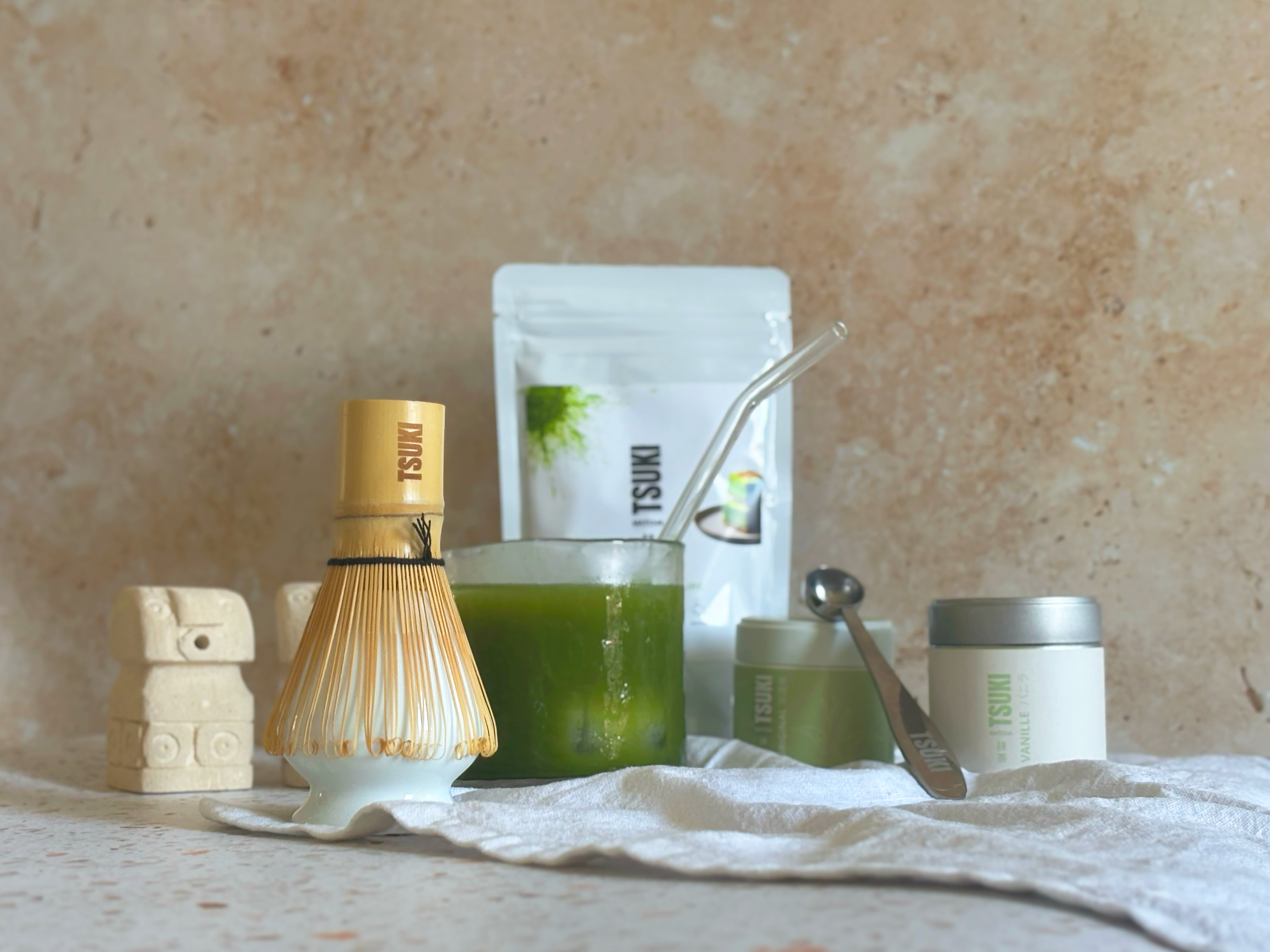

Matcha cup: which cup to choose for matcha
Matcha cup: which cup to choose for matcha
Choosing a matcha cup may seem trivial, but the container truly changes the tasting experience. Capacity, material, shape, hot or latte use: this guide reviews everything that matters to find the ideal cup, without confusing the drinking cup with the whisking bowl.
Many beginners buy a beautiful green powder, a whisk, then wonder what to serve their drink in. The matcha cup is not just an aesthetic detail. Its capacity dictates the powder-to-liquid ratio, its material influences the warmth in hand, and its shape affects the foam and the pleasure of drinking. Here’s how to make the right choice based on how you consume matcha.
Cup, bowl, or glass: don't confuse matcha containers
Matcha is prepared and drunk in containers that do not have the same function. Understanding this difference avoids purchasing errors and preparation frustrations.
The matcha bowl (chawan), for whisking
The traditional bowl, called chawan, is wide and flared. This opening allows for ample movements with the bamboo whisk to create a fine foam. You can drink directly from it, but its primary purpose remains preparation. If you whisk your matcha in the Japanese way, a real chawan adapted for whisking matcha remains essential; the cup does not replace it at this stage.
The cup or mug, for drinking
The matcha cup, or mug, is used for tasting. It is taller and more enclosed than the bowl, which keeps the drink hot longer and is easy to hold. It is the ideal container for an elongated usucha or for a matcha latte that you enjoy slowly. Many people whisk in the bowl, then transfer to a pretty cup for drinking.
The glass, for iced versions
For cold matcha or an iced latte, a transparent glass highlights the layers of milk and matcha. It doesn't have the same constraints as a hot cup, since the question of warmth in hand no longer arises. The choice then depends mainly on the capacity and the aesthetic of the green gradient.
What capacity to choose for a matcha cup
The capacity directly depends on your drink. A traditional, concentrated, short matcha fits in a small volume. A matcha latte, elongated with milk, requires much more space.
| Drink type | Recommended capacity | Suitable container |
|---|---|---|
| Traditional matcha (usucha) | 70 to 120 ml | Small cup or bowl |
| Elongated matcha | 150 to 200 ml | Classic cup |
| Hot matcha latte | 250 to 350 ml | Large mug |
| Iced matcha latte | 300 to 400 ml | Large glass |
A common pitfall is choosing a mug that is too large for a traditional matcha. The drink then appears lost at the bottom of the container and cools quickly. Conversely, a small cup overflows as soon as milk is added. The best approach is to have a dedicated cup for your favorite drink, depending on your usual way of drinking matcha daily.
What material to choose for your matcha cup
The material is not just a matter of visual taste. It influences heat retention, the feel in hand, and the durability of your cup.
Ceramic and stoneware
Ceramic and stoneware are the most classic materials for a hot matcha cup. They retain heat well, offer a pleasant touch, and come in an infinite number of finishes. A slightly thick stoneware cup keeps the temperature longer, which is perfect for a matcha latte that is drunk slowly.
Glass
Double-walled glass is very popular for matcha. It allows the color of the drink to be seen, does not heat up on the outside, and gives a modern look. It is an excellent compromise for those who alternate between hot and cold drinks, even if it retains heat a little less than thick stoneware.
Other materials
Stainless steel, especially in insulated mugs, keeps the drink hot for a very long time and is suitable for on-the-go. However, it masks the color of the drink and slightly alters the tasting sensation. For a home matcha break, ceramic or glass remain more pleasant. The essential thing is to build a small coherent set, as in a selection of accessories designed to prepare matcha.
The ideal cup according to your matcha
The container is also chosen according to what you drink. A ceremonial matcha whisked with water is enjoyed in a small volume, to concentrate the aromas and umami. A flavored matcha or a gourmet latte is more suited to a large mug that you hold with both hands.
If you like soft and comforting versions, a slightly wide cup highlights the creamy foam and the roundness of a vanilla matcha prepared as a latte. The shape of the container then fully contributes to the pleasure, in the same way as the chosen powder.

For daily use, the ideal is often to have two containers: a bowl for whisking and a cup for drinking. This simple organization makes each preparation smoother, especially when it integrates into a true matcha preparation routine at home.
Maintaining and presenting your matcha cup
A matcha cup requires little maintenance, but a few actions prolong its lifespan. Matcha sometimes leaves fine green traces on the sides. A quick rinse with lukewarm water immediately after use is sufficient in most cases, before a more complete wash.
For ceramic and stoneware, avoid abrupt thermal shocks, such as pouring boiling water into a cup taken from the refrigerator. Double-walled glass is preferably washed by hand to preserve the space between the two layers. A beautiful cup, placed next to the bowl and the bamboo whisk for preparing matcha, also transforms the kitchen corner into a small space dedicated to the ritual.
Presentation matters more than one might think. Drinking your matcha in a cup you love, rather than in the first mug you find, anchors the act in a personal moment. It is often this detail that transforms a simple drink into a true daily ritual.
Frequently asked questions about the matcha cup
Can you prepare matcha directly in a cup?
Yes, provided the cup is wide enough at the bottom to allow the whisk to pass through. A cup that is too narrow hinders movements and results in less regular foam. For comfortable whisking, a flared bowl is more suitable, then transfer to the cup for drinking.
What is the difference between a matcha cup and a classic mug?
In principle, a classic mug can perfectly hold a matcha latte. A cup designed for matcha often has a better-calibrated shape and capacity, between the small traditional format and the large latte mug. Comfort and visual appeal make the difference, not a strict technical constraint.
Do I need a double-walled cup for matcha?
It's not mandatory, but it's very practical. The double wall prevents burned fingers and keeps the drink hot longer. For those who often drink iced lattes, it also limits condensation on the outside of the glass.
What capacity for a matcha latte?
Count between 250 and 350 ml for a comfortable hot matcha latte, and up to 400 ml for an iced version with ice cubes. Below 200 ml, it becomes difficult to achieve a good balance between matcha and milk.
Is a matcha cup dishwasher safe?
It depends on the material. Many ceramic cups are dishwasher safe, but double-walled models and delicate finishes are best washed by hand. Always check the manufacturer's instructions to preserve the cup over time.
A beautiful cup makes you want to prepare a good matcha even more every day. To accompany your ritual, discover TSUKI's ceremonial and flavored matchas, to enjoy in the cup that suits you.


