

Ikigai and the Matcha Ritual: Finding Your Daily Purpose the Japanese Way
Ikigai is often reduced to a personal development framework. The Japanese reality is softer and deeper. It unfolds in small daily gestures, like preparing tea. Here's what ikigai truly is, and how a matcha ritual can become a concrete practice of the present moment.
The word ikigai fascinates in the West. It's widely presented as the key to happiness or success. Yet, its popular version strays far from its original meaning.
In Japan, ikigai is not a grand life project. It's a reason to get up in the morning. Sometimes immense, often minuscule. A warm tea is one of those small reasons.
What is ikigai?
Ikigai is a Japanese word formed from iki, meaning life, and gai, referring to value or worth. It can be translated as what makes life worth living.
It's not a destination. It's a daily sensation. The feeling that the day is worth living, here and now.
Ikigai can be found in work, in a passion, in a relationship. But it also hides in very simple things. A ray of sunshine, a shared meal, a moment of calm with a cup in hand.
The true ikigai, far from the Western model
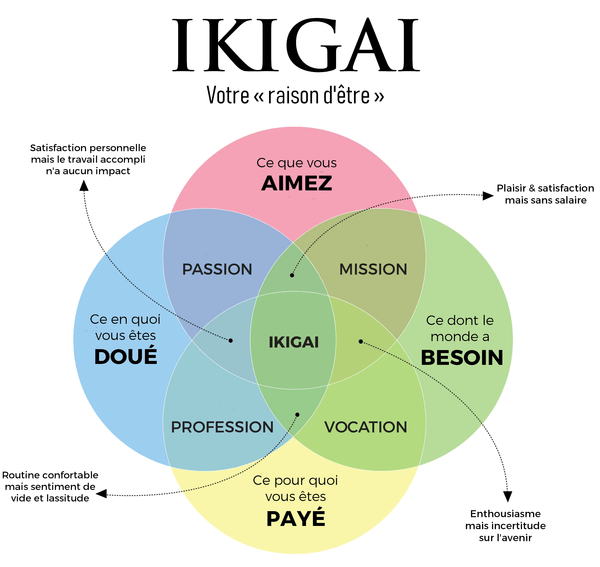
You've probably seen that famous diagram. Four overlapping circles: what you love, what you're good at, what the world needs, what you get paid for. At the center, ikigai.
This diagram is alluring. It is also a recent Western invention, absent from traditional Japanese culture.
In Japan, no one seeks their ikigai at the intersection of profitability and talent. Ikigai doesn't need to be useful to the world or bring in money. It can be completely free.
This nuance changes everything. It frees ikigai from the pressure of performance. It brings it back to its true nature: a quiet joy, rooted in the present.
This spirit can be found in other Japanese arts. Kintsugi and its beauty of imperfection remind us that value is born not from perfection, but from the attention paid to things as they are.
Ikigai and small daily rituals
If ikigai lives in the present, then it is cultivated through repeated gestures. These are the rituals that give rhythm and meaning to the days.
A ritual doesn't need to be spectacular. It simply needs to be chosen and lived fully. Preparing coffee, walking in the morning, writing a few lines in the evening.
These moments have one thing in common. They require you to be there, truly there. They switch off autopilot.
This mindful attention connects to a central idea of Japanese culture, ichigo ichie, the art of savoring the present moment. Every moment is unique and will not return. Living it fully is already a form of ikigai.
The matcha ritual as an ikigai practice
Among all possible rituals, matcha preparation holds a special place. It combines slowness, gesture, and attention into a single practice.
Preparing matcha is not done in a hurry. You sift the powder to avoid lumps. You pour hot water. You whisk with a steady motion until you get a fine, silky foam.

During these two minutes, the mind settles. There is only the bowl, the whisk, and the gesture. This gentle concentration is exactly what ikigai seeks.
This link between tea and presence is not new. The role of matcha in Japanese culture spans centuries, from Zen Buddhism to tea houses.
This dimension reaches its peak in the traditional matcha ceremony and its history, where every gesture is conceived as a meditation in motion.
The chemistry of calm behind the ritual
The feeling of calm experienced during a matcha ritual is not just an impression. It is also based on the unique composition of this tea.
Matcha contains a rare amino acid, associated with a sensation of relaxed concentration. L-theanine in matcha and its effect on focus promote a state of calm alertness, without the agitation sometimes associated with coffee.
This combination creates the ideal conditions for the ritual. A clear mind, yet composed. Present, yet serene.
Matcha obviously does not replace overall life balance. But it offers a simple anchor point, a daily rendezvous with oneself.
Creating your own ikigai matcha ritual
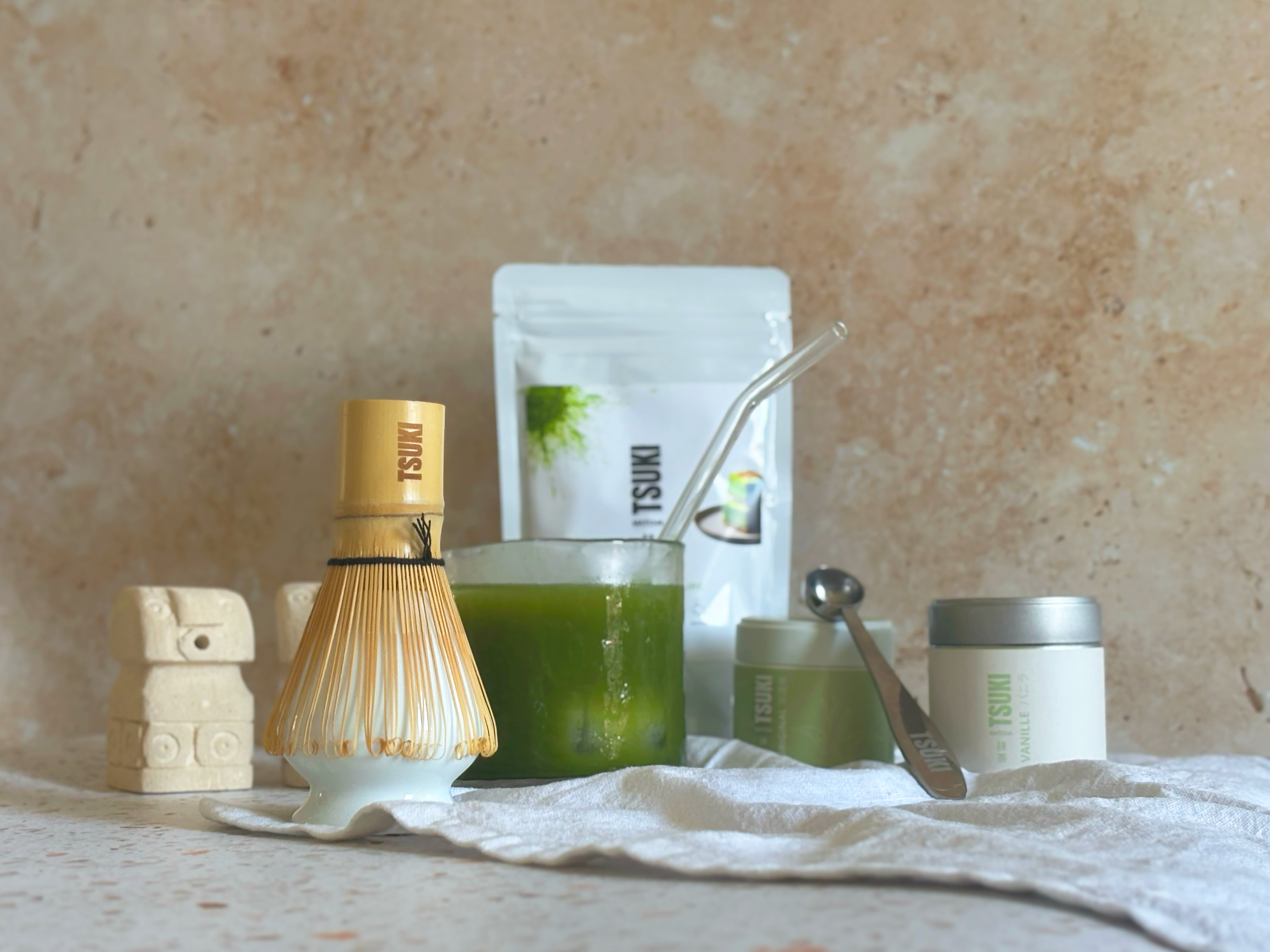
Setting up this ritual requires little. Good matcha, a whisk, a bowl, and above all, the intention to slow down.
Choose a fixed time of day. Morning to start the day with clarity, or afternoon for a real break. Regularity transforms a simple tea into a ritual.
The quality of the matcha also matters. A premium quality matcha from Japan offers a creamy texture and balanced taste, which make the moment truly enjoyable.
To gather the essentials in one go, the Complete Set brings together matcha, whisk, and the necessary accessories to start this ritual without hesitation.
With repetition, this gesture becomes a benchmark. One more small reason to appreciate the day. An ikigai within reach.
Frequently asked questions about ikigai
What is ikigai in one sentence?
It's what gives value to your daily life, often in simple things rather than a grand, distant goal.
Is the four-circle diagram wrong?
It is not originally Japanese. It is a useful Western tool for reflecting on one's life, but it does not correspond to the traditional meaning of ikigai, which is more modest and focused on the present.
How to find your ikigai?
Rather than searching for it like a treasure, observe the moments when you feel fully present and at peace. Ikigai often reveals itself in these ordinary moments.
How does a matcha ritual help?
It creates a daily rendezvous with the present. The slow and regular gesture anchors attention, which aligns with the spirit of ikigai.
Do you have to be Japanese to practice ikigai?
No. Ikigai is a universal way to live more present. Everyone can adapt it to their culture and daily life.
Living the present, one cup at a time
Ikigai is not a goal to be achieved. It's a way of inhabiting one's days, with attention and gentleness.
The matcha ritual is a concrete entry point. Simple, accessible, soothing. It transforms a few minutes into a truly meaningful moment.

Ready to make matcha your daily ritual? The Complete Set gathers everything you need to prepare quality matcha and cultivate your own present moment.


