

The 5 Essential Steps of the Traditional Matcha Ceremony
The traditional matcha ceremony, or Chado, represents much more than just a simple tea tasting. A true ancient art, it embodies a philosophy of life, a moment of mindfulness, and a deep connection with Japanese traditions.
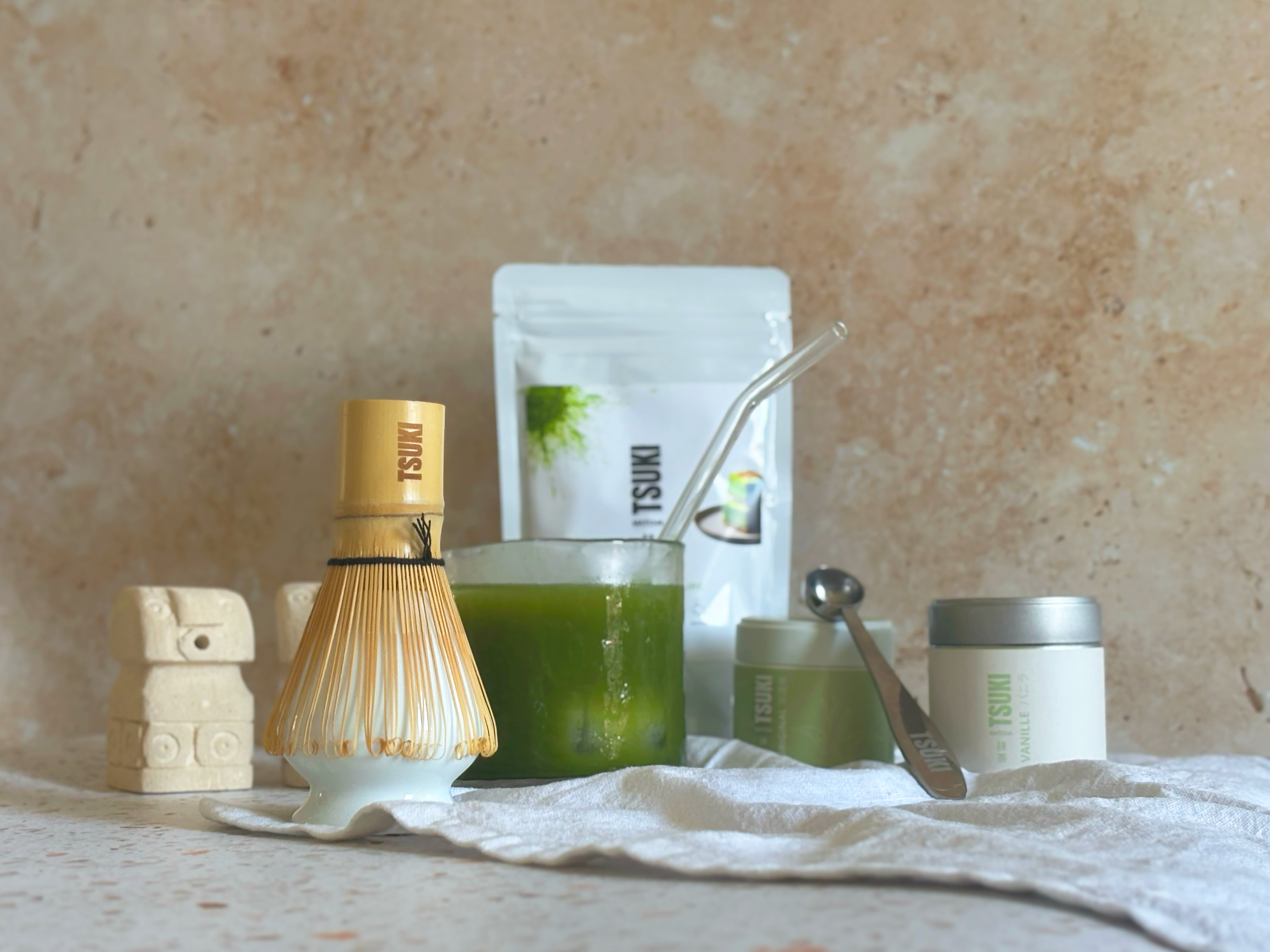
In this article, discover the fascinating history, key steps, and cultural importance of this practice, while exploring how to recreate this ritual with our Ritual Kit, including Original Matcha, a bamboo whisk (Chasen), and a measuring scoop.
History of the matcha ceremony
Origins and introduction to Japan
Matcha, a finely ground green tea powder of unparalleled fineness and purity, has its origins in Zen Buddhist rituals. Introduced to Japan in the 12th century by monks, it quickly became a spiritual practice, symbolizing the quest for serenity and purity.
Evolution and cultural influence
In the 16th century, masters such as Sen no Rikyu transformed this tradition into a sophisticated art, integrated into Japanese culture. The fundamental principles of Chado – harmony (wa), respect (kei), purity (sei), and tranquility (jaku) – still resonate today as an invitation to live fully in the present moment.
These values are deeply rooted in traditional Japanese culture and still influence many artistic and spiritual practices today.
The key steps of the ceremony
1. Purification
Everything begins with the meticulous cleaning of the utensils and the ceremony space. This ritual prepares the mind and body to receive the tea in complete serenity.
2. Preparation of matcha
The ceremony master carefully measures the matcha powder before mixing it with hot water using the Chasen. This delicate yet precise movement creates a smooth and velvety foam, the signature of quality matcha.
Its subtly vegetal and rich umami flavor also contributes to the unique sensory experience of the ceremony.
3. Tasting
Each participant savors the matcha with respect for etiquette: the bowl is turned gently, and each sip is an invitation to mindfulness.
4. Meditation and reflection
Silent pauses punctuate the ceremony, allowing for a deep connection with oneself and other participants.
5. Closing
The ceremony concludes with the tidying and cleaning of the utensils, an act of gratitude and a return to simplicity.
Recreate this ritual
With our kit, you have everything you need to adopt a daily matcha ritual, inspired by the traditional ceremony:
- Original Matcha: a 100% organic green tea powder, rich in antioxidants, with sweet and vegetal notes.
- A bamboo whisk (Chasen) : essential for achieving a perfect foam and authentic texture.
-
A measuring spoon (Chashaku) : for precise and refined matcha dosing.
The use of a measuring bowl is also highly encouraged to avoid making a mess 😂

Every gesture of the ritual, from measuring the matcha to tasting, becomes a moment of meditation and awakening.
A timeless philosophy adapted to modern life
Chado is much more than a cultural practice: it is a way to slow down, to fully experience each moment, and to cultivate serenity.
FAQ – All about the traditional matcha ceremony (Chado)
What is the matcha ceremony, or Chado?
Chado is the traditional Japanese art of the tea ceremony. It's not just about drinking matcha, but about experiencing a moment of mindfulness based on harmony, respect, purity, and tranquility.
What is the origin of the matcha ceremony?
The matcha ceremony has its roots in Zen Buddhism. Introduced to Japan in the 12th century by monks, matcha was used as an aid to meditation before becoming a cultural ritual in its own right.
Who codified the matcha ceremony as we know it today?
It was in the 16th century that tea masters, notably Sen no Rikyu, structured and codified Chado, giving it its aesthetic, spiritual, and philosophical dimension.
What utensils are needed to perform a matcha ceremony?
The essential elements are matcha, a bamboo whisk (chasen), a measuring spoon (chashaku), and a matcha bowl (chawan). These accessories allow for traditional gestures and an authentic texture.
What type of matcha should be used for a traditional ceremony?
High-quality matcha, with sweet and vegetal notes, is recommended. Ceremonial grade Original Matcha is particularly suitable for recreating a ritual inspired by Japanese tradition at home.
How long does a matcha ceremony last?
A traditional ceremony can last from 30 minutes to several hours depending on its format. At home, a Chado-inspired ritual can be performed in a few minutes, the essential being the attention paid to the moment.


