
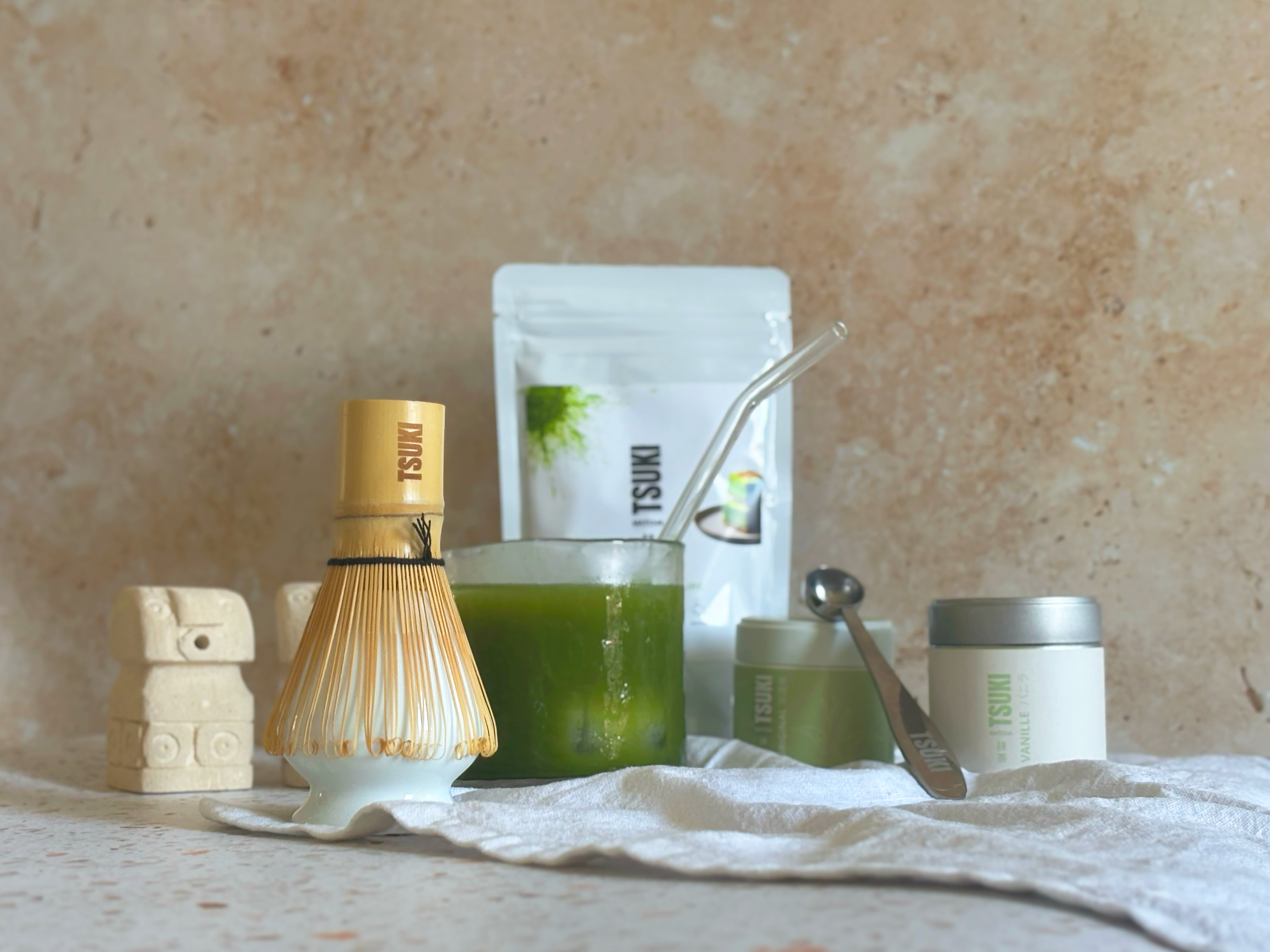

Matcha and Color: Why Matcha Is Green (and What the Shade Reveals)
Why is matcha green? And what about the "blue matchas" and "purple matchas" that are popping up all over Instagram? A deep dive into the chemistry of matcha's color, what it reveals about quality, and the truth about these colorful variations.
The color of matcha is fascinating. That vibrant, almost unreal green, found in bowls, lattes, and desserts. Why such a unique shade? Where does it come from? And most importantly: why are some matchas a brilliant green while others lean towards khaki, yellow, or even brown? The answer to these questions lies in two words: chlorophyll and shading.

And then, in recent years, amazing products have emerged. "Blue matcha," "purple matcha," sometimes even "pink matcha." On Instagram photos, they look stunning. But what are they really? Real matcha? A new variety? An artificial colorant? The question deserves to be asked clearly, because it changes how we choose our products and read labels. This article covers the whole issue, from the science of green color to the false promises of colored matchas.
Why matcha is green: the science behind the hue
The color of matcha is no accident. It is the direct result of a plant, a cultivation technique, and an extremely precise processing method. Here's what happens, step by step.
Chlorophyll, the magic pigment
Like all green plants, the tea plant (Camellia sinensis, from which all matcha comes) contains chlorophyll. This pigment allows the plant to capture light energy for photosynthesis. And it's this same pigment that gives the leaves their green color. The more chlorophyll a leaf contains, the more intense its green.
In a classic green tea (sencha), the chlorophyll content is already significant, which explains its characteristic green color after infusion. But matcha takes this concentration to a completely different level. And the secret to this intensification is shading.
Shading: the key to deep green
Approximately three to four weeks before harvest, tea plants destined to become matcha are covered with black cloths that block up to 90% of the light. Deprived of sunlight, the plant can no longer photosynthesize normally. To survive, it triggers a fascinating biological response: it significantly increases its chlorophyll production, as if desperately trying to capture the little light available.
This overproduction of chlorophyll is what gives matcha its vibrant jade green, much more intense than any other green tea. It's a color the plant develops under stress, and it's precisely this controlled stress that defines matcha's visual identity. To understand the rich chemistry behind this hue, the details of the complete composition of the green powder provide an insight into everything a real matcha contains.
Preserving the color: steaming and drying
After harvesting, two steps ensure that this intense green color is preserved all the way to your bowl. First, steaming within minutes of picking. This steaming (between 15 and 45 seconds) deactivates the enzymes responsible for oxidation. Without this step, the leaves would brown in a few hours and produce black tea, not green tea. Second, flat drying with hot air, without rolling the leaves. This method preserves the pigments intact and yields tencha, the intermediate state before grinding.
Stone mill grinding: the final protection
Finally, traditional stone mill grinding, which turns very slowly (about 30 revolutions per minute), avoids heating the powder by friction. Heat would degrade chlorophyll and dull the color. This is why matchas ground mechanically at high speed lose color and vibrancy. The slowness of traditional grinding also preserves the characteristic jade green of ceremonial matcha.
What the hue of matcha says about its quality
Here's valuable information that changes how you choose matcha. The exact color of matcha in the container is a very reliable indicator of its quality.

A trained eye can recognize good matcha in seconds, just by looking at it.
Vibrant jade green: the signature of excellent matcha
Ceremonial-grade matcha, produced from shaded young shoots of selected cultivars (Yabukita, Okumidori, Saemidori, Samidori), displays a very bright jade green, almost fluorescent in daylight. This hue indicates three things simultaneously: a high chlorophyll concentration (meaning long and well-executed shading), preserved freshness (recent matcha, well-stored, not oxidized), and quality grinding (stone mill, no heating). If you open a box and the powder is this vibrant, bright green, you have a good product.
Medium green, slightly duller: acceptable quality
A more tempered green, less vibrant but still distinctly green, generally corresponds to good quality matcha but not ceremonial grade. Often a quality culinary matcha, or an entry-level ceremonial matcha. Perfect for lattes, baking, gourmet preparations. Not ideal for drinking plain with water, but highly respectable for everyday use.
Khaki green, yellow-green or olive: low-grade or oxidized matcha
This is where you need to be careful. If the powder tends towards khaki, olive, or takes on a dull yellow-green hue, it's a bad sign. Three possible causes. Firstly, it's matcha made from overly mature leaves, not from tender, concentrated young shoots. Secondly, it's matcha that has aged or been poorly stored (exposure to light, air, humidity). Thirdly, it's matcha produced without sufficient shading, or worse, simple ground green tea sold as "matcha." In all cases, the resulting taste will be flat, bitter, sometimes rancid.
Brownish green or brownish: to be avoided
If the color is distinctly brownish, it means significant oxidation has occurred. The matcha is too old, poorly stored, or the leaves were not properly steamed after harvesting. At this stage, the matcha has lost most of its antioxidant properties, its taste is likely bitter and dry, and it has little nutritional value. To avoid this type of product, the guide to choosing good matcha details all the criteria that matter beyond just color.
Why color also varies by cultivar
Even within very high-quality matchas, there are shades of green that depend on the chosen cultivar. Yabukita traditionally yields a slightly softer green. Okumidori produces a deeper, more intense green. Saemidori is known for its almost "neon," very bright green. These subtle differences are the work of Japanese botanists who have been selecting varieties for decades. To delve deeper into this, the article dedicated to matcha cultivars details the profiles of each variety.
Blue matcha and purple matcha: the honest truth
Now for the question that comes up most often in recent years. What to make of the "blue matcha" and "purple matcha" seen everywhere on Instagram and in trendy coffee shops? The answer is simple, but it deserves to be given precisely.

"Blue matcha" is not matcha
The product sold as "blue matcha" has nothing to do with real matcha. It is actually a powder of butterfly pea flower petals (Clitoria ternatea), a climbing plant native to Southeast Asia. This blue flower is traditionally used in Thailand and Malaysia as a natural dye in certain culinary preparations.
Why the "matcha" designation then? For two reasons. Firstly, because the product comes in fine powder form, like matcha. Secondly, because it is prepared similarly, by whisking the powder in hot water or milk. But the analogy stops there. Blue matcha does not come from the Camellia sinensis tea plant, does not contain caffeine or L-theanine, and does not follow the shading, steaming, or stone-grinding process. Calling it "matcha" in this case is technically a misnomer, even if the usage has become widespread.
Does blue matcha have any benefits?
As matcha, no. As butterfly pea flower powder, yes. The butterfly pea flower contains anthocyanins, interesting antioxidants also found in blueberries or red cabbage. Its taste is very mild, slightly floral and herbaceous. It is traditionally used in Ayurvedic medicine for its relaxing effects. It's a pleasant drink, especially for its coloring properties (with a few drops of lemon, it magically changes from blue to purple, thanks to the pH change).
But it doesn't provide the energy of matcha, nor its cognitive properties, nor its specific antioxidant benefits linked to catechins. It's a different product, with its own merits, which has no reason to bear the name matcha. If you like blue matcha, go for it. But know that you are drinking a flower infusion, not matcha tea.
What about "purple matcha"?
The term "purple matcha" actually covers several very different products. First possibility, it's simply blue matcha with a little lemon added: the pH shifts, and the color changes from blue to purple. A nice visual effect, same basic product. Second possibility, it's purple yam powder (taro or ube), native to the Philippines. Again, no connection with matcha: it's a dried and ground root, which has a naturally sweet and vanilla taste. Third possibility, rarer, it's a mix of "blue matcha" and "pink matcha" (dragon fruit powder), which gives a purple result by blending colors. In all these cases, we are not looking at matcha in the strict sense, but at colored powders that borrow the name for marketing reasons.
Why this confusion has set in
The global explosion of matcha since 2020 has created enormous demand. Producers of "alternative matcha" have ridden this wave by borrowing the name to make their products more visible and attractive. It's an effective marketing strategy, but it fosters harmful confusion for consumers. When you buy "blue matcha" thinking you're buying an exotic variant of matcha, you actually end up with a flower powder that has nothing in common with it. To understand what real matcha is beyond the marketing, the article what is matcha puts the basics back in place.
How to recognize quality matcha by its color
Now that we've covered the theoretical aspect, here's the practical method for evaluating matcha visually, in a few seconds. A very useful skill in a shop, café, or simply when opening a tin at home.
The dry test: observe the powder
First reflex, examine the dry powder in the tin. In natural light (not under fluorescent light), a true ceremonial matcha should have a bright, almost vibrant jade green. If the powder appears dull, matte, or leans towards khaki, yellow, or brown, it's an immediate sign of insufficient quality. The more vibrant the green, the better. It's that simple.
The bowl test: observe the preparation
Second level, once the matcha has been whisked with water, observe the color of the liquid. Good matcha produces a deep, almost opaque jade green drink with a beautiful, fine foam on the surface. If the drink is translucent, brownish, or yellowish, it's poor matcha (or poorly prepared matcha). The foam is also an indicator. A beautiful, fine, stable foam indicates high powder quality and good preparation.
The time test: color stability
Third, more subtle indicator. Let the prepared matcha sit for a few minutes. Quality matcha retains its beautiful green color for several hours. Poor quality matcha quickly dulls, becomes more matte, sometimes grayish. This rapid degradation signals oxidation of the compounds, thus poor chemical quality.
Reference table: color and quality
| Observed Color | Probable Quality | Recommended Use |
|---|---|---|
| Bright jade green, almost "neon" | Excellent — premium ceremonial grade | Pure tasting with water, ceremony |
| Vibrant and deep green, slightly more tempered | Very good — standard ceremonial grade | Pure tasting or premium latte |
| Medium green, a bit duller | Good — quality culinary grade | Latte, baking, smoothies |
| Green tending towards yellow or khaki | Mediocre — low-grade or aged | To be avoided, or masked culinary use |
| Olive green or brown | Bad — oxidized, expired or fake matcha | Do not consume |
| Blue, purple, pink | Not matcha — other plants | Infusion or culinary coloring |
How to preserve the color of your matcha at home
You've purchased excellent matcha with an impeccable color. To keep that vibrant hue for as long as possible, a few storage rules must be strictly followed.
Protect from light
Light, especially sunlight, quickly degrades chlorophyll. This is the same reaction that turns matcha from green to yellow in a few weeks if left in the light. Store matcha in an opaque, airtight container, away from any direct exposure.
Protect from heat
Heat also accelerates oxidation. Store matcha in a cool place, ideally in the refrigerator once the tin is opened. Take the tin out to room temperature 15 minutes before use to prevent condensation upon opening.
Protect from air and humidity
Oxygen and humidity are the other two enemies of matcha. Seal the tin tightly after each use. Never leave a damp spoon in the powder. If the original tin is not sufficiently airtight, transfer to a more suitable container.
Consume quickly
Once opened, ceremonial matcha is ideally consumed within 4 to 6 weeks to preserve optimal color and aromas. Beyond that, even when well-stored, quality begins to decline. This is why it is advisable to purchase formats adapted to your actual consumption, rather than storing large quantities that will eventually lose their vibrancy.
Frequently asked questions about matcha color
Why is matcha green?
Matcha is green thanks to its very high chlorophyll concentration. This concentration is achieved by prolonged shading of the tea plants (3 to 4 weeks) before harvesting. Deprived of light, the plant produces more chlorophyll to compensate. This overproduction gives matcha its characteristic vibrant jade green.
Why isn't my matcha very green?
If your matcha is khaki, yellow, or brown, there are three main reasons: low-quality matcha (insufficient shading, or made from overly mature leaves), matcha oxidized due to poor storage (light, heat, air), or matcha that is too old (beyond a few months after opening). In all cases, this is a signal to switch to another product.
Is blue matcha really matcha?
No. "Blue matcha" is actually butterfly pea flower powder (Clitoria ternatea), a plant from Southeast Asia. It does not come from the Camellia sinensis tea plant, contains no caffeine or L-theanine, and does not follow any of the traditional matcha processes. It is a colored infusion that borrows the name matcha for marketing purposes.
Does real purple matcha exist?
No. "Purple matcha" is generally either blue matcha to which lemon has been added (pH change), purple yam powder (taro or ube), or a mixture of colored powders. None of these products come from the tea plant or follow the matcha processes. There is no naturally purple variety of Camellia sinensis.
Can matcha naturally have a different color depending on the year?
Slightly, yes. The terroir, annual climatic conditions, and the cultivar used can vary the shade of green within a narrow range. But for a quality matcha, it always remains in the bright and luminous green register. Variations towards yellow or brown are never "natural" for a well-produced ceremonial matcha.
How can I tell if my matcha is too old by its color?
Compare the current color to what it was when you first opened the container. If the shade has visibly dulled, yellowed, or taken on a grayish tint, the matcha has aged. Beyond 4 to 6 weeks after opening, even if well-preserved, ceremonial matcha gradually loses its vibrancy. At this stage, it can still be used for baking, but no longer for pure enjoyment.
Why does supermarket matcha never have this beautiful color?
Three cumulative reasons. Firstly, matchas sold in supermarkets are often low-grade culinary matchas, produced without sufficient shading. Secondly, their shelf life (light, heat, duration) accelerates their aging even before purchase. Thirdly, many are not true tencha matchas but ground green tea sold under the appellation. The dull color is the first sign.
Can "too green" matcha be suspicious?
Very rarely, some low-grade matchas are enriched with colorants to artificially intensify their green. This is rare in the French market for products labeled "Japanese matcha," but it exists on international marketplaces. If the color seems truly "too perfect," almost artificially fluorescent, check the composition (a true matcha contains only one ingredient: ground green tea) and the product's origin.
Matcha color, a signature of quality
The vibrant green of matcha is not a mere visual coincidence. It is the result of expertise that combines plant selection, shading technique, immediate steaming after harvest, and slow stone grinding. This color is a reliable marker of quality, almost as telling as a tasting. Learning to read it means gaining autonomy in your matcha choices. As for the "blue matchas" and "purple matchas" that proliferate on social media, it's best to see them for what they are: interesting colored infusions in themselves, but which have nothing to do with real Japanese matcha. True matcha is and will remain a vibrant jade green. It is its identity card.

To discover the true color of a ceremonial grade matcha from Japan, cultivated according to traditional methods, browse our selection of premium matcha. You will immediately see the difference from matchas you may have encountered elsewhere.


