
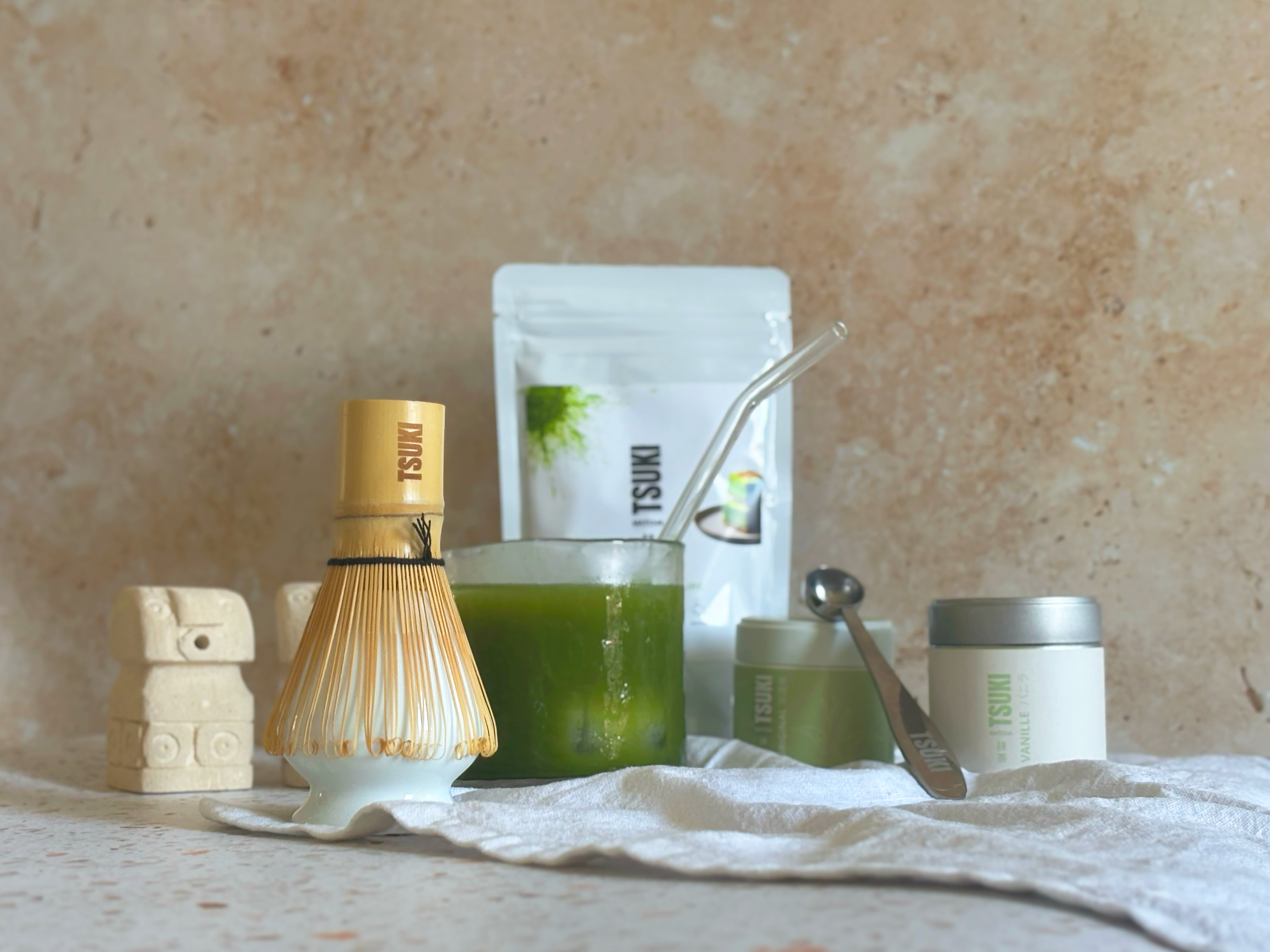

Matcha and sleep: can you drink matcha in the evening?
Matcha contains caffeine, but its effect on sleep is nothing like that of coffee. From the time of your last cup to the dosage and the soothing role of L-theanine, here's how to enjoy matcha without sacrificing your night's rest.
Matcha has a reputation for being an energizing tea. This image leads many people to avoid it from mid-afternoon onwards, for fear of sleeping poorly. The reality is more nuanced. Its caffeine acts differently from that of coffee, and the impact on sleep depends mainly on your sensitivity, dosage, and consumption time.
Understanding these three parameters allows you to continue enjoying matcha throughout the day, without compromising your rest.
How much caffeine is in a cup of matcha?
A classic serving of matcha, prepared with 1 to 2 grams of powder, provides approximately 30 to 70 mg of caffeine. For comparison, a filter coffee contains 80 to 100 mg. Matcha is therefore less potent, but with an important peculiarity: you consume the entire powder, not just a filtered infusion.
The dose makes all the difference. A light preparation of half a gram remains very gentle, while a concentrated usucha is closer to a strong tea. Knowing precisely the amount of caffeine in matcha depending on the dose and grade helps adjust your consumption at the end of the day.
Why matcha caffeine acts differently
The key difference lies in absorption. In coffee, caffeine is absorbed quickly, causing an energy spike followed by a sometimes brutal crash. In matcha, caffeine is released more slowly, extending its effects over several hours and avoiding jitters.
This behavior is explained by the presence of L-theanine, an amino acid that promotes calm concentration. This molecule tempers the stimulation associated with caffeine and creates a state of relaxed alertness, very different from the jitteriness of an espresso.
It is precisely this synergy between L-theanine and caffeine that gives matcha its stable energy, without the aggressive jolt associated with disturbed sleep.
Can you drink matcha in the evening?
The answer depends primarily on your personal sensitivity to caffeine. Some people fall asleep without difficulty after an evening matcha, while others still feel its effects several hours later.

It takes an average of five to six hours for the body to eliminate half of the ingested caffeine. A cup drunk at 5 PM can therefore still be active around 10 PM or 11 PM in the most receptive individuals. If you know that caffeine keeps you awake, it's best to set a clear limit during the day.
For those who tolerate caffeine well, a light matcha in the evening is still entirely possible, provided the dose is reduced and a gentle preparation is chosen.
What time should you stop drinking matcha?
The simplest rule is to allow enough time before bed. Here are some practical guidelines based on your profile.
| Profile | Recommended last cup | Recommended dose |
|---|---|---|
| Very sensitive to caffeine | Before 2 PM | 0.5 g |
| Average sensitivity | Before 4 PM | 1 g |
| Not very sensitive | 5 hours before bedtime | 1 to 2 g |
These guidelines are indicative. The best way to know your limit is to observe your nights after drinking a cup at different times, then adjust accordingly.
Our tips for combining matcha and good sleep
Adjust the dose at the end of the day
An afternoon matcha does not need to be as concentrated as a morning one. Reducing the amount of powder to half a gram is often enough to enjoy the taste and ritual without overloading the body with caffeine. Knowing how much matcha to consume per day helps distribute your intake without excess.
Opt for a gentle preparation
Water at 70 to 80 degrees extracts a round flavor and a lighter texture. Too hot or too strong a preparation accentuates bitterness and caffeine content, which is not helpful in the evening.
Listen to your body
Caffeine tolerance varies greatly from person to person. Some perfectly manage daily matcha consumption, including in the late afternoon, while others need to stop early. Staying attentive to your body's signals remains the best compass.
Can matcha, on the contrary, help you sleep better?
Indirectly, yes. The L-theanine in matcha is associated with a state of relaxation that helps reduce nervous tension accumulated during the day. This soothing effect contributes to a balance of stress related to cortisol, which can promote more serene sleep in the evening.

The idea is not to ban matcha, but to manage the timing well. Consumed early in the day, it supports alertness; its relaxing component contributes to a calmer mind over the hours, without over-stimulating at bedtime if the caffeine has had time to be eliminated.
Frequently asked questions about matcha and sleep
Does matcha prevent sleep?
Not systematically. For people not very sensitive to caffeine, matcha consumed during the day has no effect on sleep. For more sensitive individuals, late intake can delay falling asleep. It all depends on the dose and time.
How long does caffeine from matcha remain active?
The body eliminates about half of the caffeine in five to six hours. A cup consumed in the mid-afternoon can therefore still be active in the early evening for receptive individuals.
Is matcha more stimulating than coffee for sleep?
No, rather the opposite. Matcha contains less caffeine per cup and its L-theanine softens the effects. The difference in absorption between matcha and coffee on energy explains a smoother decline and less nervousness.
Can you drink decaffeinated matcha in the evening?
Matcha is almost non-existent in a quality decaffeinated version, as the decaffeination process alters the powder. For a hot caffeine-free drink in the evening, it is better to turn to an herbal tea or a naturally low-caffeine tea.
Is a light matcha in the evening risky?
For most people, half a gram of matcha taken several hours before bed is not a problem. In case of doubt or known sensitivity, it is still prudent to be aware of the possible side effects of matcha and adjust accordingly.
Enjoying matcha at the right time
Matcha and sleep are not incompatible. You just need to adjust the dose, monitor the time, and listen to your own reactions. Consumed early, it provides stable energy; in the evening, a light version may suit less sensitive individuals.

To create a ritual adapted to every moment of the day, discover the TSUKI premium matcha collection, from ceremonial grade for the morning to flavored matcha for a gentler moment.


