
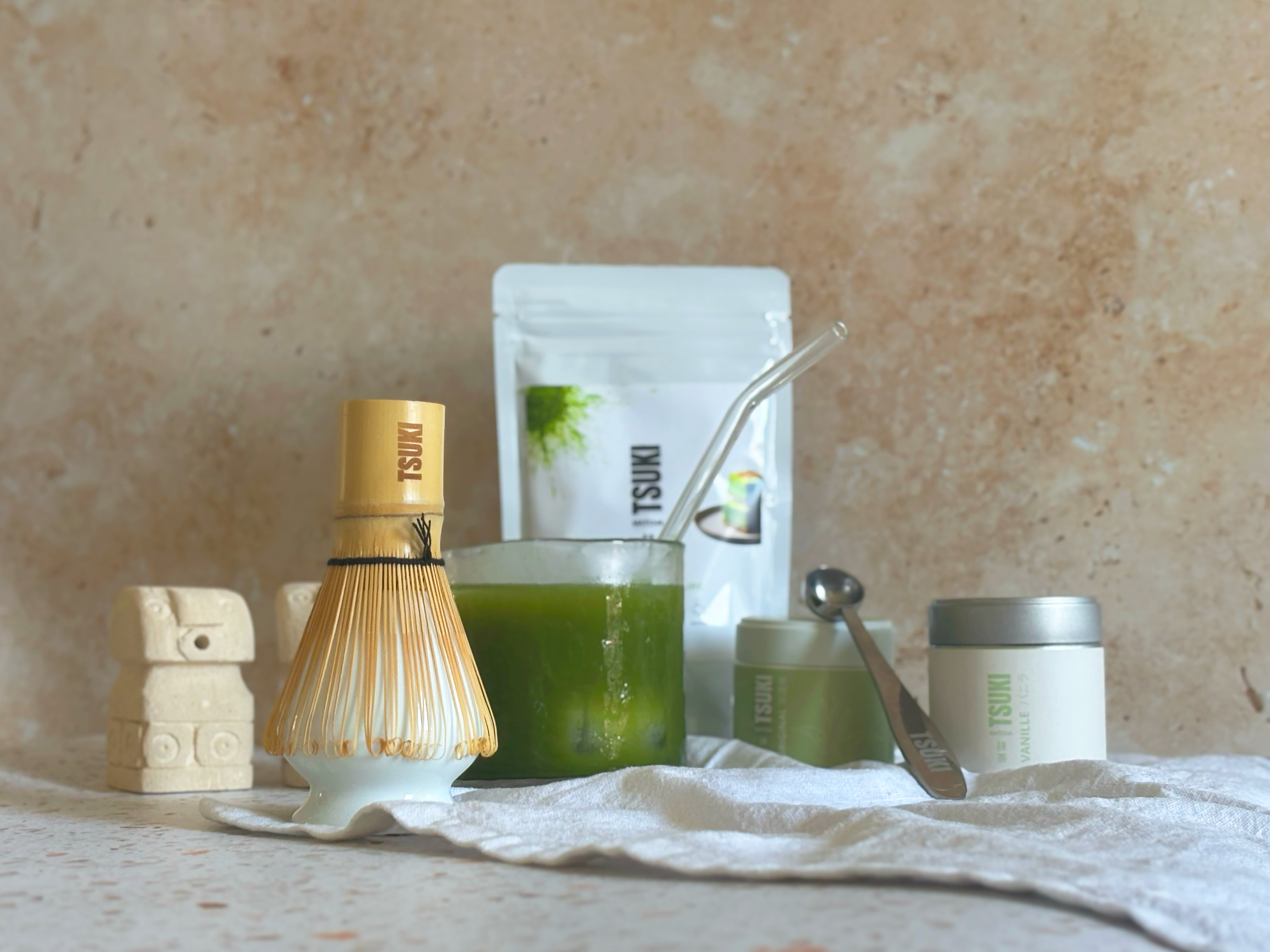

Matcha vs. Kefir: which ally for digestion and energy?
Two natural drinks come up again and again when we talk about gut health and vitality. Matcha, Japanese green tea powder, and kefir, a fermented drink rich in live cultures. Yet they act in very different ways. This comparison clarifies what each truly brings to digestion and energy, to help you choose according to your needs, or to combine them.
Matcha and kefir do not belong to the same family. The first is a green tea ground into a fine powder, consumed suspended in water or milk. The second is a fermented drink, made from milk or fruit-sweetened water, driven by live grains. To oppose them is therefore to compare a plant antioxidant and a natural probiotic. Understanding this distinction is key to knowing what you are really looking for.
Two drinks, two different logics
Matcha comes from Camellia sinensis, the tea plant. The leaves are shaded before harvesting, dried, then ground with a stone mill. The result is a green powder that is drunk whole, including the leaf. This particularity concentrates nutrients, especially catechins and caffeine.

Kefir, on the other hand, does not come from a plant but from a process. Kefir grains, an ecosystem of lactic bacteria and yeasts in symbiosis, transform a sugary liquid into a slightly sparkling drink. According to analyses, a grain can host more than fifty different strains of microorganisms. It is this diversity that gives it its reputation as a probiotic cocktail.
The fundamental difference is therefore simple. Matcha provides protective plant compounds. Kefir provides live microorganisms. One nourishes and protects cells, the other directly enriches the intestinal flora.
Matcha vs kefir for digestion
In terms of digestion, the two drinks play complementary rather than competing roles.
Kefir acts by providing live ferments. These lactic bacteria strengthen the balance of the microbiota and can counteract the action of less favorable bacteria. It is a direct probiotic effect, particularly sought after after an intestinal imbalance, a period of antibiotics, or a diet poor in fermented foods.

Matcha follows another path. It contains no ferments, but its polyphenols act as prebiotics, i.e., food for the good bacteria already present. The link between matcha and intestinal comfort lies in these compounds and chlorophyll, which contribute to a healthier digestive environment. At high doses or on an empty stomach, however, matcha can be irritating for sensitive stomachs, a point to watch.
| Digestion criterion | Matcha | Kefir |
|---|---|---|
| Mechanism of action | Prebiotic (polyphenols) | Probiotic (live ferments) |
| Bacterial input | None, it feeds those present | Yes, more than 50 strains |
| Desired effect | Antioxidant support of the environment | Microbiota rebalancing |
| Precaution | Avoid on an empty stomach if stomach is sensitive | Introduce gradually |
For a purely digestive objective, kefir has the advantage of direct ferment input. Matcha, on the other hand, maintains a favorable environment over time without replacing a probiotic.
Matcha vs kefir for energy
In terms of energy, the difference is clear and easy to decide.
Matcha is a true stimulating drink. One serving generally provides between 30 and 70 mg of caffeine depending on the dose and grade. This caffeine is accompanied by L-theanine, an amino acid specific to green tea. The synergy between L-theanine and caffeine smooths the release of energy and avoids the typical peak and crash of coffee. It is often described as a calm and sustained alertness.

Kefir does not fall into this category. It contains little or no caffeine. Its energy contribution is indirect, through its B vitamins, minerals, and a better balanced microbiota that improves nutrient absorption. It is a fundamental support, not an immediate boost.
In other words, to replace a morning coffee or to sustain a morning's work, matcha is the obvious choice. Kefir, on the other hand, contributes to a more subtle energy, linked to a body that digests and absorbs better. Those who often compare matcha to coffee for alertness will find this same logic of controlled stimulation.
Can matcha and kefir be combined?
Nothing prevents consuming both. They do not neutralize each other and meet distinct needs. A consistent routine can reserve matcha for the morning, for energy and concentration, and kefir later in the day, for digestive comfort.
Be careful, however, not to mix them in the same glass. The heat and acidity of prepared matcha can disturb the fragile ferments of kefir, which prefer gentle conditions. Keeping them separate in time preserves the qualities of each. Integrating matcha into a complete list of matcha benefits helps understand why it finds its place upon waking, while kefir better accompanies meals.
As with any active drink, regularity takes precedence over quantity. Drinking matcha every day without overdoing it remains the best way to benefit from it, just as kefir is consumed in gentle cures rather than in large quantities at once.
How to choose according to your goal
The right choice depends mainly on what you are looking for at this point in your life.
| Your need | The best choice |
|---|---|
| Energy and concentration in the morning | Matcha |
| Rebalance intestinal flora | Kefir |
| Coffee alternative | Matcha |
| Support after antibiotics | Kefir |
| Antioxidant intake | Matcha |
| Completely caffeine-free | Kefir |
If your priority is daily vitality, quality matcha makes a difference. A ceremonial grade matcha from Japan offers a mild flavor and well-tolerated caffeine, far from the dull and bitter powders found in supermarkets. Kefir, on the other hand, is easily prepared at home or bought ready-to-drink, favoring low-sugar versions.
Frequently asked questions
Does kefir contain caffeine?
No, or in negligible amounts. Neither milk kefir nor water kefir are sources of caffeine. This clearly distinguishes them from matcha, which is designed for energy and alertness.
Is matcha good for the gut?
Matcha supports digestive comfort thanks to its polyphenols and chlorophyll, which act as prebiotics. It does not replace a probiotic like kefir, but it maintains a favorable environment, provided it is not drunk on an empty stomach if the stomach is sensitive.
Can you drink matcha and kefir on the same day?
Yes, without a problem. The most consistent approach is to have matcha in the morning for energy and kefir later for digestion. It is best to avoid mixing them in the same glass, as the preparation of matcha can damage the ferments in kefir.
Which one to choose for weight loss?
Neither is a miracle solution. Matcha can support a weight loss approach through its effect on metabolism and satiety, while kefir supports balanced digestion. Both are part of an overall healthy lifestyle, never as a substitute for an adapted diet.
Matcha or kefir to replace coffee?
Matcha is the best coffee substitute because it provides real caffeine, softened by L-theanine. Kefir does not stimulate in the same way and cannot play this role as a morning energizing drink.
The verdict
There is no absolute winner between matcha and kefir, only two answers to two needs. Kefir excels in digestion thanks to its live ferments. Matcha dominates in clean energy and concentration, while subtly supporting the intestinal environment. Combining them intelligently, each at its own time of day, often remains the best wellness strategy.

Want to start with a solid foundation for energy and serenity? Discover the TSUKI premium matcha collection, sourced in Japan and stone-ground for a gentle daily ritual.


