
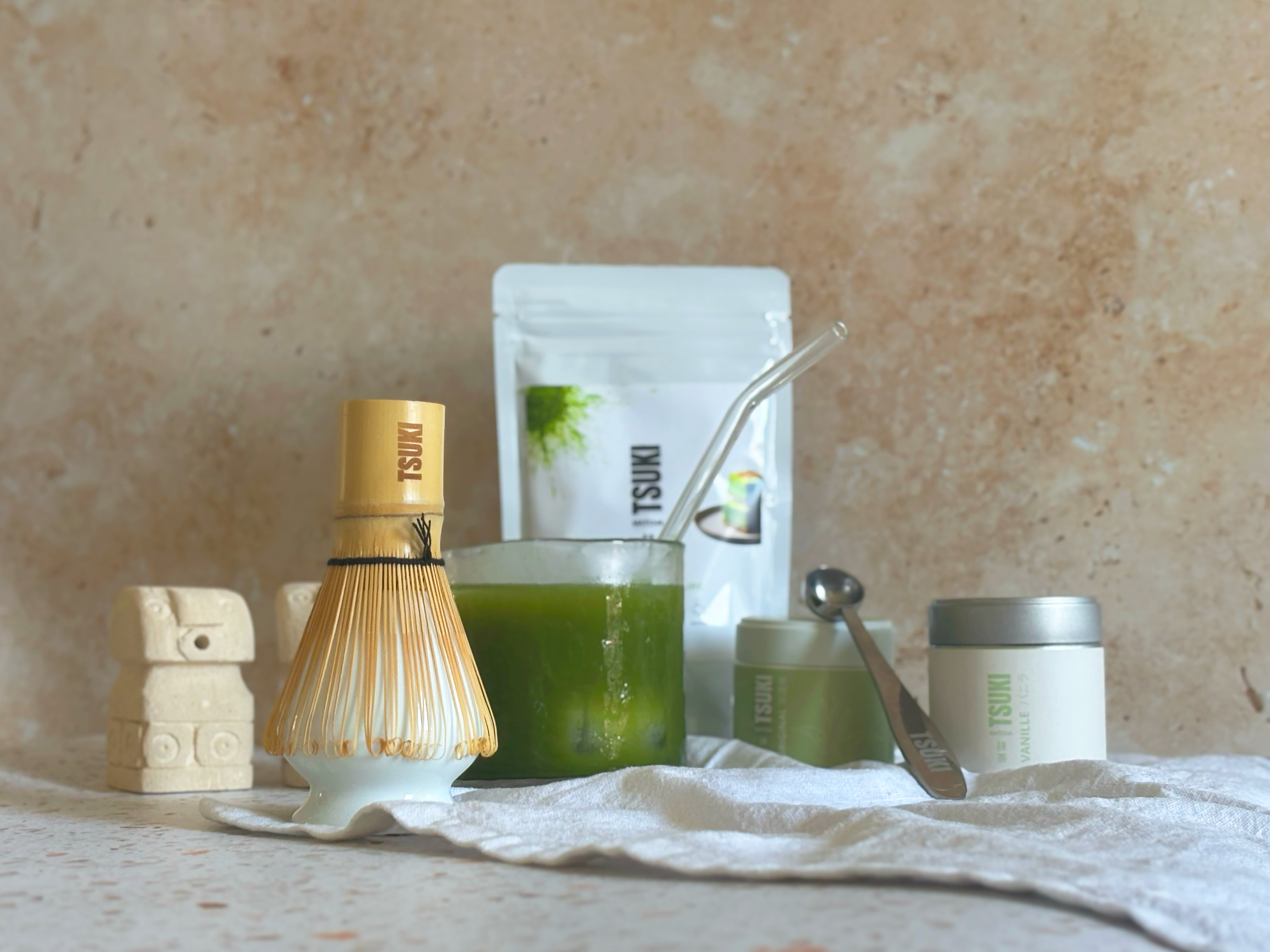

Matcha vs. Green Tea: What's the Real Difference?
Matcha is a green tea. But a green tea isn't necessarily matcha. Both come from the exact same plant (Camellia sinensis), yet their taste, color, nutritional composition, and preparation have almost nothing in common.

This article explains what truly separates them, from cultivation to cup, to help you understand why matcha costs more, has a more intense taste, and offers superior benefits.
The same plant, two processes
Matcha and classic green tea both come from Camellia sinensis, a shrub native to Asia cultivated for millennia. The fundamental difference lies in four production steps that transform a simple tea leaf into matcha.
Shading
Three to four weeks before harvest, tea plants intended for matcha are covered with structures that block 80 to 90% of sunlight. Deprived of light, the plant reacts by producing more chlorophyll (hence the bright green color) and L-theanine (hence the umami sweetness).

Classic green tea grows in full sun, without shading. This single difference radically alters the chemical composition of the leaf.
Harvesting
Matcha comes from the first spring shoots, which are the youngest and most tender.

For the best producers, harvesting is still done by hand. Classic green tea can be machine-harvested, over several harvests throughout the year, with leaves of different maturities.
Processing into tencha
After harvesting, matcha leaves are steamed to stop oxidation, dried flat, and then stripped of their stems and veins. What remains are only the most noble parts of the leaf: tencha. This step does not exist in the classic green tea process, where the entire leaf (including stems and veins) is dried and rolled.

This processing method was codified in Japan centuries ago.
Grinding
Tencha is then ground into an ultra-fine powder using granite stone mills. This grinding is extremely slow (approximately 30 g per hour) to avoid heating the powder and altering its active compounds.

The result is a powder with a fineness comparable to talc, of a brilliant green. Classic green tea is never ground. It remains in the form of dried, rolled, or twisted leaves.
Nutrients: matcha vs infused green tea
The direct consequence of these different processes: when you drink green tea, you infuse the leaves in hot water, remove them, and discard 70 to 80% of the active compounds with them. When you drink matcha, you consume the entire ground leaf. 100% of the nutrients go into your cup.
| Component | Matcha (2 g) | Infused Green Tea (200 ml) | Ratio |
|---|---|---|---|
| Catechins (EGCG) | 120-260 mg | 20-40 mg | ~10x more |
| L-theanine | 25-30 mg | 5-10 mg | ~3-5x more |
| Caffeine | 60-70 mg | 25-40 mg | ~2x more |
| Chlorophyll | High | Traces | ~10x more |
| Fiber | Present | Absent (filtered) | Only matcha |
| Calories | ~6 kcal | ~2 kcal | Negligible |
The 10 to 1 ratio in antioxidants is the most frequently cited figure. It is real and documented. Matcha contains up to 137 times more EGCG than a standard Chinese green tea according to some studies, although this figure varies depending on the quality of the matcha and tea compared.
The complete composition of matcha is much richer than what this table summarizes.
Taste and experience
The taste difference is as significant as the nutritional difference.
Infused green tea
Classic green tea (sencha, bancha, genmaicha) has a light, herbaceous taste, sometimes slightly astringent. The color is a translucent yellow-green. The texture is that of water. The taste is pleasant but discreet, refreshing but without depth. It is a staple drink, ideal for hydration throughout the day.
Matcha
Matcha is concentrated. The color is an opaque, vivid, and bright green. The texture is velvety, almost creamy thanks to the foam. The taste is dense: deep umami, distinct vegetal notes, natural sweetness, slight bitterness in the finish. The taste of matcha is a complete experience that engages the palate, nose, and texture.
The most telling comparison: the difference between green tea and matcha is comparable to that between a grape and a glass of wine. The raw material is the same, but the transformation process creates a completely different product.
Preparation
Green tea is steeped: you immerse the leaves in hot water, wait, then remove the leaves.
Matcha is whisked: you sift the powder, pour in the water, and whisk vigorously.

Matcha preparation is more active, more involved, more ritualized. It's an action, not a wait.
Which to choose
Matcha and green tea are not in competition. They meet different needs.
Choose matcha if: you are looking for maximum antioxidants and L-theanine per cup, stable and concentrated energy, an active preparation ritual, an intense and deep taste. Matcha is ideal as a morning drink (pure or in a latte), as a coffee alternative, or as an ingredient for baking and smoothies.

Choose green tea if: you want a light drink to sip throughout the day, with low caffeine, and no special preparation. Green tea is perfect for continuous hydration, meals, or times when you don't want a strong stimulant.
Combine both: a matcha in the morning for energy and antioxidants, a sencha green tea in the afternoon for hydration. This is the most common consumption pattern in Japan, where tea culture naturally integrates both forms.
FAQ: matcha vs green tea
Is matcha really a green tea?
Yes, botanically and technically. Matcha comes from the same plant (Camellia sinensis) as all green teas. The difference is in the cultivation process (shading), processing (tencha), and consumption (ground powder ingested vs. filtered infused leaves). To deeply understand what this powder is, matcha in 5 minutes covers the essentials.
Why is matcha more expensive than green tea?
The production process is incomparably more demanding. Shading, selective picking, stem removal (tencha), and slow stone-mill grinding represent dozens of hours of work for one kilogram of matcha. A classic green tea is machine-harvested, dried, and packaged directly. The price reflects this difference in labor and care.
Can green tea be replaced by matcha?
Yes, but keep in mind that matcha contains more caffeine. If you drink 5 to 6 cups of green tea a day, replacing all of them with matcha could give you too much caffeine. One or two matchas in the morning + green tea for the rest of the day is a good compromise.
Is powdered green tea sold in supermarkets matcha?
Not necessarily. Some green tea powders are simply coarsely ground green tea leaves, without shading or processing into tencha. The result is visually similar but lacks the fineness, taste, or composition of real matcha. Real matcha always specifies its grade (ceremonial, premium, culinary) and its Japanese origin.
What exactly is "matcha green tea" in tea bags?
Tea bags labeled "matcha" sold in supermarkets generally contain 2 to 5% matcha blended with classic loose-leaf green tea. This is not matcha; it's green tea with a touch of matcha. The taste, color, and benefits are nothing like those of true matcha powder prepared correctly.
Do matcha and green tea have the same benefits?
They have the same categories of benefits (antioxidants, L-theanine, caffeine), but at very different concentrations. Matcha offers 10 to 15 times more antioxidants per cup. To get the same benefits as one cup of matcha, you would need to drink 10 cups of infused green tea.
Ready to switch to matcha? Our ceremonial grade matchas let you taste the difference from the very first cup: 10x more antioxidants, stable energy, and a taste that green tea cannot match.


