

Teapots and brewing accessories: the complete guide to choosing well
Between the classic teapot and the matcha bowl, brewing needs are not the same. This guide helps you choose the right material, the right infuser, and the right maintenance practices, whether you're brewing loose-leaf tea or preparing matcha at home.
Many households have owned a teapot for years without ever really considering the material or the size of the infuser. Yet, these two choices completely change the result in the cup. An ill-suited teapot can restrict the expansion of the leaves, retain unwanted aromas, or cool the tea too quickly. Here's how to make sense of it all.
Teapot or Matcha Bowl: Two Different Brewing Universes
Matcha is not infused. The entire powder is whisked directly into hot water, in a traditional chawan rather than a teapot. A teapot, on the other hand, is used to steep loose-leaf tea (green tea, black tea, Japanese tea) which remains in contact with the water for several minutes before being removed.

The two universes remain complementary in the same kitchen. A matcha enthusiast who also likes to vary with other teas has every interest in properly equipping both rituals rather than using a single teapot for everything.
Teapot Materials: Cast Iron, Porcelain, Glass
Three families of materials dominate the teapot market. Each has its strengths and limitations depending on the desired use.
Cast Iron Teapot
Cast iron remains the benchmark for heat retention. A cast iron teapot keeps tea hot significantly longer than a porcelain or glass model, making it ideal for long sessions or multiple infusions of the same tea.
Porcelain Teapot
Porcelain does not alter any flavor. It respects the subtlety of aromas and is particularly suitable for delicate teas like green or white teas, in the same logic of preserving aromas as a well-maintained bamboo chasen for matcha.
Glass Teapot
Glass is appealing for its transparency: watching the leaves unfurl is part of the preparation pleasure. On the other hand, a glass teapot retains heat poorly and is better suited for immediate tasting than for a long session.
Teapot with or without memory
Some teapots, made of unglazed terracotta, are said to have "memory." Their porous surface gradually absorbs the tannins and essential oils of the tea with each use, which refines its aromatic profile over time but requires dedicating the teapot to a single type of tea.
Teapots without memory (enameled cast iron, porcelain, glass, glazed ceramic) do not retain any aroma. They allow you to freely alternate teas without the risk of mixing flavors, a more versatile choice for those who like to vary their pleasures.
Choosing your infuser: ball, basket, or tongs
A tea leaf can multiply its volume by twenty during infusion. An infuser that is too small prevents the leaves from unfolding properly, which limits the extraction of aromas and nutrients.
Tea Ball
The stainless steel ball remains the most common infuser. It's best to fill it halfway to allow some space for the leaves, and to reserve it for small-leaf teas like broken black tea or fine rooibos.
Filter Basket
A large basket or filter offers the best results for most loose-leaf teas. Its generous volume allows the leaves all the necessary space to unfold and release their aromas.
Tea tongs
Practical and inexpensive, tea tongs close around a portion of leaves. Their main drawback is an often too restricted volume for optimal infusion, making them more of a temporary fix than a lasting solution.
Comparison table: which accessory for which use
| Accessory | Best Use | Main Limitation |
|---|---|---|
| Cast iron teapot | Long sessions, multiple infusions | Heavier, careful maintenance |
| Porcelain teapot | Delicate green and white teas | Fragile, retains less heat |
| Glass teapot | Immediate tasting, visual effect | Cools quickly |
| Tea ball | Small leaves, temporary solution | Restricted space |
| Filter basket | Large leaves, daily use | Slightly larger footprint |
| Matcha bowl (chawan) | Matcha preparation with whisk | Does not replace a teapot |
Properly caring for your teapot and brewing accessories
A rinse with clear water after each use is sufficient for most non-memory teapots. Avoid scented soap, which can leave odor residues in contact with the tea. For a memory teapot, never use detergent: hot water alone preserves the aromatic patina that forms over time.
For matcha, similar care applies to dedicated accessories. Rinsing the bowl immediately after use and air-drying it is the simplest way to extend its lifespan, a principle also found in the maintenance tips for the daily matcha ritual.
Teapot and Matcha Ritual: Two Complementary Worlds
There's nothing stopping you from having both universes at home. A cast iron teapot for long sessions of black tea or Japanese tea, and a chawan paired with a chashaku for precise matcha dosing. To serenely start both rituals at the same time, a complete starter kit is often the easiest way to have all the right equipment from the first cup.
Frequently Asked Questions
Which teapot should I choose for daily use?
An enameled cast iron or non-memory ceramic teapot offers the best compromise between heat retention and versatility for everyday use.
Can a teapot be used to prepare matcha?
No. Matcha is prepared by whisking in a wide bowl, never infused in a teapot, because the entire powder must be dissolved and not filtered.
What size infuser should I prefer?
A large filter basket type infuser is preferable in most cases, as it allows the leaves the necessary space to fully unfurl.
Should a memory teapot be washed with soap?
No, never. A simple rinse with hot water preserves the aromatic patina that forms with successive infusions.
Is glass a good choice for all teas?
Glass is mainly suitable for immediate tasting, as it retains heat poorly. For longer sessions, cast iron or ceramic are preferable.
Do you need a different teapot for each type of tea?
Only memory teapots truly require it. Non-memory models (porcelain, glass, enameled cast iron) allow you to alternate teas freely.
To go further into the matcha ritual
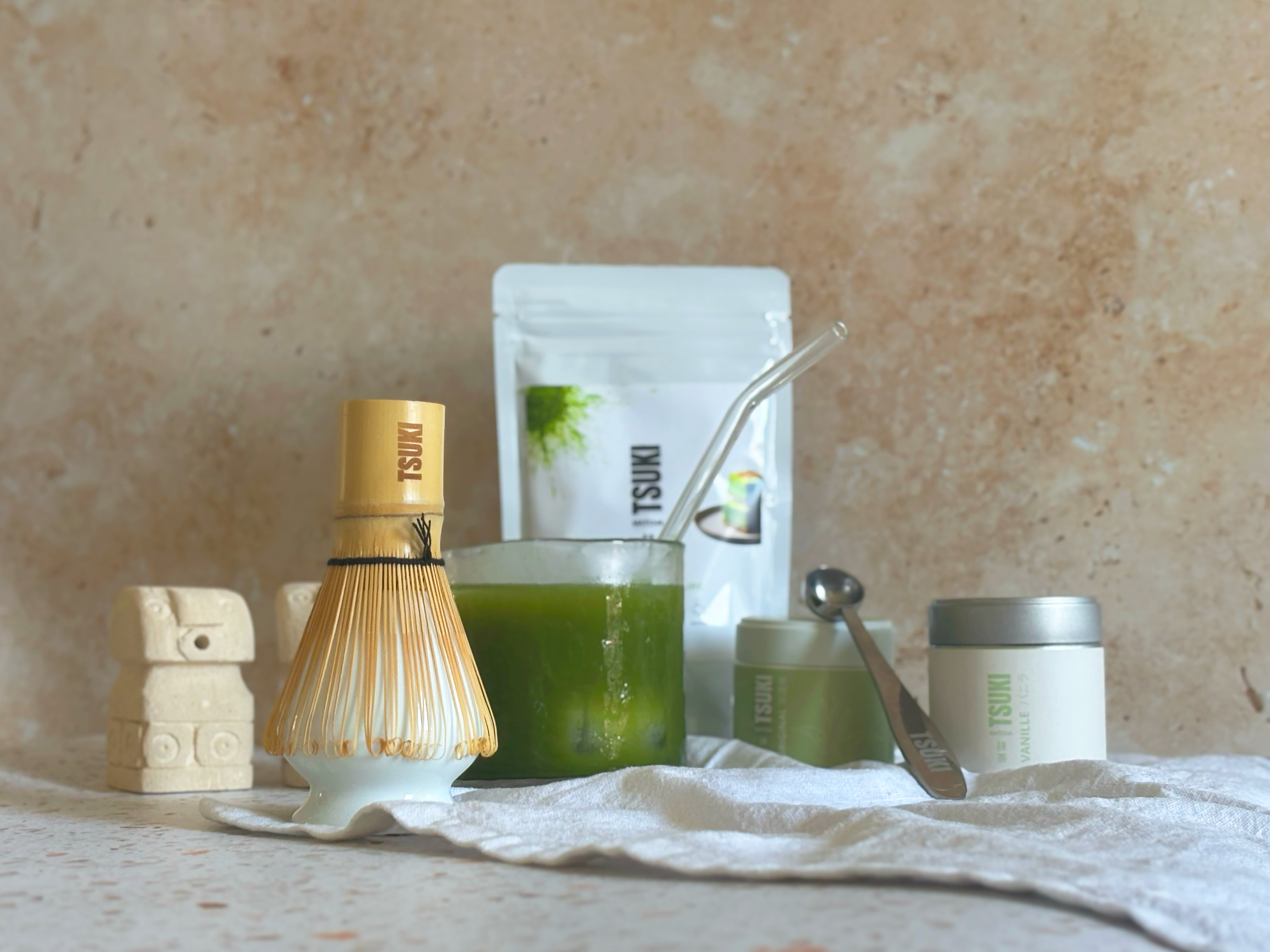
Choosing the right teapot and brewing accessories is also an opportunity to review all your home preparation equipment. The original TSUKI matcha is simply prepared with a chawan and a bamboo whisk, for a ritual as accessible as that of a good cup of brewed tea.

Discover the TSUKI matcha collection to complete your home preparation ritual.


