

Wabi-sabi: The Japanese Aesthetic of Imperfection and its Link to the Matcha Ritual
Wabi-sabi celebrates the beauty of what is simple, imperfect, and marked by time. This worldview, born at the heart of the way of tea, gives full meaning to the matcha ritual. Here's what it encompasses, where it comes from, and how it transforms every bowl prepared at home.
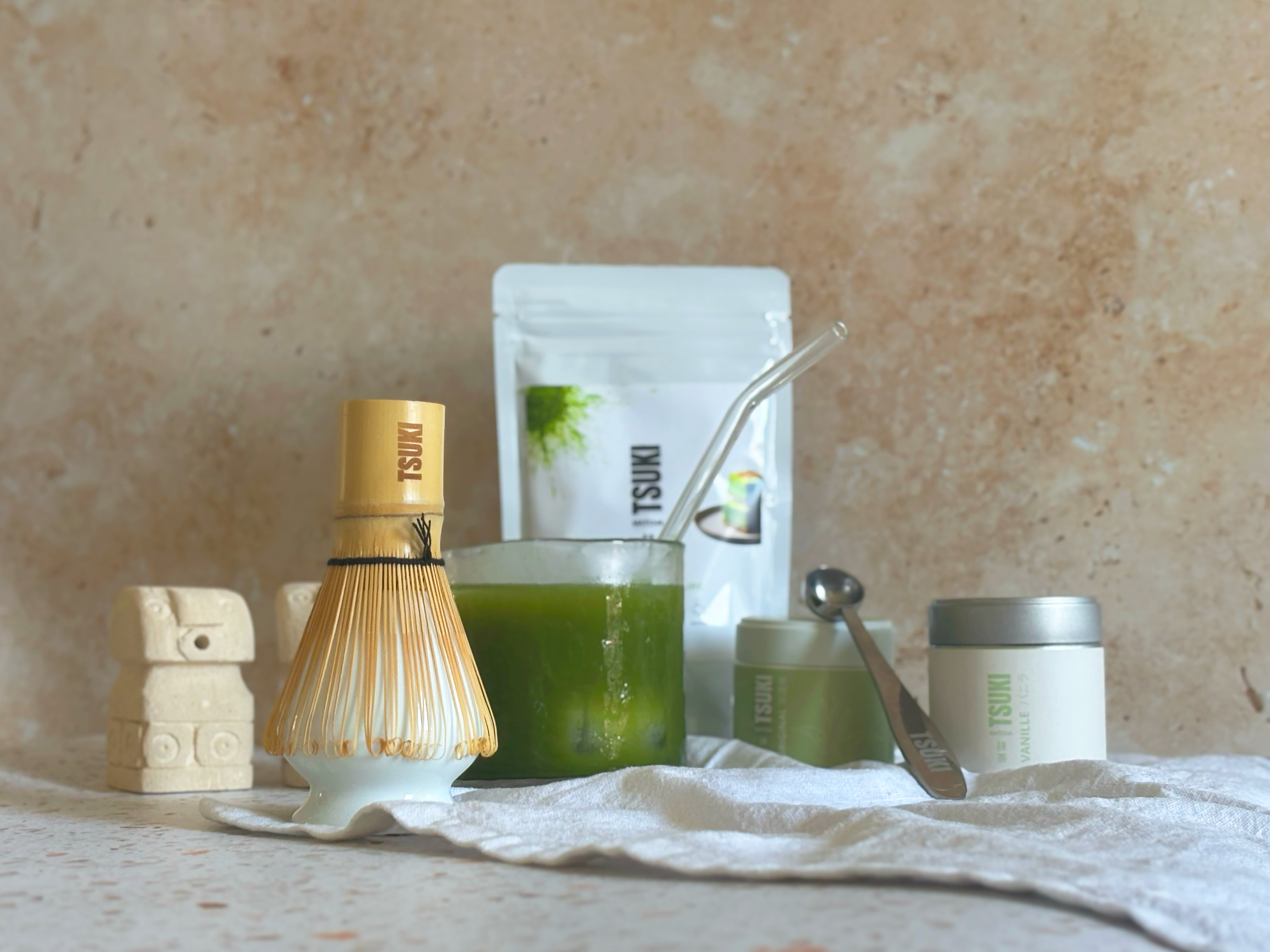
Wabi-sabi is one of the deepest concepts in Japanese culture, yet one of the most difficult to translate. It doesn't describe a specific object but a sensibility, a way of looking at things. A slightly irregular bowl, a teapot with worn glaze, the silence of a bare room: all of this can be wabi-sabi. Matcha, slowly prepared and drunk in the moment, is one of its purest expressions.
What is wabi-sabi?
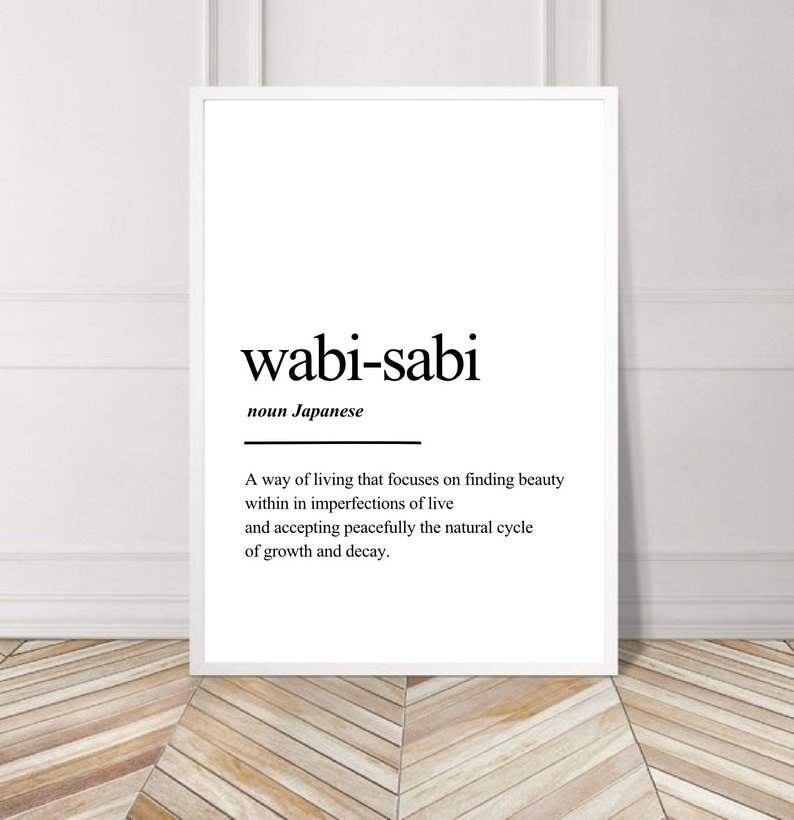
The word combines two distinct ideas. Together, they form a complete aesthetic that values simplicity, wear, and the ephemeral nature of all things.
Wabi: the beauty of simplicity
The term wabi originally evoked solitude and destitution, with a rather negative connotation. Over the centuries, its meaning reversed. Today, it refers to a humble and discreet beauty, that of a simple life, free from the superfluous. A refined space, an unadorned object, a sober gesture: wabi finds richness in scarcity.
Sabi: the patina of time
Sabi refers to the mark of time on things. A surface that patinates, wood that darkens, glaze that cracks. Far from being a flaw, this wear tells a story and gives the object a depth that newness does not possess. Sabi reminds us that nothing lasts and that this impermanence is precisely what makes every moment precious.
The origins of wabi-sabi in the way of tea
Wabi-sabi crystallized around the Japanese tea ceremony between the fifteenth and sixteenth centuries. The tea master Sen no Rikyū is its central figure. Faced with the splendor of aristocratic ceremonies, often focused on precious Chinese utensils, he imposed a radically stripped-down aesthetic.
Rikyū preferred local potters' bowls, with irregular shapes and dark hues, to imported perfect porcelain. He designed tiny tea rooms, with raw earth walls, where one entered by bowing to leave one's social status at the door. This voluntary simplicity is the heart of wabi-cha, the way of tea in the wabi spirit. Understanding the traditional matcha ceremony and its history directly illuminates the emergence of this aesthetic.
This lineage explains why matcha and wabi-sabi remain so intertwined. The green powder whipped by hand, the bowl held with both hands, the calm of the moment: each element extends Rikyū's vision. Matcha's place in Japanese culture and its traditional arts is rooted in this same soil.
How wabi-sabi is expressed in the matcha ritual
One might think wabi-sabi is reserved for museums or formal ceremonies. In reality, it lives in the most concrete objects and gestures of matcha. Three elements make it particularly visible.
The bowl, or chawan
The chawan is undoubtedly the most wabi-sabi object in the entire ritual. A good matcha bowl is never perfectly smooth or perfectly symmetrical. Its glaze has variations, its shape bears the trace of the potter's hand, its foot reveals the raw earth. These irregularities are not failures: they are the soul of the object.

Choosing a chawan with natural shapes and a vibrant glaze brings this aesthetic into the daily gesture.
The slowness of gestures
Preparing matcha is not rushed. Sifting the powder, pouring water at the right temperature, whisking in regular movements until a fine foam forms: each step requires full attention. This chosen slowness aligns with the idea of ichigo ichie, that unique encounter that will never be replicated. Wabi-sabi and the present moment go hand in hand.
The taste, between sweetness and bitterness
Matcha does not have a smooth, sweet taste. Its slight bitterness, its hint of astringency, and its umami depth require acclimatization. It's an honest taste that doesn't seek to please immediately. Learning to appreciate the natural astringency and bitterness of matcha is part of the same journey as loving an imperfect bowl: accepting things as they are.
Wabi-sabi, ichigo ichie, kintsugi: a family of ideas
Wabi-sabi does not exist in isolation. It dialogues with several Japanese concepts that share the same attention to time, simplicity, and imperfection.
Kintsugi, the art of repairing broken ceramics with gold, is its most eloquent extension. Instead of hiding the break, it highlights it and makes it an ornament. This celebration of the beauty of imperfection and embraced scars is wabi-sabi applied to repair.
Ikigai, for its part, seeks meaning and joy in the small things of daily life. Anchoring a simple and regular matcha ritual in one's day is a very concrete way to live this spirit. Together, these notions draw the same wisdom: slow down, simplify, savor.
Integrating the wabi-sabi spirit into your matcha ritual
No need for a traditional tea room to experience wabi-sabi. A few simple gestures are enough to rediscover its spirit at home.
Prefer authentic objects over overly perfect sets. A handmade bowl, a bamboo whisk, a wooden spoon are worth more than an impeccable and characterless service. Set aside a moment without screens, without haste, where preparing matcha becomes a pause in itself. Accept that each bowl is different: a foam more or less fine, a shade that varies with the light. It is precisely this variation that makes the ritual alive.
This journey always begins with a quality powder, rich in umami and truly fresh. A ceremonial grade matcha finely ground on a stone mill offers the depth of taste that gives full meaning to these slowed-down gestures.
Wabi-sabi applied to matcha at a glance
| Wabi-sabi Principle | Expression in the matcha ritual |
|---|---|
| Beauty of simplicity (wabi) | Simple objects, uncluttered space, unostentatious gestures |
| Patina of time (sabi) | Worn chawan, cracked glaze, patinated bamboo |
| Praise of imperfection | Irregular shapes, never identical foam |
| Impermanence | A unique bowl, drunk here and now |
| Full attention | Slow gestures, silence, presence in the moment |
Frequently asked questions about wabi-sabi and matcha
Is wabi-sabi a philosophy or an aesthetic?
Both. It is primarily an aesthetic, a way of finding beauty in the simple and the worn. But it also carries a worldview, marked by the acceptance of impermanence and imperfection, akin to Zen thought.
Why is an irregular matcha bowl valued?
Because its irregularities bear the trace of the human hand and artisanal gesture. In the wabi-sabi spirit, this uniqueness makes the object more alive and endearing than a perfectly smooth industrial piece.
Do you need a full ceremony to experience wabi-sabi?
No. The wabi-sabi spirit mainly lies in the attention paid to the moment. Preparing matcha at home, slowly and without distraction, is enough to rediscover its essence, even without the decorum of a formal ceremony.
What is the connection between wabi-sabi and kintsugi?
Kintsugi is a direct application of wabi-sabi. By repairing broken ceramics with gold rather than masking the break, it transforms an accident into beauty and embraces the marks of time, exactly in the spirit of sabi.
Does the bitter taste of matcha have a connection with wabi-sabi?
Yes, in a subtle way. Appreciating a taste that is not immediately sweet requires accepting things as they are, without correcting them. It is the same disposition of mind that makes one love an imperfect object.

To bring this ritual to life, it all starts with a truly premium powder. Discover the collection of ceremonial grade matcha from Japan and make every bowl a wabi-sabi moment.


