
Everything about Matcha

Dive into the world of matcha: benefits, origins, recipes, and daily tips.

Matcha is much more than just a drink. This fine Japanese green tea powder, made from shaded leaves and then finely stone-ground, embodies both a millennia-old tradition and a modern superfood with multiple benefits. Consumed for centuries in Japan, particularly as part of the tea ceremony, matcha is now popular for its unique taste, nutritional richness, and gentle, sustained energy.

Rich in antioxidants, catechins, and L-theanine, Japanese matcha is known for supporting concentration, metabolism, inner balance, and daily vitality. Whether you want to discover its benefits, understand its origin, learn how to prepare it correctly, or explore creative recipes, here you will find all the keys to integrate matcha into your routine.

From traditional usucha matcha to modern lattes, from storage tips to rituals inspired by Japanese culture, this collection guides you step-by-step to understand, choose, and fully enjoy matcha in all its forms.

Mugicha : origine, bienfaits et comparatif avec le matcha - Tsuki Matcha

Mugicha : origine, bienfaits et comparatif avec le matcha

on Sep 10 2026
Le mugicha est le thé d'orge grillée japonais, sans caféine, à boire chaud ou glacé. Origine, préparation et comparatif complet avec le matcha.
Matcha Yame : terroir sucré, gyokuro et umami de Fukuoka - Tsuki Matcha

Matcha Yame : terroir sucré, gyokuro et umami de Fukuoka

on Sep 10 2026
Yame, région montagneuse de Fukuoka, produit l'un des matchas les plus doux et umami du Japon. Terroir, histoire du gyokuro et comparaison avec Uji, Shizuoka et Kagoshima.
Thé blanc : origine, bienfaits et comparatif avec le matcha - Tsuki Matcha

Thé blanc : origine, bienfaits et comparatif avec le matcha

on Sep 10 2026
Le thé blanc a-t-il vraiment moins de caféine que le matcha ? Origine, fabrication et composition de ce thé délicat, comparés point par point à la poudre verte japonaise.
Température de l'eau pour le matcha : à combien de degrés la chauffer - Tsuki Matcha

Température de l'eau pour le matcha : à combien de degrés la chauffer

on Sep 10 2026
La température de l'eau change tout pour le matcha : trop chaude, elle le rend amer. Voici la bonne température (70 à 80 °C) et comment l'atteindre sans thermomètre.
Matcha et fer : le matcha réduit-il l'absorption du fer ? - Tsuki Matcha

Matcha et fer : le matcha réduit-il l'absorption du fer ?

on Sep 09 2026
Le matcha freine-t-il vraiment l'absorption du fer ? On fait le point sur les tannins, les profils concernés et les gestes simples pour profiter de son matcha sans nuire à votre fer.
Matcha ou boisson énergisante : quelles différences ? - Tsuki Matcha

Matcha ou boisson énergisante : quelles différences ?

on Sep 09 2026
Matcha ou boisson énergisante ? On compare caféine, sucre, ingrédients et ressenti pour comprendre ce qui les distingue et faire un choix éclairé.
Tamis à matcha : pourquoi et comment tamiser sa poudre - Tsuki Matcha

Tamis à matcha : pourquoi et comment tamiser sa poudre

on Sep 09 2026
Le tamis à matcha casse les grumeaux et aère la poudre pour une préparation lisse et une mousse régulière. Voici pourquoi tamiser et comment bien le faire.
Matcha pas cher : peut-on trouver un bon matcha à petit prix ? - Tsuki Matcha

Matcha pas cher : peut-on trouver un bon matcha à petit prix ?

on Sep 09 2026
Le matcha pas cher cache parfois de mauvaises surprises. Voici comment repérer un matcha abordable de qualité et éviter les pièges du prix trop bas.
Calories du matcha latte : combien de calories dans un matcha ? - Tsuki Matcha

Calories du matcha latte : combien de calories dans un matcha ?

on Sep 09 2026
Le matcha pur ne contient presque aucune calorie, mais un matcha latte varie de 45 à plus de 200 kcal selon le lait et le sucre. Voici les vrais chiffres, préparation par préparation.
Matcha et pesticides : quels contrôles demander ? - Tsuki Matcha

Matcha et pesticides : quels contrôles demander ?

on Sep 07 2026
Matcha sans pesticides : quels contrôles et certifications demander, comment lire une analyse et reconnaître un matcha sûr et propre avant d'acheter.
Matcha cérémonial : existe-t-il une définition officielle ? - Tsuki Matcha

Matcha cérémonial : existe-t-il une définition officielle ?

on Sep 01 2026
Le grade cérémonial du matcha a-t-il une définition officielle ? Ce que veut vraiment dire cérémonial, comment le vérifier et éviter les abus marketing.
Matcha japonais ou chinois : quelles différences ? - Tsuki Matcha

Matcha japonais ou chinois : quelles différences ?

on Sep 01 2026
Matcha chinois ou japonais : origine, culture, couleur, goût et qualité. On compare les deux pour savoir lequel choisir et pourquoi le Japon domine.
Comment ajouter le matcha à sa routine de rentrée - Tsuki Matcha

Comment ajouter le matcha à sa routine de rentrée

on Aug 31 2026
Comment intégrer le matcha à sa routine du matin à la rentrée : bons moments, dosage, remplacement du café et gestes simples pour tenir la nouvelle habitude.
Matcha à 13 € ou à 37 € : quelle différence pour 30 g ? - Tsuki Matcha

Matcha à 13 € ou à 37 € : quelle différence pour 30 g ?

on Aug 31 2026
Pourquoi un matcha 30 g coûte 13 € ou 37 € ? On décompose ce que vous payez vraiment à chaque prix pour choisir le bon matcha sans vous tromper.
Infusion de matcha : peut-on infuser le matcha comme un thé ? - Tsuki Matcha

Infusion de matcha : peut-on infuser le matcha comme un thé ?

on Aug 27 2026
Peut-on faire une infusion de matcha comme avec un sachet de thé vert ? Non, et on vous explique pourquoi le matcha se fouette au lieu de s'infuser.
Matcha et intestin irritable : bienfaits, risques et précautions - Tsuki Matcha

Matcha et intestin irritable : bienfaits, risques et précautions

on Aug 27 2026
Peut-on boire du matcha quand on a l'intestin irritable ? Ce qu'il faut savoir sur la caféine, la dose et la meilleure façon de le consommer sans gêne digestive.
Mousseur à matcha : bien choisir et utiliser son mousseur électrique - Tsuki Matcha

Mousseur à matcha : bien choisir et utiliser son mousseur électrique

on Aug 27 2026
Le mousseur électrique donne un matcha lisse et mousseux en quelques secondes. Découvrez comment choisir votre mousseur à matcha, les différents types et la technique pour éviter les grumeaux.
Comment évaluer un matcha sans être expert - Tsuki Matcha

Comment évaluer un matcha sans être expert

on Aug 22 2026
Reconnaître un bon matcha ne demande pas d'expertise. Couleur, odeur, texture, goût : voici la méthode simple pour évaluer un matcha en toute confiance.
Cultivar de matcha : pourquoi cela change vraiment le goût - Tsuki Matcha

Cultivar de matcha : pourquoi cela change vraiment le goût

on Aug 18 2026
Le cultivar, cette variété de théier rarement indiquée, façonne l'umami, l'amertume et la couleur du matcha. Voici pourquoi le cultivar change vraiment le goût.
Métaux lourds dans le matcha : ce que révèlent vraiment les analyses - Tsuki Matcha

Métaux lourds dans le matcha : ce que révèlent vraiment les analyses

on Aug 18 2026
Plomb, aluminium, cadmium : le matcha contient-il des métaux lourds dangereux ? Ce que révèlent vraiment les analyses de laboratoire, le niveau de risque réel et comment choisir un matcha propre et sûr.

Showing 60/213

Matcha tea

Originally from China, matcha has become a major tradition in Japan, particularly through the tea ceremony. Buddhist monks already used it to accompany their meditation.

Its three specific characteristics

It's a powdered green tea that is whisked, not steeped. It offers powerful benefits because the entire leaf is consumed, and it can also be used as an ingredient in cooking, in drinks as well as in recipes.

How do you prepare matcha tea?

Preparing matcha tea is not just about mixing a powder with hot water.

This Japanese ritual relies on a few precise steps that reveal all the subtlety of matcha: water at the right temperature, sifted powder, and energetic whisking for a light and creamy foam.

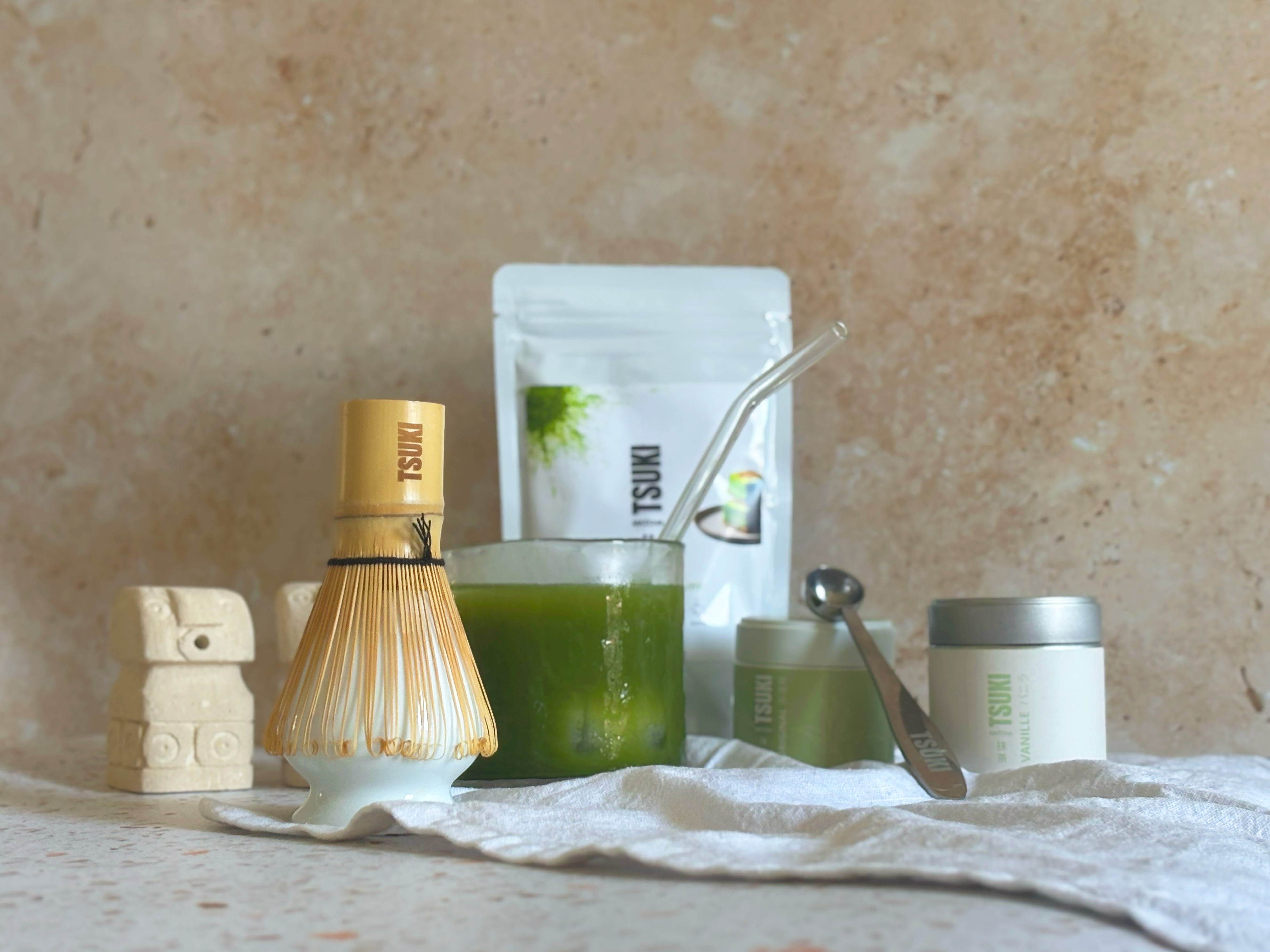
To do this, we recommend choosing our Original matcha or Vanilla matcha.

In just a few minutes, you can transform your break into a true moment of calm and concentration.

With quality matcha and the right accessories, preparing your matcha at home becomes a simple, daily pleasure.

100% Japanese matcha, cultivated with respect and expertise

All our matchas come from the Yabukita cultivar, known for its aromatic quality and rich umami.

The tea leaves are harvested in the Shizuoka and Kagoshima regions, renowned for their exceptional tea plantations.

The benefits of matcha tea ❤️

An exceptional concentration of antioxidants

One of the main benefits of matcha is its remarkable richness in antioxidants, particularly catechins like EGCG. Unlike infused tea, matcha is consumed as a fine powder, meaning the entire leaf is ingested. This peculiarity gives it a much higher concentration of polyphenols than classic green tea. These compounds help protect cells against oxidative stress and contribute to the overall proper functioning of the body.

A gentle and steady energy

Matcha naturally contains caffeine, but its effect is very different from that of coffee. Thanks to the presence of L-theanine, an amino acid developed during leaf shading, the energy is gradual and long-lasting. The result: stimulation without excessive nervousness or a sudden crash. This unique balance promotes concentration, creativity, and mental clarity.

Immune system support

Rich in essential vitamins and minerals such as potassium, magnesium, and zinc, matcha fits perfectly into a balanced routine. Its nutritional density makes it an interesting ally for supporting natural defenses, especially during seasonal changes.

An ally for the skin

Thanks to its high content of antioxidants, matcha helps combat the effects of oxidative stress on the skin. By protecting cells from free radicals, it helps preserve skin elasticity and maintain a radiant complexion. Its richness in chlorophyll also reinforces this "natural glow" dimension.

A partner in a weight management journey

Matcha is often associated with an active routine. Some studies suggest that catechins, especially EGCG, may support metabolism as part of a healthy lifestyle. It is not a miracle product, but an interesting supplement when combined with a balanced diet and regular physical activity.

A balance between relaxation and stimulation

The unique combination of caffeine and L-theanine provides a dual effect: it is both stimulating and soothing. This harmony explains why matcha was historically consumed by Buddhist monks during meditation. It promotes a state of calm alertness, conducive to refocusing and well-being.

An alkalizing and anti-inflammatory tea

Matcha naturally fits into a plant-rich diet. Its composition helps support acid-base balance and contributes to a holistic approach aimed at reducing chronic inflammation associated with modern lifestyles.