
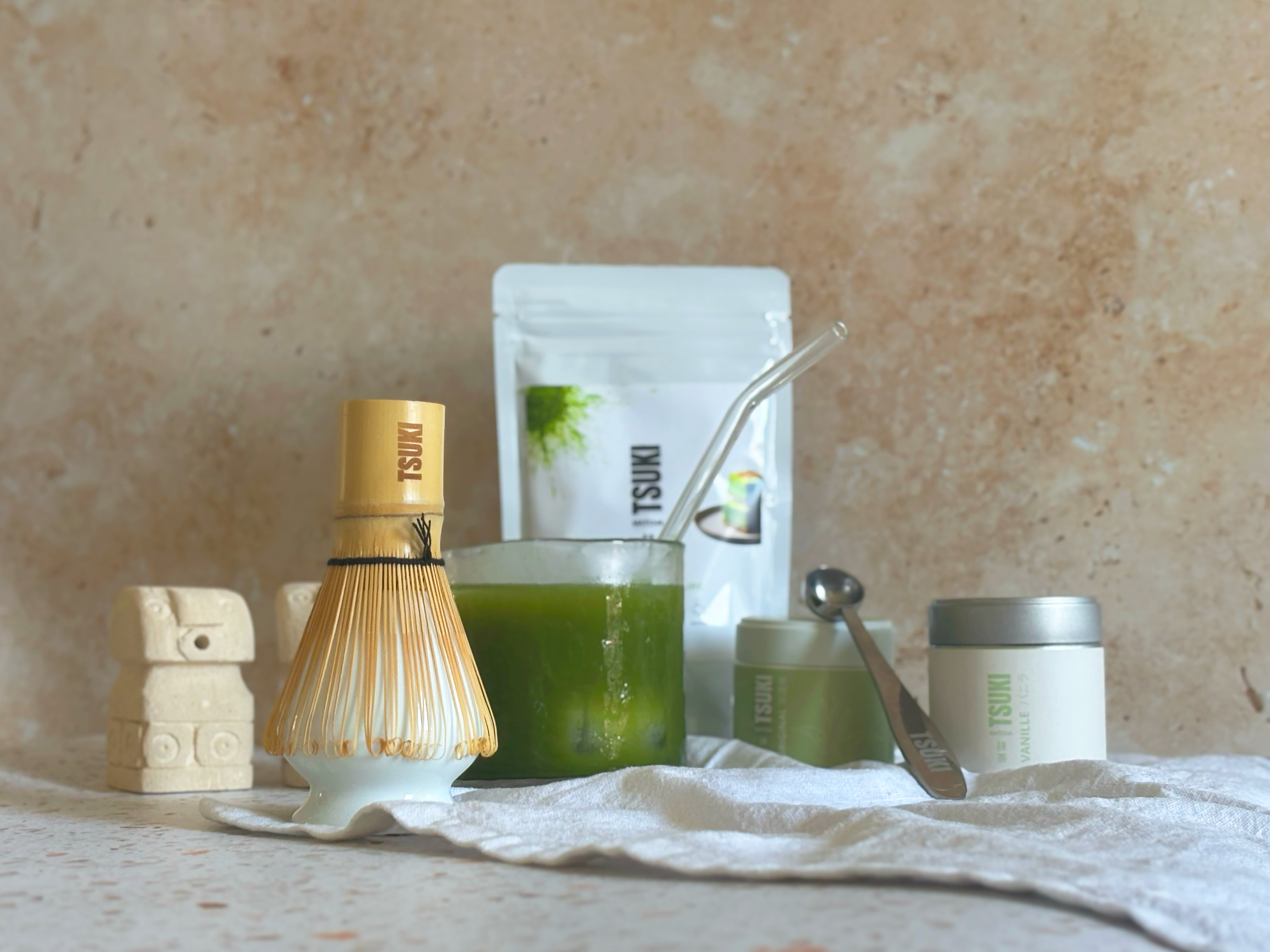
Everything about Matcha

Dive into the world of matcha: benefits, origins, recipes, and daily tips.

Matcha is much more than just a drink. This fine Japanese green tea powder, made from shaded leaves and then finely stone-ground, embodies both a millennia-old tradition and a modern superfood with multiple benefits. Consumed for centuries in Japan, particularly as part of the tea ceremony, matcha is now popular for its unique taste, nutritional richness, and gentle, sustained energy.

Rich in antioxidants, catechins, and L-theanine, Japanese matcha is known for supporting concentration, metabolism, inner balance, and daily vitality. Whether you want to discover its benefits, understand its origin, learn how to prepare it correctly, or explore creative recipes, here you will find all the keys to integrate matcha into your routine.

From traditional usucha matcha to modern lattes, from storage tips to rituals inspired by Japanese culture, this collection guides you step-by-step to understand, choose, and fully enjoy matcha in all its forms.

Matcha et glycémie : le matcha aide-t-il à réguler le taux de sucre dans le sang ? - Tsuki Matcha

Matcha and blood sugar: Does matcha help regulate blood sugar levels?

on Jul 09 2026
Does matcha affect blood sugar? Rich in catechins, this Japanese green tea can help limit blood sugar spikes after meals. Benefits, science, and tips for proper consumption.
Bancha : origine, bienfaits et comparatif avec le matcha - Tsuki Matcha

Bancha: Origin, Benefits, and Comparison with Matcha

on Jul 09 2026
Bancha, a Japanese everyday green tea made from mature leaves, is mild and low in caffeine. Learn about its origin, benefits, preparation, and how it compares to matcha to help you choose.
Kukicha : origine, bienfaits et comparatif avec le matcha - Tsuki Matcha

Kukicha: Origin, Benefits, and Comparison with Matcha

on Jul 08 2026
Kukicha, a Japanese green tea made from stems and twigs, is mild and low in caffeine. Learn about its origin, benefits, preparation, and how it compares to matcha to help you choose.
Peut-on boire du matcha à jeun le matin ? - Tsuki Matcha

Can you drink matcha on an empty stomach in the morning?

on Jul 08 2026
Drinking matcha on an empty stomach in the morning: sustained energy, focus, and a calming ritual. Our tips for enjoying it without discomfort, depending on your digestive sensitivity.
Matcha et sommeil : peut-on boire du matcha le soir ? - Tsuki Matcha

Matcha and sleep: can you drink matcha in the evening?

on Jul 08 2026
Can you drink matcha in the evening without disrupting your sleep? It all depends on the dose, the time, and the L-theanine. Here's what you need to know to balance matcha and sleep.
Sencha : origine, bienfaits et comparatif avec le matcha - Tsuki Matcha

Sencha: origin, benefits, and comparison with matcha

on Jul 08 2026
Sencha, a Japanese green tea infused in leaves, shares the same origin as matcha. Origin, benefits, preparation, and comparison to help you choose your green tea.
Chai latte maison : recette chaude et froide en 10 minutes - Tsuki Matcha

Homemade Chai Latte: hot and cold recipe in 10 minutes

on Jul 08 2026
Homemade chai latte: the hot and cold recipe in 10 minutes, with spices, milk choice, mistakes to avoid, and a matcha variation.
Genmaicha : comment préparer ce thé au riz grillé chez soi

Genmaicha: how to make this roasted rice tea at home

on Jul 08 2026
Homemade Genmaicha Recipe: hot and cold preparation of this roasted rice tea, including temperature, steeping time, accessories, and iced variations.
Gyokuro : origine, bienfaits et comparatif avec le matcha - Tsuki Matcha

Gyokuro: Origin, Benefits, and Comparison with Matcha

on Jul 07 2026
Gyokuro, a shaded Japanese green tea, shares matcha's umami. Origin, benefits, preparation, and comparison to help you choose between these two exceptional teas.
Matcha vs kéfir : quel allié pour la digestion et l'énergie ? - Tsuki Matcha

Matcha vs. Kefir: which ally for digestion and energy?

on Jul 07 2026
Matcha or kefir for digestion and energy? Clear comparison between the Japanese green tea and the fermented drink: probiotics, caffeine, benefits, and tips for choosing wisely.
Théière et accessoires d'infusion : le guide complet pour bien choisir - Tsuki Matcha

Teapots and brewing accessories: the complete guide to choosing well

on Jul 07 2026
Cast iron, porcelain or glass, ball or basket infuser: how to choose the right teapot and accessories, in addition to the matcha ritual.
Le thé Darjeeling : origine, bienfaits, préparation et comparatif avec le matcha - Tsuki Matcha

Darjeeling Tea: Origin, Benefits, Preparation, and Comparison with Matcha

on Jul 06 2026
Origin, benefits, preparation of Darjeeling tea, and a full comparison with matcha in terms of taste, caffeine, and antioxidants.
Le haïku japonais et le rituel du matcha : la poésie de l'instant - Tsuki Matcha

Japanese Haiku and the Matcha Ritual: The Poetry of the Moment

on Jul 06 2026
Between seventeen syllables and a steaming bowl of matcha, haiku and the Japanese tea ritual share the same quest for the present moment. Discover how this ancient poetry can transform your daily matcha break.
L-théanine et caféine : la synergie unique qui rend le matcha si efficace

L-Theanine and caffeine: the unique synergy that makes matcha so effective

on Jul 06 2026
How the L-theanine + caffeine combination makes matcha so effective, for steady energy without jitters. The complete guide to this synergy.
Aliments riches en potassium : et si le matcha en faisait partie ? - Tsuki Matcha

Potassium-rich foods: could matcha be one of them?

on Jul 06 2026
Discover the foods richest in potassium, from fruits to legumes, and the true place of matcha as a plant-based source.
Ikigai et rituel matcha : trouver son sens au quotidien à la japonaise - Tsuki Matcha

Ikigai and the Matcha Ritual: Finding Your Daily Purpose the Japanese Way

on Jul 02 2026
Far from the Western model, ikigai is experienced in small rituals. How preparing matcha becomes a practice of the present moment.
Tea time japonais : l'art de prendre le thé, du sencha au matcha - Tsuki Matcha

Japanese Tea Time: The Art of Tea Drinking, from Sencha to Matcha

on Jul 02 2026
Tea time is not just for the English. Discover the Japanese tea ritual, from sencha to matcha, and how to recreate this moment of calm at home.
Hojicha vs matcha : lequel choisir selon vos besoins ? - Tsuki Matcha

Hojicha vs. matcha: which one to choose based on your needs?

on Jun 30 2026
Hojicha vs. matcha: a roasted evening sweetness or a morning boost of plant-based energy? Our comprehensive comparison helps you choose the right Japanese tea for your needs.
Thé vert : bienfaits, types et différence avec le matcha - Tsuki Matcha

Green tea: benefits, types, and how it differs from matcha

on Jun 27 2026
Green tea is one of the most consumed beverages in the world, and one of the most studied for its health benefits. But behind this name lie very different teas, from sencha to gyokuro and matcha. This guide provides an overview of the types, benefits, preparation, and what truly distinguishes classic green tea from matcha. What is green tea? Green tea comes from the same shrub as all other teas, the tea plant. Its particularity lies in how the leaves are processed after harvesting. Unlike black tea, green tea is not oxidized. The leaves are quickly heated, by steaming in Japan or pan-frying in China, to stop oxidation. This process preserves the green color, natural compounds, and vegetal taste. This absence of oxidation explains why green tea retains so many antioxidants. It also gives it that fresh, herbaceous profile that many appreciate. Japanese or Chinese green tea A major dividing line separates green teas according to their country of origin and their fixation method. In Japan, the leaves are fixed by steaming, which results in vegetal, marine-tasting teas with an intense green color. In China, they are pan-fried, producing teas that are more roasted, dry, and slightly smoky. This difference in processing explains why a Japanese sencha and a Chinese gunpowder green tea with rolled leaves have such distinct tastes, even though they come from the same plant. The main types of green tea Green tea is not a single beverage. It's a large family, with varied profiles depending on its origin and production method. Sencha This is the most consumed green tea in Japan. Fresh, vegetal, slightly astringent, it is drunk daily and is an excellent introduction to Japanese teas. Gyokuro More rare and refined, gyokuro is shade-grown, like matcha. This shading develops its sweetness and umami. It is an exceptional tea, to be savored slowly. Gunpowder Originating from China, its leaves are rolled into small, tight pellets. Its taste is bolder and smokier. It is often used as the base for mint tea. Matcha Unique in this family, matcha is not infused but ground into a powder and drunk whole. It is the most concentrated form of green tea. We will come back to this below. Other Japanese teas complete this panorama, such as roasted hojicha with its roasted taste or genmaicha blended with roasted rice, perfect for varying your pleasures. The benefits of green tea If green tea is so popular, it's also for its natural benefits. Here are the main ones, supported by a long tradition of use. Rich in antioxidants, especially catechins, which help fight oxidative stress. Gentle energy thanks to caffeine, lighter than that in coffee. A calming effect linked to L-theanine, which promotes calm concentration. A calorie-free beverage, ideal for hydrating with pleasure. These benefits, however, depend on the quality of the tea and the quantity consumed. A fresh, well-preserved, and well-prepared tea delivers its full potential. Green tea and matcha: what's the real difference? This is the most frequently asked question. Matcha is indeed a green tea, but it stands out on several essential points. Criterion Classic Green Tea Matcha Form Leaves Fine powder Consumption Filtered infusion Whole leaf Concentration Moderate Very high Cultivation Mostly in the sun Shade-grown before harvest The main difference lies in the consumption method. With infused green tea, you only drink the flavored water and then discard the leaves. With matcha, you ingest the entire leaf, and therefore all its compounds. For an equivalent dose, matcha thus concentrates more antioxidants per cup. Shading before harvest also plays a key role in the aromatic profile. Deprived of direct light, the plant produces more amino acids, including L-theanine, hence the characteristic sweetness of matcha and gyokuro compared to a full-sun sencha. How to properly prepare your green tea Green tea is prone to many errors that spoil its taste. The main one is water that is too hot. Heat the water between 70 and 80 degrees Celsius, never boiling. Steep for only one to two minutes. Do not exceed the recommended time to avoid bitterness. For matcha, the preparation changes. It is not filtered. You whisk the powder with a little warm water until a fine foam is obtained, then complete with water or milk. Frequently asked questions about green tea Is matcha a green tea? Yes. Matcha is a Japanese green tea, but in powder form. It is drunk whole instead of infused, which makes it more concentrated. Which green tea is best for health? Matcha comes out on top because you consume the entire leaf. Quality gyokuro and sencha remain excellent choices for a classic infusion. Does green tea contain a lot of caffeine? Green tea contains a moderate dose of caffeine, lower than coffee. Matcha, being more concentrated, provides a little more, but with an effect softened by L-theanine. How many cups of green tea per day? Two to three cups per day are suitable for most people. Avoid drinking it too late to avoid disrupting sleep. Does green tea help with concentration? Yes, thanks to the L-theanine associated with caffeine. This combination promotes a state of calm alertness, particularly noticeable with matcha. In summary Green tea is a large family with multiple facets, from fresh sencha to refined gyokuro. Matcha is part of it, but in a separate category, more concentrated and more ritualistic. If you are looking for the most complete and intense form of green tea, matcha remains unrivaled: you drink the entire leaf, and therefore everything it has to offer. Want to discover the most concentrated form of green tea? Explore the TSUKI premium matcha collection and find yours.
Thé matcha : le guide complet pour débutants et initiés - Tsuki Matcha

Matcha Tea: The Complete Guide for Beginners and Connoisseurs

on Jun 27 2026
Everything you need to know about matcha tea: origins, benefits, grades, and preparation, for beginners and connoisseurs alike.

Showing 80/182

Matcha tea

Originally from China, matcha has become a major tradition in Japan, particularly through the tea ceremony. Buddhist monks already used it to accompany their meditation.

Its three specific characteristics

It's a powdered green tea that is whisked, not steeped. It offers powerful benefits because the entire leaf is consumed, and it can also be used as an ingredient in cooking, in drinks as well as in recipes.

How do you prepare matcha tea?

Preparing matcha tea is not just about mixing a powder with hot water.

This Japanese ritual relies on a few precise steps that reveal all the subtlety of matcha: water at the right temperature, sifted powder, and energetic whisking for a light and creamy foam.

To do this, we recommend choosing our Original matcha or Vanilla matcha.

In just a few minutes, you can transform your break into a true moment of calm and concentration.

With quality matcha and the right accessories, preparing your matcha at home becomes a simple, daily pleasure.

100% Japanese matcha, cultivated with respect and expertise

All our matchas come from the Yabukita cultivar, known for its aromatic quality and rich umami.

The tea leaves are harvested in the Shizuoka and Kagoshima regions, renowned for their exceptional tea plantations.

The benefits of matcha tea ❤️

An exceptional concentration of antioxidants

One of the main benefits of matcha is its remarkable richness in antioxidants, particularly catechins like EGCG. Unlike infused tea, matcha is consumed as a fine powder, meaning the entire leaf is ingested. This peculiarity gives it a much higher concentration of polyphenols than classic green tea. These compounds help protect cells against oxidative stress and contribute to the overall proper functioning of the body.

A gentle and steady energy

Matcha naturally contains caffeine, but its effect is very different from that of coffee. Thanks to the presence of L-theanine, an amino acid developed during leaf shading, the energy is gradual and long-lasting. The result: stimulation without excessive nervousness or a sudden crash. This unique balance promotes concentration, creativity, and mental clarity.

Immune system support

Rich in essential vitamins and minerals such as potassium, magnesium, and zinc, matcha fits perfectly into a balanced routine. Its nutritional density makes it an interesting ally for supporting natural defenses, especially during seasonal changes.

An ally for the skin

Thanks to its high content of antioxidants, matcha helps combat the effects of oxidative stress on the skin. By protecting cells from free radicals, it helps preserve skin elasticity and maintain a radiant complexion. Its richness in chlorophyll also reinforces this "natural glow" dimension.

A partner in a weight management journey

Matcha is often associated with an active routine. Some studies suggest that catechins, especially EGCG, may support metabolism as part of a healthy lifestyle. It is not a miracle product, but an interesting supplement when combined with a balanced diet and regular physical activity.

A balance between relaxation and stimulation

The unique combination of caffeine and L-theanine provides a dual effect: it is both stimulating and soothing. This harmony explains why matcha was historically consumed by Buddhist monks during meditation. It promotes a state of calm alertness, conducive to refocusing and well-being.

An alkalizing and anti-inflammatory tea

Matcha naturally fits into a plant-rich diet. Its composition helps support acid-base balance and contributes to a holistic approach aimed at reducing chronic inflammation associated with modern lifestyles.