

Matcha bio vs conventionnel : quelles différences ?
Matcha bio vs conventionnel : quelles différences ?
Le matcha, cette poudre de thé vert japonaise, a conquis les palais et les réseaux sociaux. Mais face à une offre pléthorique, il est crucial de comprendre les différences entre le matcha bio et le matcha conventionnel.

Ce choix n'est pas qu'une question de préférence gustative, il impacte directement votre santé et l'environnement.
Culture et production : le cœur du différentiel
La principale différence réside dans les méthodes de culture et de production. Le matcha bio est issu d'une agriculture biologique certifiée.
Cela signifie que :
- Pas de pesticides de synthèse : Les plants de thé ne sont pas traités avec des produits chimiques nocifs pour l'environnement et votre santé.
- Engrais naturels : On privilégie les engrais organiques pour enrichir le sol naturellement.
- Respect des cycles naturels : Les pratiques agricoles bio favorisent la biodiversité et le respect des écosystèmes.
- Contrôles rigoureux : Des organismes indépendants contrôlent l'ensemble du processus de production, de la culture à la récolte, pour garantir le respect du cahier des charges bio.

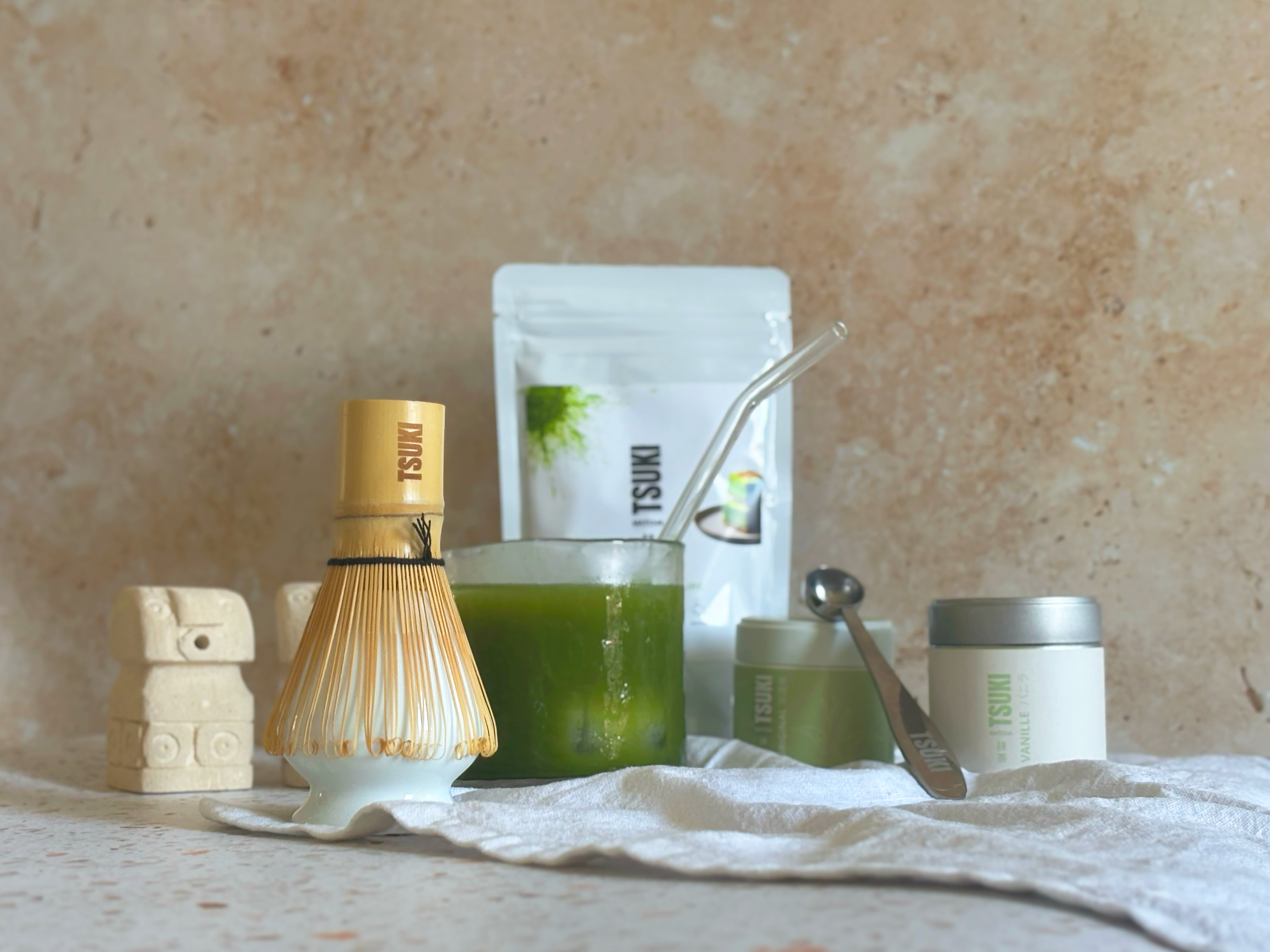
Nos Matcha incarne ces valeurs.
Cultivé au Japon selon des méthodes biologiques strictes, il est conçu pour offrir une expérience authentique et respectueuse de l’environnement.
Le matcha conventionnel, quant à lui, peut être cultivé avec des pesticides et des engrais chimiques.
Ces produits, bien que soumis à des réglementations, peuvent laisser des traces dans le produit final et avoir des impacts négatifs sur la santé à long terme. De plus, les pratiques agricoles conventionnelles peuvent être plus agressives pour l'environnement.
Différences gustatives et qualitatives
Bien que subjectives, les différences gustatives entre matcha bio et conventionnel existent.
Le matcha bio, cultivé dans un sol sain et riche, présente souvent :
- Une saveur plus douce et plus complexe : Les notes végétales et umami sont plus prononcées.
- Un arôme plus subtil et raffiné : L'absence de produits chimiques permet au goût authentique du thé de s'exprimer pleinement.
- Une couleur plus vive : Le matcha bio affiche souvent une couleur vert émeraude plus intense.
Cependant, il est important de noter que la qualité d'un matcha dépend également de nombreux autres facteurs, tels que la variété de thé, le processus de transformation et le stockage.
Un matcha conventionnel de qualité supérieure peut présenter des saveurs agréables, mais il ne présentera pas les mêmes garanties en termes d'impact sur l'environnement et la santé.
Le matcha culinaire ou cérémonial ont aussi beaucoup de différences gustatives.
Impact sur la santé et l'environnement
Choisir un matcha bio, c'est opter pour une consommation plus responsable et plus saine :
- Moins de produits chimiques dans votre organisme : Éviter les pesticides de synthèse réduit votre exposition à des substances potentiellement nocives.
- Soutien à une agriculture durable : Votre achat contribue à préserver la biodiversité et les écosystèmes.
- Meilleure qualité nutritionnelle (potentielle) : Certains affirment que le matcha bio est plus riche en antioxydants, mais cela n'est pas toujours prouvé scientifiquement.
Même si le prix d'un matcha bio est souvent plus élevé, l'investissement vaut la peine pour la qualité supérieure, le respect de l'environnement et la préservation de votre santé. Le choix entre matcha bio et conventionnel est un choix responsable qui va au-delà du simple plaisir gustatif.
Privilégiez les labels bio reconnus et lisez attentivement les étiquettes pour faire un choix éclairé.
Avec TSUKI Matcha, vous avez l'assurance d'une qualité optimale, que vous choisissiez notre matcha.


