
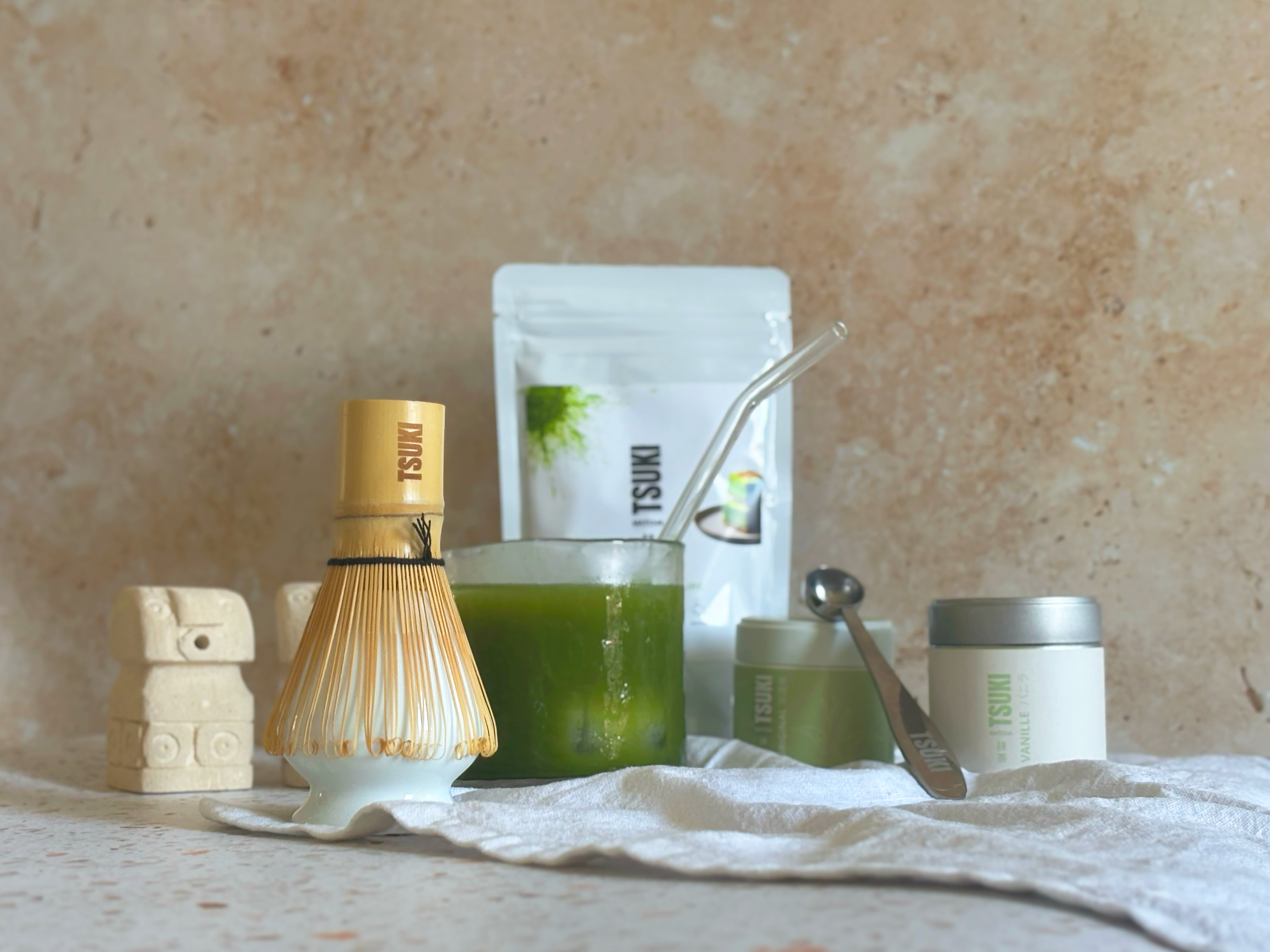

Matcha bowl with a pouring spout: the ultimate guide to choosing the right one
The spouted bowl transforms matcha preparation into a clean and precise action. Whisk in the bowl, pour directly into the cup or glass, with no intermediate spoon or matcha spilling onto the countertop. Here's what it's really for, how to choose it, and how to integrate it into your daily ritual.
When preparing matcha at home, whisking is rarely done in the final cup. You need a wide container to allow room for the whisk's movement. The problem then arises: transferring a fine foam without losing half of it. The spouted bowl solves precisely this issue by adding a small pouring lip that channels the liquid.
What is a spouted matcha bowl?
A spouted bowl is a wide, flared container with a small protrusion on the rim, designed to direct the liquid when serving. In Japan, this item is called a katakuchi. It has long been used in the art of serving, for both sake and tea, precisely because it allows for clean pouring of delicate beverages.

Its shape echoes the spirit of the traditional whisking bowl, while adding this practical function. It maintains the wide opening that facilitates whisk movement, with the added ability to pour without spilling. It's a hybrid object, halfway between a preparation bowl and a serving pitcher.
Many beginners start with a simple classic matcha bowl, the traditional flared chawan without a spout. The spouted bowl is often the next step, when one seeks to streamline the serving process.
Spouted bowl vs. classic chawan: what are the differences?
The two look similar at first glance, but each has its own logic of use. The chawan is designed for drinking directly from it, in the tradition of the ceremony. The spouted bowl is designed for preparing and then transferring, which better suits modern habits of iced matcha lattes or matcha served in a beautiful glass.
| Criterion | Spouted bowl | Classic chawan |
|---|---|---|
| Primary use | Prepare then pour | Whisk and drink from it |
| Clean serving | Yes, thanks to the spout | Less precise |
| Ideal for | Latte, iced matcha, glass | Plain matcha, ritual |
| Whisking comfort | Very good | Very good |
Neither is inherently better. The choice depends on how you drink your matcha. If you mostly prepare drinks to be poured into another container, the spout really makes a daily difference. If you enjoy the traditional gesture of drinking from the bowl where the matcha was whisked, the chawan remains the reference.
The daily advantages of the pouring spout
The first benefit is obvious from the first use: no more drips running down the side of the bowl. The lip concentrates the flow, making serving neat even when pouring aerated foam. This is particularly appreciated for a matcha latte, where you transfer it onto milk or ice.

The second advantage concerns precision. A spout allows you to control the flow rate, thus creating beautiful presentations without stress. For those who like to care for their drink, this opens the door to visual gradients and slow pours that are admired in specialized cafes.
Finally, the object remains versatile. As the wide part functions as a real preparation bowl, it naturally integrates into a well-organized home matcha station, alongside the whisk, scoop, and powder.

How to choose your spouted matcha bowl well
Not all spouted bowls are created equal. A few simple criteria can help avoid unpleasant surprises and find an object that is both practical and pleasant to use.
The material
Ceramics remain the most common choice because they retain heat well and feel good in the hand. Glass has its fans for cold drinks, as it allows the color of the matcha to be seen. The important thing is that the interior surface is smooth so as not to retain powder during whisking.
Size and depth
A bowl that is too small hinders the whisk's movement; one that is too large disperses the matcha. A medium capacity, with sufficiently high sides, offers the best compromise between whisking comfort and ease of serving. This also applies to preparation in a bowl of suitable capacity for the whisk.
The shape of the spout
A well-designed spout, neither too short nor too flat, makes all the difference. It should create a true pouring lip so that the liquid flows straight. A poorly formed spout causes the matcha to dribble down the side, which negates the whole point of the object.
How to use it to prepare and serve matcha
The method remains identical to that of a classic bowl, with the convenience of the spout at the end. Sift the powder to avoid clumps, add a little warm water, then whisk in a 'W' motion until a foam is obtained. The whole logic of the gesture is detailed in our method for preparing matcha tea step by step.
The whisk is as important as the bowl for the result. A good technique with a soft and well-maintained bamboo whisk creates a fine, stable foam that then pours cleanly thanks to the spout. For dosage, a bamboo measuring scoop for precise grammage avoids approximation.
Once the foam is ready, simply tilt the bowl and pour slowly over milk, water, or ice. This is the moment that distinguishes the pouring spout: the flow remains controlled from start to finish, without splashing. To go further on the gestures that produce a beautiful result, the best homemade matcha preparation covers the key points.
Care of the spouted bowl
Maintenance is simple but requires a little attention. Rinse the bowl with clean water immediately after use, without letting matcha residue dry at the bottom. Air drying is sufficient in most cases.
It's best to avoid harsh detergents and very abrasive sponges, especially on glazed ceramics. The spout, being finer, should be cleaned gently to avoid damaging it. This care aligns with the same logic as maintaining other essential accessories for the matcha ritual, starting with the bamboo whisk.
Frequently Asked Questions about the Spouted Matcha Bowl
Can you drink directly from a spouted bowl?
Yes, nothing prevents it, but that's not its primary purpose. Its shape is designed for preparing then transferring. For direct drinking, a classic chawan is more comfortable on the lips.
Is the pouring spout useful for plain matcha?
It is especially useful if you pour matcha into another container. For plain matcha drunk from the preparation bowl, the benefit of the spout is limited. It comes into its own with lattes and iced versions.
Do you need a special whisk for this type of bowl?
No, the traditional bamboo whisk is perfectly suitable. The wide opening of the bowl provides ample room for movement. It is the flexibility and condition of the whisk that matter, more than the bowl itself.
What capacity should I choose?
A medium capacity with fairly high walls is the best choice. It allows whisking without splashing matcha, while still providing enough volume to prepare a full latte in one go.
Does the spouted bowl replace the chawan?
It complements it rather than replaces it. Many enthusiasts keep both: the chawan for the ritual of plain matcha, the spouted bowl for everyday poured drinks.
A cleaner gesture, a smoother ritual
The spouted bowl is not a gadget. It's a small adjustment that makes serving clean and pleasant, especially if you enjoy lattes and iced matcha. Combined with a good whisk, a precise scoop, and quality powder, it completes a home ritual that is both simple and refined.

Want to start on a good footing? Discover our selection of ceremonial grade matchas and create the ritual that suits you.


