
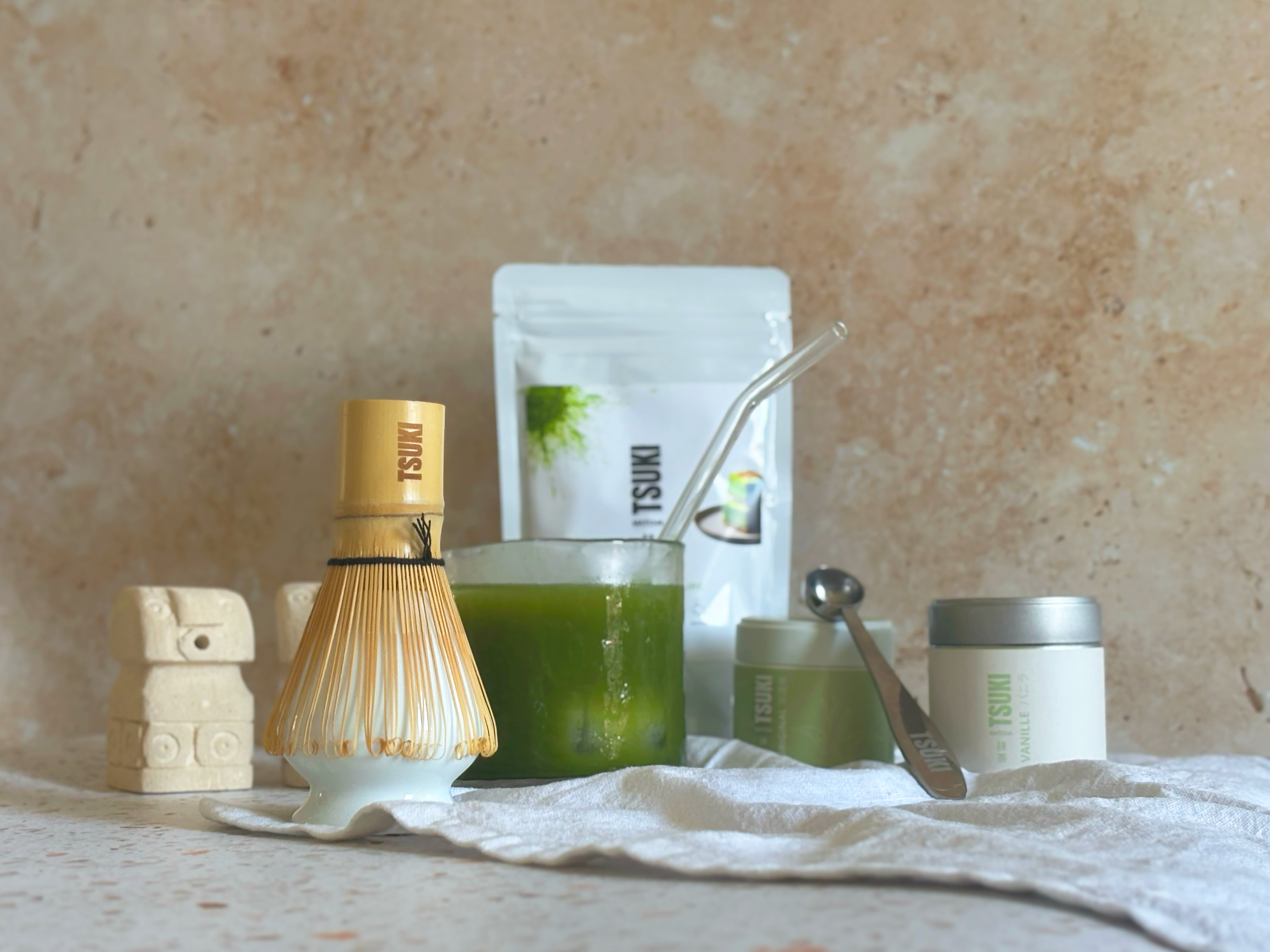

How to drink matcha: hot, cold, latte, plain? The complete guide
Hot or cold? Pure or in a latte? Morning or evening? All the right answers to fully enjoy your matcha depending on the time of day, your taste, and the desired effect. A practical guide without dogma, just real good practices.

You have your box of matcha at home. Great. Now, how do you drink it? Pure with water like in the Japanese ceremony? As a sweetened latte like at Starbucks? Iced in summer? And is it really a good idea to drink it in the evening? Matcha lends itself to many uses, and each way of preparing it has its advantages, its moments, and its pitfalls. This article answers all the practical questions one asks when integrating matcha into their daily life.
Hot matcha or cold matcha: what's the difference?
Matcha can be drunk both hot and cold, but the taste experience and the felt effect change. Here's what you need to know to choose according to the moment.
Hot matcha: more aromatic, more traditional
Hot matcha, prepared with water around 75°C, is the version most faithful to Japanese tradition. The heat fully releases the umami and vegetal aromas of matcha, gives a creamier foam, and a more contemplative experience.

It's ideal for cool mornings and moments when you want to take your time. The complete method is detailed in the guide on how to prepare matcha tea step by step.
Cold matcha: more refreshing, less bitter
Cold matcha, prepared by pouring the hot matcha shot over ice cubes or directly as an iced matcha latte, accentuates the sweetness of matcha and lessens any bitterness.

It's ideal in summer, after sports, or simply when you're looking for an energizing but refreshing drink. The aromas are more discreet but the profile remains pleasant.
The mistake not to make
Never mix matcha directly with cold water or cold milk without a whisking step with hot water. Matcha is hydrophobic and would form clumps. Always prepare a matcha "shot" with 75°C water first, then dilute it with whatever you want (cold water, milk, ice cubes). This rule applies to all cold preparations.
Pure matcha or matcha latte: each to its own time
Pure matcha and matcha latte are two different experiences, neither better nor worse. Choose according to what you are looking for.
Pure matcha (without milk)
Pure matcha, or "usucha" matcha in Japanese (light matcha), is prepared with only matcha and water. It has a vegetal, umami, slightly bitter profile, with a real presence in the mouth. This is the most authentic version, the most concentrated in benefits (no milk to dilute antioxidants), and the most demanding on matcha quality. Ceremonial grade matcha is recommended for this preparation: a mediocre matcha reveals all its flaws with pure water. For beginners, it can be a bit unsettling at first, but you quickly get used to it.
Matcha latte (with milk)
Matcha latte, the most popular version in cafes, adds milk (dairy or plant-based) to the matcha shot. Milk softens the profile, brings roundness and indulgence.

It's more accessible for beginners, more versatile for daily use, and more forgiving on matcha quality (a premium culinary matcha is more than enough). Ideal for gourmet breaks and enthusiasts who don't like the intensity of pure matcha.
Choice table by moment
| Moment / Craving | Recommended preparation |
|---|---|
| Contemplative morning | Hot pure matcha (ceremonial) |
| Gourmet breakfast | Hot matcha latte (oat) |
| Afternoon break | Hot vanilla matcha latte |
| Summer / After sport | Iced matcha latte or cold pure matcha |
| Energy boost before effort | Hot pure matcha |
| Evening after dinner | To avoid (see next section) |
Matcha in the evening: good idea or bad idea?
A frequent question, deserving a nuanced answer. It all depends on your sensitivity to caffeine and the exact time.
Why matcha can prevent sleep
A standard cup of matcha contains between 50 and 70 mg of caffeine, which is equivalent to an espresso coffee. This caffeine is released more slowly than coffee due to the L-theanine present in matcha, providing a more stable energy. But it remains in the body for 4 to 6 hours. Drinking matcha at 7 PM means risking delaying sleep until 11 PM for most people.
The time limit to respect
To avoid disrupting sleep, the simple rule is not to drink matcha after 2 PM-3 PM, to be adjusted according to your personal sensitivity. People very sensitive to caffeine should even stop before noon. Less sensitive individuals may be able to go until 4 PM without issue.
Alternatives for the end of the day
If you want the matcha ritual without the caffeine, you have two options. First: use a reduced dose (1 g instead of 2 g) in a sweetened latte, for a much lighter effect. Second: turn to caffeine-free infusions (rooibos, chamomile, verbena) which offer the warm ritual without the boost. Matcha will never establish itself as an evening drink; it's simply its nature.
Matcha without milk: why and how
Many people seek to drink their matcha without milk, for various reasons. Here are the main ones and how to do it well.
Why choose matcha without milk
Four good reasons. Firstly, to maximize benefits: milk dilutes certain antioxidants and reduces their bioavailability. To fully enjoy catechins and L-theanine, matcha with water remains optimal. Secondly, to reduce calories: pure matcha has less than 5 kcal, compared to 100-200 kcal for a matcha latte depending on the milk. Thirdly, to discover the true taste: pure matcha reveals the true umami, vegetal, sometimes iodized notes of the product. Fourthly, lactose intolerance: pure matcha is naturally compatible with all diets.
The technique for successful pure matcha
For 1 cup of pure matcha (usucha):
- 2 g of ceremonial matcha (1 heaped chashaku scoop)
- 60-80 ml of filtered water at 75 °C
- Sift the matcha into a wide bowl (chawan)
- Pour in the water and whisk with a chasen in a rapid "W" motion for 15-20 seconds
- Drink immediately, in several sips
Ideally, you should have the right equipment: a bamboo whisk (chasen), a fairly wide matcha bowl (chawan), and a measuring spoon (chashaku) to measure the correct quantity.
When to drink matcha during the day: the best times
Matcha is not a drink to be consumed at any time. Choosing the right timing optimizes its effects.
Morning (7 AM-11 AM): the ideal time
This is the optimal slot for matcha. The gentle and stable energy kickstarts the day without the peak-and-crash of coffee. L-theanine brings increased concentration and calm alertness, perfect for the first hours of work or productivity. A cup of matcha in the morning means a better start to the day. Prefer pure or lightly sweetened matcha to avoid a glycemic spike.
Early afternoon (1 PM-3 PM): the energy break
Ideal for overcoming the afternoon slump without calorie overload. A flavored matcha latte (vanilla, strawberry) at 2 PM helps sustain the afternoon with a clear but gentle boost. A good alternative to the office coffee break, especially for people who feel nervous after coffee.
Before sport (30-60 min before)
Matcha consumed half an hour before a workout activates fat oxidation during exercise. A true ally for cardio sports enthusiasts. Opt for pure matcha or an unsweetened latte to avoid weighing down the stomach.
Avoid on an empty stomach for sensitive stomachs
Matcha on an empty stomach can cause digestive discomfort in some sensitive individuals, due to the natural acidity of catechins. If this is your case, accompany your matcha with a small snack (fruit, biscuit, toast) to avoid inconvenience without diminishing the benefits.
How much matcha per day?
What is the reasonable dose to integrate matcha into your daily life without risk?
The recommended dose for a healthy adult
1 to 3 cups of matcha per day, which means 2 to 6 g of total powder, is the range generally considered ideal to enjoy the benefits without excessive caffeine. Beyond that, one risks undesirable effects related to caffeine (nervousness, palpitations, sleep disturbances) and a load of theanine and catechins that no longer provides marginal benefit.
More cautious groups
Some populations should limit their consumption. Pregnant women should not exceed 1 cup per day (recommended daily caffeine limit of 200 mg). People suffering from anxiety, high blood pressure, or heart conditions may also be more sensitive to the effects of caffeine. Children under 12 years old should avoid matcha. If in doubt, consult a doctor.
Frequently asked questions about how to drink matcha
Should matcha be drunk hot or cold?
Both work. Hot matcha (prepared with 75°C water) is more traditional, more aromatic, perfect for contemplative moments and the morning. Cold matcha (iced matcha latte or pure matcha over ice) is more refreshing, slightly less bitter, ideal in summer and after exercise. The choice depends on the moment and your taste.
Can you drink matcha in the evening?
It is not recommended. A cup of matcha contains between 50 and 70 mg of caffeine, which remains in the body for 4 to 6 hours. Drinking matcha after 2 PM-3 PM risks disturbing sleep. People very sensitive to caffeine should stop before noon. For the evening ritual, prioritize caffeine-free infusions.
Should you drink matcha pure or as a latte?
Both have their place. Pure matcha is more authentic, more concentrated in benefits, and more demanding on quality (a ceremonial matcha is recommended). Matcha latte is more accessible, more versatile, and works very well with a premium culinary matcha. The right choice depends on your taste and the time of day.
How much matcha can you drink per day?
For a healthy adult, 1 to 3 cups per day (2 to 6 g of matcha) is the ideal dose. Beyond that, one risks excessive caffeine and undesirable effects. Pregnant women should limit themselves to 1 cup per day, and anxious or hypertensive individuals should be more cautious.
Can you drink matcha on an empty stomach?
Yes, for most people. But people with sensitive stomachs may experience digestive discomfort due to the natural acidity of catechins. If this is your case, accompany the matcha with a small snack (fruit, biscuit, toast) to avoid inconvenience without diminishing the benefits.
How to drink matcha without milk?
Prepare pure matcha (usucha) with 75°C water. Sift 2 g of ceremonial matcha into a wide bowl, pour 60-80 ml of water, whisk with a chasen in a rapid "W" motion for 15-20 seconds until a fine foam is obtained, then drink in several sips immediately. This is the most authentic version and the richest in benefits.
What is the best time to drink matcha?
The morning (7 AM-11 AM) is the ideal time to enjoy the gentle and stable energy of matcha at the start of the day. Early afternoon (1 PM-3 PM) is also very good for getting through the slump. Before exercise (30-60 minutes before), matcha activates fat oxidation. Avoid after 3 PM to avoid disturbing sleep.
Does matcha really energize?
Yes, but differently from coffee. The caffeine in matcha is released slowly thanks to L-theanine, which provides stable energy for 3-4 hours, without the peak-and-crash of coffee. The result is calm alertness and increased concentration, particularly appreciated for intellectual work and productivity.
Drink matcha your way
There isn't one single right way to drink matcha. There's the way that suits you. Pure in the morning for its contemplative aspect, as a gourmet latte for an afternoon break, iced in summer for refreshment. The important thing is to have good quality matcha (quality makes all the difference in the cup) and to follow a few simple rules: water at 75°C, sifting before whisking, and not after 3 PM to avoid disturbing sleep. The rest is a matter of building habits to sustainably integrate matcha into your daily life.
To start or perfect your matcha ritual at home, discover our selection of premium Japanese origin matcha, with different grades adapted to each preparation (ceremonial for pure matcha, premium culinary for lattes and flavored drinks).


