
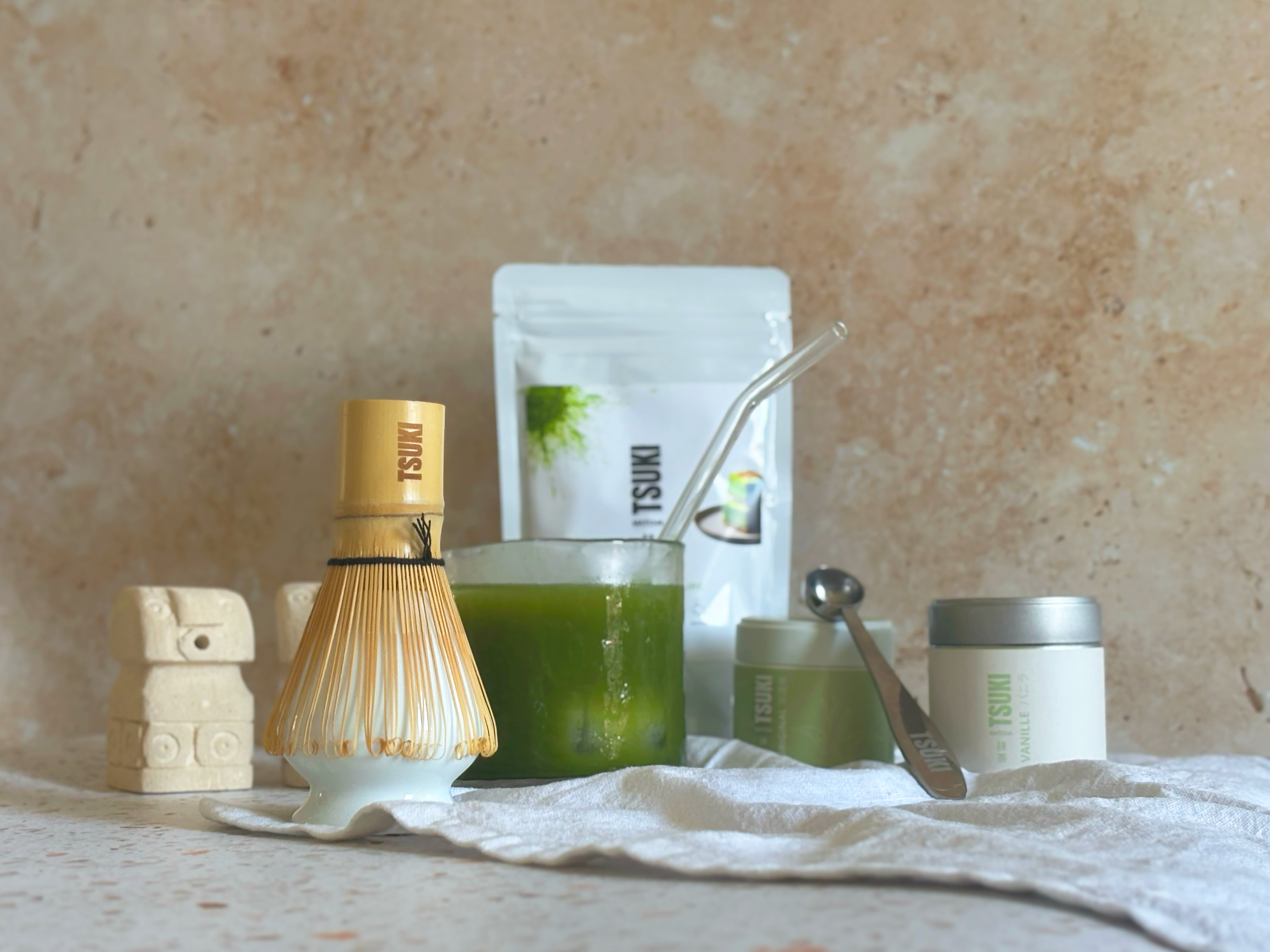

How to make matcha without a whisk (3 methods)
Just received your first matcha but don't have a whisk yet?
Don't panic. There are several ways to prepare a decent matcha without a chasen or an electric whisk.
Here are three troubleshooting methods that actually work, with their advantages and limitations.
Before you start: the golden rule
Whatever method you use, one step remains essential: sifting your matcha. Matcha powder naturally forms small clumps. If you don't sift it, no makeshift utensil will be able to completely eliminate them.
Pass your matcha through a fine sieve or small tea strainer before mixing it with water. This takes ten seconds and significantly improves the result, regardless of the preparation method chosen.

For all methods below, use 1.5 to 2g of matcha (one level teaspoon) and 70 to 80ml of hot water between 70 and 75°C. Never use boiling water. Water that is too hot makes matcha bitter and destroys some of its aromas. For a complete guide to dosages and temperatures, consult our matcha preparation guide.
Method 1: The shaker or glass jar
This is the most effective method when you don't have a whisk. It works with any airtight container: cocktail shaker, sports shaker, Le Parfait type glass jar, or even a small bottle with a tight-fitting cap.
How to do it
Sift your matcha into the shaker or jar. Add hot water (be careful not to use a container that cannot withstand heat). Close tightly. Shake vigorously for 15 to 20 seconds.
Open gently, as the pressure can make the lid pop off. Pour into your cup or add cold milk for an iced matcha latte.
The result
The matcha is well dissolved, without clumps. You even get a slight foam on the surface. The texture is homogeneous and pleasant. This is by far the best alternative to a whisk for daily matcha preparation.
This method is also ideal for travel or at the office. Take a small jar, a sachet of quality matcha, and hot water. In a few seconds, your matcha is ready, wherever you are.
Advantages
Homogeneous, clump-free result. Slight foam on the surface. Convenient for travel. Allows you to prepare an iced matcha directly by adding ice cubes. No specific accessories to buy.
Limitations
The foam is less fine and less airy than with a chasen. Be careful with glass containers with hot water (risk of breakage). The pressure can be surprising when opening.
Method 2: The electric kitchen whisk or mini-blender
If you have an electric milk frother, a small battery-powered kitchen whisk, or a mini-blender (individual blender type), you can use them to prepare your matcha.

How to do it
Sift the matcha into a bowl or large cup. Add hot water. Submerge the electric whisk or frother and run it for 15 to 20 seconds. Move the device up and down to incorporate air and create foam.
If you are using a mini-blender, pour the matcha and water into the cup, blend for 10 to 15 seconds, then transfer to your cup.
The result
The matcha is perfectly dissolved. The foam is more generous than with a shaker, even if it remains a little less fine than with a traditional chasen. It's an excellent compromise between practicality and quality.
If this method suits you, an electric frother dedicated to matcha could become an everyday ally. To compare options, see our article electric whisk or chasen: which to choose?
Advantages
Result close to a dedicated whisk. Fast (15 seconds). Versatile (also used for frothing milk). Many households already have one.
Limitations
A classic kitchen whisk (with rotating beater) can be too powerful and splash. A coffee frother may not be long enough to reach the bottom of a cup. Requires batteries or charging.
Method 3: The fork (troubleshooting)
Let's be honest: the fork is a last resort. It works, but the result is significantly inferior to the other two methods. If you really have nothing else on hand, here's how to do it.

How to do it
Sift the matcha into a small bowl (not a cup, you need space for movement). Add a tablespoon of hot water. Mix with the fork, crushing any clumps against the sides of the bowl. Gradually add the rest of the water, whisking as vigorously as possible with the fork, trying to replicate a zigzag motion.
The result
The matcha will be mixed but not perfectly homogeneous. Some micro-clumps may persist. The foam will be almost non-existent. The taste will be correct but the texture will lack finesse.
This is an acceptable solution for tasting matcha while waiting to receive a real whisk. But it's not a method to adopt long-term if you want to fully appreciate the aromas and texture of your matcha.
Advantages
Everyone has a fork. No special equipment needed. Can help out in any circumstance.
Limitations
Possible clumps. No foam. Less pleasant texture. Risk of not appreciating matcha at its true value and judging it too bitter or too grainy when the problem comes from the method, not the tea.
Why the chasen remains the best option
The three methods above are troubleshooting solutions. They allow you to make matcha correctly, but none can rival the result obtained with a chasen (the traditional bamboo whisk).

The chasen was designed centuries ago for one purpose: to whisk matcha. Its 80 to 120 bamboo prongs create a movement that incorporates air optimally. The result is a fine, light, and creamy foam that releases all the rich aromatic qualities of matcha. The mouthfeel is incomparable.
The chasen also transforms preparation into a special moment. The act of whisking in an M or W motion for 15 seconds has something soothing, almost meditative. Many of our customers tell us that this morning ritual has become their favorite moment of calm during the day.
In terms of price, a good quality chasen costs between €10 and €25. It's a minimal investment for a considerable difference in results. To get the most out of it, learn the right techniques with our guide how to use the chasen and extend its lifespan with our tips for caring for your bamboo whisk.
At TSUKI, our Ritual Kit includes ceremonial grade matcha, a handmade chasen, a measuring spoon, and a matcha bowl. Everything you need to go from troubleshooting to a true matcha experience.
Also discover our complete guide to essential matcha accessories.
FAQ: preparing matcha without a whisk
Can matcha be mixed with a spoon?
Technically yes, but the result will be poor. A spoon cannot incorporate air or effectively break up clumps. The matcha will remain gritty and without foam. At a minimum, prefer the shaker or jar method, which gives a significantly better result.
Can matcha dissolve in cold water?
Yes. Matcha is a suspension, not an infusion. It also mixes in cold water. However, dissolution is more difficult in cold water. Use a shaker or blender to compensate. Hot water remains the simplest solution for obtaining smooth matcha without special accessories.
Is the result without a whisk really different?
Yes, the difference is noticeable. Without a whisk, you get matcha that is mixed but not emulsified. The foam is absent or coarse. The mouthfeel is less creamy. The taste may also seem more bitter because the aromas are not released in the same way. It's like the difference between filter coffee and espresso: both contain coffee, but the experience is very different.
What is the cheapest accessory to prepare matcha well?
The chasen (bamboo whisk) remains the most affordable and effective accessory. You can find them starting from €10, and the result is superior to any troubleshooting method. At TSUKI, our bamboo whisk is designed to offer perfect foam from the first use.
Can a classic blender be used for matcha?
Yes, a blender works well to dissolve matcha. It's even very practical for matcha smoothies. However, for pure matcha (matcha + water), a blender is oversized, and cleaning takes longer than the preparation itself. A shaker or chasen are more suitable for daily use.
Does matcha prepared without a whisk have the same benefits?
Yes. The preparation method does not affect the nutritional properties of matcha. Whether you use a chasen, a shaker, or a fork, you consume the same amount of catechins, L-theanine, and antioxidants. The difference is only in taste and texture.
Ready to experience true matcha? Discover our TSUKI Ritual Kit and transform every cup into an exceptional moment.


