
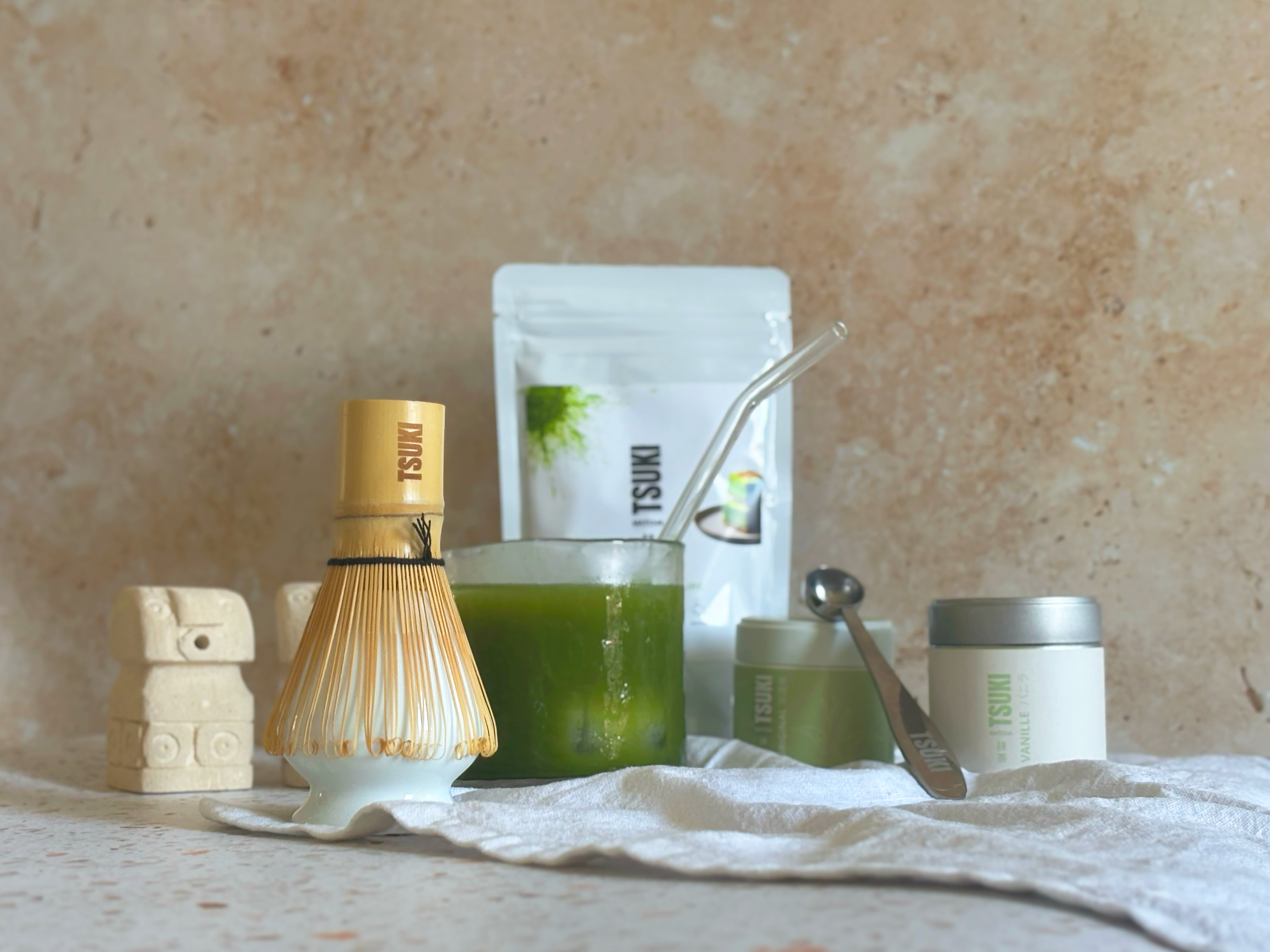

Matcha composition: what does this green powder really contain?
Matcha is often presented as a superfood. But what exactly does it contain? This fine green powder is much more than just ground tea. Catechins, EGCG, L-theanine, caffeine, chlorophyll, vitamins: each component plays a precise role in the effects experienced.
This article deciphers the composition of matcha, to understand where its benefits come from and why not all matchas have the same nutritional value.
Catechins and EGCG
Catechins are a family of polyphenols naturally present in the tea plant. They are the star antioxidants of matcha, and the reason it is associated with so many benefits. Matcha contains four main catechins: EGCG, EGC, ECG, and EC.
EGCG (epigallocatechin gallate) is the most studied and most potent. It accounts for about 50% of total catechins. EGCG neutralizes free radicals, unstable molecules produced by oxidative stress, pollution, UV rays, and cellular aging.
What makes matcha unique is its concentration. One gram of matcha contains 60 to 130 mg of catechins, 10 to 15 times more than a cup of brewed green tea. The reason is mechanical: you consume the entire ground leaf, not just a filtered infusion where a large part of the compounds remain in the discarded leaves.
Matcha's catechins are also protected by the production process. Shading the tea plants preserves chlorophyll and concentrates active compounds. Brief steaming after harvest stops oxidation. Slow grinding with a stone mill avoids heat that would degrade the molecules.
L-theanine
L-theanine is an amino acid almost exclusive to the tea plant (Camellia sinensis). It represents 1 to 3% of the dry weight of matcha, an exceptional concentration compared to a classic green tea where it is much more diluted.
Its peculiarity: it crosses the blood-brain barrier and stimulates the production of alpha waves in the brain. These waves are associated with a state of relaxed alertness, the kind sought during meditation or concentrated work.

L-theanine has two major effects. It promotes concentration without nervousness, making matcha a sought-after ally for cognitive work and memory. And it smooths the effect of caffeine by modulating its peak and prolonging its action, which avoids the typical coffee crash.
The L-theanine concentration in matcha comes directly from shading. When tea plants are deprived of light 3 to 4 weeks before harvest, they accumulate more L-theanine to compensate for reduced photosynthesis. This amino acid also gives matcha its characteristic umami flavor, this deep and savory fifth taste.
Matcha caffeine
Matcha contains about 30 to 35 mg of caffeine per gram, or 60 to 70 mg for a standard 2 g cup. That's half as much as an espresso but enough to feel a clear stimulating effect.
What distinguishes matcha caffeine from coffee caffeine is its biochemical environment. In coffee, caffeine acts alone and quickly. In matcha, it is accompanied by L-theanine which moderates its absorption and effect. The result: a more gradual, more stable energy, without the nervous peak or the crash.
Caffeine content varies by grade and harvest. A first flush matcha, shaded for a long time, contains more caffeine than a late harvest matcha. Ceremonial matcha contains slightly more caffeine than culinary matcha, contrary to popular belief.
Chlorophyll and vitamins
The vibrant green color of matcha comes from chlorophyll. Prolonged shading forces tea plants to produce more chlorophyll to maximize the absorption of remaining light. Quality matcha can contain up to 4 times more chlorophyll than standard green tea.
Chlorophyll is not just a pigment. It has antioxidant properties and is thought to be involved in detoxification (binding to heavy metals in the digestive tract). It also contributes to a brighter complexion in regular consumers.
Matcha also provides a series of vitamins and minerals in moderate amounts: vitamin C, vitamin E, B vitamins, potassium, calcium, iron, zinc. None of these concentrations are sufficient to make matcha a major source, but together they contribute to its complete nutritional profile.
The particularity of matcha in all this: total ingestion. Unlike brewed tea where you discard the leaves, matcha allows you to consume the plant material in its entirety. Each cup provides 100% of the leaf's compounds, whereas a classic infusion only releases 20 to 30%.
Why quality changes composition
Two matchas can have the same "matcha" label and radically different compositions. Here's what varies the actual concentration of active compounds.

Shading. Matcha shaded for 3 to 4 weeks concentrates chlorophyll, L-theanine, and catechins. Matcha that is lightly shaded or not shaded at all will have a duller color and a less rich composition.
Harvest. The first spring harvest (Ichibancha or First Flush) yields the youngest leaves most concentrated in nutrients. Subsequent harvests produce more mature leaves, with less L-theanine and more bitterness.
Cultivar. Different tea plant varieties (Yabukita, Okumidori, Saemidori) have slightly different biochemical profiles. The choice of cultivar influences L-theanine content and aromatic profile.
Grinding. Rapid mechanical grinding heats the powder and degrades some active compounds. Traditional slow, cold stone grinding preserves the intact composition. This ancestral method, still practiced today by the best producers, is an integral part of Japanese matcha culture.
Freshness. Matcha oxidizes quickly after opening. Matcha stored for three months after opening has lost a significant portion of its L-theanine and catechins. The color turns khaki, the taste becomes flat. This is why the 30g format is recommended: it is consumed before oxidation degrades the product too much.

Ceremonial grade matcha grown in Japan with prolonged shading, from the first harvest, stone-ground and stored correctly contains much more than its low-end version. The 70 mg of catechins indicated on the label can actually range from 60 to 130 mg depending on quality. To fully understand what this powder really is, our presentation "what is matcha in 5 minutes" covers the essential basics.
FAQ: Matcha composition
Does matcha contain sugar?
No. Pure matcha contains no sugar. However, preparations sold as "matcha latte powder" or "sweet matcha" often contain 50% or more added sugar. Always check the ingredient list: real matcha contains only one ingredient, matcha.
How many calories in matcha?
Pure matcha powder provides about 3 kcal per gram, or 5 to 6 kcal per cup prepared with water. This is negligible. The calories in a matcha latte come almost entirely from the milk used (100 to 150 kcal depending on the milk) or any added sugar.
Is matcha a good source of protein?
Matcha contains about 5g of protein per 100g of powder, in the form of amino acids including L-theanine. But since you only consume 2g per cup, the actual intake is negligible (0.1g). Matcha is not a significant source of protein.
What is the difference in composition between matcha and green tea?
Same plant, but concentration changes everything. For the same weight, matcha contains about 10 times more catechins, 5 times more L-theanine, and 3 times more caffeine than brewed green tea. The reason is twofold: shading concentrates the compounds in the leaf, and total ingestion of the powder means you consume everything the leaf contains.
Is matcha rich in iron?
Matcha contains moderate amounts of iron (about 17 mg per 100g of powder), but this is non-heme iron, which is less well absorbed than animal iron. In addition, tannins in matcha can reduce the absorption of iron from other foods consumed at the same time. It is not a preferred source of iron if you have a deficiency.
Is the composition of ceremonial and culinary matcha the same?
Qualitatively yes, quantitatively no. Ceremonial grade matcha, from shaded first flushes, contains more L-theanine and chlorophyll. Culinary matcha, from later harvests, contains more bitter catechins and fewer aromatic compounds. Both are matcha, but their profiles differ depending on their intended use.
Optimal composition depends on every step. Our ceremonial grade matchas are cultivated in Japan with prolonged shading, first harvest, and stone grinding, to preserve every active compound.


