

Matcha whisk: Amazon, Action, Aroma Zone… which one to buy?
The bamboo whisk (chasen) is the accessory that makes the biggest difference in matcha preparation. But between the €4 chasen at Action, the dozens of models on Amazon, and the Aroma Zone whisk, the choice isn't obvious.
This comparison analyzes each option by purchasing channel: bamboo quality, number of tines, durability, and value for money.
Action Matcha Whisk
Action regularly offers bamboo chasens for €3 to €5, often as part of seasonal arrivals. This is the lowest market price for a matcha whisk.
What you get. A bamboo chasen with 60 to 80 tines, generally quite thick and stiff. The packaging is minimal, with no precise indication of the bamboo's origin or the exact number of tines.
What works. For a first try, the Action whisk does the job. It dissolves the matcha correctly and produces a minimum amount of foam. If you've never used a chasen and want to test the technique before investing, this is an accessible entry point.
Limitations. The tines are often stiff from the start and break quickly with daily use. After two to four weeks, several tines are broken or deformed, which reduces efficiency and can leave bamboo splinters in your matcha. The whisk is not designed to last; it's a disposable consumable.
Verdict. Okay for a one-time test. Not viable for regular use. If you enjoy matcha after your first try, plan to upgrade to a better quality chasen.
Amazon Matcha Whisk
Amazon offers the widest selection of chasens, with prices ranging from €8 to €25. The majority come from Chinese manufacturers, with a few Japanese or European brands at higher prices.
What you get. A chasen with 80 to 120 tines depending on the model, often delivered with a stand (kusenaoshi) and sometimes a chashaku scoop. The packaging is more refined than at Action, and product descriptions generally indicate the number of tines.
What works. Models between €15 and €20 with 100 tines are often very good. The bamboo is more flexible, the tines are finer, and the foam produced is significantly superior to an Action whisk. Some €20 models rival artisanal chasens in whisking quality.
Limitations. Quality varies greatly from one seller to another. Product photos are sometimes misleading (the whisk received is less refined than pictured). Durability depends on the bamboo density, which is impossible to assess before holding it. Read reviews and filter by lifespan; that's the most reliable criterion.
Verdict. The best value for money if you choose carefully. Aim for 100-tine models between €15 and €20, with at least 50 positive reviews mentioning durability.
Aroma Zone Matcha Whisk
Aroma Zone, known for natural cosmetics, also offers a bamboo chasen and matcha accessories. The positioning is DIY and wellness-oriented.
What you get. A classic bamboo chasen, usually 80 tines, sold for around €10-€12. Aroma Zone also offers matcha (more for cosmetics than drinks) and accessories like a bowl.
What works. The quality is decent, comparable to mid-range Amazon models. The bamboo is of medium density, the tines fine enough to produce a decent foam.
Limitations. The price is higher than Action but without a clear advantage over a good Amazon model at the same price. As Aroma Zone's positioning is cosmetic, the whisk and matcha sold together are sometimes more designed for face masks than for drinking. Check that the associated matcha is food-grade if you intend to drink it.
Verdict. A decent option if you're already ordering from Aroma Zone. No particular reason to prefer it over a good Amazon model at the same price.
Artisanal Whisk (Specialized Matcha Brands)
Specialized matcha brands offer chasens specifically selected for beverage preparation, with quality control over the bamboo, number of tines, and finish.
What you get. A chasen with 80 to 120 natural, flexible, and resistant bamboo tines. The tines are finely cut to maximize foam and minimize clumps. The whisk is designed to last 4 to 6 months of daily use with proper care.

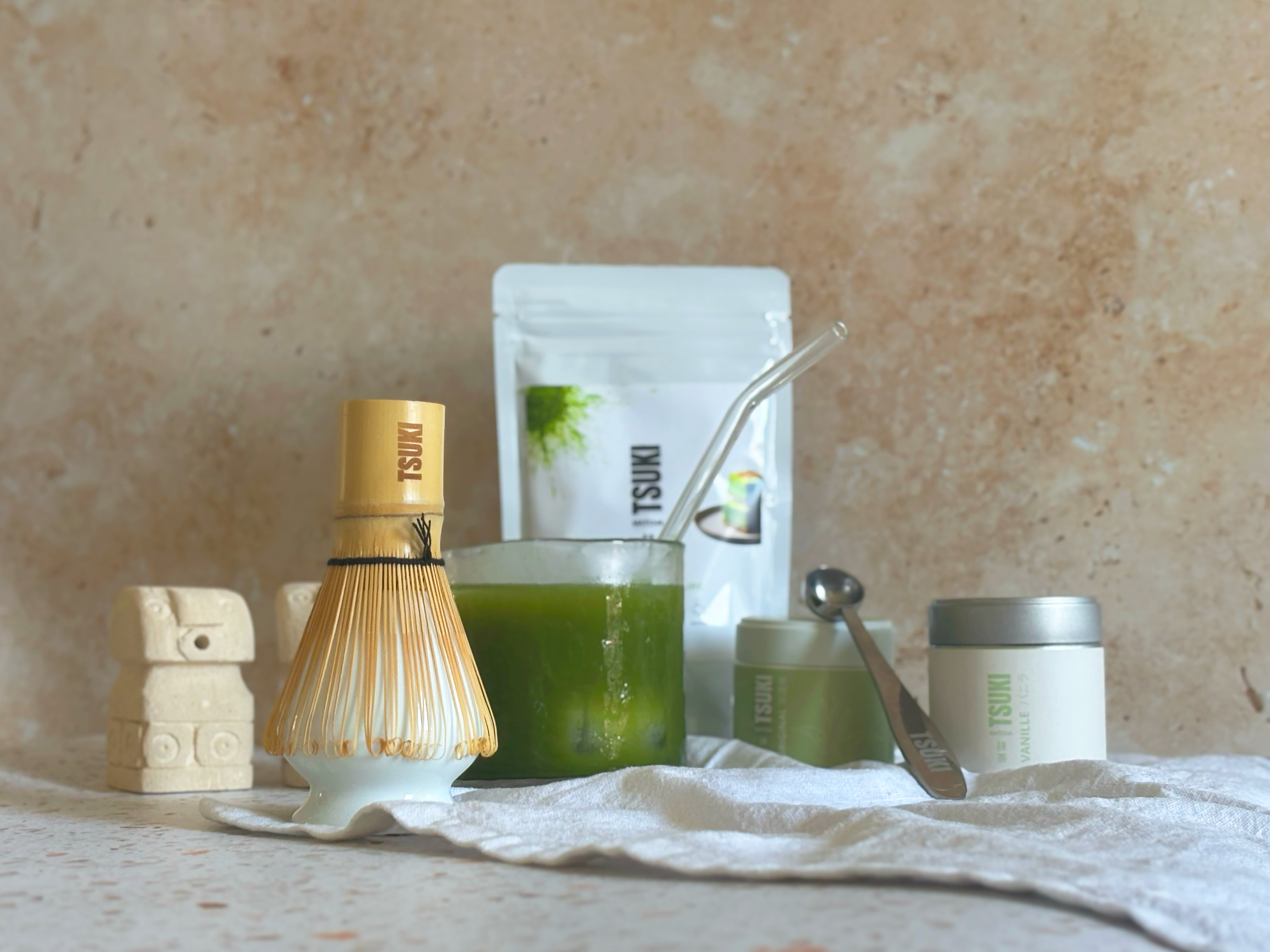
The TSUKI chasen is crafted from dense bamboo, with fine, flexible tines that return to their shape after each use. It is tested with our matchas to guarantee an optimal result from the very first preparation.
What works. The difference is palpable. An artisanal chasen is lighter, more flexible, and the whisking motion is smoother. The foam is finer, more consistent, and more persistent. Durability is significantly superior: where an Action chasen breaks in 3 weeks, a quality chasen lasts 4 to 6 months.
Limitations. The price is higher (€15 to €25). But when factored into the number of cups prepared, the cost per use is often lower than that of a cheap chasen replaced every month.
Verdict. The most relevant choice for regular use. The investment pays for itself within a few weeks of daily matcha.
How to Choose Your Matcha Whisk
Five criteria help evaluate a chasen before purchase.
Number of tines. 80 tines is the minimum for a decent result. 100 to 120 tines is ideal for fine, creamy foam. Below 80, the whisk produces coarse bubbles rather than a smooth foam.
Flexibility of tines. The tines should bend slightly under gentle pressure and return to their position. Stiff tines that don't bend are a sign of low-quality bamboo. Properly using your whisk preserves this flexibility over time.
Type of bamboo. Untreated natural bamboo is preferable. Avoid painted or dyed chasens (often a sign of disguised inferior quality bamboo).
Finish of the tips. The tips of the tines should be smooth and tapered, not cut bluntly. Blunt tips scratch the bowl and leave splinters in the matcha.
Durability. A good chasen loses a few tines over time (which is normal) but does not deform overall. Caring for your chasen (rinsing after each use, drying on a stand, never in the dishwasher) extends its lifespan by 50% and allows you to focus on preparing matcha.
| Channel | Price | Tines | Durability | Ideal for |
|---|---|---|---|---|
| Action | €3-5 | 60-80 | 2-4 weeks | First test |
| Amazon (mid-range) | €15-20 | 80-120 | 2-3 months | Regular use, controlled budget |
| Aroma Zone | €10-12 | ~80 | 1-2 months | Existing Aroma Zone customer |
| TSUKI (artisanal) | €15-20 | 80-100 | 4-6 months | Daily use, quality |
FAQ: Buying a Matcha Whisk
Can an electric whisk replace a chasen?
An electric frother dissolves matcha effectively and produces decent foam. It is faster and more convenient for daily use. The chasen produces a finer and more consistent foam, with a ritualistic dimension that the frother lacks. The ideal is to have both: the chasen for pleasure, the frother for busy mornings.
How many tines are needed?
80 tines is the functional minimum. 100 tines is the standard for quality chasens. 120 tines is high-end, used for koicha (thick matcha). For daily use in usucha (classic matcha) or lattes, 80 to 100 tines are sufficient.
How do I know if my chasen is worn out?
If more than 10 tines are broken, if the remaining tines no longer return to their natural curved position, or if the foam no longer forms properly, it's time to replace it. A chasen is a consumable, like a coffee filter. Replacing it regularly is part of the ritual.
Can a chasen be put in the dishwasher?
Never. The dishwasher deforms the tines, cracks the bamboo, and reduces its lifespan to just a few uses. Rinse the chasen with lukewarm water after each use, and dry it on a stand (upside down) or upright in a glass. That's all it needs.
Should I buy the whisk alone or in a kit?
If you don't have any matcha accessories, a complete kit is more economical and more coherent. If you already have a bowl and scoop and simply want to replace your worn-out chasen, buying it alone is more relevant.
Want a chasen that lasts? The TSUKI whisk is crafted from dense and flexible bamboo, designed for daily use and compatible with all our matchas.


