

Hojicha vs. matcha: What are the real differences between these two Japanese teas?
Hojicha and matcha are two Japanese teas often confused, yet they are radically different. One is made from roasted leaves, the other from fine powder. One is mild and smoky, the other umami and vegetal. Let's explore all the differences to help you choose according to your tastes and the occasion.
When you're interested in Japanese teas, two names often come up: matcha and hojicha. Both are of Japanese origin, both come from the same tea plant, and yet they are so different that they could be two drinks with nothing in common. One has become a vibrant green global star, while the other remains more niche with its amber-brown color. This article covers all the differences between hojicha and matcha: processing, taste, caffeine, uses, price, and how to choose between the two according to your desires.
Hojicha and matcha: two teas, two worlds
Before going into detail, let's lay the groundwork. Hojicha and matcha are both Japanese green teas, derived from the same plant: Camellia sinensis. But that's about all they have in common.
Matcha in brief
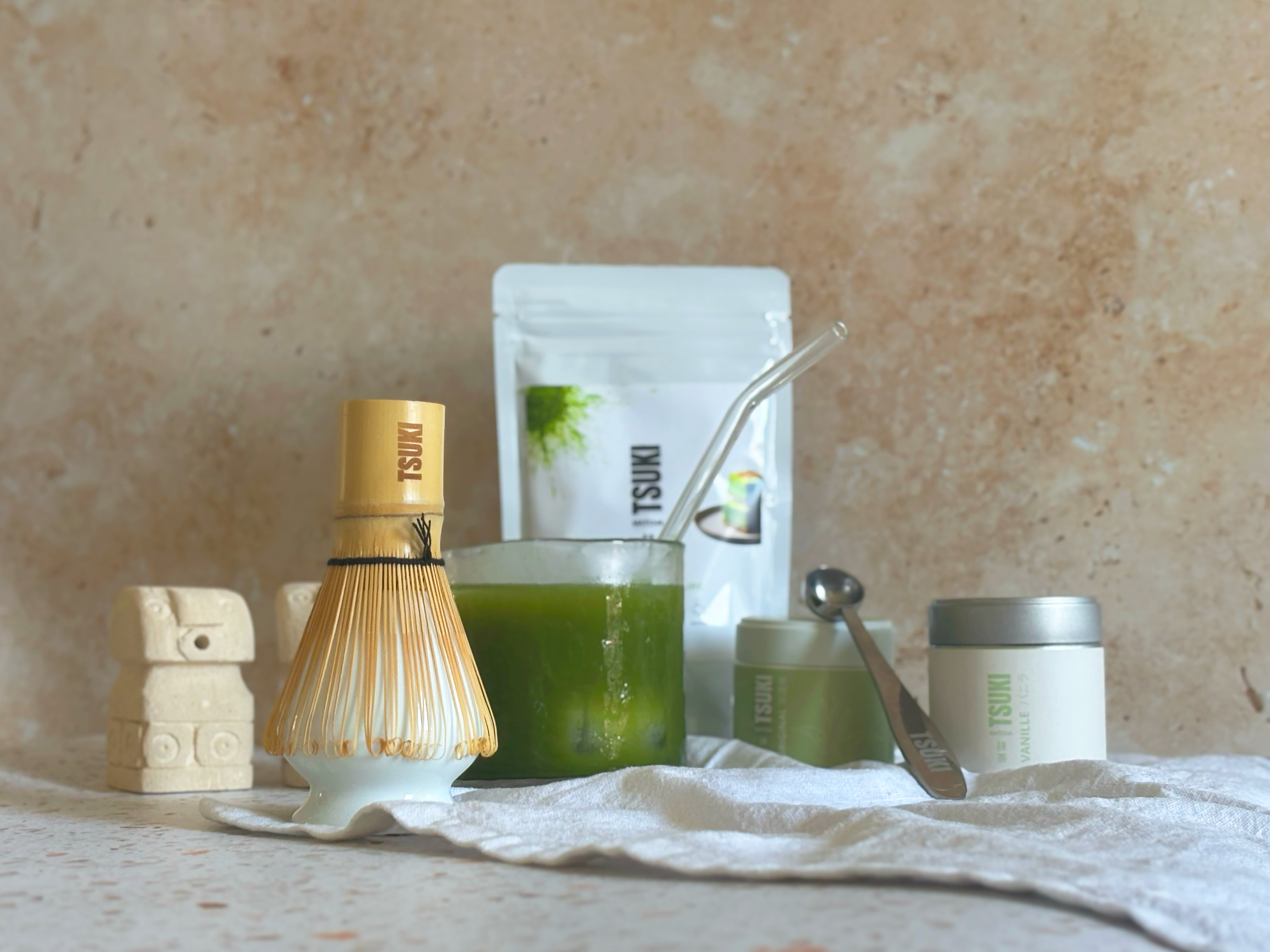
Matcha is a fine green tea powder made from shade-grown leaves (tencha), steamed immediately after harvesting, dried flat, then slowly ground with a stone mill.

Vibrant jade green color, umami and vegetal taste, intense and concentrated profile. For a complete overview of its fundamental characteristics, the introduction to everything you need to know about matcha in 5 minutes provides the basics.
Hojicha in brief
Hojicha (焙じ茶) is a Japanese green tea made from whole leaves, roasted at high temperature after drying.
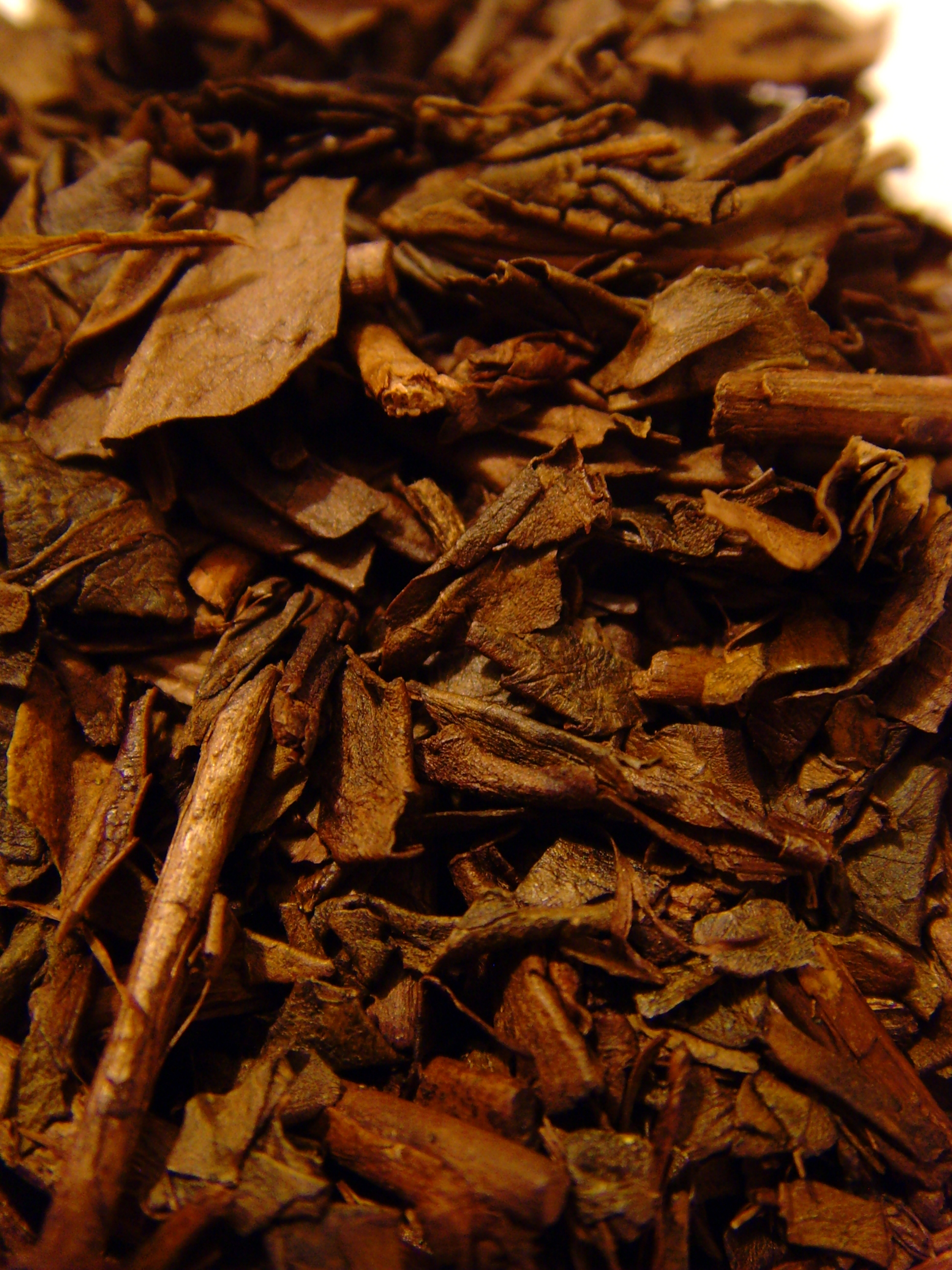
This roasting gives it its characteristic amber-brown color and its roasted, mild, almost chocolatey aromatic profile. Much lower in caffeine than matcha, it is traditionally served at the end of meals or as an evening drink in Japan.
The origin of each tea
Matcha has existed in its current form since the 19th century in Japan, and its technical roots lie in the Chinese Song dynasty in the 12th century. Hojicha is much more recent: it was created in the 1920s in Kyoto by a merchant who roasted his surplus green tea leaves to avoid wasting them. This recovery technique has become a true Japanese specialty. For the complete chronology of matcha, the details on the origin of matcha from China to Japan trace a thousand years of history.
Differences in processing
It all starts with how the leaves are treated after harvest. This step explains most of the subsequent differences.
Matcha: shading and grinding
For matcha, tea plants are covered with black cloths 3 to 4 weeks before harvest, blocking up to 90% of the light. This shading forces the plant to produce more chlorophyll and L-theanine, which gives it its intense color and umami profile.

After harvesting, the leaves are steamed (15-45 seconds), dried flat, de-veined (tencha), then slowly ground with a stone mill. This complete chain of transformation applied to the Camellia sinensis tea plant grown for matcha explains the product's specificity.
Hojicha: high-temperature roasting
For hojicha, the tea plants are not shaded (which already distinguishes it from matcha at the outset). The leaves are picked, steamed, and dried in the usual way, as for a standard sencha green tea. Then comes the step that changes everything: high-temperature roasting (160-200 °C) in a metal cylinder for a few minutes. This roasting caramelizes natural sugars, radically changes the color (green to brown) and the aromatic profile (vegetal to roasted). Hojicha remains in whole leaves, never ground.
Why hojicha is brown and matcha is green
The color difference is entirely due to roasting. High heat degrades chlorophyll (which gives the green color) and caramelizes sugars and amino acids, which creates the amber-brown color and roasted aromas of hojicha. Matcha, on the other hand, is protected from this degradation thanks to immediate low-temperature steaming after harvesting, which preserves all the chlorophyll. The processing method therefore directly determines the color of matcha and what it reveals about its quality.
Differences in taste and aromas
This is probably the most striking difference when tasting. Hojicha and matcha are poles apart on the palate.
The matcha profile
Matcha has a concentrated and complex aromatic profile: marked umami (5th flavor, savory and rich), vegetal notes (fresh grass, spinach), sometimes a slight iodine hint (seaweed), pleasant mild bitterness when well prepared. Its texture is creamy and velvety. It is a tea that demands real attention, not to be drunk distractedly. The exact profile depends on the cultivar and quality, and all the sensations to anticipate for the taste of matcha during a first tasting deserve a guide of their own.
The hojicha profile
Hojicha has a radically opposite profile: mild, roasted, and soothing. Notes of roasted hazelnut, caramel, light chocolate, sometimes smoked wood. Very little bitterness, no marked umami, no vegetal notes. Light texture, clear and amber infusion. It is an "easy-to-drink" tea that is immediately appealing, with no barriers to entry.
Which taste for whom
Matcha is more demanding to get used to: a beginner might be surprised by the umami intensity on the first try. But it offers greater aromatic depth over time. Hojicha is pleasing from the first sip, without preparation. It is an excellent "introductory" tea to the Japanese world for those who do not like the bitterness of classic green teas.
Caffeine, theanine, and effects
Beyond taste, hojicha and matcha have very different effect profiles, which changes their consumption times.
Caffeine content
This is one of the most practical differences. A standard cup of matcha contains 50-70 mg of caffeine (equivalent to an espresso). A cup of hojicha contains only 7-15 mg, which is 5 to 10 times less. Why this difference? Because high-temperature roasting degrades a large part of the caffeine present in the leaves. This is what makes hojicha an acceptable tea even in the late afternoon, whereas matcha should be avoided after 2-3 PM.
L-theanine content
Matcha, being shade-grown (which multiplies L-theanine) and consumed as a whole leaf, contains 15-25 mg per gram, or 30-50 mg per cup. Hojicha, not shade-grown and only infused, contains significantly less. This is also why matcha is more associated with a "calm alertness" effect, and hojicha more with a digestive soothing and relaxing effect.
Respective benefits
Matcha is significantly more concentrated in catechins (especially EGCG), L-theanine, chlorophyll, and antioxidants in general. It is the "functional energy + well-being drink" profile. Hojicha provides fewer antioxidants in absolute quantity (due to roasting, which degrades some of them), but offers a better "digestion + soothing" profile thanks to its low caffeine. Both have their place in a wellness routine, at different times.
Culinary uses and preparations
Both teas lend themselves to different uses in cooking and baking.
Preparing matcha
Matcha is prepared in a few minutes: sift 1-2g of powder, add 60-80ml of 75°C water, whisk with a chasen for 15-20 seconds to obtain a fine foam. It can be drunk pure (usucha) or as a latte (with hot or cold milk). In baking, it is used to make cakes, ice creams, mochi, financiers, cheesecakes. Its vibrant green color is also an important visual argument.
Preparing hojicha
Hojicha is prepared like a classic tea: infuse 1 teaspoon of leaves in 200 ml of 95°C water for 30-60 seconds. Unlike matcha, it handles almost boiling water very well without becoming bitter, thanks to its prior roasting. It can also be served cold as a cold brew. In baking, it brings a roasted, caramelized note that pairs very well with chocolate, nuts, and autumn-winter desserts. Powdered hojicha (rarer) also exists for latte-type uses.
Quick comparison table
| Criterion | Matcha | Hojicha |
|---|---|---|
| Form | Fine powder | Whole leaves |
| Color | Vibrant jade green | Amber brown |
| Aromatic profile | Umami, vegetal, intense | Roasted, caramelized, mild |
| Caffeine per cup | 50-70 mg | 7-15 mg |
| L-theanine | High (30-50 mg/cup) | Low |
| Preparation | Whisked with chasen, 75°C water | Infused, 95°C water, 30-60s |
| Ideal time | Morning and early afternoon | Afternoon, evening, after meals |
| Price per kg (standard quality) | 400-800 €/kg | 50-150 €/kg |
How to choose between hojicha and matcha
The two teas are not competitors; they complement each other. Here's how to choose according to the moment and your craving.
Choose matcha when
- You're looking for gentle, stable energy for the morning or afternoon
- You want to maximize antioxidants and L-theanine
- You appreciate a complex and concentrated aromatic profile
- You want a versatile drink (latte, iced, pastry)
- You enjoy the whisking ritual and the foam
Choose hojicha when
- You're looking for a soothing hot drink at the end of the day
- You are sensitive to caffeine or want an evening tea
- You prefer a roasted, mild profile, without bitterness
- You want to accompany a meal (very good with Japanese cuisine)
- You are new to Japanese tea and want an accessible taste
The ideal: have both
Many Japanese tea enthusiasts use both daily. Matcha in the morning and early afternoon, hojicha in the late afternoon and evening. It's a balanced routine that combines morning energy and evening calm, all with two authentic Japanese teas with complementary profiles. Both also have their place in the vast world of tea in Japanese culture, where each tea has its moment and use.
Frequently asked questions about hojicha and matcha
What is the main difference between hojicha and matcha?
The processing. Matcha is a fine powder of shade-grown leaves, steamed and ground with a millstone. Hojicha is a whole-leaf tea roasted at high temperature. This difference in process explains everything else: color, taste, caffeine, uses.
Hojicha or matcha for the evening?
Hojicha without hesitation. It contains only 7-15 mg of caffeine per cup (5 to 10 times less than matcha) thanks to the roasting that degrades caffeine. It is a tea suitable for consumption at the end of the day, whereas matcha should be avoided after 2-3 PM.
What does hojicha taste like?
Hojicha has a mild, roasted, and caramelized taste, with notes of roasted hazelnut, light caramel, sometimes light chocolate. Very little bitterness, no marked umami. It is an "easy-to-drink" tea that is appealing from the first sip, without bitterness.
Do hojicha and matcha come from the same tea plant?
Yes, both come from Camellia sinensis, like all teas in the world. The difference comes entirely from cultivation and processing. For matcha, tea plants are shaded 3-4 weeks before harvest. For hojicha, no shading. For matcha, grinding into powder. For hojicha, whole roasted leaves.
Which tea contains the most antioxidants?
Matcha, by far. Its shade cultivation, whole-leaf consumption (not just an infusion), and lack of roasting preserve all the catechins and antioxidants. Hojicha contains significantly less due to roasting, which degrades some of them. For maximum benefits, it's matcha.
Does powdered hojicha exist?
Yes, more rarely, but "hojicha matcha" or powdered hojicha exists. It is hojicha ground after roasting, which allows for creamy hojicha lattes. More accessible and less expensive than powdered matcha, it offers a gourmet alternative for lovers of roasted profiles.
Is matcha more expensive than hojicha?
Yes, significantly. Ceremonial grade matcha from Japan costs 400-800 €/kg, while standard quality hojicha costs 50-150 €/kg. The difference comes from the more complex production of matcha (long shading, manual stone mill grinding, selection of tender tencha leaves). Hojicha is also traditionally made with more mature, less expensive leaves.
Can matcha be replaced by hojicha in baking?
Not really. The two yield radically different results. Matcha adds green color and umami-vegetal notes (perfect for cakes, mochi, ice cream with fresh notes). Hojicha adds amber color and roasted caramelized notes (perfect for autumn desserts, chocolate-hazelnut pairings). These are two distinct culinary uses.
Two teas, two experiences
Hojicha and matcha are two gateways into the world of Japanese tea, each with its own character. Matcha for its intensity, its concentration of benefits, and its ritual. Hojicha for its sweetness, accessibility, and versatility in the evening. Choosing between the two doesn't really make sense: it's better to have both in your cupboard and switch between them depending on the moment. This is the richness of Japanese tea tradition, which is not limited to a single product but to an entire family of drinks, each with its own moment.

To discover authentic Japanese matchas of different grades (ceremonial for pure tasting, culinary premium for lattes and pastries), explore our selection of premium Japanese matcha, sourced directly from producers in Shizuoka and Kagoshima.


