
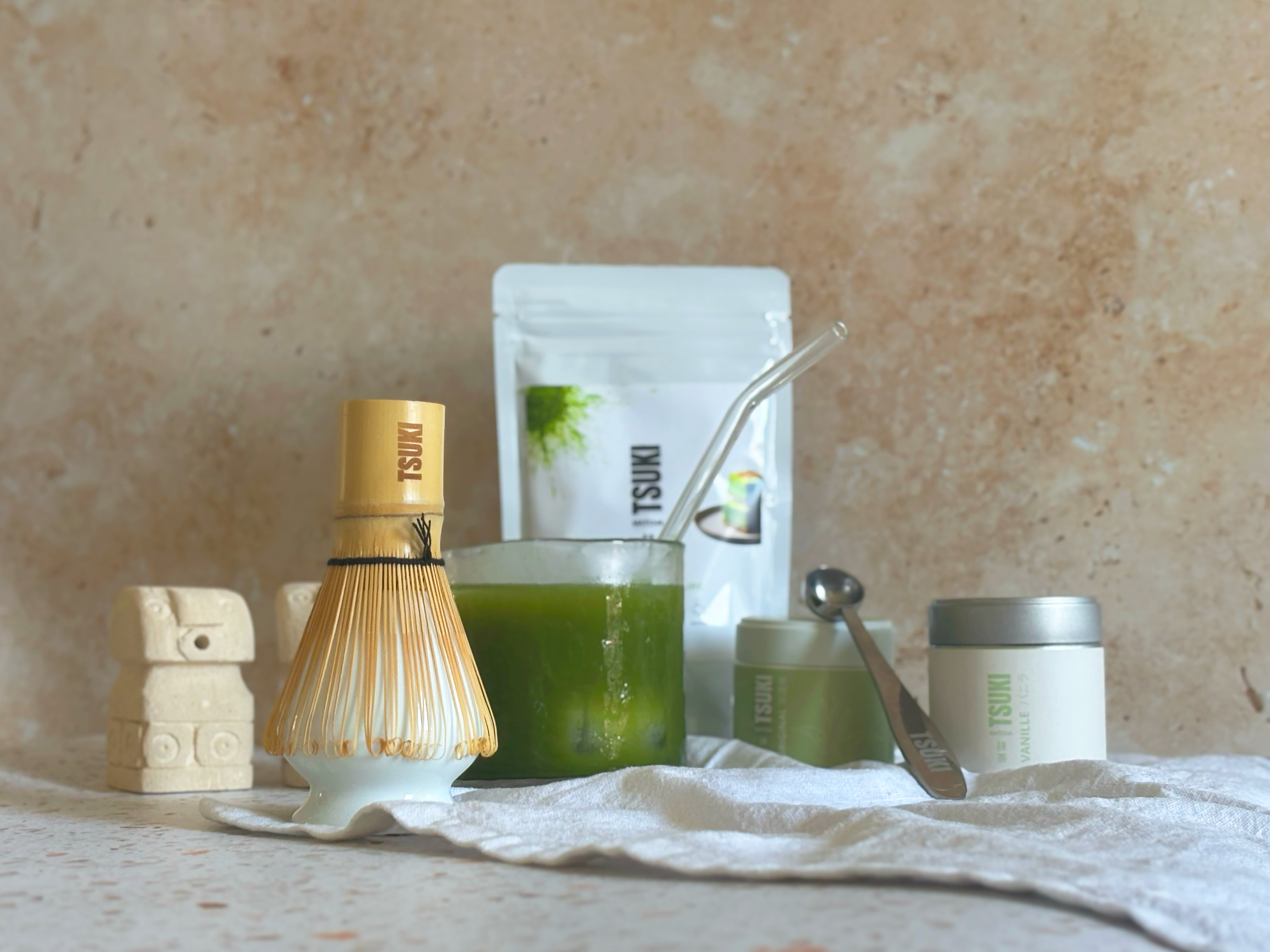

The taste of matcha: what to expect when tasting it for the first time
Many people who say "I don't like matcha" have actually never tasted good matcha.
There's a world of difference between bitter matcha from a supermarket sachet and freshly prepared ceremonial grade Japanese matcha.
This article precisely describes the taste of matcha, explains where bitterness comes from when present, and helps beginners know what to expect before their first cup.
The Flavors of Quality Matcha
Good matcha doesn't have a single taste. It unfolds in several layers of flavors that reveal themselves as you drink it.
Umami
This is the signature of quality matcha. Umami, the fifth recognized taste after sweet, salty, bitter, and sour, evokes something deep, savory, almost meaty. In matcha, it translates into a roundness in the mouth reminiscent of dashi broth, seaweed, or even cooked spinach.
It's this flavor that makes you say "that's good" from the first sip of a well-prepared matcha.
Vegetal Notes
Matcha brings to mind freshly cut grass, young spinach shoots, sometimes even peas. These vegetal notes are delicate and fresh, not aggressive. They come directly from the chlorophyll in the ground leaf and its freshness.
Natural Sweetness
Without any added sugar, good matcha has a slight natural sweetness that comes from amino acids, mainly L-theanine. This sweetness balances any potential bitterness and provides a pleasant finish. The longer the tea plants are shaded before harvest, the more pronounced this sweetness is.
Very Contained Bitterness
Good matcha has a hint of bitterness at the end of the palate, comparable to that of quality dark chocolate. It's discreet, well-integrated, and adds depth to the beverage. It's not unpleasant. The aggressive bitterness that many associate with matcha is not the normal taste of matcha; it's a sign of a problem.
Texture
Taste is also about texture. Well-prepared matcha has a velvety, almost creamy consistency, thanks to the fine foam that forms on the surface. This foam isn't just decorative: it changes the perception of taste, softens the first sip, and carries the aromas to the nose.

Why Some Matchas Are Bitter
If your matcha is unpleasantly bitter, the problem is almost never the matcha itself, but one of the following five factors.

Unsuitable Grade
Culinary matcha is designed for baking and cooking. Its more robust and bitter profile works well with sugar and butter, but it's not intended for drinking. If you drink culinary matcha, you will experience a distinct and unpleasant bitterness. Ceremonial grade matcha is the only option for drinking.
Insufficient Quality Matcha
Matcha grown without prolonged shading, from late harvests, or mechanically ground contains less L-theanine (the sweet molecule) and more bitter catechins. The result: even when prepared correctly, it will be more bitter than a well-grown premium matcha.
Water That's Too Hot
Boiling water burns matcha and instantly releases bitter compounds. All matchas, even the best, become bitter if prepared with 100°C water. The ideal temperature is 70 to 75°C. If you don't have a thermometer, let boiled water sit for 2 to 3 minutes before using it.
Over-dosing
More matcha doesn't mean more flavor; it means more bitterness. The correct ratio is 1.5 to 2g of powder for 70 to 80ml of water. Three grams in the same amount of water will result in an unbalanced, overly concentrated, and too bitter matcha.
Oxidized Matcha
Matcha oxidizes quickly after opening. Matcha stored for three months in a cupboard after opening loses its vibrant color, sweet aromas, and umami notes. What remains is bitterness. This is why the 30g format is recommended for personal use: it is consumed before oxidation degrades the product too much.
Taste Varies with Preparation
The same matcha can have radically different tastes depending on how you prepare it.
Pure Matcha (usucha)
This is the most direct version. 2g of matcha in 70ml of water at 70-75°C, whisked. You taste the matcha unfiltered. All its nuances are perceptible: umami, vegetal, sweetness, a slightly bitter finish. This is the method for appreciating the quality of matcha and detecting its subtleties.
Thick Matcha (koicha)
A traditional and concentrated version. 4g of matcha in 40ml of water, kneaded rather than whisked. The taste is intense, syrupy, almost creamy. Umami dominates, and the sweetness is pronounced. Koicha requires very high-quality matcha, as any flaw is amplified by the concentration.
Matcha Latte
With milk, the taste of matcha mellows. The fat in the milk envelops the bitter notes and enhances the creamy and vegetal aspects. This is the best version for beginners who find pure matcha too intense.

Oat milk best preserves the flavor of matcha, followed by whole milk and almond milk.
Iced Matcha
Dissolved in a little hot water then poured over ice with cold water or cold milk, iced matcha has a more refreshing and slightly less aromatic taste. The cold slightly mutes the umami but also masks any residual bitterness.
Your First Matcha: What to Expect
If it's your first time, here's what to expect and how to make the most of it.
The first sip will surprise you. Matcha is nothing like steeped green tea. The texture is denser, the taste more concentrated, the color more intense. Take time to savor this first impression.
You're looking for reference points. Many beginners try to connect matcha to a familiar flavor. Some find it reminiscent of cooked spinach, others of seaweed, still others of a hint of white chocolate. These comparisons are all valid. Matcha is unique in itself.
You first perceive bitterness. This is normal and temporary. Our palate detects bitterness first, before umami and sweetness. After a few sips, your perception adjusts and you start to feel the other layers.
The finish is longer than expected. Unlike coffee, matcha leaves a sensation in the mouth that lingers for several minutes. The umami extends, sometimes accompanied by a sweetness that appears after the sip. It is this finish that makes matcha memorable.
The second or third time is often better. Many drinkers say their first matcha was confusing and that the second or third cup was a revelation. The palate educates itself, the nuances become legible. Give yourself a few tries before making a conclusion.

To start well, choose a ceremonial grade matcha from a balanced cultivar like Yabukita, prepare it at the right temperature and with the correct dosage, and drink it plain the first time. This will give you the basis for comparison for all your future cups.
FAQ: The Taste of Matcha
Does matcha really taste like green tea?
No. Although matcha and green tea come from the same plant, shading and processing profoundly alter the taste profile. Matcha is more intense, more umami, sweeter, and creamier than classic steeped green tea. The difference is as marked as that between a grape and a glass of wine.
Why does my matcha taste like hay or fish?
These unpleasant notes are a sign of insufficient quality or oxidized matcha. Fresh, quality matcha has fresh vegetal notes, never a taste of hay or fish. Check the color (should be vibrant green), the opening date, and the grade of your matcha.
Can you sweeten matcha?
You can, but good matcha doesn't need it. Its natural sweetness and umami are sufficient. If you need sugar to enjoy your matcha, it often means the matcha itself is not of sufficient quality or the preparation is incorrectly dosed. Sugar masks flavors rather than revealing them.
Does a matcha latte taste the same as pure matcha?
No. Milk softens, rounds out, and partially masks the nuances of matcha. A latte is more accessible for beginners, but it doesn't allow you to truly taste the matcha. Both versions have their place: the latte for daily pleasure, pure matcha to appreciate the quality of a product.
How long does it take to get used to the taste of matcha?
Two to five cups for most people. The first time can be confusing, especially if you're used to coffee. By the third or fourth cup, your palate recognizes the nuances and anticipates the flavors. If after five cups with quality matcha you still don't like it, it may simply be that matcha isn't for you.
How to describe the taste of matcha to someone who has never tried it?
Imagine a concentrated green tea, made creamier and sweeter, with a depth reminiscent of broth or cooked spinach. A well-integrated hint of bitterness, like in dark chocolate. A slightly velvety texture. A finish that lingers in the mouth. It's a unique drink, unlike anything else.

Our matcha production facilities in Shizuoka, Japan.
Ready to taste real matcha? Our ceremonial grade matchas are sweet, umami, and without aggressive bitterness, for a convincing first experience from the first cup.


