
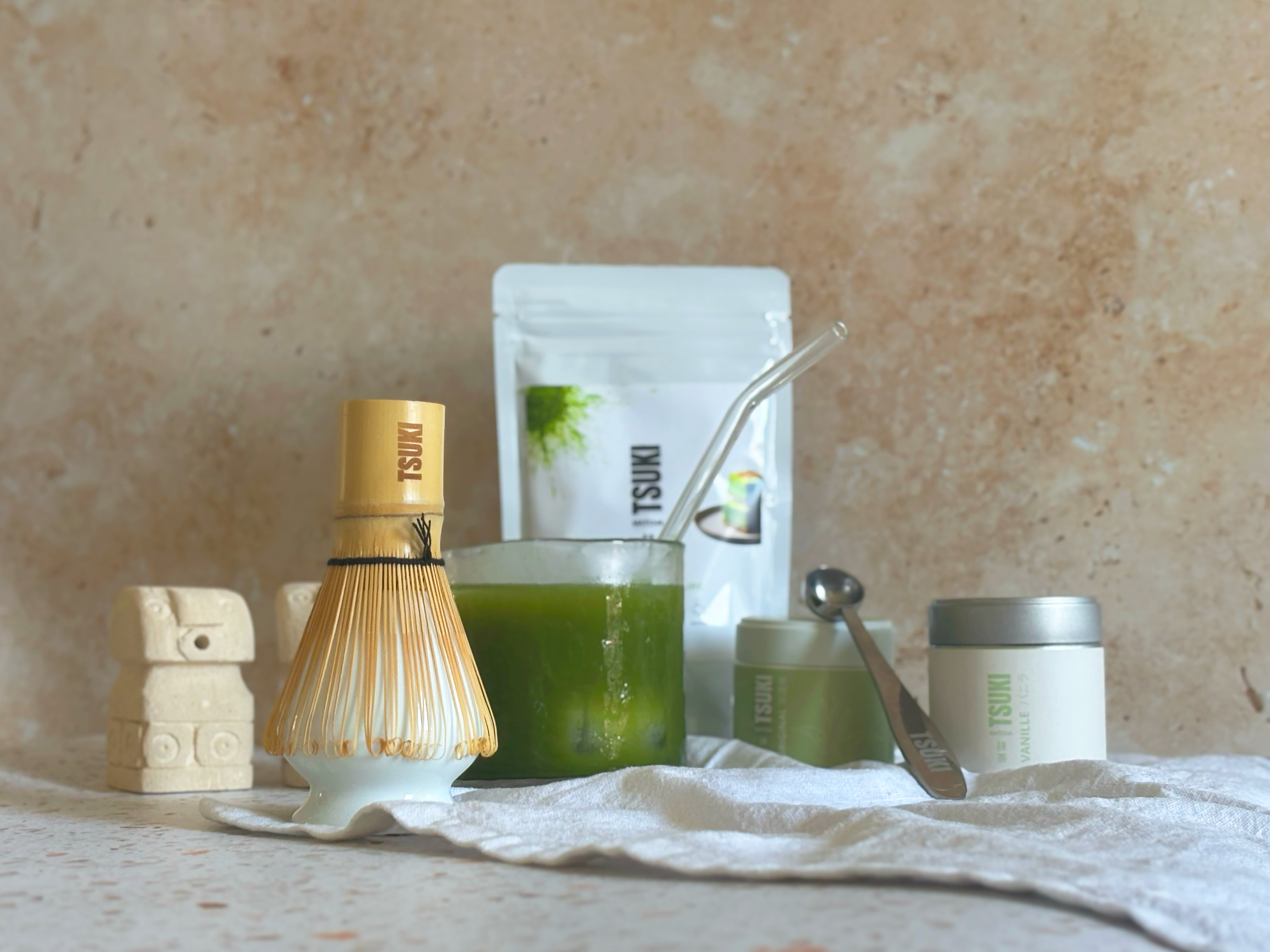

Matcha tea: what exactly is it, and how does it differ from matcha?
You type "macha tea" or "macha" into Google and you get results talking about matcha. That's not a mistake on your part. Both words refer to the same thing. Here's what this Japanese green powder really is, why the spelling varies, and how to choose the right product for your needs.
Matcha is increasingly intriguing. We see it in cafes, on social media, in iced latte recipes. But one question often comes up for beginners: should it be written "macha" or "matcha"? And more importantly, is there a real difference between the two?
The short answer is one sentence: Macha and matcha refer to exactly the same product. The only difference is in the spelling.
Macha or matcha: one and the same green powder
The word comes from Japanese. It is written with two characters that mean "ground tea" or "powdered tea." In Western transcription, it is written "matcha," with a T.
The form "macha," without the T, is a very common misspelling in French. It simply comes from the way the word is pronounced orally. When spoken, the T blends into the rest. Many people therefore write what they hear.
There is no powder called "macha" that is different from matcha. No brand, no grade, no specific origin. If a website sells you "macha tea" as a separate product, it's purely a keyword issue, not a product issue.
Why do so many people write macha?
Three main reasons explain this common confusion.
- Pronunciation. We hear "matcha" and write it phonetically.
- Novelty. Many people are discovering this drink and have never seen the word written.
- Influence of other languages. In some transcriptions, the double T disappears.
In short, writing "macha" is nothing to be ashamed of. It's even very common. But to search and buy well, it's better to know the exact spelling.
What exactly is matcha?
Matcha is a Japanese green tea reduced to a very fine powder. Its peculiarity is that it is not infused. It is mixed directly with water or milk. So you drink the entire leaf, not just its infusion.
This powder comes from tea leaves grown in the shade for several weeks before harvesting. This shading changes everything. It concentrates chlorophyll, develops amino acids, and softens bitterness. This is what gives matcha its intense green color and its round taste.
After harvesting, the leaves are dried and then processed into tencha. This tencha is then slowly ground, often on a stone mill, until a powder as fine as talc is obtained.
To understand all the culture and expertise behind this powder, this complete overview of matcha in a few minutes lays out the essential foundations.
Matcha tea vs. classic green tea: it's not the same
Many beginners confuse matcha tea with ordinary green tea. However, the method of consumption is completely different.
With classic green tea, you steep leaves in hot water, then remove them. You only drink the flavored water. A large part of the nutrients remains in the discarded leaves.
With matcha, nothing is lost. The entire leaf is consumed in powder form. You therefore benefit from all its compounds, including antioxidants and the famous L-theanine, an amino acid that provides calm and focused energy.
| Criterion | Macha / Matcha | Classic Green Tea |
|---|---|---|
| Form | Fine powder | Whole leaves |
| Preparation | Mixed, whisked | Infused then filtered |
| Leaf consumed | Entire | Discarded after infusion |
| Energy | Stable and sustained | Lighter |
The different types of matcha tea
Now that you know matcha and matcha are identical, there's a real distinction to be aware of. Not all matchas are created equal. They are mainly classified into two grades.
Ceremonial grade
This is the highest quality. It comes from the first, youngest, and tenderest leaves. Its color is vibrant, its taste soft and vegetal, without aggressive bitterness. It is drunk plain, simply with water, or as a latte to reveal its roundness.
If you're looking to discover the true taste of matcha, this ceremonial grade matcha versus culinary grade is the one to prioritize.
Culinary grade
More robust, sometimes more bitter, it is designed for cooking and baking. Its flavor stands up well to sugar, white chocolate, or milk. It's the ally for cakes, ice creams, and gourmet recipes.
Neither is inherently better. It all depends on the use. For drinking, aim for ceremonial. For cooking, culinary is perfectly sufficient.
How to choose your matcha tea (your matcha) well?
Once the spelling and grades are understood, purchasing becomes simple. A few pointers are enough to avoid disappointment.
- Color. A beautiful matcha tends towards vibrant green. A dull or yellowish green often indicates lower quality or an overly old product.
- Origin. Japan remains the benchmark, particularly the Shizuoka and Kagoshima regions.
- Grade. Ceremonial for drinking, culinary for cooking.
- Fineness. A silky powder mixes better and provides a more pleasant texture.
To go through the entire process, this guide on how to choose a quality Japanese matcha details each criterion step by step.
And if you want to understand everything at once, from origins to preparation, the ultimate guide to matcha for complete mastery gathers the essentials in one place.
Frequently asked questions about matcha tea
Macha or matcha, which is the correct spelling?
The correct form is matcha, with a T. Macha is a widespread but incorrect phonetic variation. Both refer to the same product.
Does matcha tea contain caffeine?
Yes. Matcha contains caffeine, combined with L-theanine. This combination provides a more stable and gentle energy than coffee, without the subsequent crash.
What does matcha tea taste like?
A good ceremonial macha has a vegetal, soft, and slightly sweet taste, with a touch of umami. Lower quality versions are more bitter and astringent.
How to prepare matcha tea simply?
Pour half a spoon of powder into a bowl. Add a little hot (not boiling) water. Whisk in a zigzag motion until foamy. Top up with water or milk as desired.
Is macha/matcha tea good for health?
Matcha is rich in antioxidants and L-theanine. Consumed in moderation, it fits very well into a balanced daily routine.
In summary
Macha and matcha are exactly the same Japanese green powder. The correct word is matcha, but the spelling macha remains very common (and very wrong).
The real distinction to remember is not in the name. It lies in the quality and grade of the product.
For daily drinking, aim for a ceremonial grade. For cooking, culinary grade does the job perfectly.

Want to taste a real premium Japanese matcha, sourced from Japan and ground on a stone mill? Discover our collection of premium Japanese matchas and find the one that suits your desires.


