

Matcha Aroma Zone: Is it a good matcha for drinking?
Aroma Zone offers several green powders in its catalog, and confusion quickly arises between food-grade matcha and cosmetic extract.
Here's an honest overview: what Aroma Zone really sells, what quality means, and when to prefer a specialized brand for tasting.
What Aroma Zone offers regarding matcha
Aroma Zone is primarily a French brand of natural cosmetics and aromatherapy. Matcha plays a secondary but growing role, following the superfood trend. The catalog offers two products that must be absolutely distinguished.
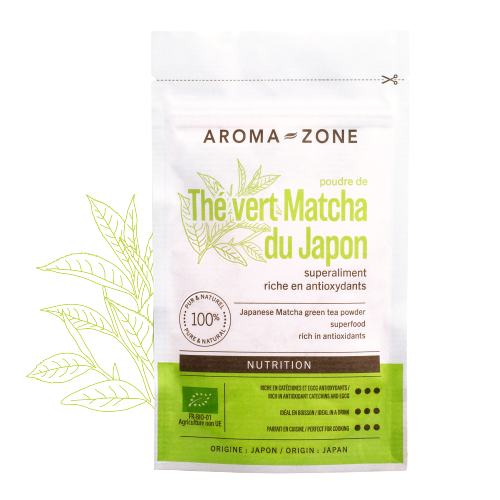
On one hand, an organic Matcha green tea powder from Japan, certified FR-BIO-01, presented as food-grade and usable in drinks, cooking, or as a mask. This is the product most customers search for when they type "matcha Aroma Zone". It is packaged in a resealable kraft bag, without precise information on the exact region or cultivar.
On the other hand, a green tea extract powder, more concentrated in polyphenols, intended only for homemade care. Aroma Zone states on its own product page that this product is not edible. It is a cosmetic ingredient, not a drink.

The confusion stems from the fact that both powders are green, sold in the same store, and presented alongside other DIY ingredients. The first reflex to have is to check the exact product name before buying.
Cosmetic matcha vs. food-grade matcha: the distinction that changes everything
Not all "green tea powders" are matcha for drinking. Three families coexist in natural health sections.
Japanese ceremonial matcha. Made from leaves shaded for three to four weeks, slowly ground with a stone mill, intended to be drunk pure in a bowl after whisking. This is the most demanding grade, with a vibrant jade color and a pronounced umami taste.
Culinary matcha. Same general method, but harvested later in the year, sometimes with faster grinding. Suitable for lattes, smoothies, and pastries, where milk and sugar soften the edges. The distinction between ceremonial and culinary grade is central to choosing a matcha.
Cosmetic green tea extracts or powders. Designed for skin or hair. Concentrated in catechins, sometimes mixed with other active ingredients, but not intended for consumption. These are the extracts found in DIY mask and homemade care rituals.
Aroma Zone offers all three families in its catalog (organic food-grade matcha, cosmetic recipes using this same powder, and green tea extract dedicated to care). This versatility is an advantage for DIY beauty, but it dilutes the beverage positioning.
Can you drink Aroma Zone matcha?
Yes, provided you buy the right powder. The "organic Japanese Matcha green tea powder" from Aroma Zone is indeed edible. It is a ground Japanese green tea powder, organic, intended for drinks and cooking. Its strengths and limitations.
Strengths
Clearly announced Japanese origin, European organic certification, affordable price (around 10 to 15 € for 50g depending on promotions). It is a clean product, without additives, useful for discovering the drink, enhancing a smoothie, or making a matcha pastry recipe.
Limitations for tasting
Several critical pieces of information are missing for those who want to drink it pure. The exact region (Shizuoka, Kagoshima, Uji, Nishio) is not specified, although it determines the aromatic profile. The cultivar is not mentioned. The ceremonial or culinary grade is not explained, leaving the customer to guess. The kraft bag packaging is not ideal for preserving freshness over time, compared to an opaque metal tin.
Honest conclusion: Aroma Zone food-grade matcha is a good entry-level product for mixed uses (latte, cooking, smoothie, occasionally plain drink). It is not designed as a ceremonial matcha to be drunk pure daily, and the brand itself does not claim it as such.
For those looking for a broader comparison, our comparison of the best matchas of 2026 places Aroma Zone in relation to specialized brands.
And the cosmetic version? What is green tea extract used for?
Aroma Zone green tea extract is intended for homemade care: purifying masks, scrubs, anti-aging formulas. Rich in polyphenols and tannins, it helps tighten pores, fight free radicals, and give the complexion a boost.
This powder is not edible. The brand explicitly states this. Consuming it as a drink would be useless (the active ingredients are calibrated for topical use) and potentially unpleasant.
If you want to enjoy both the internal and external benefits of green tea, the correct approach is simple: drink a real quality food-grade matcha, and use the cosmetic extract as a mask. The two uses are complementary, not substitutable.
How Aroma Zone positions itself compared to the rest of the market
To put Aroma Zone in context, here's how the main options in France are distributed.
| Source | Quality Level | Main Use | Key Strength |
|---|---|---|---|
| Supermarkets | Variable, often culinary | Latte and pastry | Low price, accessibility |
| Aroma Zone (food-grade) | Correct, versatile | Occasional drink, cooking, DIY | Certified organic, DIY ecosystem |
| Specialized online brands | Ceremonial to premium | Pure tasting, premium latte | Origin, cultivar, traceability |
| Japanese tea houses | Premium to exceptional | Ceremony, koicha | Authenticity, full traceability |
Aroma Zone occupies a useful intermediate segment: better than mass distribution in terms of transparency and organic certification, but below specialists in terms of precise origin and grade control. To understand the implications of the organic label in matcha, organic remains a useful criterion, but it does not cover the question of taste quality alone.
The alternative for drinking: why switch to a specialized matcha
If you buy Aroma Zone matcha only for drinking, and especially for drinking pure, two reasons will make you switch to a brand dedicated to tasting.
The first is traceability. A serious ceremonial matcha indicates its region (Shizuoka, Kagoshima...), its cultivar (Yabukita by reference), its harvest date, and its grinding. These four pieces of information radically change the aromatic profile in the mouth.
The second is preservation. Matcha oxidizes quickly in light, air, and heat. An opaque metal tin preserves the aromas for several weeks, whereas a regularly opened kraft bag loses intensity over the weeks.
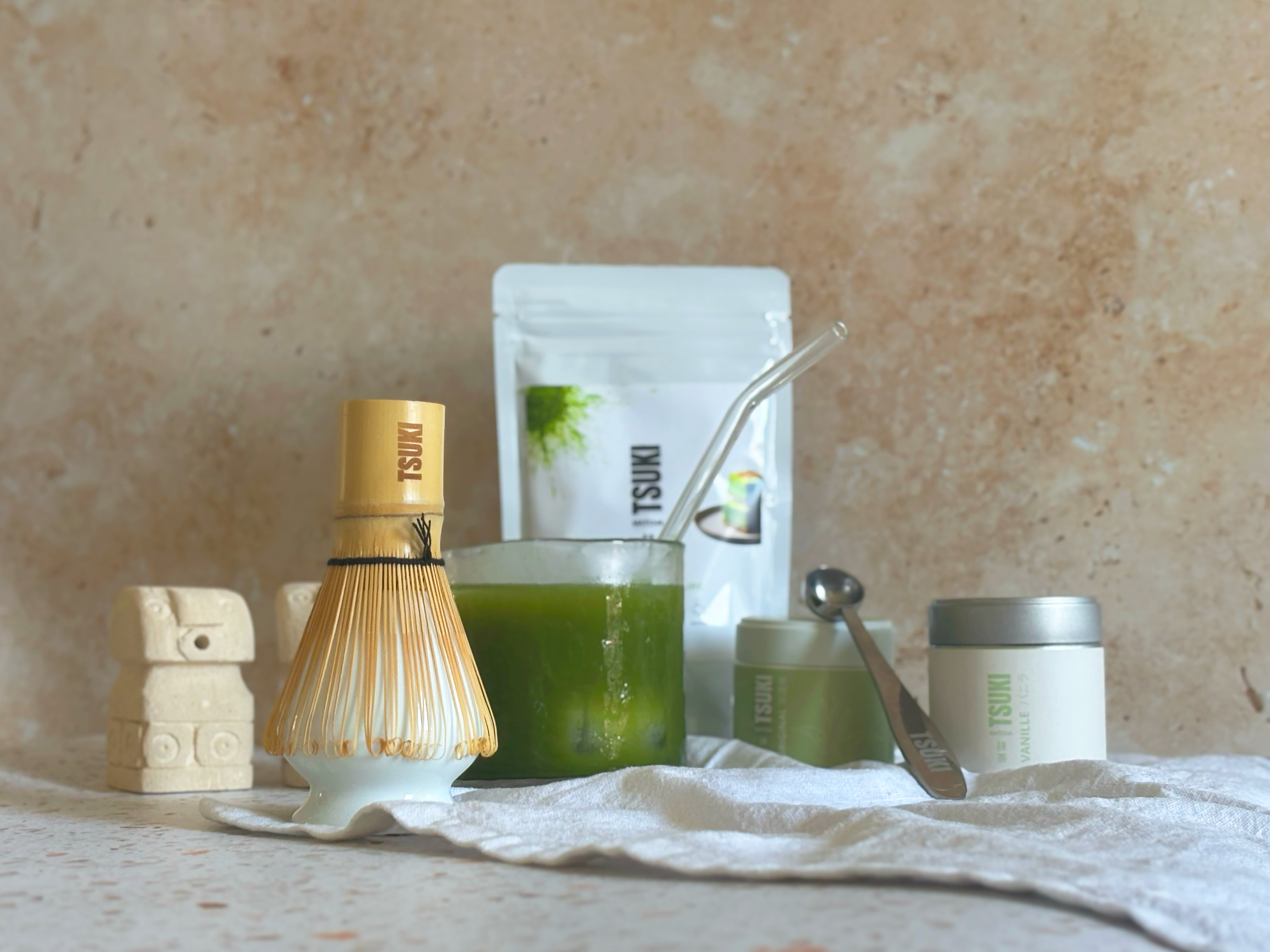
TSUKI Matcha is part of this logic. The Original matcha comes from Yabukita leaves from Shizuoka and Kagoshima, shaded for three weeks before harvesting according to the tencha process, stone-ground, and packaged in an opaque 30g tin to preserve color, taste, and antioxidants. For daily use in lattes or cooking, the culinary matcha remains more economical without losing anything in terms of origin.

The complete method for choosing good matcha details each criterion and allows you to arbitrate between Aroma Zone, supermarket, and specialized brand according to your actual use.
Aroma Zone, supermarket, online: which channel for which need
Not all purchasing channels are equal depending on what you are looking for. A quick arbitration by use case.
If you mainly do DIY masks and an occasional latte: Aroma Zone is consistent. The organic food-grade matcha plays its role, the cosmetic extract completes the ritual, the brand's DIY ecosystem is practical.
If you want matcha for daily cooking and lattes: a dedicated culinary matcha from a specialized brand generally offers a better intensity/price ratio than Aroma Zone, with a more precise origin. Supermarket matchas also help in this case, without always offering the same rigor on origin.
If you want to drink your matcha pure with a spoon and whisk: head for a specialized brand. Traceability, clearly announced grade, and suitable packaging change the experience. The debate on buying online or in store often boils down to the seriousness of the supply chain.
FAQ: Aroma Zone matcha, your frequently asked questions
Is Aroma Zone matcha real Japanese matcha?
Yes, it is cultivated in Japan and certified organic. The exact region and cultivar are not specified on the product sheet, which distinguishes it from matchas from specialized brands that detail their sourcing.
Can all Aroma Zone green powders be drunk?
No. Only the "organic Matcha green tea powder" is food-grade. The green tea extract is cosmetic and explicitly not edible. Always check the product sheet before buying.
What is the grade of Aroma Zone matcha?
The grade is not explicitly specified on the product sheet. In use, its aromatic profile and recommended use (drink, cooking, mask) place it closer to a culinary or versatile matcha than a premium ceremonial one intended to be drunk pure.
Aroma Zone or supermarket: who offers the best matcha?
Aroma Zone generally offers more transparency (displayed Japanese origin, clear organic certification) than the average matchas sold in supermarkets, where the origin is sometimes vague. For pure tasting, neither equals a specialized brand.
How to store an opened Aroma Zone matcha bag?
Reseal the bag tightly, store it in a cool, dry place, away from light. Ideally in an opaque container or in the refrigerator in its resealed packaging. Consume within six to eight weeks after opening.
Does Aroma Zone matcha make you lose weight?
Matcha contains catechins and caffeine studied for their effects on metabolism, but no matcha is a weight loss product in itself. Regular consumption as part of a balanced diet makes sense, but miracle promises do not.
In summary
Aroma Zone matcha exists in two distinct versions: an organic drinkable food-grade matcha, and a non-edible cosmetic green tea extract. The food-grade powder is a clean and certified product, perfect for those looking for versatility in drinks plus DIY. For drinking pure matcha daily, with a true ceremonial grade and precise origin, a specialized brand remains more relevant.
The right reflex: first define your main use, and choose the source accordingly.
Want to taste a matcha with clearly documented origin, cultivar, and grade? Discover TSUKI's selection of premium matchas, cultivated in Shizuoka and Kagoshima, stone-ground, and packaged in opaque tins to preserve the aromas.


