
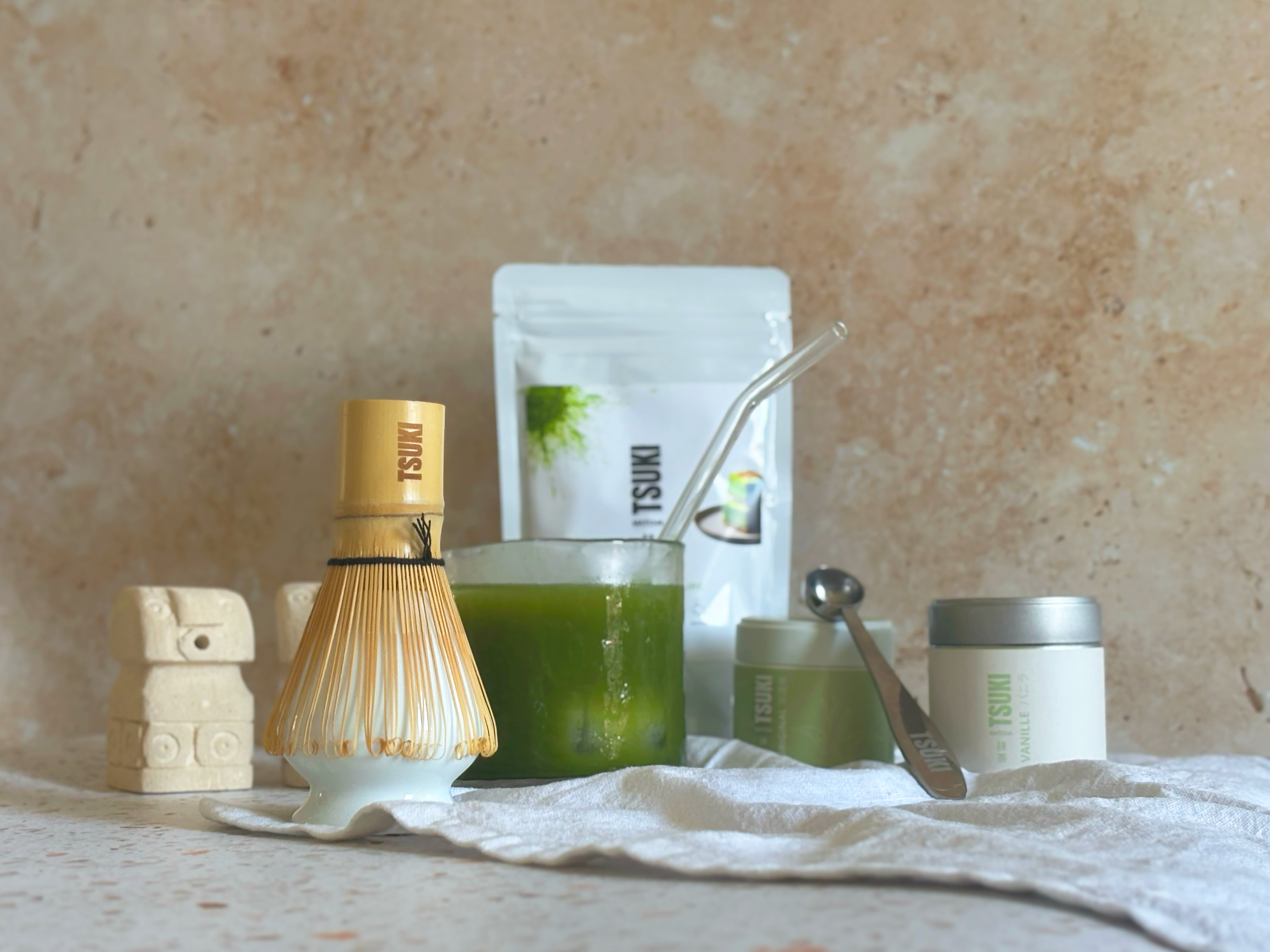

Matcha: Benefits and Drawbacks, What Science Really Says
Matcha is often presented as a superfood with miraculous properties. The reality is more nuanced. Matcha has genuine benefits, supported by serious scientific studies.
It also has potential side effects that few brands mention.
This guide provides an honest overview of both sides, so you can consume your matcha with full awareness.
Proven Benefits

Exceptional Antioxidant Concentration
Matcha contains catechins, a family of polyphenols, the most studied of which is EGCG (epigallocatechin gallate). Because the entire ground leaf is consumed, not just a filtered infusion, the antioxidant concentration is 10 to 15 times higher than that of regular green tea. These antioxidants help neutralize free radicals, unstable molecules involved in cell aging and certain chronic diseases.
Calm Energy and Focus
Matcha contains approximately 30 to 35 mg of caffeine per gram, or 60 to 70 mg per cup (for 2 g). This is about half an espresso. But the unique characteristic of matcha is its L-theanine content, an amino acid that promotes the production of alpha waves in the brain. The combination of caffeine + L-theanine produces a state of calm alertness: improved concentration, increased vigilance, without the nervous peak or crash caused by coffee. This is why Zen monks have used matcha for centuries to support meditation.

Metabolic Support
Several studies suggest that matcha catechins, combined with caffeine, slightly increase thermogenesis (the body's heat production) and fat oxidation. The effect is modest but real: matcha can contribute to a slightly more active metabolism as part of a balanced diet. It is not a miracle fat burner; it is a natural boost that our article on matcha and weight loss details with more nuance.
Cardiovascular Protection
Regular consumption of green tea (and by extension matcha) is associated in epidemiological studies with a reduction in cardiovascular risk. Catechins help reduce oxidized LDL-cholesterol and improve endothelial function. These results are observed in populations consuming green tea daily over long periods.
Skin Benefits
Matcha's antioxidants, especially EGCG, protect skin cells against oxidative stress caused by UV and pollution. Chlorophyll contributes to skin radiance. These benefits are observed through both internal consumption and topical application. Learn how to incorporate matcha into your beauty routine.
Possible Side Effects
Matcha is not dangerous for the vast majority of healthy people. But like any food containing caffeine and active compounds, it can cause undesirable effects in certain situations.
Caffeine Sensitivity
A cup of matcha contains 60 to 70 mg of caffeine. This is less than coffee (80 to 130 mg) but enough to cause insomnia, restlessness, or palpitations in caffeine-sensitive individuals. If you react to coffee, start with half a dose of matcha (1 g instead of 2 g) and observe your reaction. Matcha remains gentler than coffee thanks to L-theanine, which attenuates caffeine's stimulating effects.
Iron Absorption
Matcha's catechins and tannins can reduce the absorption of non-heme iron (plant-based iron). This is not a problem for most people, but it is a point of concern for anemic individuals or those with a low-iron diet. The precaution is simple: avoid drinking matcha during main meals. Consuming it on an empty stomach or between meals (30 minutes before or 1 hour after) minimizes this interaction.
Digestive Effects
When consumed on an empty stomach, matcha can cause nausea or gastric discomfort in some people. Tannins stimulate gastric acid production, which can irritate a sensitive stomach. If this happens to you, take your matcha after a small snack or add milk (plant-based or animal) to buffer the acidity.
Lead and Contaminant Content
The tea plant naturally absorbs heavy metals present in the soil, including lead. Since matcha is consumed entirely (not filtered like brewed tea), exposure is higher. This risk is mitigated by choosing quality matcha, grown in controlled soils (Japanese regions like Shizuoka and Kagoshima have strict standards). Certified organic matcha adds an extra layer of guarantee.
Who Should Limit Matcha Consumption
Pregnant and breastfeeding women. The general recommendation is to limit caffeine to 200 mg per day during pregnancy (WHO). A cup of matcha (60-70 mg) falls within this budget, but all other daily sources of caffeine (coffee, tea, chocolate, sodas) must be considered. As a precaution, many healthcare professionals advise limiting matcha to one cup per day during pregnancy.
Anemic individuals. If you have a diagnosed iron deficiency, consult your doctor before consuming matcha regularly. The effect on iron absorption is documented and can worsen existing anemia.
Individuals on anticoagulants. Matcha contains vitamin K, which plays a role in blood clotting. If you are taking anticoagulants (e.g., warfarin), significant matcha consumption can interfere with the treatment. Consult your doctor for adjustments if necessary.
Children. Caffeine is not recommended for young children. Matcha can be introduced in small amounts to adolescents, but it is best to start with reduced doses.
Individuals with anxiety disorders. Even if L-theanine has a calming effect, caffeine can worsen anxiety in some people. If you are prone to anxiety attacks, matcha is not necessarily contraindicated but requires attention to dosage.
Recommended Dosage
There is no official matcha dosage established by health authorities. But available data allow for a reasonable consensus.

For most healthy adults: 1 to 3 cups per day (2 to 6 g of matcha) is a safe and beneficial consumption. This represents 60 to 200 mg of caffeine, well below the 400 mg threshold recommended by the EFSA (European Food Safety Authority).
For beginners: start with 1 cup per day (1.5 to 2 g) and observe your body's reaction for a week before increasing.
For pregnant women: maximum 1 cup per day, considering other sources of caffeine.
Best time: morning or early afternoon. Avoid matcha after 4 PM if you are sensitive to caffeine, as caffeine's half-life is 4 to 6 hours.
Matcha consumed with milk (in a latte) or in a matcha collagen is slightly better tolerated digestively than pure matcha with water, thanks to the buffering effect of milk proteins.
FAQ: Benefits and Drawbacks of Matcha
Is matcha dangerous?
No. Matcha is a safe food for the vast majority of healthy adults when consumed in reasonable quantities (1 to 3 cups per day). Possible side effects are related to caffeine and tannins and mainly concern sensitive individuals, pregnant women, or those on anticoagulant treatment.
Is matcha healthier than coffee?
Matcha and coffee have different profiles. Matcha provides less caffeine, more antioxidants, and L-theanine (calm energy). Coffee provides more caffeine and chlorogenic acid. Both are beneficial in moderation. Matcha is often preferred by those seeking stable energy without jitters.
Can you drink matcha every day?
Yes. Daily matcha consumption is common in Japan and supported by scientific data. Regularity is even what allows for full benefit from its antioxidant and metabolic effects. 1 to 2 cups per day is an ideal rhythm for most people.
Does matcha prevent sleep?
If you drink it too late in the day, yes. Matcha's caffeine has a half-life of 4 to 6 hours. Matcha drunk at 5 PM can still have a stimulating effect at 11 PM. Prioritize consumption before 3 PM if you are sensitive.
Is matcha bad for the stomach?
For some people, matcha drunk on an empty stomach can cause slight discomfort (nausea, acidity). The solution is simple: take matcha after a small snack or combine it with milk. In a latte, the problem almost always disappears.
Matcha is an everyday ally, provided it is well-dosed and well-chosen. Our ceremonial grade matchas are grown in Japan, rich in L-theanine and antioxidants, for maximum benefits with each cup.


