
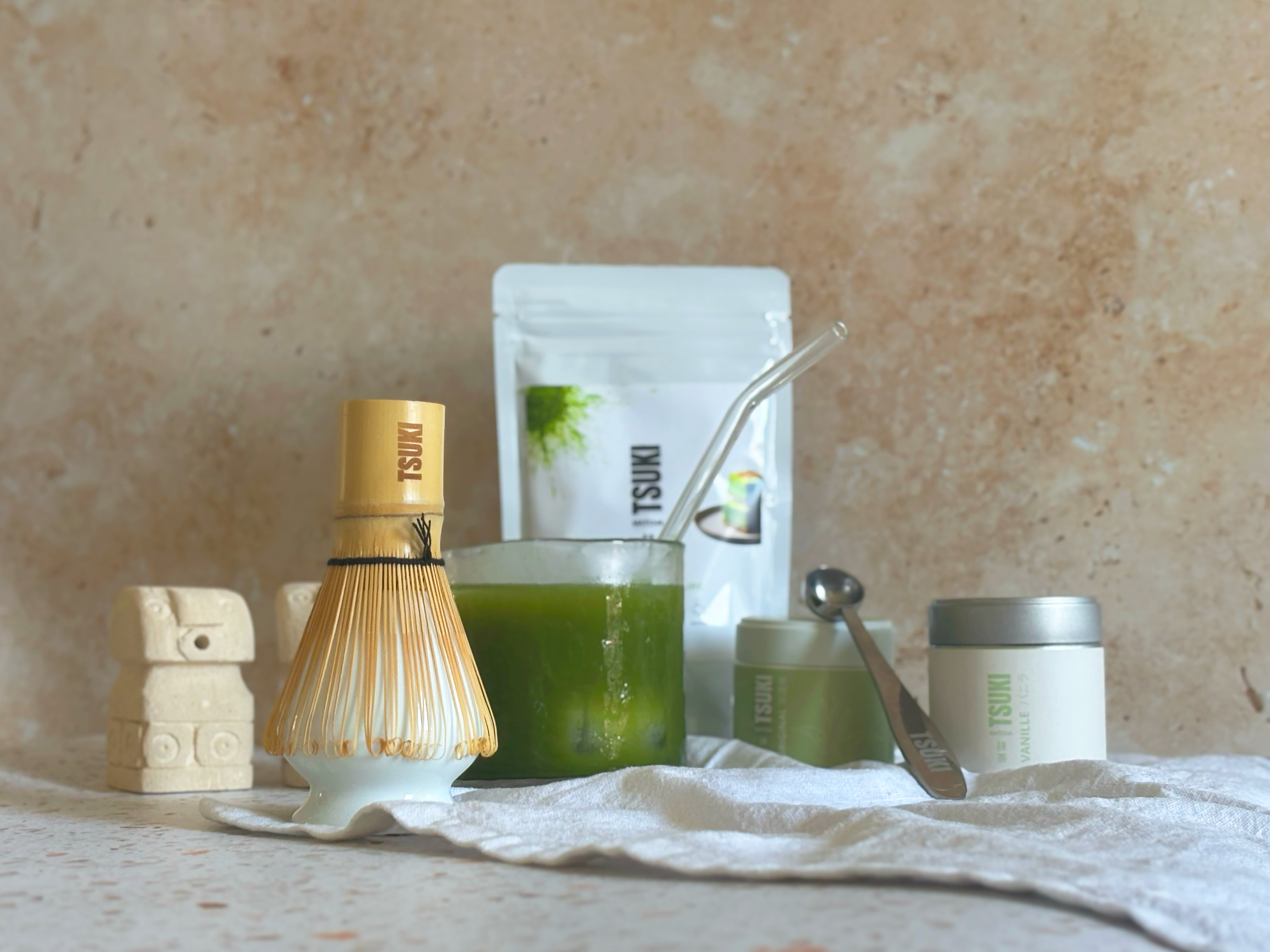

Ceremonial Matcha: how to recognize and choose it
Ceremonial matcha, ceremonial grade matcha: three terms for the highest grade of matcha. But what truly distinguishes a real ceremonial matcha from a standard matcha? How can you identify it for sure, and most importantly, how can you avoid marketing exaggerations? Here's the guide to making the right choice.
"Ceremonial matcha," "ceremonial grade matcha"... these terms are now used by almost all matcha brands on the market. The problem is that there is no official standard defining what ceremonial matcha is. As a result, under the same name, you find products that are radically different in both quality and price. This article provides a comprehensive overview of the subject: what ceremonial matcha truly is, how to distinguish it from culinary grade, the concrete criteria for recognizing a genuine premium product, and how to avoid brands that leverage the term without the corresponding quality.
What exactly is ceremonial matcha?
Before you can recognize it, you need to understand what the term truly means and where it comes from.
The origin of the term
Ceremonial matcha (ceremony = cha-no-yu in Japanese, the tea ceremony) historically refers to the highest quality matcha, the one served during the traditional Japanese tea ceremony. In Japan, this matcha is meant to be drunk pure, whisked with water, without milk or sugar. Its quality must therefore be impeccable, as there is nothing to mask any potential flaws.
Technical criteria of true ceremonial matcha
To earn this name, a matcha must combine several characteristics:
- Authentic Japanese origin (Uji, Nishio, Kagoshima, Shizuoka, Yame)
- Leaves from the first spring harvest (ichibancha), the most tender and richest in aromas
- Long shading period (3 to 4 weeks before harvest, up to 90% light blocked) which maximizes chlorophyll and L-theanine
- Slow stone-grinding (not industrial), which preserves the fineness and freshness of the matcha
- A vibrant jade green color, a sign of long shading and preserved freshness
- An umami aromatic profile, sweet, without aggressive bitterness, which can be enjoyed pure without masking flavors
The absence of even one of these criteria should raise suspicion. A matcha that cannot be drunk pure is not a true ceremonial matcha, regardless of what the packaging indicates. To understand the entire production chain in detail, the complete production method of ceremonial matcha traces each step.
Why this quality comes at a cost
The production of true ceremonial matcha is slow, manual, and demanding. Prolonged shading reduces the tree's yields, hand harvesting is expensive, and stone-grinding produces only 30 to 40 g of matcha per hour. All these factors explain why true ceremonial matcha cannot be found for less than €25-30 per 30 g. Below this price, be wary: there is likely a compromise somewhere.
Ceremonial matcha vs. culinary matcha: the real difference
The other common grade is culinary matcha (sometimes called "premium" or "ingredient grade"). Distinguishing the two is essential for making the right purchase.
Culinary matcha in brief
Culinary matcha is designed to be mixed with other ingredients: milk for lattes, sugar and butter for baking, fruit for smoothies. It comes from later harvests (second or third harvest), meaning more mature leaves. The aromatic profile is more intense and bitter, which is not a problem as it will be balanced by the other ingredients. The color is generally less vibrant than ceremonial matcha.
When to choose one, when to choose the other
The rule is simple:
- Ceremonial matcha: for drinking pure (usucha, koicha), for contemplative tastings, for matcha lattes where the quality of the matcha remains central
- Culinary matcha: for baking (cakes, cookies, ice cream), for flavored drinks (strawberry, vanilla, coconut matcha), for smoothies and frappés where other flavors dominate
Buying ceremonial matcha to make cookies is a waste of money. Buying culinary matcha to drink it pure deprives you of the true tasting experience. This trade-off between the two uses is precisely what the comparison ceremonial grade matcha vs. culinary grade matcha clarifies, with all the elements to choose according to your use.
Quick comparison table
| Criterion | Ceremonial | Culinary |
|---|---|---|
| Harvest | First (ichibancha, spring) | 2nd or 3rd harvest |
| Shading | Long (3-4 weeks) | Shorter or partial |
| Color | Vibrant jade green | Duller green |
| Profile | Umami, sweet, little bitterness | More intense, more bitter |
| Ideal Use | Pure drink, premium matcha latte | Baking, frappés, smoothies |
| Price 30 g (FR reference) | €25-50 and beyond | €10-25 |
The 5 criteria for recognizing a true ceremonial matcha
Here are the concrete checks to make to determine if the matcha you are looking at truly deserves its name.
1. The color: vibrant jade green
This is the first visual clue. A true ceremonial matcha is a vivid, deep, almost fluorescent green.

If the color leans towards khaki, olive green, or yellow-green, it's a bad sign: either the matcha was not shaded enough, or it is old and has oxidized. The color of matcha directly reflects its production quality and preservation state.
2. Precise and Japanese origin
A true ceremonial matcha must indicate a specific Japanese region (Uji, Nishio, Kagoshima, Shizuoka, Yame), not just "Japan."
Even less "Asia" or vague origins. If the brand does not provide the precise origin, it's a disqualifier for a product that sells for a high price.
3. Transparency about production
A reputable brand provides information on the cultivar (Yabukita, Okumidori, Samidori, Saemidori), the shading duration, the grinding method (ideally stone-ground), and the harvest date.

The complete absence of technical information on the packaging or website is a red flag.
4. The aromatic profile on the palate
A well-prepared ceremonial matcha should be umami, sweet, slightly vegetal, without aggressive bitterness. If, with pure water (without milk or sugar), the matcha is undrinkable due to bitterness, it is not a true ceremonial matcha. Pure tasting remains the ultimate test. The expected aromatic profile is detailed in the taste of matcha to expect for the first tasting.
5. Price consistent with claimed quality
Ceremonial matcha sourced directly from Japan costs a minimum of €25-30 for 30g, and easily goes up to €50 and beyond for higher grades. If you see "ceremonial matcha" for €12 for 30g in a supermarket or on Amazon, be cautious: the real production margin is incompatible with this price. Either the matcha isn't truly ceremonial, or it's old, or the origin is questionable.
Marketing abuses to be aware of
Several commercial practices use the term "ceremonial" without adhering to its criteria. Here are the most common pitfalls.
"Ceremonial" that isn't
Many brands use the term "ceremonial grade" on the packaging to sell a product at a higher price that would actually correspond to a premium culinary grade. Since the term is not regulated, this is legal. But the consumer pays more for a quality that does not match. The clues: abnormally low price, "Japan" origin without precision, dull color, absence of technical information.
Dubious "ceremonial blend"
Some brands offer "ceremonial blends" by mixing a bit of true ceremonial matcha with cheaper culinary matcha to lower the price. The result is intermediate and no longer corresponds to a true ceremonial grade. If the brand does not explain its blends in detail, be cautious.
Non-Japanese "ceremonial matcha"
Ceremonial matcha is inherently Japanese. No serious ceremonial matcha comes from China or other countries. If a brand sells "Chinese ceremonial matcha" or does not specify the origin, it is no longer ceremonial matcha in the traditional sense.
Deceptive introductory pricing
Beware of extreme promotions ("ceremonial matcha -70%"). Authentic products are not sold off cheaply because margins are already tight. A massive promotion on ceremonial matcha often hides a product nearing its expiry date (and thus already oxidized) or a product whose actual quality is lower than claimed.
How to choose the right ceremonial matcha for you
Beyond quality criteria, the choice of ceremonial matcha also depends on your usage and budget.
If you are new to ceremonial matcha
Start with an accessible ceremonial matcha (€25-35 for 30g), clear Japanese origin (Uji, Nishio, or Kagoshima), from a recognized French brand with good transparency. There's no need to go for competition grades at €80-100 initially: the difference will be difficult for an untrained palate to perceive.
If you are a regular enthusiast
At this stage, you can explore higher ceremonial grades (€40-60 for 30g), sometimes single-cultivar (pure Yabukita, pure Okumidori, pure Saemidori) to taste the nuances between cultivars. Vary producers to develop your palate.
If you want the best of the best
Competition grades from major traditional Japanese houses (Marukyu Koyamaen, Horii Shichimeien, Ippodo Tea) can reach €80-120 for 30g, or even more for limited editions.

This is an expense justified for very advanced enthusiasts, but not for beginners. For a detailed comparison of major brands on the market, the 2026 best matchas comparison provides a relevant overview.
The importance of traceability (shodai)
Beyond the grade, producer traceability has become a key criterion. Knowing the producer's name, the exact region, and the harvest lot are strong indicators of quality. The concept of "shodai matcha" and producer traceability details why this parameter has become so important in the current market.
Properly preparing ceremonial matcha
Buying good matcha is not enough. You also need to know how to prepare it to avoid wasting its quality.
The usucha method (standard preparation)
For 1 cup of ceremonial matcha:
- 1.5 to 2 g of matcha (1 heaped chashaku scoop)
- 60 to 80 ml of filtered water at 75 °C (never boiling)
- Sift the matcha into a wide bowl (chawan)
- Pour in the water and whisk with a chasen in a rapid "W" motion for 15-20 seconds
- Drink immediately, in several sips
Errors that spoil ceremonial matcha
Several errors can ruin even the best matcha. Water that is too hot: burns the matcha and produces bitterness. No sifting: guaranteed lumps. Incorrect dosage: too much or too little matcha. Open-air storage: rapid oxidation in a few days. Matcha that is too old: opened ceremonial matcha should be consumed within a month to preserve its freshness.
Storage: preserving the quality of your matcha
Ceremonial matcha is a living and sensitive product. Its storage directly affects the quality in your cup.
Storage rules
- Opaque airtight container is mandatory to block light and oxygen
- Keep cool (ideally in the refrigerator in a sealed bag for regular users)
- Away from odors: matcha absorbs ambient aromas
- Rapid consumption: maximum 1 month after opening, ideally 2-3 weeks
Why freshness is crucial
Matcha oxidizes when exposed to air. The older it gets, the duller its color, the more its aromas fade, and its vibrancy is lost. An excellent ceremonial matcha left open for 3 months is worth less than fresh culinary matcha. This is also why format matters: prefer a small format consumed quickly over a large format that lasts several months.
Frequently asked questions about ceremonial matcha
What is the difference between ceremonial matcha and ceremonial grade matcha?
There is no semantic difference: "ceremonial matcha," "ceremonial grade matcha," and "ceremonial matcha" all refer to the same highest grade. The three terms are used interchangeably depending on brands and countries. The important thing is what the grade truly encompasses: first harvest, long shading, stone-grinding, and a profile that can be drunk pure without aggressive bitterness.
How do you recognize a true ceremonial matcha?
By five converging criteria: a vibrant jade green color, a precise Japanese origin (Uji, Nishio, Kagoshima, Shizuoka, Yame), transparency about production (cultivar, shading, grinding), a sweet umami aromatic profile without aggressive bitterness, and a consistent price (€25-50 minimum for 30g). The absence of even one of these criteria should raise suspicion.
Can you make a latte with ceremonial matcha?
Yes, but it's a shame. Ceremonial matcha is designed to be drunk pure, where its aromatic quality is fully appreciated. In a latte, milk and sugar mask a large part of the nuances. If you want to make lattes daily, a premium culinary matcha offers much better value for money. Reserve ceremonial for pure tasting moments.
What is the average price of ceremonial matcha?
Expect to pay between €25 and €50 for 30g of a good standard ceremonial matcha, and up to €80-120 or even more for competition grades from traditional Japanese houses. Below €20 for 30g, be cautious: the actual quality rarely matches true ceremonial grade.
What is the difference between ceremonial matcha and culinary matcha?
Ceremonial matcha comes from the first harvest (spring), with long shading and slow stone mill grinding. It is designed to be drunk pure, smooth, and umami. Culinary matcha comes from later harvests, is more intensely bitter, and is designed to be mixed with other ingredients (pastries, smoothies, heavily flavored lattes). Both have their legitimate uses.
Is ceremonial matcha necessarily organic?
Not necessarily. Some major traditional Japanese houses (Marukyu Koyamaen, Ippodo Tea) are not organic but have been producing excellent ceremonial matcha for centuries. Conversely, premium French brands often combine ceremonial matcha AND European or Japanese organic certification (JAS). Organic is a plus, not an absolute requirement for quality ceremonial matcha.
How long does an open ceremonial matcha last?
Maximum 1 month after opening, ideally 2 to 3 weeks to enjoy its best aromas. Matcha oxidizes on contact with air, its color fades, and its aromas diminish. Store in an opaque, airtight container, in a cool place, away from odors. For regular enthusiasts, prefer small formats that are consumed quickly.
How to tell if ceremonial matcha is too old?
Three converging signs: the color dulls (from vibrant jade green to khaki or olive green), the aromas become flat and anonymous (fewer umami notes, less vegetal freshness), and bitterness increases. Old ceremonial matcha will not make you sick, but it will make you pay the price of a ceremonial grade for degraded quality.
Choose well, drink well
Ceremonial matcha is the most refined expression of the Japanese tea tradition. But it is also a term whose marketing abuse has become common. To avoid making a mistake, remember five key criteria: vibrant jade green color, precise Japanese origin, transparency about production, smooth umami profile with pure water, consistent price (minimum €25-30 for 30g). With these benchmarks, you will certainly identify a true ceremonial matcha among the many products that claim the status without the accompanying quality. The rest is a matter of careful preparation and rigorous storage, to preserve the quality for which you have paid.

To discover a true ceremonial matcha of Japanese origin (Yabukita cultivar, traditional stone mill grinding, direct sourcing from the Shizuoka and Kagoshima regions), explore our selection of premium Japanese origin matcha.


