
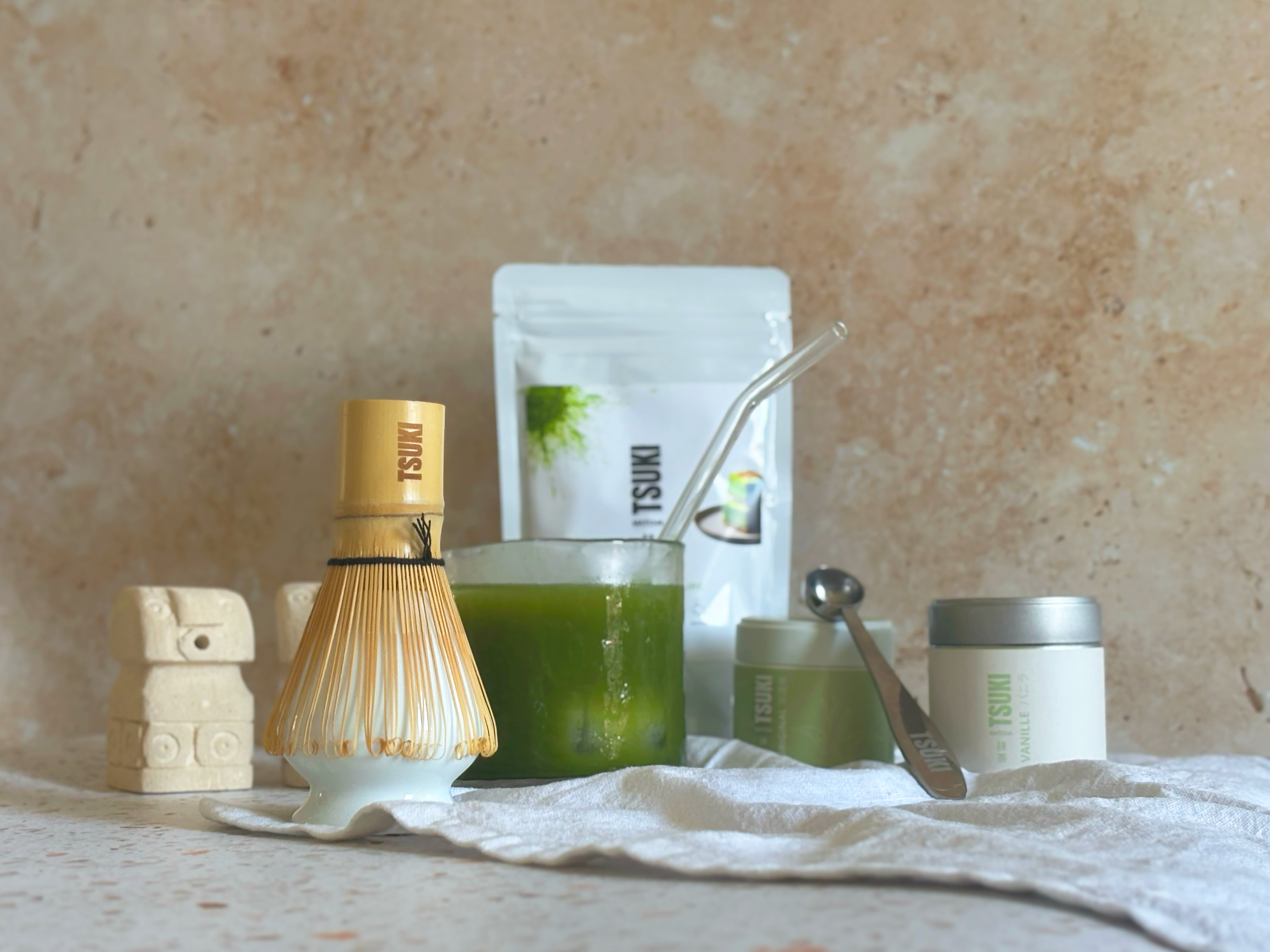

Japanese matcha: why the best matcha comes from Japan and how to recognize it
Not all matchas are created equal, and their origin changes almost everything. Japan remains the gold standard for a simple reason: the expertise, climate, and cultivars there produce a powder of unparalleled fineness and flavor. Here's what distinguishes a real Japanese matcha, how to identify a reliable origin, and avoid green powders that are matcha in name only.

When looking for good matcha, one question constantly arises: does it really have to be Japanese? The answer lies in the history of tea, geography, and a set of production techniques that cannot be improvised. Japan has shaped matcha for centuries, making it a national signature. Understanding why helps you choose better and avoid being swayed by a simple green color on a package.
Why Japanese Matcha is the Global Standard
Matcha originated in China, but it was perfected in Japan. As early as the twelfth century, Japanese monks adopted powdered tea and integrated it into a precise ritual. This continuity allowed for the refinement of each step, from cultivation to grinding. Today, China primarily produces loose-leaf green tea, and ceremonial matcha remains a Japanese specialty.

Three factors explain this advantage. First, the climate: Japanese producing regions offer morning mists and humidity that soften the bitterness of the leaves. Then, the cultivars, these tea plant varieties selected for powder, including the famous Yabukita. Finally, the technique, with prolonged shading of the plants before harvest, steaming, and then slow grinding on a stone mill. These elements combined give the vibrant color and smooth mouthfeel found in authentic ceremonial matcha.

Japanese expertise is not limited to cultivation. The transformation into tencha, the dried leaf that will become matcha, requires rigorous temperature and humidity control. It is this mastery, passed down through generations, that explains why each step of ceremonial matcha production weighs so heavily on the final result.
Major Matcha Producing Regions in Japan
Quality Japanese matcha often bears the mark of its region of origin. Each terroir imparts its style, much like with wine. Knowing these regions helps to assess the level of a matcha and understand its price.
| Region | Characteristics | Flavor Profile |
|---|---|---|
| Uji (Kyoto) | Historic birthplace of matcha, high-end reputation | Intense umami, great delicacy |
| Shizuoka | Country's leading tea region by volume | Balanced, vegetal, accessible |
| Kagoshima | Southern Japan, early harvests | Round, sweet, rich color |
| Nishio (Aichi) | Long-specialized in matcha | Sweet, consistent, very fine |
At TSUKI, sourcing focuses on Shizuoka and Kagoshima, with the Yabukita cultivar, for a balance between sweetness and intensity. These terroirs are also featured in a comparison of the best matchas in 2026, where origin remains a central criterion.
Japanese Matcha vs. Chinese Matcha: What Are the Differences?
More and more powders are being sold as matcha, even though they come from other countries, often China. This is not to discredit all Chinese green tea, but Chinese matcha rarely meets the standards of Japanese ceremonial matcha.
The difference lies in several points. The shading of the plants is often shorter or absent, which increases bitterness. Grinding is frequently done by machine rather than on a stone mill, resulting in a coarser powder. Finally, heavy metal and residue control does not always offer the same guarantees. A serious Japanese matcha relies on clear traceability, from the field to the box.

The taste quickly reveals the origin. A well-produced Japanese matcha remains sweet, vegetal, and round, with controlled bitterness. A powder that is too harsh, dull, or chalky often indicates a questionable origin or too long storage. Knowing how to recognize the true criteria of good matcha avoids paying a high price for disappointing quality.

How to Recognize Authentic Japanese Matcha
A few simple pointers help verify origin and quality, even without being an expert. They are useful both in-store and when buying online.

Color is the first indicator. A real Japanese matcha has a vibrant, almost electric green, a sign of good shading and rich chlorophyll content. A dull, yellowish, or khaki green often indicates quality presented as premium without concrete proof.

Texture is just as important. When rubbed between the fingers, a Japanese ceremonial powder is ultra-fine, almost silky, with no perceptible grains. The label must also specify the Japanese origin, ideally the region and grade. A simple word like "Japanese" on the front is not enough: it's better to look for a clear mention of provenance and be wary of supermarket matchas whose quality may be more limited, as shown by tests on matchas sold in supermarkets.
The grade also guides usage. A ceremonial grade is enjoyed plain, with water, while a culinary grade is suitable for lattes and pastries. This distinction between ceremonial grade matcha and culinary grade matcha helps avoid paying a ceremonial price for culinary use.
Where to Buy Trustworthy Japanese Matcha
Once the Japanese origin is identified, the next step is to choose a reliable point of purchase. Specialized circuits and transparent brands with their sourcing generally offer more guarantees than general platforms.
Buying online from a brand that documents its terroirs and cultivars often remains the safest way. That said, the choice between buying matcha online or in-store also depends on the desire to taste it first, or to benefit from direct advice.
To find reliable sales points near you or online, there are reliable sources for buying matcha in France, from organic stores to specialized brands. On platforms, however, it's best to be aware of the pitfalls of matcha sold on Amazon, where the actual origin is sometimes unclear.
Frequently Asked Questions about Japanese Matcha
Does all matcha come from Japan?
No. Matcha has Chinese origins, and today powders are produced in China or elsewhere. But the benchmark ceremonial matcha, cultivated, shaded, and ground according to traditional methods, remains a Japanese specialty.
How do I know if a matcha is truly Japanese?
Look for a precise mention of origin, if possible the region, as well as the cultivar and grade. A vibrant green color, a very fine texture, and a soft bitterness confirm a well-produced Japanese matcha.
Is Japanese matcha necessarily better?
Japanese origin is a guarantee of expertise, but quality also varies depending on the region, grade, and freshness. A well-preserved Japanese ceremonial matcha offers the best guarantees of taste and delicacy.
Why is Japanese matcha more expensive?
Prolonged shading, manual harvesting of young leaves, and slow grinding on a stone mill require time and labor. This level of demand explains a higher price than industrial powders.
Which grade of Japanese matcha should I choose to start?
For plain tasting, a ceremonial grade is ideal. For lattes and recipes, a Japanese culinary grade offers good value for money while maintaining the authenticity of the origin.
Choosing a Japanese Matcha That Delivers on Its Promises
Japanese matcha is not just a marketing argument. It is the result of a terroir, selected cultivars, and patient expertise that gives this vibrant, fine, and smooth powder that is recognizable from the first sip. By checking the origin, color, texture, and grade, you maximize your chances of drinking real matcha, not an anonymous green powder.

Want to taste Japanese matcha from the terroirs of Shizuoka and Kagoshima? Discover the TSUKI premium Japanese matcha collection, selected for their origin and finesse.


