
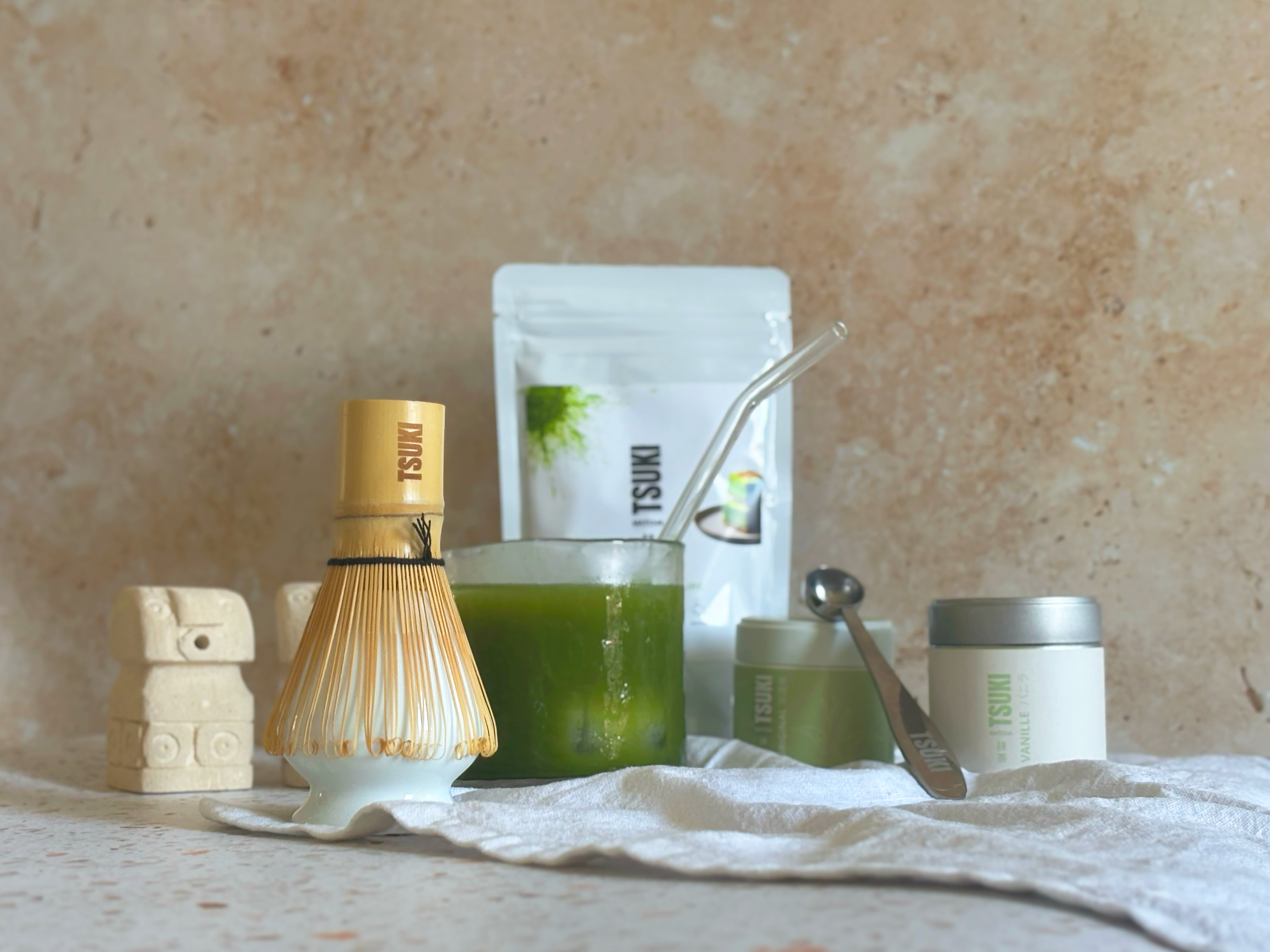

Premium matcha: what does that really mean?
"Premium matcha", "quality matcha", "good matcha": brands use these terms constantly. But what do they really mean, and how can you tell if the matcha you're buying is truly premium or just marketing? Here are the real criteria for recognizing high-end matcha without being fooled.

"Premium matcha." The phrase has become so common that it hardly means anything anymore. All brands claim it, at all prices, across all distribution channels. The problem is that there's no official definition of "premium matcha." Each brand puts whatever it wants under that term. This article explores the issue: what "premium matcha" should truly mean, how to distinguish marketing from genuine quality positioning, objective criteria to check, and how to find true premium matcha without being swayed by empty promises.
"Premium Matcha": A Term Without Official Definition
The first thing to understand to navigate the market well is that the word "premium" has no regulatory definition for matcha.
Why the term is so overused
Unlike "organic" (which corresponds to specific and certified specifications) or even "ceremonial matcha" (which traditionally designates the highest grade), "premium" is purely marketing. Any brand can write "premium matcha" on its packaging without any authority verifying it. The result: today you can find matcha for €8 per 30g labeled "premium" in supermarkets, and matcha for €80 per 30g also labeled "premium" in specialty stores. The term alone says absolutely nothing about the actual quality.
What the term should mean
If we take the word seriously, truly premium matcha should combine several characteristics:
- An authentic and precise Japanese origin (Uji, Nishio, Kagoshima, Shizuoka, Yame)
- A superior harvest quality (ideally spring ichibancha)
- Long shading before harvest to maximize chlorophyll and L-theanine
- Traditional stone mill grinding
- Clear traceability from production to packaging
- Preserved freshness through appropriate packaging and a short delay between harvest and sale
Without these criteria, "premium" remains an empty word. To delve into all the parameters that define true high-end matcha, the pillar article on how to choose good matcha covers the subject comprehensively.
Premium Matcha vs. Ceremonial Matcha: Are They the Same Thing?
A frequent question, as the two terms often intersect in brand marketing.
The two terms are not equivalent
"Ceremonial matcha" historically refers to the highest grade of matcha, designed to be drunk pure during the Japanese tea ceremony. "Premium matcha" is a broader commercial term, which can denote different levels depending on the brand. Ceremonial matcha is always premium. But "premium" matcha is not necessarily ceremonial. Many brands use "premium" to designate their best culinary matcha (i.e., just below ceremonial grade), which remains legitimate but should not be misleading.
The actual hierarchy of grades
To put things in perspective, here is the hierarchy most often found on the market:
- Ceremonial Grade Matcha: The highest grade, first flush, to be drunk pure
- Premium Matcha / Premium Culinary Matcha: Excellent matcha, often also from the first flush, but with a slightly more intense profile that supports milk and other ingredients
- Culinary Matcha (or "ingredient grade"): Standard matcha for pastries and flavored drinks, later flushes
- Low-grade matcha: To be avoided, often old, dubious origin, dull color
The direct comparison between the two main grades is covered in the analysis ceremonial grade matcha vs. culinary grade matcha.
The 6 Objective Criteria for True Premium Matcha
Here are the concrete checks to make to identify true premium matcha, regardless of marketing promises.
1. Precise and Verifiable Japanese Origin
True premium matcha always comes from Japan. The best regions are Uji (Kyoto) for ceremonial tradition, Nishio (Aichi) for tencha cultivation, Kagoshima for its warm climate and modern production, Shizuoka for the diversity of cultivars, and Yame (Fukuoka) for high-end matchas. A brand that only specifies "Japan" without a region is less transparent than one that details its sourcing areas.
2. Radiant Jade Green Color
This is the most immediate visual criterion. Premium matcha has a vibrant, deep, almost fluorescent jade green color. If the color tends towards olive green, khaki, or yellow-green, it's a bad sign: either the shading wasn't long enough, or the matcha is old and has oxidized. The color of matcha directly reflects its quality in terms of production and freshness.
3. Smooth Umami Aromatic Profile, Without Excessive Bitterness
True premium matcha is smooth, umami, slightly vegetal, with a subtle iodized or sweet note. Bitterness should be present but discreet, never aggressive or dominant. The ultimate test: prepare the matcha with water (without milk or sugar) and taste it. If it's undrinkable plain, it's not a true premium matcha, regardless of the advertised price.
4. Fine and Soluble Texture
Premium matcha is very finely ground with a stone mill, resulting in an extremely fine, silky powder that disperses easily in water and produces a fine, stable foam. A coarse powder that clumps despite sifting is a sign of industrial grinding or an old product.
5. Transparency in Production
A truly premium brand communicates technical details: cultivar (Yabukita, Okumidori, Saemidori), exact region, grinding method, harvest date, shading duration.

If the brand provides no technical information about the product, it's a strong signal that the actual quality doesn't match the advertised positioning.
6. Price Consistent with Claimed Quality
True premium Japanese origin matcha, first flush, stone-ground, cannot be sold for €10 per 30g. The production margin does not allow it. Expect a minimum of €20-25 per 30g for decent premium matcha, and €30-50 for superior references. Be wary of "premium matcha" with low introductory prices: there's bound to be a compromise somewhere.
How to Avoid "Fake Premium"
Several marketing practices use the term "premium" without the quality that should accompany it. Here are the pitfalls to be aware of.
"Premium" from the Supermarket
Many mass-market brands use "premium" on their standard matchas to justify an average price for a product that is actually low-end. Clues: "Japan" origin without precision, dull color, complete lack of technical information, price between €8 and €15 per 30g. These matchas are not dangerous, but they do not deliver on the "premium" promise.
"Premium" on Amazon
Marketplaces are filled with low-priced "premium" matchas from dubious resellers. Risks: old, oxidized matcha, sometimes mixed with cheaper powders. The color in photos is often retouched to appear more vibrant than reality. Without transparency on origin and producer, be wary. The complete guide to buying matcha on Amazon with pitfalls to avoid is a useful reference before any marketplace purchase.
Non-Japanese "Premium Matcha"
Premium matcha is, by definition, Japanese. No truly premium matcha comes from China, Vietnam, or other countries. If a brand offers "premium matcha" without specifying that it's Japanese, or worse, by mentioning another origin, it's no longer premium matcha in the sense understood by the market.
Misleading "Bitterness-Free" Matcha
Marketing often highlights "bitterness-free" matcha as a premium argument. The reality is more nuanced: a truly quality matcha does indeed have very little bitterness, but it is not the complete absence of bitterness that defines quality. Matcha that is too "sweet," almost without character, is often matcha with dulled flavors due to poor shading or oxidation. The good benchmark: very subtle but present bitterness, balanced by umami and natural sweetness.
Finding True Premium Matcha: Where to Look
Once the quality criteria are mastered, the question remains where to buy it. Several channels, with their advantages and disadvantages.
Specialized French Brands
French premium brands dedicated to matcha (direct sourcing from Japan, quality focus, online sales) generally offer the best compromise. Reasonable prices (€25-35 for 30g for premium quality), good transparency, preserved freshness, personalized advice. This is the most accessible channel in France for true premium matcha.
Traditional Japanese Tea Shops
A few rare shops in France directly import from major Japanese houses (Marukyu Koyamaen, Ippodo Tea, Yamamasa Koyamaen). Exceptional quality, but high prices (€60-120 for 30g for superior grades) and often limited choice. Excellent for advanced enthusiasts.
Large Multi-Country Tea Houses
Palais des Thés, Mariage Frères, Dammann Frères offer premium matchas in their collections. Decent quality without being top-tier, average price, high accessibility. To be preferred if you want to discover matcha without committing to a dedicated brand.
The Supermarket Trap
Supermarkets now sell "premium" matcha, but the quality is generally much lower than specialized brands. Vague origin, inconsistent storage, compromised freshness. For occasional culinary use, it might suffice. For a true matcha experience, it's better to invest a little more in a reputable brand. For details on supermarket qualities, the analysis of supermarket matcha and what it's really worth is unsparing.
The Real Value for Money of Premium Matcha
A point often misunderstood: how much does a daily cup of premium matcha actually cost?
Cost per cup
With a 30g box at €30 and a dose of 2g per cup:
- Number of cups per box: 15
- Cost per cup: €2
This is significantly cheaper than a matcha latte in a cafe (€5-6) and comparable to a good espresso made at home. Premium matcha is therefore not an "inaccessible luxury" product: it is a product whose cost per tasting remains very reasonable, and which justifies its price by a superior quality of experience.
Compared to alternatives
At €2 per cup for a true premium Japanese origin matcha, we are:
- Cheaper than a tea at Mariage Frères in store
- Much cheaper than a cappuccino in an urban cafe (€4-5)
- Comparable to a high-end coffee capsule
Premium matcha is therefore accessible for daily consumption, contrary to what one might believe given the price of the box. It is probably one of the best value-for-money propositions in the premium beverage category.
The Importance of Freshness and the Producer
Beyond production criteria, two often-overlooked parameters make a big difference in final quality.
Freshness: A Critical Factor
Matcha that is 6 months old, even if of very high original quality, is inferior to fresh matcha of average quality. Matcha oxidizes quickly: its color dulls, its aromas fade.

Truly premium matcha should have been harvested within the current year, and ideally consumed within 6 months of opening. Check the harvest date (often indicated as "harvest year" or "harvest 2026") rather than just the expiration date.
The Importance of Knowing the Producer
A recent trend in the premium market: traceability all the way to the individual producer. Instead of simply indicating "Uji matcha," some brands now specify the producer's name, the plot, and the exact harvest lot. This transparency has become a strong marker of quality, as explained by the concept of shodai matcha and the importance of traceability to the producer.
Frequently Asked Questions About Premium Matcha
What exactly is premium matcha?
The term "premium matcha" has no official regulatory definition. In practice, true premium matcha should combine precise Japanese origin, a first flush harvest (ichibancha), long shading, stone mill grinding, a radiant jade green color, a smooth umami profile, and good traceability. Without these criteria, the term "premium" is just marketing.
Premium matcha and ceremonial matcha: what's the difference?
"Ceremonial matcha" historically refers to the highest grade, designed to be drunk pure. "Premium matcha" is a broader, commercial term. Ceremonial matcha is always premium, but "premium" matcha is not necessarily ceremonial: the term can also refer to excellent premium culinary matcha, just below ceremonial grade.
How do you recognize good matcha?
By six converging criteria: precise Japanese origin (Uji, Nishio, Kagoshima, Shizuoka, Yame), a radiant jade green color, a smooth umami profile without aggressive bitterness, a fine and silky texture, transparency in production (cultivar, shading, grinding), and a consistent price (minimum €20-25 per 30g). The absence of a single criterion should raise suspicion.
Why is bitterness-free matcha good matcha?
The absence of excessive bitterness is indeed a good sign: quality matcha has very subtle bitterness, balanced by umami and natural sweetness. However, be careful: matcha that is completely characterless, "too sweet," is often matcha with dulled flavors. The good benchmark is present but discreet bitterness, within a rich aromatic ensemble.
How much does true premium matcha cost?
Expect a minimum of €20-25 per 30g for decent premium matcha, €30-50 for superior references, and over €60 for ceremonial grades from major Japanese houses. Reduced to cost per cup (2g of matcha), this represents about €2 per serving, which remains very reasonable compared to a coffee in a shop.
Is premium matcha from supermarkets really premium?
Rarely. "Premium" matchas sold in supermarkets generally have a vague origin (just "Japan" without precision), a dulling color, and little technical information. For the same price, specialized online brands offer significantly better matcha. The supermarket remains relevant for occasional culinary use, not for a true premium experience.
Does premium matcha keep for a long time?
Opened premium matcha ideally keeps for 2 to 4 weeks, up to 6 months if kept sealed and refrigerated. Freshness is crucial: an originally high-quality matcha that is 6 months old after opening is worth less than a more modest but fresh matcha. Prefer small formats consumed quickly over large formats that last longer.
Is there an official "premium matcha" label?
No, there is no official international or French label that certifies the term "premium" for matcha. It is purely marketing. The only official certifications concern organic products (European AB, Ecocert, Japanese JAS). For the quality itself, one must rely on objective criteria: origin, color, profile, transparency, consistent price.
True premium is consistency
"Premium matcha" is a marketing term that says nothing on its own. True quality is recognized by the consistency between promise and reality: if a brand claims premium, it must be able to justify it by its precise origin, bright color, real aromatic profile, transparency about its production, and a consistent price. With these benchmarks, you can identify truly premium brands and avoid empty marketing. A true premium matcha remains accessible (€2 per cup) and offers a quality experience that no low-end matcha can imitate. It is one of the best possible investments in the daily beverage category.

To discover a truly premium matcha from Japan (Yabukita cultivar, traditional stone-ground, direct sourcing from Shizuoka and Kagoshima regions), explore our selection of premium matcha.


