

Starbucks Matcha: ingredients, calories, and how to make it better at home
Is Starbucks matcha latte really matcha? How much sugar does it contain, how much does it cost, and most importantly: can you make a better one at home? A complete analysis, official data, and the recipe to reproduce (and improve upon) Starbucks matcha at home for 3 to 4 times less.
Starbucks matcha latte is probably the drink that introduced millions of people worldwide to matcha. Launched in the United States in 2006 and expanded internationally in subsequent years, it popularized a color, a taste, and the very idea of drinking Japanese green tea in latte form. But behind this lifestyle icon lies a reality that most consumers are unaware of. Starbucks matcha is not pure matcha. It's an industrial blend whose primary ingredient is not green tea, but sugar.
This article deciphers exactly what you're drinking when you order a matcha latte at Starbucks. Real composition according to the brand's official statements, calories per size, sugar equivalent, comparison with a true pure matcha. And most importantly, the step-by-step method to prepare a significantly superior quality matcha latte at home, at three to four times less cost, in under five minutes. No judgment, no moralizing. Just the numbers, the facts, and the solutions.
What's in Starbucks Matcha: The Official Composition
Let's start with the actual ingredients of a Starbucks matcha latte, as declared by the brand on its official nutritional information sheets. The transparency here is instructive.
The exact ingredients of a Starbucks matcha latte
According to Starbucks' official declarations, a standard matcha latte (without modifications) contains three main components:
- Milk (whole, skim, or plant-based alternative depending on the order)
- Classic syrup [sugar, water, natural flavors, preservative, citric acid]
- Matcha [ground green tea]
At first glance, we already notice that matcha is only one of the three components, listed last. But the most important detail lies in the "Matcha Tea Blend" itself used in stores.
The details of Starbucks' "Matcha Tea Blend"
The brand officially declares that its "Matcha Tea Blend" powder consists of two ingredients in this order: sugar, then ground Japanese green tea. In food regulations, the order of ingredients reflects their proportion by decreasing weight. Concretely, this means that the first ingredient in Starbucks matcha is sugar, not matcha.
To give an order of magnitude, most independent analyses suggest that the Starbucks blend contains approximately 50% sugar and 50% matcha (varying slightly by market). To this is then added the classic syrup from the final recipe, which is also sugar. We therefore get a product that combines two sources of sugar on top of a modest dose of pure matcha.
Why this composition
The reason is simple. Pure matcha, especially the culinary grade used in coffee shops, is inherently bitter and vegetal. To make it palatable to a wide audience accustomed to sweet drinks, Starbucks pre-sweetens the powder. This also allows for quicker preparation in stores and ensures a consistent taste from one coffee shop to another. It's a purely industrial logic, perfectly legitimate from a business perspective. The problem is that many consumers believe they are buying a "healthy" product when they are actually buying a green-colored sugary drink. To understand exactly what a matcha worthy of the name is, the article on the complete guide to choosing good matcha details the criteria to know.
Calories and sugar: the real figures for Starbucks matcha
Now for the figures, as officially declared by Starbucks on its website and confirmed by independent nutritional analyses. These can then be compared with a homemade matcha latte.
How many calories by size
Here are the official figures for a Starbucks matcha latte made with whole milk (standard recipe, no modifications):
| Size | Calories | Sugar | Caffeine |
|---|---|---|---|
| Tall (12 oz / 355 ml) | 160 kcal | 21 g | 45 mg |
| Grande (16 oz / 473 ml) | 220-240 kcal | 29-32 g | 65 mg |
| Venti (20 oz / 591 ml) | 370 kcal | 43 g | 80 mg |
Putting these figures into perspective
To make these figures concrete, here are some useful comparisons:
- A Grande matcha latte (29 g of sugar) contains the equivalent of 7 teaspoons of sugar, as much as a 33 cl Coca-Cola (which contains about 35 g)
- The World Health Organization recommends not exceeding 25 g of added sugar per day for an adult. A single Grande matcha latte therefore already exceeds this daily limit.
- A Venti with 43 g of sugar represents more than 10 teaspoons, the caloric equivalent of a full breakfast

And the iced versions, "matcha cream" and seasonal variations
The numbers increase even further with more elaborate versions. An Iced Matcha Latte with Oat Milk and Brown Sugar Syrup (a popular seasonal version) reaches 280 kcal and over 30g of sugar. "Matcha Cream Frappuccino" variations, with their creamy base and whipped cream topping, easily exceed 400 kcal for a Grande. The further you move from a simple matcha latte, the deeper you get into the highly caloric drink zone.
Starbucks Matcha vs. Pure Matcha: The Comparison That Clarifies Everything
Now let's directly compare what you get with a Starbucks matcha latte and what you get with a true ceremonial grade pure matcha prepared at home.
Comparative table
| Criterion | Starbucks Matcha Latte (Grande) | Homemade Matcha Latte (Pure Matcha) |
|---|---|---|
| Composition | Milk + classic syrup + matcha-sugar blend | Milk + pure matcha (optional: agave syrup, honey, vanilla) |
| Added sugar | 29-32 g (whole milk, standard recipe) | 0 g (adjustable to taste) |
| Calories | 220-240 kcal | 60-150 kcal depending on milk |
| Matcha quality | Culinary, pre-mixed with sugar | Pure ceremonial (depending on choice) |
| Catechin concentration | Low (little pure matcha in the blend) | High (1-2 g pure matcha per cup) |
| Cost per cup | €5-7 | €0.80-1.20 |
| Preparation time | Travel + wait: 15-25 min | 3-5 min at home |
What this comparison reveals
Starbucks matcha latte and a homemade matcha latte are not really the same product. The first is a sugary milky drink colored with green tea powder. The second is a true tea drink, with radically different intensity, concentration, and aromatic profile. For someone new to matcha, Starbucks can serve as an entry point. But for someone who truly wants to enjoy matcha (its flavors, effects, benefits), switching to the homemade version changes everything.
This difference is even more pronounced when comparing ceremonial grade matcha to culinary grade matcha. Ceremonial offers a delicate, sweet, umami profile, while the matcha used in chain stores remains an industrial product designed to withstand sugar and milk.
Making a Better Matcha Latte at Home: The Game-Changing Recipe
Let's move on to the most useful part. Here's how to prepare a matcha latte at home in under five minutes that will be better than Starbucks and three to four times cheaper. The recipe is simple, the equipment is accessible, and the result speaks for itself.
Necessary equipment
To get started, you'll need four things:
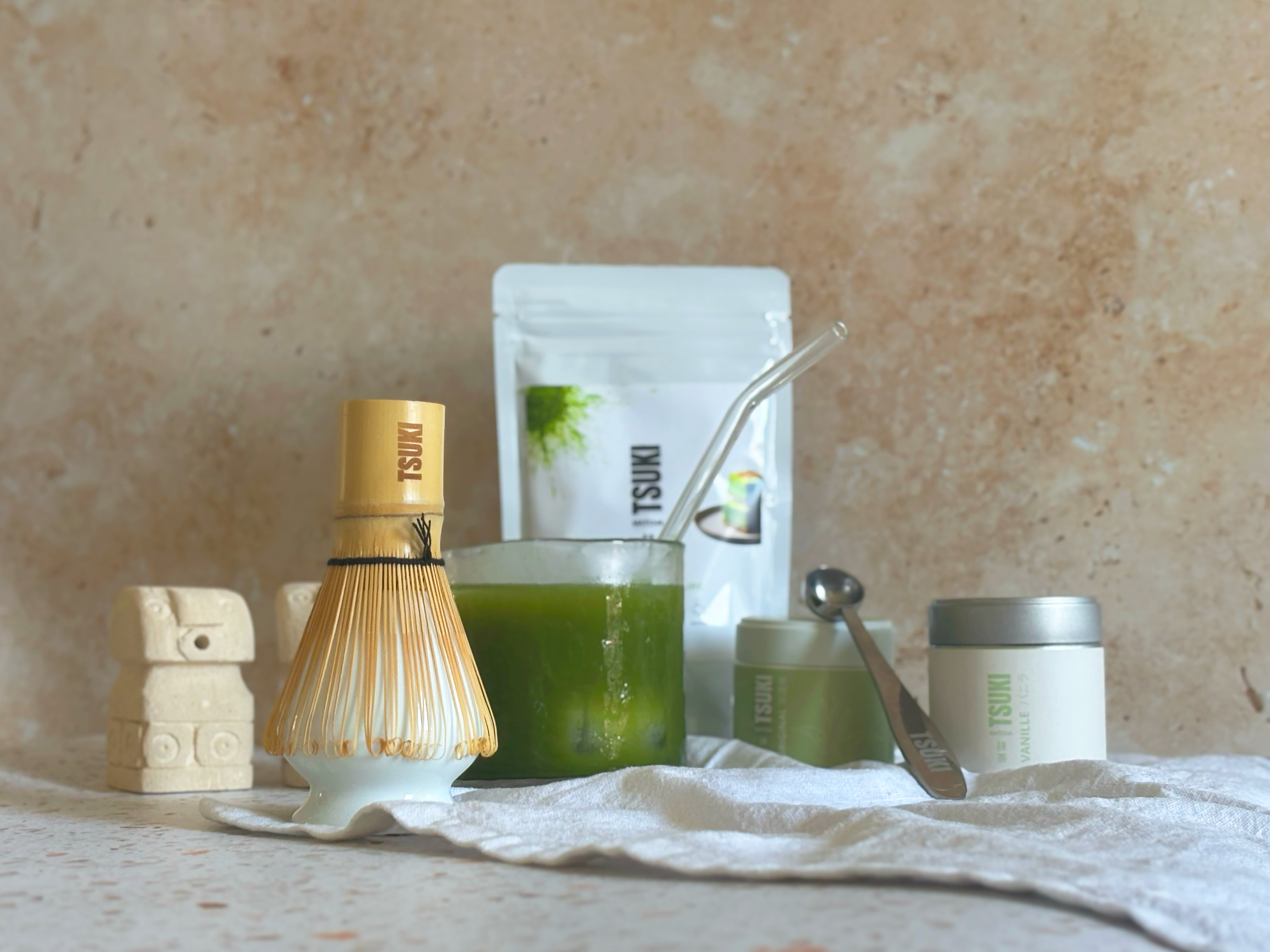
- Quality matcha: ceremonial grade from Japan for pure drinking or premium lattes, quality culinary grade for everyday use
- A bamboo whisk (chasen): essential for creating foam and dissolving the powder smoothly without clumps. An electric milk frother will do if you don't have a chasen
- A bamboo measuring spoon (chashaku): to measure the correct amount of matcha for each preparation (1 heaped scoop ≈ 1 g)
- A small bowl or large mug: wide enough for whisking movements
The 5-step recipe (3 minutes flat)
- Sift the matcha: pour 1 to 2 grams of matcha (a heaped teaspoon) into the bowl through a small sieve. This step removes lumps and ensures a perfectly smooth texture.
- Add a little hot water: pour 30 to 60 ml of water at 70-80°C (never boiling, otherwise the matcha becomes bitter).
- Whisk with a chasen: hold the whisk upright and make quick zigzag movements (in a "W" shape) for 15 to 20 seconds, until a fine, stable foam forms on the surface.
- Add milk: pour 150-200 ml of pre-heated and ideally frothed milk (with a frother, coffee maker, or by vigorously shaking in a sealed jar).
- Sweeten if desired: add a teaspoon of agave syrup, honey, or vanilla syrup to your taste. To replicate the Starbucks effect, aim for half to one teaspoon maximum.
And that's it. The result is a matcha latte with a real matcha presence, a creamy milk foam, and a sugar level you control 100%.
Tips that make a difference
A few small adjustments transform a decent matcha latte into a memorable one:
- Oat milk is probably the best plant-based milk for matcha: its natural sweetness and creamy texture perfectly complement the tea without overpowering it. Almond milk also works very well for those who prefer a lighter taste.
- For the iced version (iced matcha latte): prepare the matcha with hot water as in the recipe, then pour over a large glass filled with ice cubes and cold milk. Guaranteed visual and taste effect.
- To flavor without adding sugar: a few drops of vanilla extract, a pinch of cinnamon, or even a little orange blossom water completely transform the profile without added calories.
- To go further with the traditional method: the complete details of the traditional matcha preparation step-by-step guide allow you to master all the parameters.
How much does a homemade matcha latte really cost?
Beyond quality, the economic argument is undeniable. Let's do the real calculation based on regular consumption.
The cost per cup in detail
For a standard homemade matcha latte (1.5 g matcha + 200 ml oat milk + optional syrup):
- Premium ceremonial matcha (30 g at €27): €1.35 per cup
- Oat milk (1 L at €2.50): €0.50 per cup
- Optional syrup (50 ml at €5): €0.10 per cup
- Homemade total: ≈ €1.95 per cup
For a standard Grande Starbucks matcha latte, the price ranges from €5.50 to €7 depending on the country and options. The difference is clear: we are talking about a cost that is approximately 3 to 4 times higher in stores, for a qualitatively inferior product.
Annual savings
For someone who drinks a matcha latte every day:
- Starbucks (€6/day): €2,190 per year
- Homemade (€2/day): €730 per year
- Annual savings: €1,460
The initial purchase of a complete kit (matcha + whisk + spoon + bowl) costs around €50-60, which is amortized within two weeks of daily consumption. Beyond that, it's pure savings.
Where to Buy Good Matcha to Prepare at Home
The last question remains: where to buy quality matcha to prepare your matcha latte? Here are some concrete leads.
What to aim for
Four non-negotiable criteria for choosing well:
- Japanese origin mandatory: Shizuoka, Kagoshima, Uji or Nishio. Other origins (China, Korea) remain inferior in quality
- Clear grade: ceremonial for superior quality, quality culinary for daily use. Be wary of "matchas" with no specified grade
- Transparent composition: a true matcha contains only one ingredient, ground green tea. If the composition mentions sugar, powdered milk or flavors, it is not pure matcha
- Brilliant jade green color: the color of the powder is a reliable indicator of quality, as detailed in the article on the color of matcha and what it reveals
Preferred purchasing channels
For good quality matcha, specialized online brand sites remain the most reliable option, with much better stock rotation than supermarkets and more transparent sourcing. For details on the best purchasing channels and their advantages, the article on where to buy matcha compares the different options available in France.

Frequently asked questions about Starbucks matcha
Does Starbucks matcha really contain real matcha?
Yes, but in limited quantities and always mixed with sugar. According to official Starbucks statements, the "Matcha Tea Blend" used contains two ingredients: sugar and ground green tea, in that order (so sugar is the majority ingredient). Added to this is the classic syrup from the final recipe. Pure matcha represents a modest fraction of the final product.
How much sugar is in a Starbucks Grande matcha?
A Starbucks Grande matcha latte (16 oz / 473 ml) contains between 29 and 32 g of sugar depending on the milk chosen. This is about 7 teaspoons, equivalent to a 33 cl Coca-Cola, and above the daily limit recommended by the WHO (25 g for an adult).
Can I order a Starbucks matcha without sugar?
Partially. You can ask to remove the classic syrup, which saves a few grams of sugar. But the matcha powder itself already contains sugar incorporated into the blend, you won't be able to remove it. For a real matcha latte with no added sugar, the only solution is to make it at home.
Is Starbucks matcha good for your health?
Good for your health is a term that needs to be qualified. The matcha it contains provides its benefits (antioxidants, L-theanine, caffeine), but the amount of sugar greatly reduces the health benefits of the product. It's more of a colorful pleasure drink than a routine wellness product. To fully enjoy the benefits of matcha, it's better to make it at home with pure matcha.
How much does a Starbucks matcha latte cost compared to making it at home?
A Starbucks Grande matcha latte costs between €5.50 and €7 depending on the country. The equivalent homemade version costs about €1.95 per cup, including milk. The difference for daily consumption represents a saving of over €1,400 per year.
Which Starbucks size contains the least sugar?
The Tall size (12 oz) contains about 21 g of sugar, compared to 29-32 g for Grande and 43 g for Venti. If you're set on your Starbucks matcha, choosing the smallest size is still the least sugary option.
What matcha does Starbucks use?
Starbucks does not publicly communicate on the precise origin of its matcha or its grade. According to independent analyses, it is culinary matcha, likely of Japanese origin for most markets, pre-mixed with sugar for internal formulation. There is no information to indicate that it is premium ceremonial matcha.
How to replicate the taste of a Starbucks matcha at home?
To replicate the sweet and milky profile, use 1.5 g of quality culinary matcha, 200 ml of hot oat milk, and 1 teaspoon of vanilla syrup or vanilla sugar. Whisk with a chasen or electric frother. You will get a matcha latte very similar in taste, but with better matcha and much less sugar than the commercial version.
Does Starbucks matcha contain caffeine?
Yes. A Grande matcha latte contains about 65 mg of caffeine (from the matcha itself), equivalent to a classic espresso. The Tall contains 45 mg, the Venti 80 mg.
Matcha deserves better than a sweet industrial blend
The Starbucks matcha latte has introduced matcha to millions of people, which is its great merit. But it is also a sugary industrial product that ultimately has little in common with what a real matcha latte should be. For 3 to 4 times less money, in 5 minutes at home, with accessible equipment and quality matcha, you can prepare a vastly superior latte. More matcha, less sugar, more benefits, more gustatory pleasure. And above all, real control over what you drink. For those who truly love matcha, switching to the homemade version is not a step backward. It's a discovery.

To start under the best conditions, quality matcha makes all the difference. Discover our selection of premium matcha from Japan, sourced directly from producers in the Shizuoka and Kagoshima regions, for homemade matcha lattes that are just as good as café versions.


