
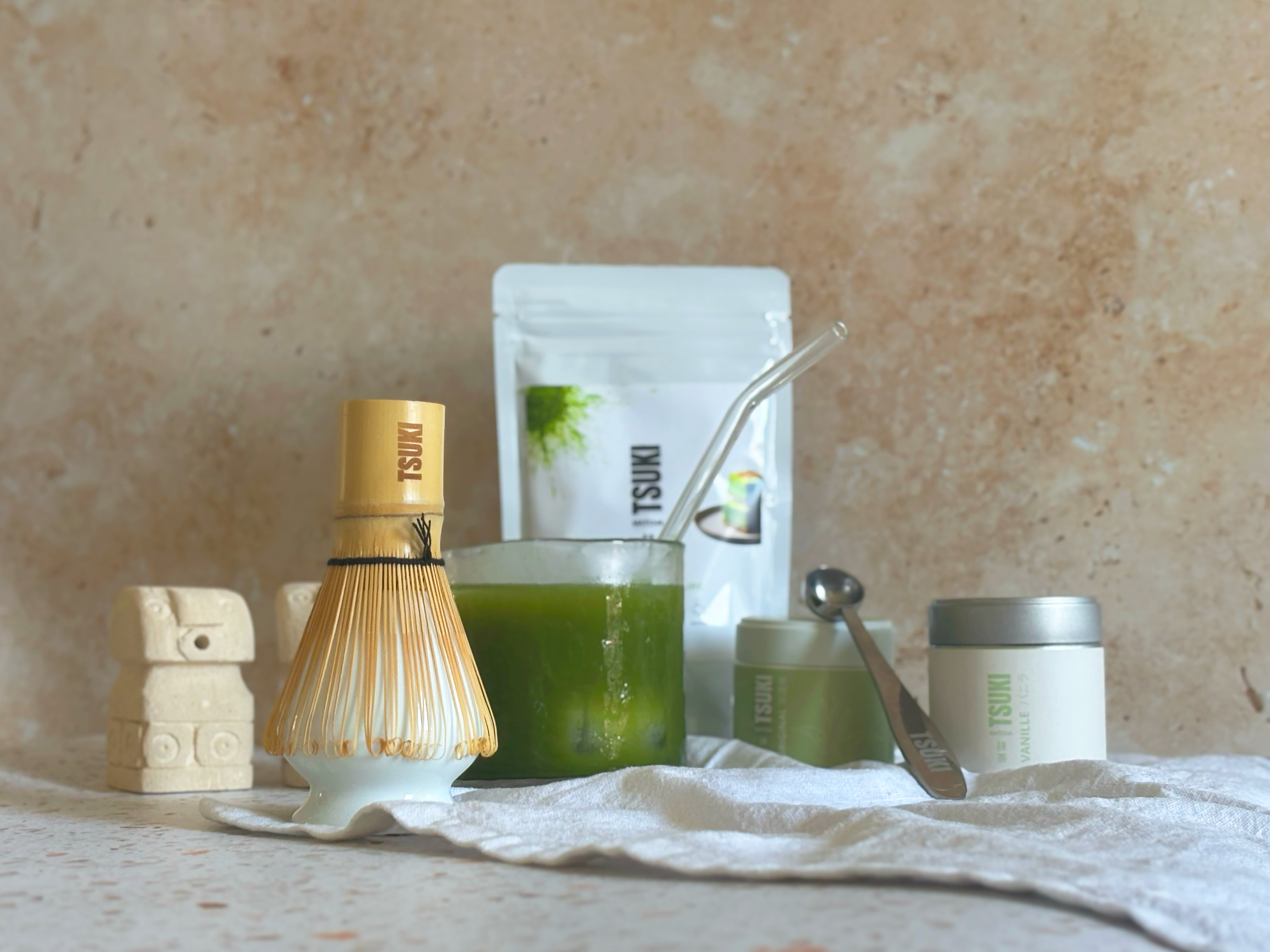

Violet, blue, and pink matcha: are colorful matchas really worth it?
Purple matcha, blue matcha, and pink matcha are taking over social media with their spectacular colors. Behind these highly photogenic powders lies a simple reality: most contain not an ounce of tea. Here's how to differentiate between an aesthetic trend and real matcha, and why color remains your best indicator of quality.
For several years now, trendy cafes and recipe videos have been featuring drinks with unreal hues. A lagoon-blue latte, a neon-pink smoothie, a purple foam: everything is presented under the name of matcha. The problem is that authentic matcha has never been blue, pink, or purple. Understanding where these colors come from allows you to buy knowingly and avoid paying Japanese tea prices for a simple coloring powder.
Purple, Blue, Pink Matcha: What Are We Really Talking About?
The word matcha refers to a very specific powder: Japanese green tea leaves, shaded before harvest, dried, then ground with a stone mill. Its natural color is a vibrant green, leaning towards jade. Nothing in this process can produce blue, pink, or purple.
The colored powders sold under the names blue matcha, pink matcha, or purple matcha are therefore different products. They borrow the name matcha to ride its popularity, but their composition has nothing to do with tea. In the vast majority of cases, they are flowers or fruits reduced to powder, used primarily as natural colorants.
Knowing how to identify the criteria for good green matcha remains the best protection against these marketing confusions, which play on aesthetics rather than the content of the cup.
Real Matcha Is Green, and Here's Why
Matcha's color is not a cosmetic detail. It tells the whole story of its production, from cultivation to grinding. A matcha that is not green is simply not matcha.
Chlorophyll, the Signature of Shaded Matcha
A few weeks before harvest, tea plants destined for matcha are covered to deprive them of direct light. Deprived of sunlight, the plant produces more chlorophyll to capture the little light available. It is this pigment that gives matcha its intense green color and rich aroma.
The more carefully the shading is done and the younger the leaf, the more vibrant the green. Ceremonial grade matcha displays a deep, luminous green, almost electric. Conversely, a dull powder indicates a less refined raw material.
What Color Says About Quality
The shade of green is a reliable indicator for judging matcha at first glance. A vibrant, homogeneous green reflects a young, well-shaded, and recent harvest. A yellowish or olive hue often betrays older leaves, prolonged storage, or exposure to air.
Some low-end powders are even artificially colored to appear greener, without the taste following suit. That's why learning to recognize authentic ceremonial matcha involves the eye as much as the palate.
Blue Matcha: Actually Butterfly Pea Flower
The famous blue matcha does not come from tea but from a flower: the butterfly pea, or Clitoria ternatea, a plant from Southeast Asia known for its intense azure blue. Dried and ground, it yields a spectacular powder, widely used as a natural colorant in drinks and desserts.
Its unique characteristic amuses content creators: add a few drops of lemon, and the blue turns purple due to acidity. It's visually stunning, but it remains a floral infusion, caffeine-free, L-theanine-free, and without the nutritional profile of green tea.
Butterfly pea has its own qualities and can be enjoyed as a herbal tea. Simply calling it matcha perpetuates a confusion that should not exist, as the two products have neither the same origin nor the same effects.
Pink Matcha: Pitaya Powder, Not Tea
Pink matcha follows the exact same logic. Its fuchsia color comes from pitaya, also called dragon fruit, an exotic fruit that is dried and then reduced to powder. Again, no tea leaves are included in its composition.
This type of powder is primarily used to naturally color a latte or a smoothie. It's a pleasant ingredient in cooking, but it provides neither the stable energy nor the specific antioxidants of green matcha. Paying the price of premium Japanese tea for a fruit powder would therefore not make much sense.
The rule is simple: as soon as a powder displays a vibrant color other than green, it leaves the world of tea to enter that of food colorants. This distinction sheds much more light on what premium matcha truly encompasses, whose value lies in the tea leaf and its terroir.
Purple Matcha: A Chemical Effect, Not a Tea
Purple matcha is often the result of the same butterfly pea flower, whose blue turns purple or mauve upon contact with an acidic ingredient like lemon or certain fruits. You also see powders presented as purple from purple sweet potato or other colored vegetables.
In all cases, the purple hue is a reaction or a mixture, never a characteristic of tea. Real matcha cannot turn purple. If it turns brown or khaki, it's not a beautiful shade of color but a sign of oxidation or aging.
In other words, purple matcha is a theatrical production. It's pretty in a glass, makes for great photos, but it doesn't replace the cup of ground green tea we look for when we talk about matcha.
Colored Matchas vs. Real Matcha: The Comparison
To clarify, here's what these different powders actually contain and what they bring to the cup.
| Powder | Real Origin | Real Tea? | Caffeine and L-theanine |
|---|---|---|---|
| Green Matcha | Shaded green tea leaves, stone-ground | Yes | Yes, sustained energy |
| Blue Matcha | Butterfly Pea Flower | No | No |
| Pink Matcha | Pitaya (dragon fruit) | No | No |
| Purple Matcha | Acidified butterfly pea or purple vegetable | No | No |
The conclusion is clear: only green corresponds to tea. The other colors are plant-based colorants that have neither the composition nor the benefits sought in a cup of matcha.
How to Recognize Quality Real Matcha
Once colored powders are set aside, the task remains to choose good green matcha. A few simple benchmarks are enough to distinguish serious offerings from mere marketing.
First, the color: aim for a vibrant, homogeneous green, never a dull green or a yellow hue. Next, the origin: Japanese matcha, from regions like Shizuoka or Kagoshima, offers guarantees of know-how that few other origins can match. Finally, the texture: a fine, silky powder, without lumps, indicates stone-ground milling.

The grade also matters depending on the use. A ceremonial grade matcha rather than culinary is essential for pure tasting, while a culinary version suffices for baking. The cultivation method also plays a role, and comparing organic matcha to conventional matcha helps choose according to one's priorities.
Should You Avoid Colored Powders?
Colored matchas are not dangerous. Butterfly pea and pitaya are natural ingredients that have their place in creative cooking, for coloring a dessert or drink without synthetic additives. The real problem is the name, not safety.
The risk is mainly financial and informational. When buying blue or pink matcha, one often believes they are buying tea, with its effects on energy and concentration, when they are getting a simple decorative powder. For a daily beverage conceived as a ritual, this difference changes everything.
The correct approach is to treat these powders for what they are: fun natural colorants. And for the true pleasure of tea, it is better to turn to authentic green matcha whose origin and grade are clearly indicated, as can be found by buying your matcha from reliable sources in France.
Frequently Asked Questions about Purple Matcha and Colored Matchas
Does purple matcha really exist?
Not as a tea. Purple matcha is almost always a butterfly pea powder whose blue turns purple on contact with an acidic ingredient, or a mixture of colored vegetables. Authentic matcha tea always remains green.
Does blue matcha contain caffeine?
No. Blue matcha is made from butterfly pea flower, which contains neither caffeine nor L-theanine. It therefore does not offer the stable, sustained energy characteristic of real green matcha.
Why isn't my matcha a beautiful green?
A yellow, olive, or brown tint generally indicates lower quality matcha, older leaves, or a product oxidized by too long storage. Fresh, well-shaded matcha displays a vibrant, luminous green.
Is pink matcha good for health?
The pitaya powder that makes up pink matcha is a fruit, therefore a healthy ingredient, but it is not a tea. It is mainly used as a natural colorant and does not provide the specific antioxidants of green matcha.
How can I be sure to buy real matcha?
Check three things: a vibrant green color, a precise Japanese origin, and a clearly stated grade. A blue, pink, or purple powder is never matcha, regardless of the name displayed on the packaging.
In summary: color does not deceive
Purple, blue, or pink matcha is a visual spectacle, not a tea tradition. These colored powders can brighten up a recipe, but they never replace authentic green matcha, which alone offers that gentle energy and unique aromatic profile.

To rediscover the true taste of stone-ground Japanese tea, discover TSUKI green matchas, selected for their vibrant color and Japanese origin.


