


The Benefits of Matcha Over Coffee
These two beverages are often consumed for their stimulating effect, but their impact on the body is very different.
While coffee is appreciated for its immediate boost, it can also cause nervousness, energy crashes, or digestive discomfort in some people.
Matcha, a Japanese powdered green tea, offers a gentler and more gradual approach. Thanks to its unique combination of caffeine and L-theanine, it provides stable energy, promotes concentration, and supports mental balance.
In this article, we compare matcha and coffee based on their actual effects on energy, concentration, stress, and well-being, to help you make an informed choice according to your needs and lifestyle.
Coffee and matcha: two sources of caffeine, two very different effects
Both coffee and matcha contain caffeine, but their mechanism of action on the body is fundamentally different.
In coffee, caffeine is rapidly assimilated by the body. It causes an almost immediate stimulating effect, often felt as a jolt, followed by a more or less pronounced energy crash in some people.

Matcha, on the other hand, acts more gradually. Its caffeine is naturally associated with L-theanine, an amino acid found in tea leaves. This combination allows for a slower and more stable release of energy, without a sudden peak. The effect is often described as gentler, longer-lasting, and better tolerated, particularly from a nervous system perspective.
Energy: immediate stimulation or sustained energy
Coffee is often chosen for its immediate effectiveness. It quickly wakes you up and strongly stimulates, which can be useful in certain specific situations. In return, this intense stimulation can be accompanied by nervousness, agitation, or a feeling of fatigue once the caffeine's action dissipates.
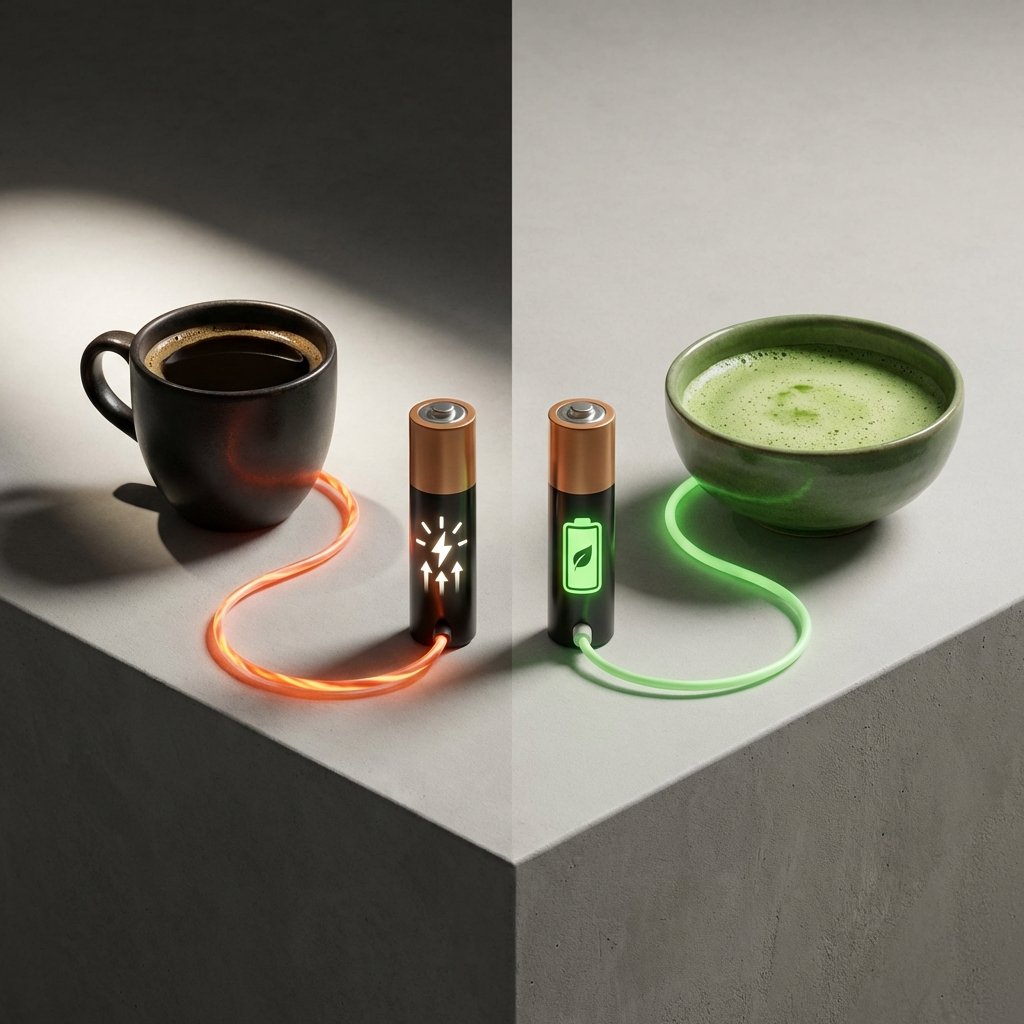
Matcha offers a different approach. The energy it provides is more stable and builds gradually. It allows you to stay active longer, without feeling overstimulated. This is why many people are gradually replacing coffee with matcha, especially in the morning or early afternoon, to maintain constant energy throughout the day.
Concentration and mental clarity
In terms of concentration, the differences between coffee and matcha are also significant. Coffee can improve alertness for a short period, but it can also generate a form of mental agitation that complicates sustained attention over the long term.
Matcha, thanks to the combined action of caffeine and L-theanine, promotes a calmer concentration. The mind remains clear, focused, and less prone to distractions. This quality makes it a particularly popular drink during periods of intellectual work, study, or creativity.
Stress, anxiety, and nervous balance
In some people, coffee can heighten feelings of stress or anxiety, especially when consumed on an empty stomach or in large quantities. Its rapid action on the nervous system can amplify tension and cause a feeling of nervousness.
Matcha, conversely, is often associated with a more calming effect. L-theanine helps promote a state of relaxation without causing drowsiness. This particularity explains why matcha is traditionally linked to meditation rituals and the tea ceremony in Japan.

Digestion and metabolism
Digestion is another important point of distinction between coffee and matcha. Coffee, particularly when consumed on an empty stomach, can be irritating to the stomach in some people and cause digestive discomfort.
Matcha is generally better tolerated. Its gentler composition and richness in antioxidants make it a beverage often appreciated for supporting metabolism without irritating the digestive system. It thus integrates more easily into a daily routine.
Matcha or coffee for sports
In a sporting context, coffee is sometimes used for its rapid stimulating effect before exercise. It can provide an immediate boost, but this effect can be short-lived.
Matcha is increasingly appreciated for activities requiring endurance and regularity. Its stable energy and richness in antioxidants can support effort and aid recovery, without causing a peak followed by a sudden crash.
Can coffee be replaced with matcha?
Replacing coffee with matcha is by no means an obligation. Each body reacts differently, and both beverages can coexist in a balanced routine. For some people, a gradual transition to matcha helps reduce the nervousness or energy fluctuations associated with coffee.

The choice also depends on the time of day. Matcha is often preferred in the morning or early afternoon, while coffee can occasionally remain useful in very specific situations.
When to choose coffee, when to choose matcha
Matcha is generally preferred during calm moments, periods of concentration, or when seeking stable energy. Coffee can be useful in an occasional emergency or an immediate need for stimulation. For intellectual work, matcha is often preferred, while for intense and short efforts, both options can be suitable depending on individual preferences.
The essential thing is to listen to your body and adapt your consumption to your lifestyle.
Why matcha is often preferred over coffee today
If matcha is gaining popularity, it is because it is part of a more holistic approach to well-being. Its gentle energy, its effect on concentration, and its better tolerance make it a popular alternative for those who wish to reduce the side effects of coffee without giving up a natural stimulant.
Its preparation, more ritualized, also invites slowing down and transforming a simple drink into a conscious moment.
Discover the best matcha to replace your coffee.


