
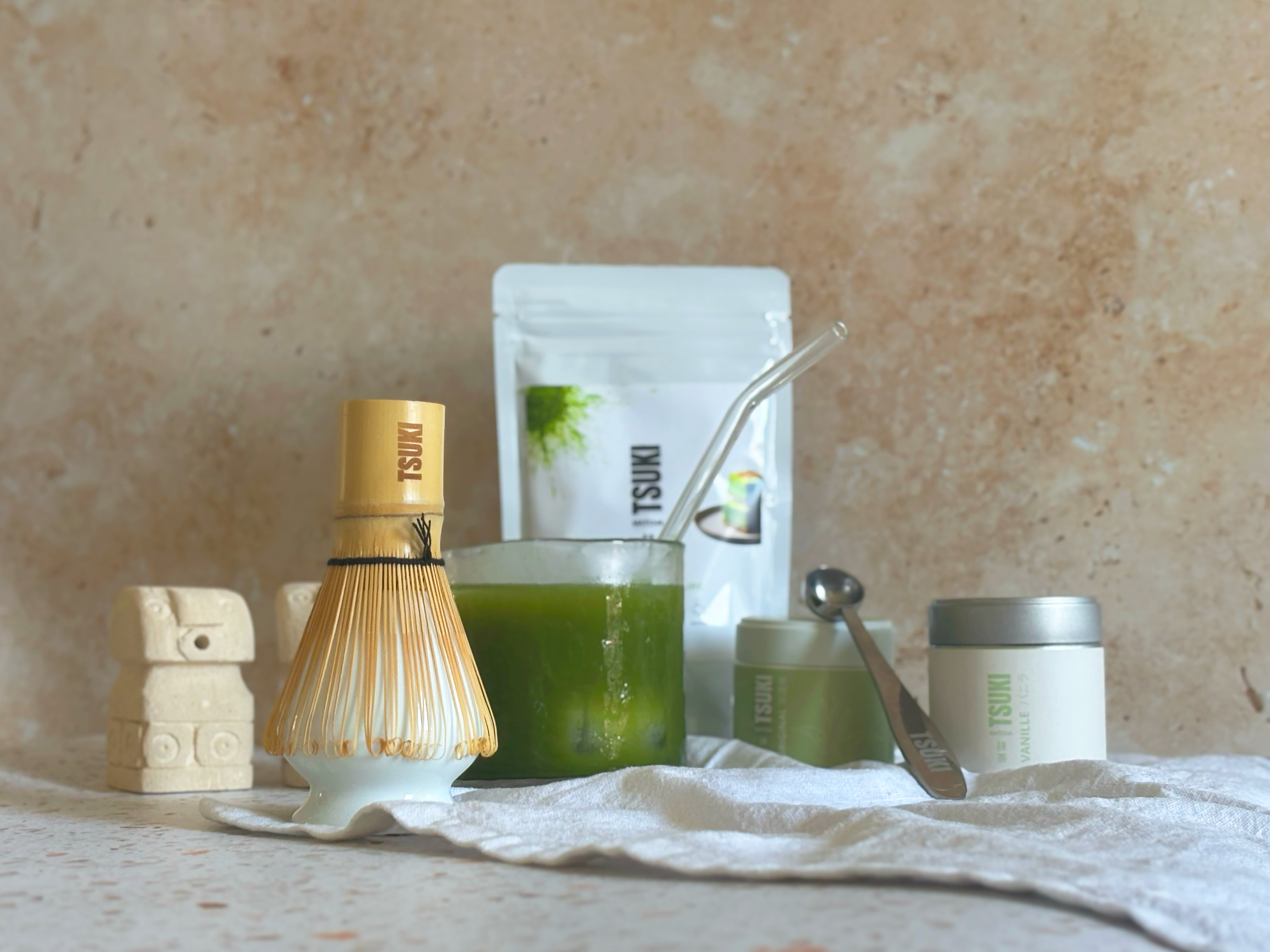

Best matcha 2026: our comparative guide to help you choose
What is the best matcha? This question is asked hundreds of thousands of times each month in Google searches. And the answer depends on what you're looking for.
The best matcha depends on your use. For daily latte consumption, choose a ceremonial grade Japanese matcha from Shizuoka or Kagoshima. For traditional preparation with water, look for a very fine powder, with low bitterness, and from a first harvest.
The best matchas are distinguished by their vibrant color, silky texture, and low bitterness. This comparison reviews the best matchas available in France in 2026, with objective criteria (origin, grade, cultivar, price, transparency) to help you make the right choice.
Our Selection Criteria
Comparing matchas without precise criteria is like rating wines without a tasting grid – it doesn't make much sense.
Here are the five criteria we use to evaluate each matcha in this comparison.
Origin and traceability. Matcha must be grown in Japan, in an identified region (Shizuoka, Kagoshima, Uji, Nishio). The brand must be able to indicate the exact origin, and ideally the cultivar used.
Grade. The distinction between ceremonial grade and culinary grade is fundamental. Ceremonial grade matcha is smooth, fine, and suitable for drinking. Culinary grade is more robust and designed for cooking.
Production method. The benchmark matcha is shade-grown (3 to 4 weeks), processed into tencha, then stone-ground. Rapid mechanical grinding produces a coarser and less aromatic powder.

Price per gram and value for money. A good ceremonial matcha costs between €0.80 and €1.30 per gram in France. Below that, the quality is rarely good, and the origin is often Chinese. Above that, you enter the ultra-premium segment.
Top 5 Best Ceremonial Matchas in France (2026)
1. TSUKI Matcha Miyazaki - Best Value for Quality and Transparency
Our ceremonial Miyazaki matcha is grown in Japan, in the Miyazaki region, from Yabukita & Yutaka Midori cultivars. The tea plants are shaded before harvest, the leaves are processed into tencha, then stone-ground. The matcha is packaged in an airtight 30g tin.
The taste profile is balanced: sweet, vegetal, with fresh notes and a present umami, without strong bitterness. It's a versatile matcha that works equally well for pure tasting, in lattes, or as an iced version.
What sets TSUKI apart is its complete transparency: cultivar communicated, precise regions of origin, detailed production method.
Over 1,000 customers and 99% satisfaction.
Price: €24.99 for 30g, or €0.83/g.

2. Anatae Ceremonial Matcha - The safe bet since 2019
Anatae is one of the first French brands specializing in matcha. Their ceremonial matcha is grown in Kagoshima and hand-picked. The profile is smooth with a distinct vegetal note and a beautiful aromatic complexity. The brand is available online and through a network of physical retailers in France.
Price: approximately €34 for 30g.
3. Matcha & CO Premium - The Most Accessible
Matcha & CO offers a spring harvest matcha at a competitive price. The taste is good, herbaceous, with a good balance for daily latte use. The brand is popular with beginners thanks to its entry-level price and frequent promotional offers.
Price: approximately €16 for 30g with a promo code.
4. Noka Matcha - For Cultivar Enthusiasts
Noka offers single-cultivar matchas (Okumidori, Saemidori) with a very transparent approach to origin and producer. The profile varies depending on the chosen cultivar, with options ranging from very smooth to more complex. This brand will appeal to advanced connoisseurs looking to explore the nuances between cultivars.
5. Kumiko Matcha - The Uji Premium Option
Kumiko positions itself in the premium segment with matchas from the Uji region (Kyoto). Their ceremonial matcha offers a round, creamy profile with a pronounced umami. The brand highlights the Uji origin, considered the historical birthplace of matcha in Japan.
Price: approximately €30 for 30g.

Complete Comparison Table
| Brand | Grade | Origin | Cultivar | Price / 30g | Ideal for |
|---|---|---|---|---|---|
| TSUKI Matcha | Ceremonial | Shizuoka / Kagoshima | Yabukita | €24.99 | Pure, latte, daily |
| Anatae Ceremonial | Ceremonial | Kagoshima | Not communicated | ~€34 | Ceremonial, pure |
| Matcha & CO Premium | Premium | Japan | Not communicated | ~€16 | Latte, daily |
| Noka Matcha | Ceremonial | Uji / Kagoshima | Okumidori / Saemidori | €25–35 | Connoisseurs, exploration |
| Kumiko Matcha | Ceremonial | Uji (Kyoto) | Not communicated | ~€30 | Premium, traditional Uji |
How to Recognize Good Matcha
Beyond rankings, a few simple tips can help you evaluate matcha for yourself.
Color. Good ceremonial matcha is a vibrant, bright, almost fluorescent green. Yellowish, khaki, or dull matcha indicates inferior quality, insufficient shading, or oxidation.
Fineness. Rub the powder between your fingers. Quality matcha is silky, almost like talc. A grainy texture indicates coarse or mechanical grinding.
Taste. Good ceremonial matcha is smooth, with umami and vegetal notes, without aggressive bitterness. If your matcha is very bitter from the first sip (at the correct temperature and dosage), it is likely not ceremonial grade. To delve deeper into these criteria, our guide to choosing good matcha details each point.
Brand Transparency. A trustworthy brand communicates the origin (region), cultivar, grade, and production method. The absence of this information is a red flag.
Price. In France, quality ceremonial grade matcha costs between €25 and €40 for 30g. Below €15, quality compromises are almost inevitable. Above €50, you are often paying for the brand more than the product.
Complete Matcha Brand Comparison
29 matcha brands analyzed and categorized: premium French brands, traditional Japanese producers, international brands, and large retailers. Verified origin, communicated cultivars, indicative price for 30g.
Premium French Brands
Brands founded in France in recent years, focused on direct sourcing from Japan with a commitment to transparency. Prices generally between €25 and €35 for 30g.
| Brand | Japanese Origin | Cultivar Communicated | Price 30g |
|---|---|---|---|
| TSUKI | Shizuoka / Kagoshima | Yes (Yabukita) | €24.99 |
| Anatae | Nishio | Not communicated | €34 |
| Noka Matcha | Yame / Nagasaki / Kagoshima | Yes (Yabukita, Okumidori) | €25-35 |
| Kumiko Matcha | Kagoshima / Kyoto / Mie | Yes (Yabukita, Okumidori, Saemidori) | €30 |
| Maison Matcha | Japan | Partially | €25-35 |
| IRO Matcha | Japan | Not communicated | €25-35 |
Traditional Japanese Producers (Tea Ceremony References)
Historic Japanese houses, some centuries or even millennia old, absolute references for ceremonial matcha. Extensive ranges with huge price differences depending on the grade (from wholesale culinary to competition grade).
| Brand | Japanese Origin | Cultivar Communicated | Price 30g |
|---|---|---|---|
| Marukyu Koyamaen | Uji (since 17th century) | According to reference | €20-60 |
| Ippodo Tea | Kyoto / Uji (since 1717) | No (blends) | €20-50 |
| Horii Shichimeien | Uji (Okunoyama garden, since 1570) | Yes (Saemidori, Samidori, Narino) | €25-60 |
| Yamamasa Koyamaen | Uji | According to reference | €20-50 |
| Hekisuien | Kyoto | Not communicated | €25-50 |
| Aiya | Nishio | Not communicated | €15-30 |
International Premium Brands (US, UK)
Anglo-Saxon brands focused on direct purchasing in Japan, often single-cultivar and small-batch. Heavily focused on traceability, sometimes more expensive than average due to marketing and logistical costs.
| Brand | Japanese origin | Cultivar disclosed | Price 30 g |
|---|---|---|---|
| Kettl | Japan (multiple) | Yes | €40-100 |
| Breakaway Matcha | Japan | Depending on reference | €35-70 |
| Sazen Tea | Uji (multi-brand reseller) | Depending on reference | €20-70 |
| Naoki Matcha | Uji | Depending on reference | €25-40 |
| Mizuba Tea | Uji | Depending on reference | €25-45 |
| Midori Spring | Japan | Not disclosed | €25-40 |
| Encha | Uji | Not disclosed | €20-35 |
| DoMatcha | Nishio | Not disclosed | €20-35 |
| Moya Matcha | Japan | Partially | €25-30 |
| Ocha & Co | Uji / Kagoshima | Not disclosed | €15-30 |
Retail & Consumer Brands
More affordable brands, distributed in large retailers, specialized stores, or general e-commerce platforms. Japanese sourcing (sometimes less traceable) with entry and mid-range positioning.
| Brand | Japanese origin | Cultivar disclosed | Price 30 g |
|---|---|---|---|
| Palais des Thés | Japan | No | €20-30 |
| Matcha & CO | Japan | Not disclosed | €16-25 |
| Aromandise | Uji | Not disclosed | €10-20 |
| Jade Leaf | Japan | Not disclosed | €15-30 |
| PureChimp | Uji | Not disclosed | €15-25 |
| OMGTea | Japan | Not disclosed | €15-25 |
| Kiss Me Organics | Japan | Not disclosed | €15-25 |
How to read this table
Three keys to interpreting the data above.
Japanese origin is a minimum, not an absolute quality argument
All these brands source from Japan, which is now the basic condition for serious matcha. But "Japanese origin" is no longer enough: quality depends on the specific region (Uji, Nishio, Kagoshima, Shizuoka, Yame), direct relationships with producers, and mastery of the processing chain. A brand that does not specify the precise region remains more opaque than a brand that details its sourcing areas.
Disclosed cultivar is a true marker of transparency
Brands that indicate the cultivar (Yabukita, Okumidori, Samidori, Saemidori, Asahi, Narino) show a true mastery of their sourcing. Many brands remain vague on this point. The Yabukita cultivar remains the benchmark (75% of Japanese tea), appreciated for its umami-freshness balance, but single-cultivar Okumidori or Saemidori offer more specific profiles for initiated palates.
The price per 30g doesn't tell the whole story
The price differences between traditional Japanese brands and retail brands are explained as much by quality as by logistical costs, marketing, and brand strategy. A €25 matcha can be superior to a €50 matcha. The real criterion remains the consistency between the announced origin, the cultivar used, the color (vivid jade green), the aromatic profile in the cup, and the overall transparency of the brand.
The right benchmark for choosing premium matcha
To recognize reliable premium matcha among this diversity, three convergent criteria.
- Precise origin : indicated Japanese region (Uji, Nishio, Kagoshima, Shizuoka, Yame), not just "Japan"
- Cultivar disclosed : Yabukita, Okumidori or other, ideally specified
- Color : a brilliant jade green to the eye, a sign of long shading and preserved freshness
These combined signals allow you to filter through the 29 brands on the market and identify the right matcha for your use, rather than relying solely on price.
Where to buy the best matcha?
Supermarkets and some marketplaces offer accessible options, but information on origin, grade, or production method is often limited.

To find quality matcha, buying online from a specialized brand is generally the best solution. This makes it easy to compare origins, cultivars, grades, and customer reviews before making a choice. Specialized brands also offer greater transparency on their producers and manufacturing methods, two essential criteria for evaluating the real quality of matcha.
Before buying, always check the Japanese origin of the product, the production region, the announced grade, the price per gram, and the traceability information provided by the brand. These elements often help distinguish a true premium matcha from a product simply presented as such.
FAQ: Best matcha and buying choices
What is the best matcha for beginners?
A ceremonial grade matcha with a soft and balanced profile is the best starting point. Avoid culinary matchas (too bitter as a drink) and ultra-premium matchas that might give you a false idea of what daily matcha is. A ceremonial Yabukita like TSUKI matcha is designed to please from the first cup.
Is it better to buy matcha online or in-store?
For quality matcha, buying online from a specialized brand is often the best choice. Specialized stores generally provide more information on origin, grade, cultivar, taste profile, and preparation tips. In-store, the choice is often more limited, and it can sometimes be difficult to objectively compare product quality.
Is the most expensive matcha necessarily the best?
No. Price is influenced by quality but also by marketing, packaging, and intermediaries. A matcha sold in a physical store in Paris will be more expensive than an equivalent matcha bought online directly from the brand. The best indicator remains transparency on origin and production method.
What's the difference between Japanese matcha and Chinese matcha?
Japan is the birthplace of matcha and has centuries of expertise. Cultivation standards (shading, tencha, stone grinding) are codified there. China also produces matcha, often at a lower cost, but production methods and quality controls differ. For tasting matcha, Japanese matcha remains the benchmark.
Why does TSUKI disclose the cultivar of its matcha?
Because the cultivar is to matcha what the grape variety is to wine: fundamental information that determines the taste profile. Disclosing the cultivar (Yabukita in our case) is a commitment to transparency. It allows our customers to understand exactly what they are drinking and to objectively compare it with other matchas.

Ready to taste the difference? Explore our ceremonial grade matchas and judge for yourself.


