

The origin of matcha: from China to Japan, 1,000 years of history
Where does matcha really come from? Many people think of it as a purely Japanese tea, but the story actually begins 400 years earlier, in imperial China. Here's the complete journey of this green powder, from its Chinese origins to its modern revival, via a thousand years of back-and-forth between two civilizations.

When we mention matcha, our minds immediately turn to Japan. Tea ceremonies in Zen temples, traditional stone mills, plantations in Kyoto. This association is so strong that we almost forget that matcha is not of Japanese origin. The technique of ground and whisked tea was born in China, several centuries before arriving in the Land of the Rising Sun. And this is one of the most fascinating paradoxes of this story: China invented matcha, then abandoned it. Japan, on the other hand, adopted it, transformed it, refined it, until it became an absolute national symbol.
This article traces the complete journey of matcha over nearly a thousand years. Not a simple chronology of dates, but a real story with characters, places, and turning points. From the Tang dynasty to modern tea houses in Tokyo, via traveling Buddhist monks, Zen masters, and contemporary producers. Understanding this history means understanding why matcha is not an ordinary drink, and why its resonance extends far beyond simple tea.
Chinese origins: the birth of powdered tea
It all begins in China, long before Japan knew tea in any form. To accurately place the origins of matcha, we must go back more than 1,200 years.
The Tang Dynasty: the first uses of powdered tea (618-907)
During the Tang Dynasty, around the 8th century, tea was still a recent beverage in China, mainly consumed in aristocratic and religious circles. It was at this time that a central figure, Lu Yu, published the Cha Jing (The Classic of Tea), the first known treatise on the cultivation, preparation, and tasting of tea. Lu Yu describes a precursor practice: tea leaves were pressed into bricks for transport, then ground into a fine powder before being mixed with hot water.

This primitive method of powdered tea was more utilitarian than aesthetic. Compressing and then grinding mainly allowed for better preservation of the leaves during long commercial journeys across the Empire. But it was still far from the matcha we know today. The whisking technique that defines modern matcha did not yet exist.
The Song Dynasty: the golden age of whisked tea (960-1279)
It was under the Song Dynasty, from the 10th century onwards, that the practice became considerably refined. The technique evolved: tea leaves were steamed immediately after harvesting (to stop oxidation), dried, then ground into a fine powder. This powder was then mixed with hot water in a bowl and vigorously beaten with a bamboo whisk to create a fine foam on the surface. The practice was then called "dian cha" in Chinese, and it is the true direct ancestor of Japanese matcha.
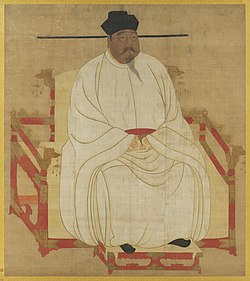
Under the Song, this tea preparation became an art in itself in Chinese high society. The emperors themselves practiced and appreciated this method. Emperor Huizong (1100-1126) even wrote a personal treatise on tea, the Daguan Cha Lun, in which he detailed with astonishing precision the best whisking techniques. At this stage, we already have the essence of what would become matcha: steamed leaves, fine grinding, whisking with water, foam on the surface.
Why whisked tea eventually disappeared in China
Here is the most fascinating historical paradox. At the very moment Japan discovered this method (late 12th century), China gradually began to turn away from it. Under the Yuan Dynasty (1279-1368) and especially under the Ming Dynasty (1368-1644), Emperor Hongwu in 1391 banned the production of compressed brick tea, which was considered too costly in terms of labor and resources. Chinese tea culture then shifted to infused whole leaves, a method that still dominates throughout the country today.
As a result, whisked tea almost completely disappeared from China within a few centuries. So much so that today, in the global collective imagination, matcha is perceived as exclusively Japanese. China, despite being its inventor, lost track of it in its own territory. It is only recently, driven by the global matcha wave, that Chinese producers are once again taking an interest in this ancestral technique.
Arrival in Japan: Monk Eisai and the 12th-century turning point
While the Chinese were refining the art of whisked tea under the Song, Japan was experiencing a troubled political period. Buddhist monks regularly traveled between the two countries to study philosophy, religious texts, and cultural practices. It was one of them who would forever change the history of tea.
1191: The date that changed everything
In 1191, the Zen Buddhist monk Myōan Eisai (1141-1215) returned to Japan after several periods of study in China under the Song. He brought back tea seeds and the complete technique for producing powdered tea. Eisai was not a simple traveler: he was the founder of the Rinzai school of Zen Buddhism in Japan, a major figure whose influence would extend far beyond the realm of tea.

Eisai first regarded powdered tea as a medicinal remedy with extraordinary properties. In 1211, he wrote the Kissa Yōjōki ("Notes on Health through Tea"), the first Japanese treatise on tea. The work became famous when Eisai reportedly used it to cure Shogun Minamoto no Sanetomo of excessive alcohol consumption. From this episode, powdered tea gained its reputation in the upper echelons of Japanese society.
The first Japanese plantations
Eisai shared his seeds with other monks, notably Myōe Shōnin, who planted the first tea bushes in the Toganoo region, near Kyoto. These initial plantations then expanded to Uji, which would become (and remains today) the most prestigious region for very high-quality matcha. Powdered tea spread to Buddhist temples, where monks used it to stay awake and focused during long zazen meditation sessions.
To understand how this powdered tea then evolved into the cultivation of Camellia sinensis as it is cultivated today, one must trace the agricultural developments of the following centuries, which transformed an imported Chinese tea into a uniquely Japanese product.
From monastic practice to aristocratic practice
In the 13th and 14th centuries, powdered tea gradually left the Buddhist temples and entered aristocratic circles. Samurai and lords (daimyō) began to organize "tōcha," a kind of tasting competition where they had to guess the origin of different teas. Tea thus became a social marker, a sign of refinement and culture. But these practices remained playful and worldly: the profound spiritual dimension that would define matcha only appeared in the following century.
Sen no Rikyū and codification: matcha becomes an art (16th century)
If one had to choose a single person to embody the transformation of powdered tea into matcha as we know it, it would undoubtedly be Sen no Rikyū (1522-1591). It was he who codified the tea ceremony and made matcha the center of a total art that still resonates in Japanese culture today.
Before Rikyū: the precursors Juko and Joō
In the 15th century, the monk Murata Juko (1422-1502) laid the first foundations for a more spiritual approach to tea. Influenced by Zen, he introduced the idea of a sober, stripped-down ceremony, in which tea was no longer just a drink but a medium for meditation. His spiritual student Takeno Joō (1502-1555) continued this work by further simplifying the framework of the ceremony, favoring modest utensils and small spaces.
1580: The Rikyū revolution
Around 1580, Sen no Rikyū, a student of Joō and tea master to the powerful general Toyotomi Hideyoshi, definitively codified the Japanese tea ceremony, chanoyu. He established four fundamental principles that still structure the entire practice today:
- Wa (和): harmony, between guests, utensils, the place, and nature
- Kei (敬): respect, mutual and towards the objects of the ceremony
- Sei (清): purity, of body, mind, and place
- Jaku (寂): tranquility, a state of serenity achieved when the other three principles are united
With Rikyū, matcha is no longer a drink; it is an art in itself. The ceremony integrates architecture (minimalist tea rooms), floral art (ikebana), calligraphy, ceramics, and gardening. Everything is designed to create a unique, suspended moment that invites full presence. This concept finds its echo in the place of matcha in contemporary Japanese culture, where these values continue to inform daily practice, even outside of ceremonies.
The wabi-sabi aesthetic
Rikyū also popularized the aesthetic of wabi-sabi: the beauty of imperfection, naturalness, and ephemerality. A cracked bowl, a withered flower, a rough earthen wall. This philosophy transforms matcha into active meditation. Preparing a cup becomes an exercise in being present in the moment, where every gesture counts. To discover how this ceremony unfolds in practice, the immersive guide to the matcha tea ceremony details each step.
Rikyū's tragic end
Rikyū's story ends dramatically. In 1591, after years of service to Toyotomi Hideyoshi, he fell from grace for reasons still debated by historians (political rivalries, aesthetic disagreements, refusal to marry his daughter to the shogun). Hideyoshi ordered him to commit ritual seppuku, which he carried out with dignity, performing a final tea ceremony before his act. His death definitively cemented his legendary stature. His direct descendants founded the three main schools of the tea ceremony (Urasenke, Omotesenke, Mushakōjisenke), still active today.
From the 17th century to modern tencha: Japanese technical evolution
While the ceremony was being codified, tea cultivation also underwent major technical developments, which definitively distanced Japanese matcha from its Chinese origins.
The invention of tencha in 1835
The year 1835 marks a major, often overlooked turning point. It was in this year that an Uji producer, Nagatani Sōen (according to historical accounts), developed the specific tencha process.
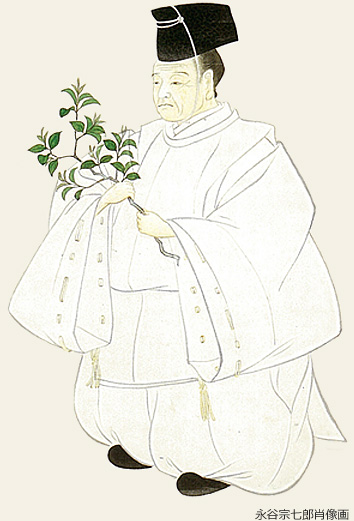
Instead of simply grinding ordinary green tea, leaves are now cultivated specifically to become matcha: prolonged shading before harvest, immediate steaming, flat drying without rolling, careful removal of veins and stems. From this date onwards, matcha ceased to be made from common green tea. Matcha became a distinct product, with its own sector, its own standards, and its own aromatic signature.
Regional expansion in Japan
Throughout the 19th and 20th centuries, matcha cultivation expanded beyond Uji to other Japanese regions. Nishio in Aichi Prefecture became a major production area. The Shizuoka region, the main matcha producing region in volume today, also grew in prominence, followed by Kagoshima in the south. Each region developed its terroir, its favorite cultivars, and its style.
Democratization in the 20th century
Long reserved for the elite (samurai, aristocrats, literati), matcha began to democratize in Japan from the Meiji era (1868-1912) and especially during the Shōwa era (1926-1989). Tea schools multiplied their disciples, practices were simplified to enter homes, and matcha found its place in Japanese pastries (wagashi), ice cream making (from the 1930s), and then gradually in daily cooking.
Matcha today: the global revival (2000-2026)
The history of matcha could have remained confined to Japan. But since the beginning of the 21st century, and with a spectacular acceleration in recent years, matcha has become a global phenomenon. This latest chapter in its history is probably the fastest and most perplexing.
International emergence (2000s)
In the 2000s, matcha began to appear outside Japan, first in major Asian capitals (Seoul, Hong Kong, Singapore), then on the American West Coast, driven by Japanese communities and the "superfood" trend. Pioneer brands like Ippodo (in Kyoto since 1717) opened outlets in New York. Matcha latte made its appearance at Starbucks in the United States as early as 2006, helping to popularize the product among the general public.
The 2015-2020 boom
From the mid-2010s, matcha shifted from being a curiosity to a global phenomenon. Social networks, lifestyle blogs, the wellness movement, the promotion of "natural" and "anti-aging" products. Everything converged. Mateine, Blue Bottle, Lady M, and other American lifestyle chains popularized matcha-based drinks. In Europe, the movement arrived a few years later, first driven by London and Berlin, then Paris.
2020-2026: the decade of matcha
The last five years have seen unprecedented acceleration. The Covid-19 pandemic, by pushing consumers towards home-based wellness routines, has propelled matcha into households in a lasting way. Since 2023, the global matcha market has been growing by more than 15% annually. Japanese producers are struggling to meet global demand, which sometimes creates supply tensions and explains why some Chinese and Korean productions are trying to fill the demand, with inconsistent quality.
This explosion also changes the perception of matcha. From a purely traditional product, linked to the Zen ceremony, it becomes a lifestyle ingredient, present in cafes, pastries, cosmetics, and morning routines. France, long behind, has been catching up since 2022 with the emergence of specialized coffee shops and dedicated brands. To better understand what defines quality matcha today in this context, the article tracing the history of matcha and its traditions provides the complete framework.
Timeline: key dates in the origin of matcha
| Date | Location | Key Event |
|---|---|---|
| 8th century | China, Tang Dynasty | Lu Yu writes the Cha Jing, the first tea treatise. Compressed tea appears. |
| 10th-11th century | China, Song Dynasty | Whisked tea "dian cha" appears, the direct ancestor of matcha. |
| 1191 | Japan (Kyoto) | Monk Eisai brings the powdered tea technique and tea seeds from China. |
| 1211 | Japan | Publication of Kissa Yōjōki, the first Japanese treatise on tea. |
| 1391 | China, Ming Dynasty | Emperor Hongwu bans compressed tea. Whisked tea disappears from China. |
| 15th Century | Japan | Murata Juko lays the spiritual foundations of the tea ceremony. |
| ~1580 | Japan | Sen no Rikyū codifies the tea ceremony (chanoyu) with its 4 principles. |
| 1835 | Japan (Uji) | Invention of tencha. Matcha becomes a dedicated production. |
| 20th Century | Japan | Matcha becomes widely used in Japanese pastry and cuisine. |
| 2006 | United States | Starbucks launches matcha latte in the USA, beginning of widespread distribution. |
| 2020-2026 | Global | Global matcha boom. Market growing +15% per year. |
What this history teaches us about contemporary matcha
Knowing the origin of matcha changes the way we drink it. Three lessons, in particular, emerge from this thousand-year history.

A product born from a dialogue of civilizations
Matcha is neither purely Chinese nor purely Japanese. It is the result of an exchange between two civilizations, where China planted the technical seed and Japan cultivated the cultural tree. This dual origin makes matcha one of the most symbolically rich products in the world of tea.
Uninterrupted transmission of expertise
From Eisai in 1191 to current producers in Shizuoka, matcha know-how has been transmitted without interruption in Japan. No other beverage can claim such a long and continuous transmission. This explains the level of expertise of Japanese producers today, and the difficulty for other countries to catch up to this level, despite increasing demand.
A renaissance based on authenticity
The global matcha boom does not mean a dilution of its quality. On the contrary, brands that succeed sustainably are those that are rooted in authentic Japanese tradition: selected cultivars, recognized terroirs, traditional production, stone mill grinding. The modernity of matcha, paradoxically, rests on its fidelity to its roots.
Frequently asked questions about the origin of matcha
Where does matcha originally come from?
Matcha has its origins in China, under the Tang (8th century) and especially Song (10th-13th century) dynasties, where the technique of grinding and then whisking tea was invented. It was the Japanese Zen monk Eisai who brought this practice to Japan in 1191. China then abandoned whisked tea in the 14th century, while Japan developed and perfected it over the following centuries.
Is matcha Chinese or Japanese?
Technically, both. The basic technique is of Chinese origin. But the current form of matcha (specific cultivars, prolonged shading, tencha, stone mill grinding, tea ceremony) was entirely developed in Japan between the 12th and 19th centuries. Today, matcha is considered an emblematic Japanese product, and it is in Japan that it achieves its highest quality levels.
Who introduced matcha to Japan?
The Zen Buddhist monk Myōan Eisai (1141-1215). In 1191, he returned from several stays in China, bringing back tea plant seeds and the technique of preparing powdered tea. In 1211, he also wrote the first Japanese treatise on tea, the Kissa Yōjōki, which established the medicinal and spiritual legitimacy of powdered tea.
What was the role of Sen no Rikyū?
Sen no Rikyū (1522-1591) was the tea master who definitively codified the Japanese tea ceremony (chanoyu) around 1580. He established the four fundamental principles (harmony, respect, purity, tranquility) and the wabi-sabi aesthetic that still define the practice of ceremonial matcha today. It was he who transformed matcha from an aristocratic drink into an art form in its own right.
Why did China abandon whisked tea?
In 1391, Ming Emperor Hongwu banned the production of compressed brick tea, deeming it too labor- and resource-intensive. Chinese tea culture then gradually shifted to whole leaf infused tea, a method still dominant in China today. Whisked tea almost completely disappeared from China within a few centuries.
When was matcha as we know it invented?
Matcha in its current form (production from specifically cultivated tencha) dates back to 1835, with the invention of the tencha process in the Uji region. Before this date, matcha was made from ground ordinary green tea. After 1835, it became a dedicated production, with prolonged shading, immediate steaming, flat drying, and stone grinding.
Does matcha still exist in China?
Hardly, or only as a recent attempt to produce for the global market. The traditional culture of whisked tea has disappeared in China since the 16th century. Today, some Chinese producers are trying to revive "matcha" production, but without the generational know-how and specific Japanese terroir, the quality remains far inferior to authentic Japanese matchas.
Why is matcha associated with Zen Buddhism?
Because it was Zen Buddhist monks who imported it to Japan (Eisai in 1191), propagated it in their temples, and used it as a support for meditation. The tea ceremony codified by Sen no Rikyū is directly inspired by Zen aesthetics and philosophy. Even today, many Japanese monasteries maintain a regular practice of matcha during meditation sessions.
A thousand years of matcha, and it's just the beginning
A thousand years of history, two civilizations, expertise transmitted without interruption since Eisai, and a global renaissance that accelerates every year. Matcha is not a fad. It is a living tradition, deeply rooted in Chinese and then Japanese culture, which is now finding a new life on a global scale. This history changes the way we look at a simple cup of matcha. What we hold in our hands is not just a trendy drink. It is the legacy of a millennial dialogue, the quintessence of exceptional know-how, and probably the drink with the richest history in the world.

Our Japanese origin matcha perpetuates this millennial tradition, from the selected cultivars of the Shizuoka and Kagoshima regions to traditional stone mill grinding. Discover our selection of premium Japanese origin matcha to keep this history alive in your cup.


