
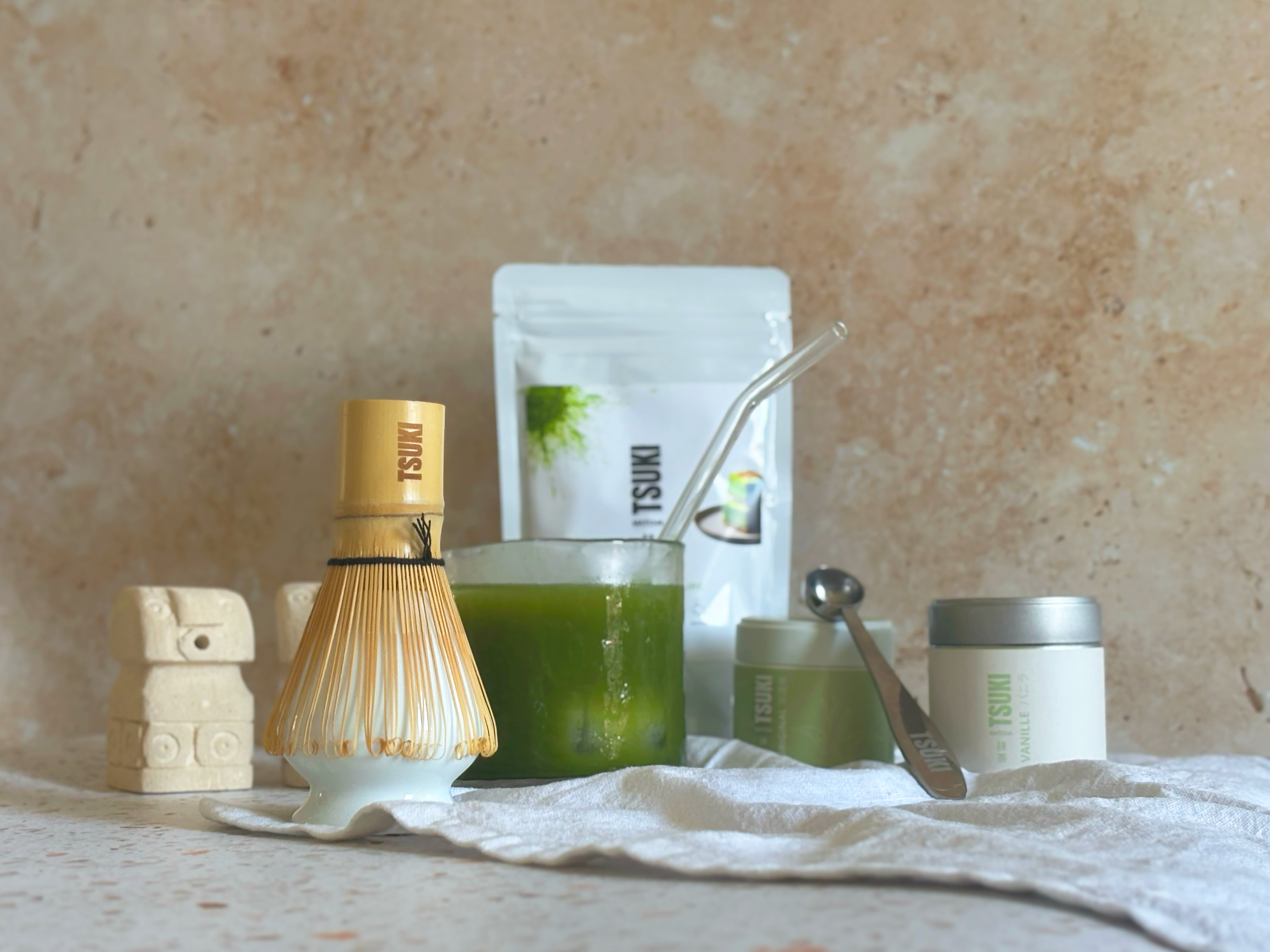

Which matcha to choose: ceremonial, latte, or culinary depending on your use
Which matcha should you choose when you're torn between ceremonial, latte, and culinary? It all depends on the use: pure tasting, daily milk drink, or pastry.
This guide clarifies the differences and helps you put together the right discovery duo to find your ideal matcha.
Faced with ceremonial, latte, or culinary labels, it's easy to get lost. These mentions do not describe inherently better or worse qualities, but rather matchas designed for different uses.
Choosing the right one means first knowing what you're going to do with it. A matcha for pure tasting is not chosen like a matcha for a cake. And to decide without making a mistake, nothing beats a discovery duo that puts two profiles side by side.
Understanding the three main uses of matcha
Before choosing, you need to connect each type of matcha to a specific use. This is key to avoiding overpaying or, conversely, being disappointed.
Ceremonial matcha
This is the finest, intended to be drunk plain, whisked with water. Its sweet and vegetal flavor, without aggressive bitterness, is enjoyed for its own sake.

A true ceremonial matcha is recognized by its vibrant color and silky texture, detailed benchmarks among the criteria for a good matcha based on grade and origin.
Matcha for latte
Designed to be mixed with milk, it has a stronger taste to stand out despite the creaminess of the milk. A matcha that is too delicate would be masked, while a slightly more intense profile creates a delicious latte.

Knowing which matcha to choose for a non-bitter latte avoids bland or overly harsh drinks.
Culinary matcha
More robust and economical, it is made for cooking and baking. Its strength allows it to retain flavor once mixed with flour, sugar, or chocolate. Drinking it plain would be disappointing, but in a cake, it excels.
Ceremonial, latte, culinary: the comparative table
This summary helps to quickly visualize which matcha corresponds to which need.
| Type | Ideal use | Flavor profile |
|---|---|---|
| Ceremonial | Pure tasting, whisked with water | Sweet, vegetal, umami, no bitterness |
| Latte | Milk drinks, hot or iced | Bold, intense enough for milk |
| Culinary | Pastries, cooking, ice cream | Robust, strong, economical |
Remember the logic: the more a matcha is intended to be drunk plain, the finer it should be. The more it is mixed with other ingredients, the more a robust profile is justified. This gradation aligns with what the term premium on a matcha label truly means, beyond mere marketing.
Assembling your discovery duo
To find your ideal matcha without making a mistake, the best approach is to compare two profiles over a few days.
Ceremonial and latte: the most versatile duo
This duo covers the essentials: a fine matcha for tasting moments, a bolder matcha for daily lattes. It's the ideal starting point for most enthusiasts, and a well-designed starter kit often combines these uses.
Ceremonial and culinary: drink and pastry
If you cook as much as you taste, this duo clearly separates the uses. The fine one for the cup, the robust one for cakes, without wasting a noble matcha in pastries. The fundamental difference between these two profiles is detailed in the comparison between ceremonial grade and culinary grade matcha.
Frequently asked questions about choosing matcha
Which matcha to choose when starting out?
A versatile ceremonial matcha is the best starting point: it can be drunk plain or in a latte. A ceremonial and latte duo then allows you to refine your preferences without a large investment.
Can ceremonial matcha be used in baking?
Yes, but it's a waste. Its delicacy is lost once mixed with flour and sugar. A culinary matcha, more robust and economical, gives a better result in cooking.
Is matcha latte an official grade?
No, it's an indication of use rather than a regulated grade. It indicates a matcha with a bold enough taste to stand out in milk, often falling between ceremonial and culinary.
How do you know if a matcha is good quality?
Vibrant color, fresh and vegetal aroma, fine texture, and Japanese origin are good indicators. A dull or yellowish matcha generally indicates lower quality or freshness.
Should I buy several matchas at once?
A duo is largely sufficient at the beginning. It covers two uses and allows for comparison, without multiplying containers that would lose freshness before being finished.

Ready to find your ideal matcha? Compare our ceremonial and culinary profiles in the TSUKI matcha collection.


