
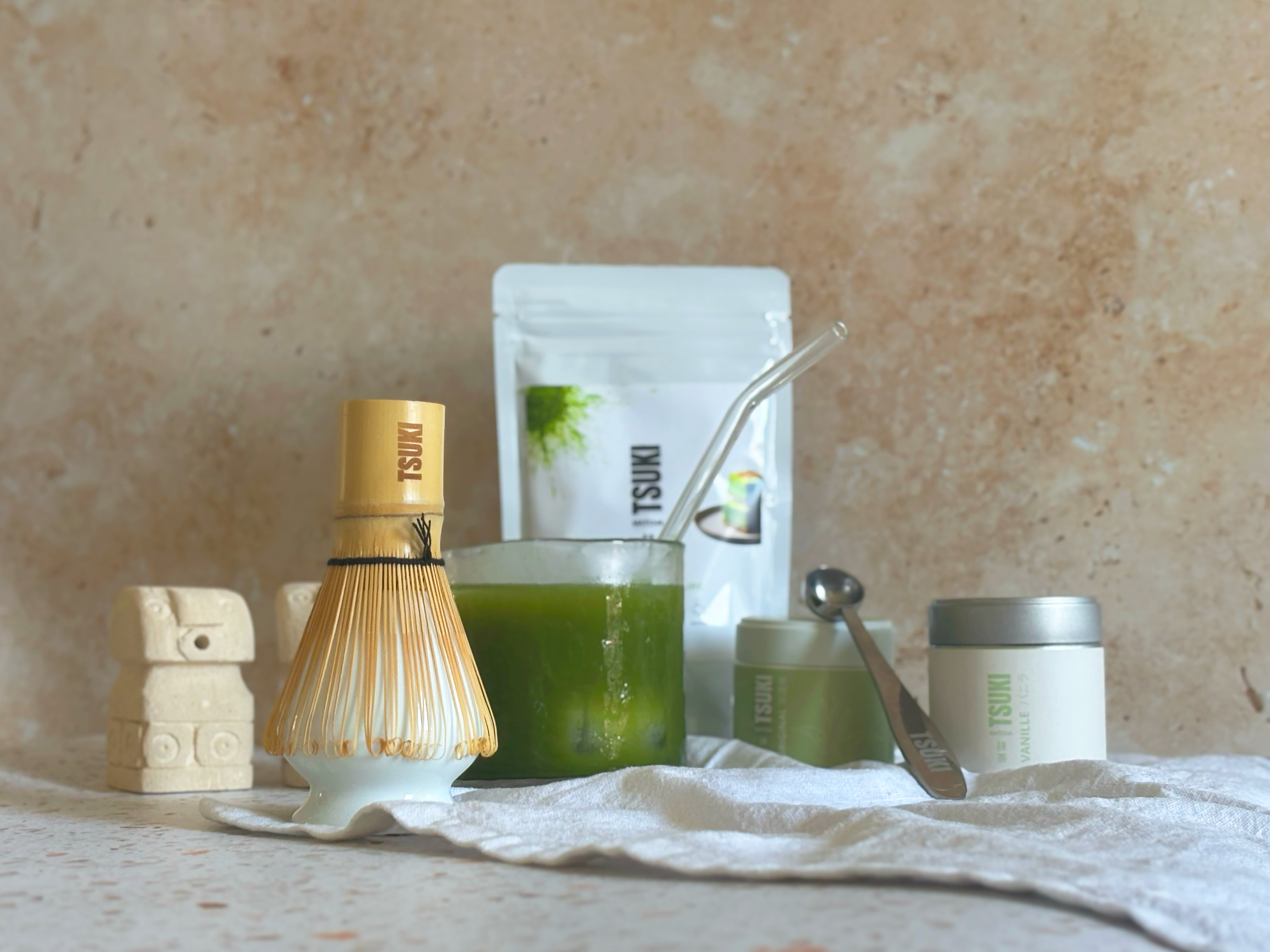

Matcha Whisk Holder: Why Use a Whisk Rest and How to Choose One
The matcha whisk stand is the small accessory that extends the life of your chasen. By holding the bamboo whisk in the correct position after each use, it preserves the shape of the bristles, limits mold, and keeps your matcha corner clean and elegant. Here’s how to choose, use, and maintain it.
A bamboo whisk costs a few euros but remains fragile. Its fine bristles quickly deform if they dry flat or are stored jammed in a drawer. The matcha whisk stand exists precisely to solve this simple problem: to offer the chasen a place to dry upside down, with its bristles wide open, in the open air.
Many people discover this accessory after damaging their first whisk. However, all it takes is a suitable stand to transform a chasen from a consumable item that needs replacing every two months into an accessory that lasts several seasons.
What is a matcha whisk stand for?
The matcha whisk stand, also called a whisk holder or kusenaoshi in Japanese, fulfills three specific roles. Each has a direct impact on the lifespan of your chasen and the quality of your preparations.

Preserve the shape of the bristles
The bristles of a new whisk are curved inward, ready to cut through water and create foam. By drying on a rounded shape, the bamboo retains its original curve. If laid flat, it flattens out and the bristles eventually point in all directions, which significantly reduces its ability to produce a fine foam.
Allow the whisk to air dry
Damp bamboo enclosed in a cupboard is an ideal breeding ground for mold. On a stand, the chasen dries upside down, water drains downwards, and air circulates between the bristles. This is the most effective way to prevent the black stains that appear on a whisk that has not been dried properly.
Organize your matcha station
A stand also provides a fixed place for the whisk. No more need to leave it on the sink rim or in a bowl. This item is one of the accessories that simplify daily preparation and make you want to repeat the ritual every morning.
Different types of matcha whisk stands
Not all stands are created equal. The material and shape influence stability, aesthetics, and ease of maintenance. Here are the main options available today.
| Stand Type | Advantages | Points of concern |
|---|---|---|
| Ceramic | Stable, easy to clean, aesthetic, matches the bowl | Heavier, can break if dropped |
| Bamboo or wood | Light, natural, in the spirit of the chasen | Can blacken with humidity if not dried |
| Dome-shaped ceramic | Opens bristles well, optimal drying | Slightly larger footprint |
| Minimalist silicone stand | Inexpensive, unbreakable, discreet | Less durable, less premium appearance |
Dome-shaped ceramic remains the reference for those who want to take care of their whisk. It follows the curve of the bristles and allows water to drain without retaining moisture. Bamboo is appealing for its natural look, provided it is thoroughly wiped dry after each use.
How to choose your matcha whisk stand
The right stand depends on your whisk, your countertop, and your habits. Three criteria are enough to make an informed choice.
Shape and curvature
A stand that keeps the bristles open is better than a simple flat base. Look for a piece with a central bump or dome, on which the whisk head rests, gently flaring out. It is this shape that protects the geometry of the chasen.
Stability
A bamboo whisk is light, but a stand that is too small can easily tip over. A wide base and some weight, as with ceramic models, prevent falls. This is especially important if you store your equipment near the sink.
Consistency with your accessories
Many people choose a stand that matches their bowl and spoon. If you start with a complete and coherent starter set, the whisk holder naturally integrates into the whole and creates a neat look on the countertop.

Proper use and maintenance of your whisk holder
A stand is useless if the accompanying gesture is not correct. The routine is simple and takes a few seconds after each bowl.
The right gesture after preparation
Rinse the whisk with clear water, without soap, gently swirling it in a little warm water. Shake gently to remove excess, then place the head on the stand, bristles down. The chasen will air dry while maintaining its shape. This habit is fundamental for keeping a chasen in good condition season after season.
Maintain the stand itself
A ceramic stand can be rinsed with water and dried with a clean cloth. For a bamboo model, wipe thoroughly after each use to avoid stains. Once a week, a more complete cleaning is enough to keep the accessory spotless.
Integrate it into your matcha station
The whisk holder truly comes into its own when you set up a dedicated corner. Grouping the bowl, whisk, spoon, and powder on a tray allows you to set up a practical matcha station at home and make each preparation smoother.
Is a stand really necessary, or can you do without it?
A stand is not essential for preparing good matcha, but it makes a difference in the long run. Without it, the whisk dries poorly, deforms, and needs to be replaced more often. With it, the same chasen lasts much longer.
If you don't have one yet, some temporary solutions exist: placing the whisk upside down in a small glass, or balancing it on an inverted bowl. These tricks are better than nothing, but they don't replace a real whisk holder designed to open the bristles. They are a stopgap until you can get proper equipment, much like those who learn to prepare matcha without a whisk using makeshift methods.
For those who prepare matcha every day, the investment quickly pays for itself. A good whisk paired with a suitable stand forms a durable duo, and a well-maintained traditional bamboo whisk retains its flexibility and foam for months.
Frequently asked questions about the matcha whisk stand
Is a matcha whisk stand really useful?
Yes, if you want your chasen to last. It keeps the bristles open, promotes air drying, and prevents mold. Without a stand, a bamboo whisk deforms and gets damaged much faster.
What material should I choose for a whisk holder?
Ceramic is the safest choice: stable, easy to clean, and durable. Bamboo and wood are lighter and more natural, but require careful wiping to prevent blackening from moisture.
How do I dry my matcha whisk without a stand?
You can place the whisk head upside down in a small glass or on an inverted bowl, so that water drains and air circulates. This is a temporary solution, less effective than a stand designed to open the bristles.
Where should I place the whisk holder in my kitchen?
In a well-ventilated place, away from stagnant humidity, ideally on a tray with the rest of the equipment. Grouping accessories in the same place makes preparation simpler and more pleasant.
Does a whisk stand fit all chasens?
Most dome-shaped stands fit standard whisks, regardless of the number of bristles. Just make sure your whisk head rests stably on the stand's shape.

Want to create a complete and lasting ritual? Discover our ceremonial matchas and accessories in the TSUKI matcha collection, to prepare each bowl with the right touch.


