
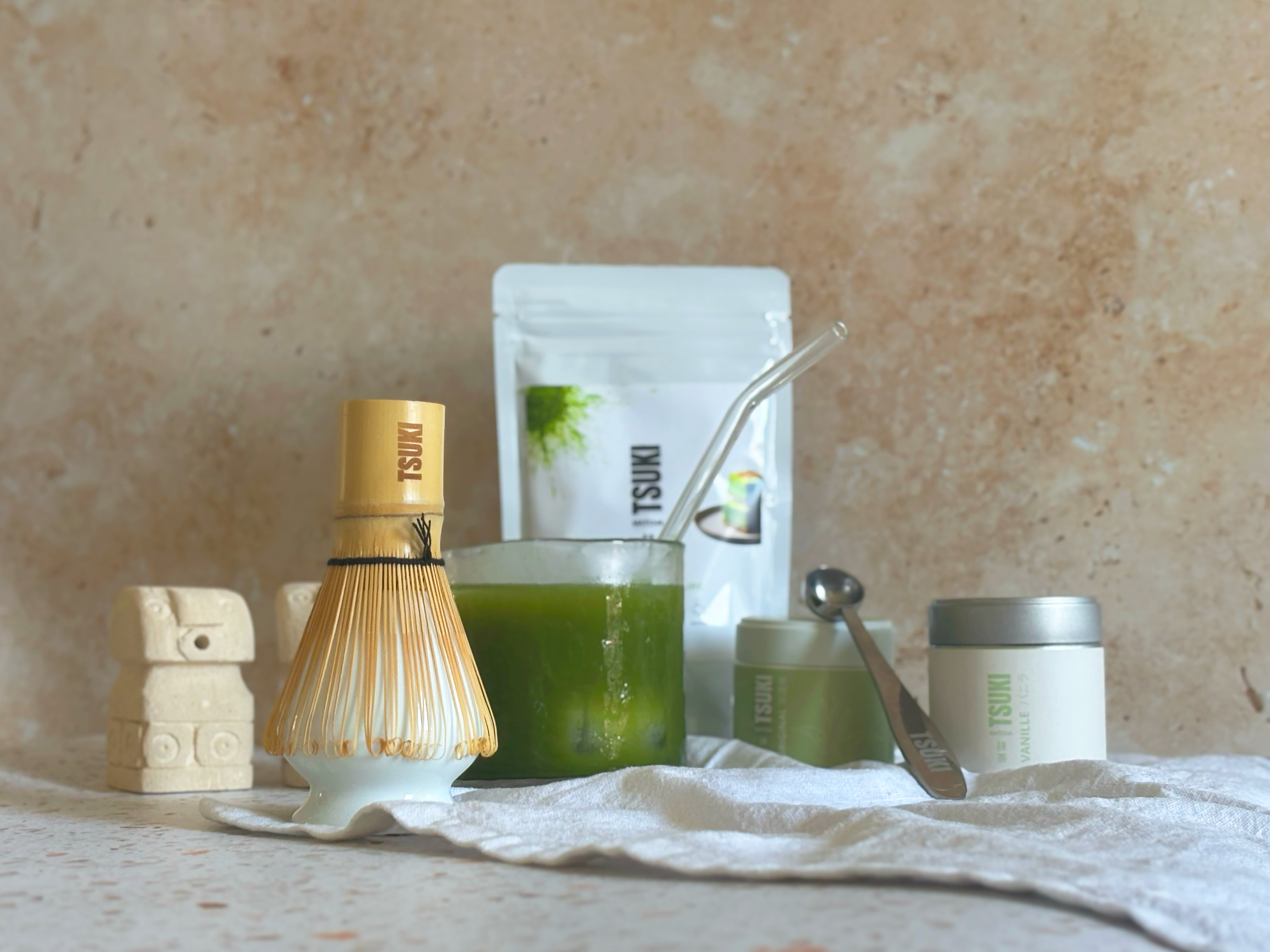

Matcha Tea: The Complete Guide for Beginners and Connoisseurs
Matcha tea captivates both the curious and seasoned connoisseurs. But between its origins, benefits, grades, and tasting methods, it's hard to know where to start. This guide brings together everything you need to know to understand, choose, and appreciate matcha, whether you're a beginner or looking to deepen your knowledge.
Matcha tea is not just a simple green tea. It's a fine, deep green powder that is consumed whole rather than steeped. This detail changes everything: the taste, effects, ritual, and even the preparation method.

Whether you're looking for a gentle alternative to coffee or an exceptional tea to savor, matcha has something to offer for a long time. Here's how to get acquainted with it.
What is matcha tea?
Matcha is a very finely ground Japanese green tea powder. Unlike classic tea leaves, it is not filtered. It is mixed directly with water or milk and then consumed entirely.
This particularity explains its richness. By consuming the entire leaf, you benefit from all its natural compounds, whereas a classic infusion leaves a large portion of them in the discarded leaves.
Matcha comes from leaves grown in the shade for several weeks before harvesting. This shading concentrates chlorophyll and amino acids, resulting in an intense color and a rounder, less bitter taste.
Where does matcha tea come from?
Matcha has its roots in Japan, where it has held a central place in the tea ceremony for centuries. Today, the major producing regions are Shizuoka and Kagoshima, renowned for their climate and expertise.
The production follows several precise steps. The leaves are shaded, harvested, dried as tencha, and then slowly ground on a stone mill. This grinding can take nearly an hour to produce a few tens of grams of powder. This partly justifies the price of good matcha.

If you want to understand the complete logic behind this product, from its origins to the final choice, the ultimate guide to understanding everything about matcha serves as an ideal starting point.
The benefits of matcha tea
Matcha is often presented as a superfood, and that's not just a marketing argument. Its composition explains its popularity among those seeking a drink that is both pleasant and beneficial.
Stable energy
Matcha contains caffeine, but also L-theanine. This amino acid modulates the effect of caffeine. Instead of a peak followed by a crash, you get a diffused, calmer energy that lasts for several hours.
Improved concentration
This same L-theanine promotes a state of relaxed concentration. Many enthusiasts adopt matcha precisely for this effect of mental clarity without nervousness.
Abundant antioxidants
By drinking the whole leaf, you absorb a high concentration of antioxidants, including catechins. This is one of matcha's major advantages over classic steeped green tea.
Matcha naturally fits into a healthy routine, without replacing a balanced diet. Consumed daily in moderation, it becomes a true enjoyable ally.
Ceremonial grade or culinary grade matcha tea?
Here is the most useful distinction when buying. Not all matchas are alike, and the grade makes all the difference depending on the use.
| Grade | Profile | Ideal Use |
|---|---|---|
| Ceremonial | Smooth, vegetal, mellow | To drink neat or in a latte |
| Culinary | Bolder, stronger flavor | Pastries, recipes, cooking |
For pure tasting, ceremonial grade is undeniably preferred. Its smoothness allows it to be appreciated without masking its taste. The details of this comparison between ceremonial grade and culinary grade matcha help decide according to your habits.
How to prepare a good matcha tea?
Preparation is part of the pleasure. No need to be an expert. A few simple steps are enough to obtain a smooth and frothy drink.
- Sift half to one teaspoon of matcha into a bowl to avoid lumps.
- Pour in a little hot water, around 70 to 80 degrees Celsius (158 to 176 Fahrenheit), never boiling.
- Whisk in a zigzag motion with a bamboo whisk until a fine foam forms.
- Top up with water for a plain matcha, or milk for a latte.
Boiling water is the most common mistake. It burns the powder and brings out the bitterness. Lukewarm water preserves the sweetness and umami.
How to choose your matcha tea when you're a beginner?
Faced with the selection, beginners can quickly get lost. Here are the truly important benchmarks.
- A vibrant green color, a sign of freshness and quality.
- A clearly indicated Japanese origin.
- A grade adapted to your use, ceremonial for drinking.
- A fine and silky texture.
For a first purchase, a well-chosen Japanese premium matcha radically changes the experience. Many people think they don't like matcha when they have simply tasted a poor-quality product.
Frequently asked questions about matcha tea
Is matcha tea better than coffee?
It's not a question of better or worse, but of the desired effect. Matcha offers more stable and gentle energy, without the peak and crash of coffee.
How much matcha tea per day?
One to two cups a day is suitable for most people. Like any source of caffeine, it's best not to overdo it, especially late in the day.
Does matcha tea help you lose weight?
Matcha alone does not cause weight loss. It can support a balanced lifestyle, but no food replaces a healthy diet and regular activity.
What does matcha tea taste like?
Good matcha has a vegetal, sweet, and slightly sweet taste, with an umami note. A low-quality product will be more bitter and astringent.
Can you drink matcha tea cold?
Yes, and it's delicious. Iced matcha, plain or in a latte, is very popular as soon as the warmer weather arrives. Simply prepare it, then add ice cubes and cold milk.
To go further
Matcha tea is discovered at your own pace. You often start with a gourmet latte, then learn to appreciate it plain, until it becomes a true daily ritual. At each stage, product quality remains the decisive factor.
Whether you're a curious beginner or a demanding connoisseur, the right matcha is the one that makes you want to come back to it every morning.
Discover the best matcha in France.

Ready to taste a true premium Japanese matcha? Browse our collection of premium Japanese matchas and choose the one that matches your desires.


