
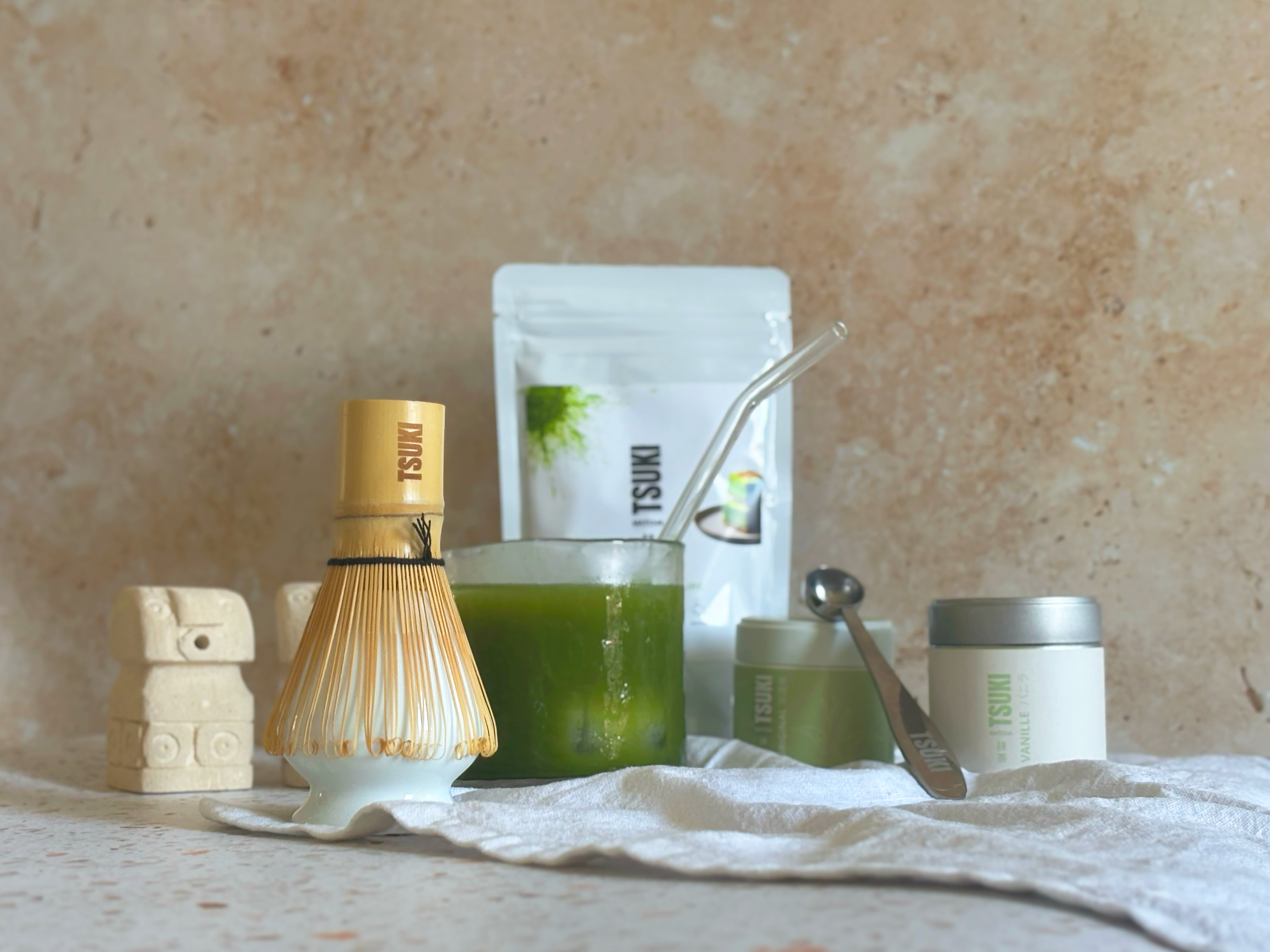

Matcha Tea Ceremony: An Immersive Guide to the Japanese Ritual
The matcha tea ceremony is not a recipe. It's an experience. A timeless space where every gesture, every silence, every detail has meaning.
This guide immerses you in the spirit of the Japanese ritual, beyond the technical steps, to help you understand its philosophy and bring its essence into your daily life.
The Spirit of the Ceremony: Wabi-Sabi and Mindfulness
The Japanese tea ceremony, called chanoyu (“hot water for tea”) or chadō (“the way of tea”), is based on four fundamental principles codified by tea master Sen no Rikyū in the 16th century: harmony (wa), respect (kei), purity (sei), and tranquility (jaku).
These four words are not mere poetic decorations. They guide every moment of the ceremony. Harmony between the host, guests, objects, and nature. Mutual respect expressed in every gesture and every bow. Purity of place and spirit, achieved through the ritualized cleaning of utensils. And tranquility, that state of deep calm that naturally emerges when the other three principles are united.
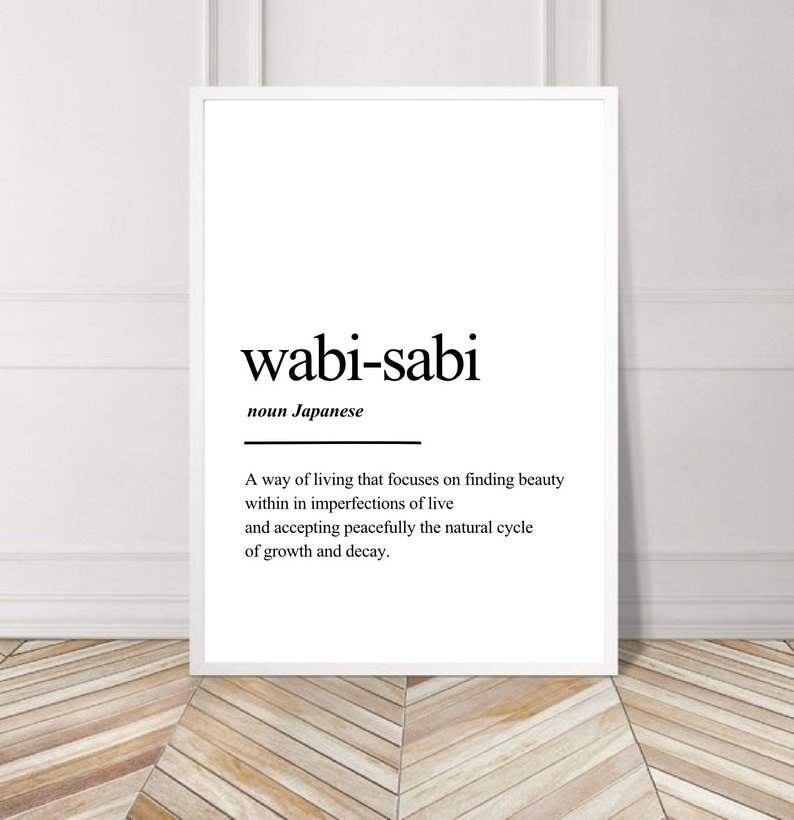
At the heart of this philosophy is the concept of wabi-sabi. Wabi-sabi is the art of finding beauty in imperfection, simplicity, and impermanence. A slightly irregular matcha bowl, a crack repaired with gold leaf according to the kintsugi tradition, a single flower placed in an unadorned vase. Nothing is meant to be perfect. Everything is meant to be true.
This vision contrasts with our Western search for perfection and control. The matcha ceremony invites us to accept the moment as it is, with its imperfections, silences, and fragile beauty. This is precisely the principle of ichigo ichie: every encounter, every cup of tea, is unique and will never be replicated identically.
The Essential Gestures
A complete traditional ceremony (chaji) can last four hours and include a kaiseki meal, a garden break, a serving of thick matcha (koicha) and then a serving of thin matcha (usucha). But the spirit of the ceremony can be experienced through a few simple gestures.
Purification
It all begins with cleaning. The host purifies each utensil in front of the guests with slow, precise movements. This is not a matter of hygiene. It is a meditative act. By cleaning the bowl, the whisk, the spoon, the host also cleans their mind. Guests observe in silence. The rhythm of daily life fades away. Time slows down.
Preparation
Matcha is measured with the chashaku (bamboo spoon), sifted into the chawan (bowl), then mixed with hot water using the chasen (bamboo whisk). The whisking motion is neither circular nor random. It follows an M or W pattern, fast but controlled, until a fine, creamy foam forms on the surface.

This gesture is more than a technique. It is a dialogue between hand and material. The resistance of the water, the lightness of the powder, the sound of bamboo against ceramic. Every sense is engaged.
Tasting
The bowl is presented to the guest with the design facing them. The guest takes it with both hands, turns it slightly (a gesture of modesty so as not to drink facing the main design), and savors the matcha in a few slow sips. The umami taste of matcha, smooth and deep, unfolds in the mouth. After tasting, the guest admires the bowl before returning it.
Silence
Between gestures, silence holds a central place. It is not an emptiness to be filled. It is the fabric that connects each moment to the next. In the tea ceremony, silence is as important as the tea itself.

The Accessories of the Ceremony
Every object used in the ceremony has been chosen with intention. Nothing is there by chance.
The chawan (matcha bowl) is the most personal object. Its shape, texture, and weight in the hand influence the tasting experience. Handcrafted bowls, with their imperfections and patina, embody wabi-sabi. A quality matcha bowl transforms each cup into a tactile and visual moment.
The chasen (bamboo whisk) is hand-carved from a single piece of bamboo. Its 80 to 120 bristles create the characteristic matcha foam. It is an ephemeral object by nature, whose bristles wear and bend over time, recalling the impermanence dear to wabi-sabi. The TSUKI chasen is designed to offer this authentic gesture from the first use.
The chashaku (measuring spoon) measures the exact amount of matcha. Made of bamboo, it is carved from a single, thin, delicate piece. Its measuring gesture is one of the first a ceremony practitioner learns.
The matcha itself is the central ingredient. For an authentic ritual, ceremonial-grade matcha is essential. Its smooth taste and umami notes are the result of an ancestral cultivation and processing process that has not changed for centuries.
Recreating the Ritual at Home
You don't need a tatami mat, a zen garden, or four hours. The spirit of the ceremony can be experienced in ten minutes, in your kitchen, with three accessories and a little intention.
Prepare Your Space
Turn off your phone. Clear a spot on your countertop or table. Place your utensils in front of you. The idea is to create a micro-space of calm, a transition between your daily life and this moment for yourself.
Set an Intention
Before touching the matcha, take three deep breaths. You can ask an inner question, make a wish for the day, or simply decide to be present for the next few minutes. This is not formal meditation. It is an anchor.
Prepare with Attention
Sift the matcha. Heat the water to 70-75 °C. Pour. Whisk. Focus on the sensations: the sound of the water, the vegetal aroma rising from the bowl, the vibration of the chasen in your hand. Don't think about the result. Be in the gesture.
Savor Without Distraction
Hold the bowl with both hands. Feel the warmth. Observe the foam. Drink slowly, in three sips if you wish. Linger for a moment after the last sip, without immediately moving on to something else. It is in this pause that the benefit of the ritual crystallizes.

The TSUKI Ritual Set includes everything needed to experience this: ceremonial-grade matcha, a handmade chasen, a measuring spoon, and a matcha bowl. Everything you need to transform a simple drink into a moment of presence.
Matcha and Meditation
The link between matcha and meditation is not a modern marketing argument. It is as old as matcha itself. Zen Buddhist monks adopted matcha in the 12th century precisely because it helped them stay alert and focused during long hours of meditation, without the agitation caused by coffee.
The reason is biochemical. L-theanine, an amino acid naturally concentrated in matcha due to the shading of the tea plants, promotes the production of alpha waves in the brain. These waves are associated with a state of relaxed alertness: the mind is calm but clear, relaxed but attentive. This is precisely the state sought in meditation.
By combining the ritualized preparation of matcha with a few minutes of silence, you create an accessible and tangible mindfulness practice. No need for a meditation cushion or mantra. The matcha bowl is your anchor. The whisking gesture is your meditation. Matcha in Japanese culture has always been inseparable from this spiritual dimension.
FAQ: Matcha Tea Ceremony
What is the difference between chanoyu, chadō, and sadō?
These three terms refer to the same practice. Chanoyu (“hot water for tea”) emphasizes the act of preparing tea. Chadō and sadō (“the way of tea”) highlight the philosophical and spiritual dimension of the ritual. All three are used interchangeably in Japan.
How long does a tea ceremony last?
A complete ceremony (chaji) lasts about four hours and includes a meal. A simplified service (chakai) lasts 30 to 60 minutes. At home, a ritual inspired by the ceremony can be experienced in 10 to 15 minutes, the essential being the quality of attention given to it. The five key steps of the ceremony can be adapted to a daily format.
What matcha should be used for a ceremony-inspired ritual?
Ceremonial-grade matcha is essential. Its smooth taste, umami notes, and fineness are at the heart of the sensory experience of the ritual. Culinary-grade matcha, which is more bitter and robust, would not allow for a full experience of this taste dimension. TSUKI matchas are ceremonial grade, cultivated in Japan, and stone-ground.
Should koicha or usucha be used for a ritual at home?
Usucha (thin matcha) is the most accessible and suitable for daily use. It uses 1.5 to 2g of matcha for 70ml of water and is whisked until a light foam is obtained. Koicha (thick matcha) uses twice the powder and is kneaded rather than whisked. It requires very high-quality matcha to avoid bitterness.
Can matcha really help with meditation?
The L-theanine in matcha promotes a state of calm alertness, similar to what is sought in meditation. Combined with caffeine, it offers gentle vigilance without agitation. This is why Zen monks adopted matcha nearly a thousand years ago. The ritual of preparation adds a dimension of mindfulness through gesture, beyond the biochemical effect.
Can you practice the tea ceremony alone?
Absolutely. The traditional ceremony involves a host and guests, but personal ritual is a recognized practice in Japan. Preparing your matcha alone, in silence, with attention, is a form of active meditation that fully aligns with the spirit of chadō.

Ready to live the experience? The TSUKI Complete Ritual Set contains everything you need to create your own tea ceremony at home, with ceremonial-grade matcha and handcrafted accessories.


