
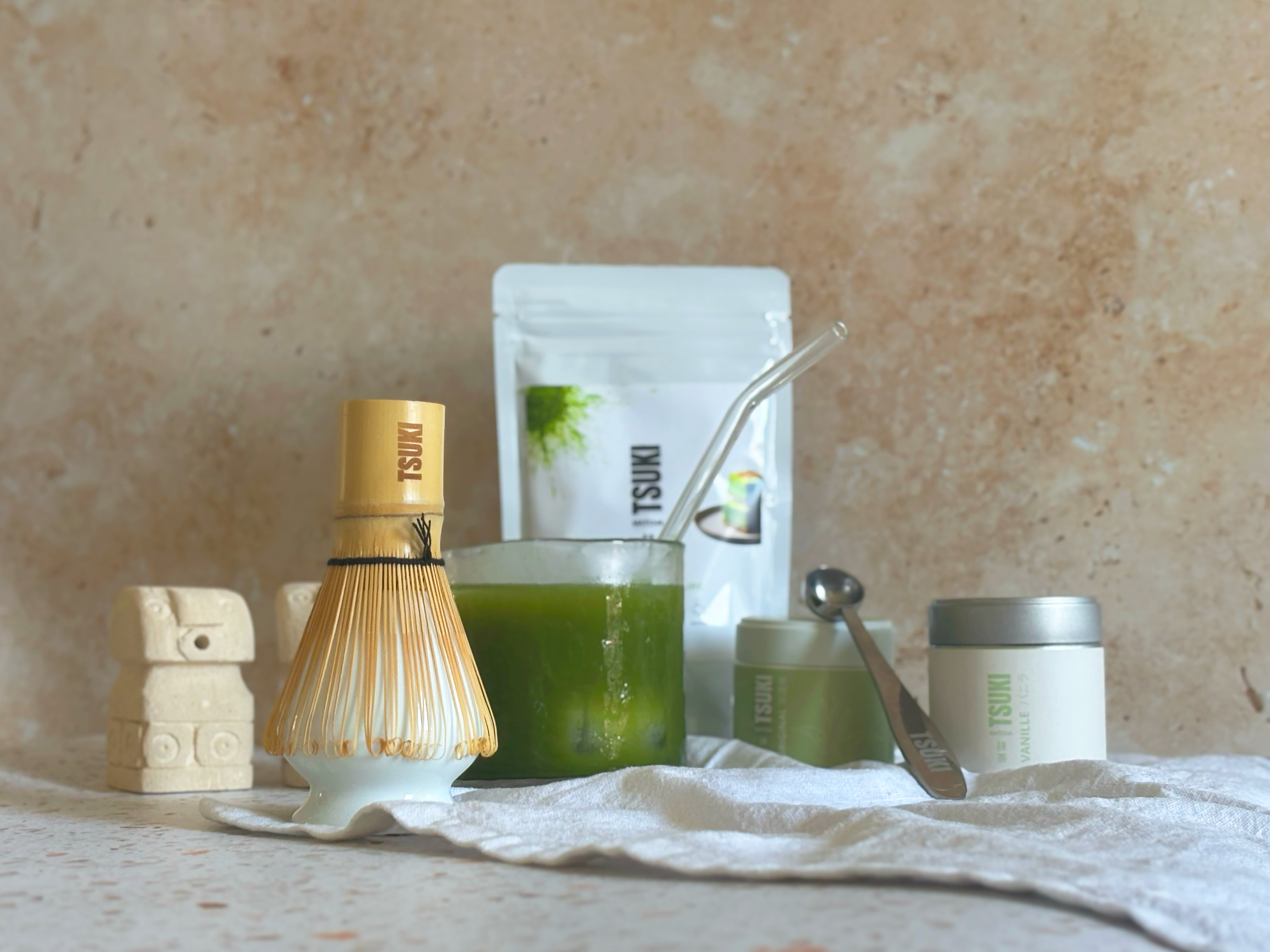

How to prepare matcha tea: a step-by-step guide
Just bought your first matcha and don't know where to start?
This guide is for you. No jargon, no complicated techniques: just the essential steps to prepare a perfect matcha from the first cup, using the tools you have at hand. From opening the package to the last sip, every step is detailed.
What you need
Three things are enough to prepare matcha. Everything else is optional.
Matcha. 1.5 to 2g per cup, or about one level teaspoon. A ceremonial grade matcha will give a smooth and pleasant result.

A culinary grade will be more bitter, especially when drunk plain.
Hot water. 70 to 80 ml, heated to 70-75 °C. No boiling water. If you don't have a thermometer, boil the water then wait 2 to 3 minutes before using it.
A whisk. The ideal is a chasen (bamboo whisk), specifically designed for matcha. Its dozens of bristles create the characteristic creamy foam. An electric frother also works very well.
And if you have neither, there are alternative methods (shaker, jar, kitchen whisk).
Optional but useful equipment
A fine sieve to remove lumps. A wide bowl (chawan type) that facilitates whisk movement. A bamboo measuring scoop (chashaku) for precise dosing. All of these matcha accessories enhance the experience, but are not essential to start.
The 5 steps
Step 1 - Sift the matcha
Place 1.5 to 2g of matcha in a small fine sieve over your bowl or cup. Push the powder through the sieve by gently pressing with the back of a spoon. Lumps disappear and the powder becomes airy.
If you don't have a sieve, you can skip this step, but you risk having small lumps in your drink. It's not too serious, just less smooth.
Step 2 - Add a little water
Pour 20 to 30 ml of hot water (70-75 °C) over the sifted matcha. Not all the water at once.

This small amount helps create a paste and dissolve the powder well before adding the rest.
Step 3 - Whisk
With your chasen or frother, whisk vigorously for 15 to 20 seconds. The ideal movement with a chasen is an M or W shape, fast and light, without pressing the whisk to the bottom of the bowl. You should obtain a smooth, lump-free paste.

Step 4 - Add the rest of the water
Add the remaining hot water (50 to 60 ml) and whisk again for 10 seconds. A thin layer of foam should appear on the surface. The finer and more even the foam, the more successful the preparation.
Step 5 - Enjoy
Drink directly from the bowl or pour into your favorite cup. Matcha should be drunk without delay, while it is hot and the foam is still present.

The powder tends to settle at the bottom if you wait too long, so don't let your cup cool for 15 minutes before drinking it.
Beginner mistakes
These five mistakes are the most common when preparing matcha for the first time. They explain most of the "I don't like matcha" comments you hear.
Mistake 1 - Using boiling water
Water at 100 °C burns the matcha and releases bitter compounds. Stay between 70 and 75 °C. The taste difference is immediate: at the right temperature, matcha is sweet and umami. With boiling water, it becomes astringent and unpleasant.
Mistake 2 - Using too much matcha
More matcha doesn't mean more taste. It means more bitterness. 1.5 to 2g for 70-80 ml of water is the ideal ratio. If you like stronger matcha, increase by 0.5g maximum. Beyond that, imbalance is guaranteed.
Mistake 3 - Not sifting
Matcha naturally forms lumps on contact with moisture. Without sifting, these lumps do not dissolve in water and create concentrated bitter mouthfuls in the middle of an otherwise pleasant drink. Sifting takes 15 seconds and changes everything.
Mistake 4 - Pouring all the water at once
If you pour 80 ml of water directly onto the powder, the matcha floats to the surface and refuses to mix. Always start with a small amount (20-30 ml) to create a paste, then add the rest. This is called the two-step method.
Mistake 5 - Using culinary matcha for drinking
Culinary matcha is designed for baking, not for drinking. It is more bitter, more robust and less refined than ceremonial grade matcha. If your first matcha was bitter and unpleasant, check the grade before concluding that you don't like matcha.
Hot matcha vs. iced matcha
Hot version (classic)
This is the method described above. 1.5 to 2g of matcha, 70-80 ml of water at 70-75 °C, whisked and drunk immediately. Hot matcha has a rounder, more umami taste, with sweet vegetal notes. This is the most aromatic version.
Iced version
Prepare a concentrated matcha shot (1.5 to 2g in 30 ml of hot water, whisked). Fill a glass with ice cubes. Pour the shot over the ice cubes. Top up with 100 ml of cold water or cold plant-based milk. Mix with a spoon or straw.

Iced matcha is more refreshing and slightly less aromatic than the hot version. But in summer, this is the version you'll be preparing every day. The key step is to always start with a hot shot: matcha does not dissolve in cold water.
Latte version
For a matcha latte, replace the cold or hot water with milk (plant-based or animal). Prepare the matcha shot in exactly the same way, then add frothed hot milk (hot version) or cold milk over ice (iced version). The matcha whisk remains the ideal tool (learn how to care for your whisk).
FAQ: Preparing your first matcha
Can you prepare matcha with a kitchen spoon?
You can mix matcha with a spoon, but the result will be less homogeneous and without foam. The chasen or electric frother makes a real difference to the texture. The TSUKI Ritual Box includes an artisanal chasen, a measuring scoop and ceremonial matcha to get started with the right equipment.
How long does it take to prepare matcha?
Two minutes. It's faster than filter coffee and about as fast as an espresso. Sifting takes 15 seconds, whisking 20 seconds, the rest is pouring water.
My matcha has lumps, what should I do?
Sift the matcha before preparing it. If lumps persist after whisking, whisk more vigorously or switch to an electric frother that spins faster. The problem almost always comes from unsifted matcha or too slow whisking.
Can matcha be prepared directly with milk?
No. Matcha does not dissolve properly in milk alone (too fatty, too thick). Always start by dissolving the matcha in a little hot water (20-30 ml) to make a shot, then add milk as a complement.
What does well-prepared matcha taste like?
A well-prepared ceremonial grade matcha is sweet, slightly vegetal, with an umami note (that deep, savory flavor, like a delicate broth). It should not be bitter or astringent. If it is, the water temperature is too high, the dosage is too strong or the grade is not correct.
Can matcha be reused like tea leaves?
No. Unlike loose-leaf tea, matcha is a powder that you consume entirely. There is no second infusion possible. Each cup uses its own dose of 1.5 to 2g.
Ready to prepare your first matcha? Our ceremonial grade matchas are sweet, not bitter, and designed for success from the first cup.


