
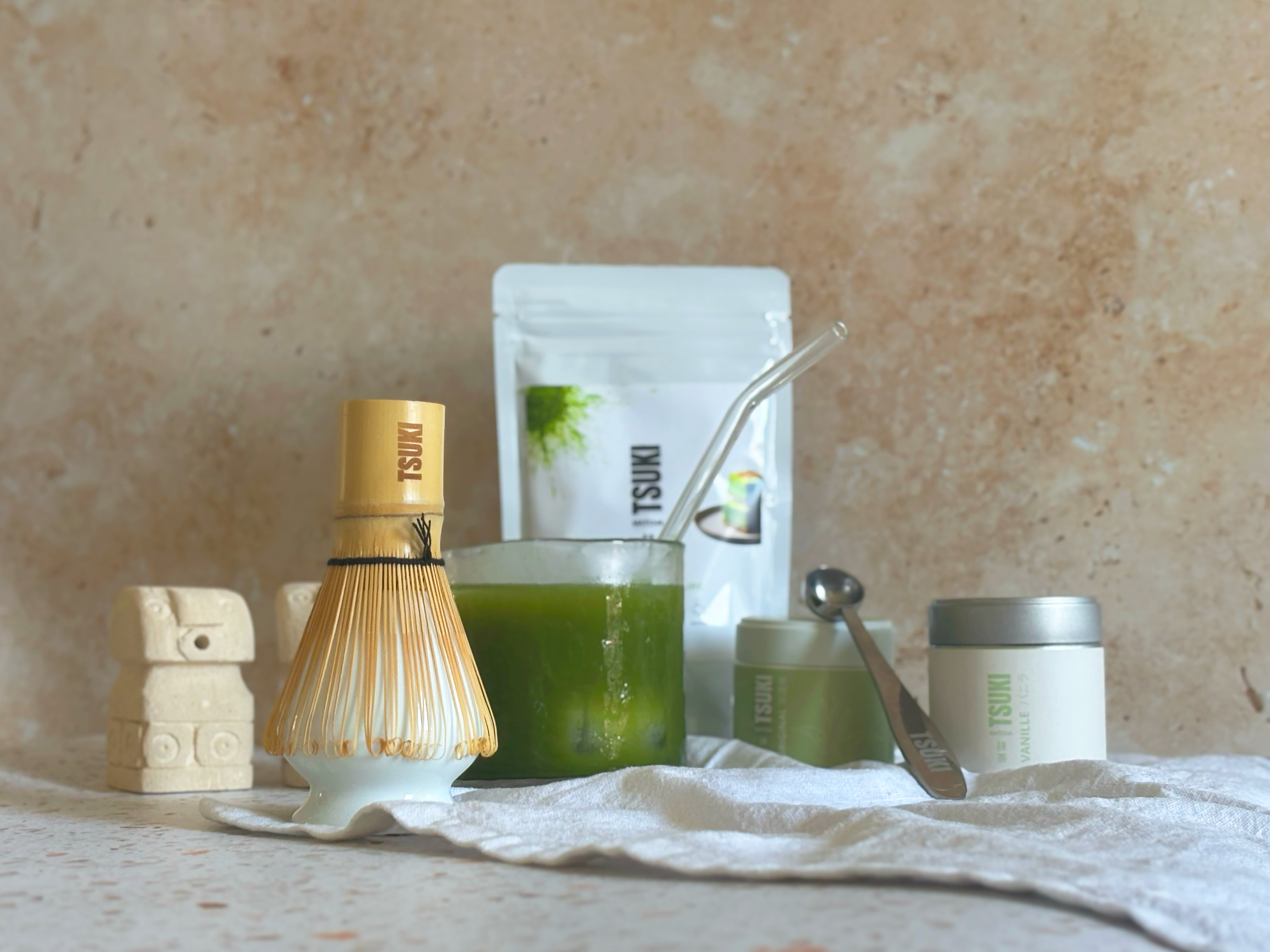

Matcha Cultivars: Yabukita, Okumidori, Saemidori... What are the differences?
Matcha, like wine, has its varietals. These are called cultivars. Yabukita, Okumidori, Saemidori, Gokou, Asahi… each tea plant variety produces matcha with a different profile in taste, color, and texture.
Understanding cultivars means moving from being a mere consumer to a connoisseur. This guide explains the three most common cultivars and why TSUKI chose Yabukita.
What is a cultivar?
A cultivar is a plant variety selected and cultivated for its specific characteristics. In the world of tea, all matchas come from the same species, Camellia sinensis, but there are many varieties of this plant. Japan officially counts over a hundred of them.
The comparison with wine is the most illustrative. Pinot Noir and Merlot are both grapes, but they produce radically different wines. It's exactly the same for matcha. A Yabukita doesn't taste like a Saemidori, which doesn't taste like an Okumidori.

The cultivar determines the aromatic profile (sweet, bitter, umami, vegetal, floral), the intensity of the green color, the fineness of the powder, the ability to produce a creamy froth, and even the content of L-theanine and catechins. It is the DNA of matcha.
Before the 20th century, Japanese tea plants were grown from seeds, which resulted in highly variable outcomes from one harvest to another. The development of cultivars allowed for standardization of quality and the selection of varieties best suited for each use: ceremony, daily drink, cooking.
The 3 most common cultivars for matcha
Yabukita: the universal classic
Yabukita is by far the most widespread cultivar in Japan. It accounts for over 70% of the national green tea production. Developed in the Shizuoka prefecture in the early 20th century, it established itself thanks to its cold resistance, reliability, and balanced taste profile.
Yabukita produces matcha with a frank, vegetal taste, a slight controlled astringency, and a beautiful freshness. Its profile is direct, unmistakable: you immediately recognize green tea. It offers an excellent balance between umami sweetness and vegetal vibrancy, making it versatile. It works equally well as pure matcha, in lattes, or in cooking.
It is a reliable, consistent, and accessible cultivar. When a matcha does not specify the cultivar on the packaging, there is a good chance it is a Yabukita or a blend based on Yabukita.
Okumidori: depth and elegance
The name Okumidori means "deep green." It is a cross that includes Yabukita in its genetic lineage but was selected for a richer and rounder profile. Officially registered in 1974, Okumidori is mainly cultivated in the Kyoto (Uji) and Shizuoka regions.
Okumidori matcha is distinguished by its natural sweetness, almost non-existent bitterness, and notes of hazelnut and flowers. Its umami is deep and enveloping, with a long and soothing finish. Its color is an intense, almost forest-like green.
This cultivar is particularly appreciated for ceremonial grade matcha, both as usucha (thin matcha) and koicha (thick matcha). Connoisseurs often describe it as "the meditation cultivar" for its calm and contemplative dimension.
Saemidori: luminous sweetness
Saemidori means "bright green." Created in 1969 in Kagoshima by crossing Yabukita and Asatsuyu (a cultivar renowned for its exceptional sweetness), Saemidori has become a favorite among contemporary matcha lovers.
Its profile is naturally sweet, almost sugary, with very little bitterness. It reveals floral, fruity notes and a hint of fresh grass. Its color is a vibrant, almost fluorescent emerald green, which instantly gives the drink a premium appearance.
Saemidori is a more delicate cultivar to grow. It is sensitive to frost and wind, which limits its production to the most temperate regions of Japan, primarily Kagoshima in the south. This relative rarity, combined with its appealing taste profile, makes it an often more expensive matcha.
It is the ideal cultivar for beginners who find matcha too bitter, as well as for premium lattes and visual presentations thanks to its vibrant color.

Why TSUKI uses Yabukita
At TSUKI, we chose Yabukita for our ceremonial grade matchas. This choice is not a compromise. It is a conviction.
Yabukita is the cultivar that offers the best balance of all the qualities we look for. Its taste profile is accessible from the first cup, without being simplistic. It has that recognizable vegetal freshness of authentic Japanese matcha tea, balanced by a pleasant umami sweetness.

Its versatility is a major asset. The same ceremonial grade Yabukita matcha works equally well whisked in a bowl, as a creamy latte with oat milk, or iced with ice cubes in summer. More specialized cultivars like Gokou or Asahi, however remarkable, are often designed for specific uses (ceremony, koicha) and less suited for daily consumption.
Our Yabukita tea plants are cultivated in the Shizuoka and Kagoshima regions, shaded three to four weeks before harvest, processed into tencha, and then slowly stone-ground. It is this ancestral process that makes the difference, beyond the cultivar itself. A ceremonial quality Yabukita, well cultivated and processed, rivals the most prestigious cultivars.
How cultivar influences taste
The taste of your matcha depends on three main factors: the cultivar, the terroir (region, soil, climate), and the processing method (shading duration, drying method, grinding speed). The cultivar lays the foundation, but the other two factors reveal or limit its potential.
| Cultivar | Dominant taste | Bitterness | Color | Ideal use |
|---|---|---|---|---|
| Yabukita | Vegetal, balanced, fresh | Slight | Bright green | Versatile (pure, latte, cooking) |
| Okumidori | Deep umami, nutty, floral | Very low | Deep green | Ceremony, pure tasting |
| Saemidori | Sweet, fruity, floral | Almost absent | Vibrant emerald green | Beginners, premium lattes |
| Gokou | Intense umami, marine | Low | Dark green | Koicha, connoisseurs |
| Asahi | Creamy, sweet, silky | Almost absent | Bright green | Special occasions, very high-end |

Next time you buy matcha, check if the cultivar is indicated on the packaging. It is a sign of transparency and traceability. A brand that does not mention the cultivar does not necessarily know the precise origin of its matcha. At TSUKI, this information is always communicated because it is an integral part of the matcha culture we uphold.
FAQ: cultivars and matcha varieties
Is a cultivar a "grade" of matcha?
No. The cultivar is the variety of the plant. The grade (ceremonial, premium, culinary) is related to the quality of the harvest and the processing method. A Yabukita can be ceremonial or culinary grade depending on how it is cultivated and processed. Cultivar and grade are two complementary pieces of information, not interchangeable.
Is Yabukita a "basic" matcha?
No. Yabukita is the most common cultivar, which makes it accessible, but not basic. A first-flush Yabukita, grown under shade in a region like Shizuoka and stone-ground, produces an exceptional quality matcha. Yabukita's popularity stems from its reliability and balanced profile, not a lack of character.
Which cultivar should you choose when starting out?
Yabukita is the ideal starting point due to its balance and versatility. If you find matcha too bitter, opt for a Saemidori, which is naturally sweeter. Once familiar with these profiles, you can explore Okumidori or Gokou for more nuanced experiences.
Does the cultivar change the benefits of matcha?
The main categories of benefits (antioxidants, L-theanine, caffeine) are present in all cultivars. However, the proportions vary. A cultivar rich in L-theanine like Saemidori or Okumidori will offer a slightly more pronounced calming effect. A Yabukita will have a robust catechin content, ideal for antioxidant effects.
Why is Uji (Kyoto) matcha so renowned?
Uji is considered the birthplace of Japanese matcha. The traditional cultivars of this region (Samidori, Gokou, Asahi) have been cultivated for centuries and benefit from an exceptional terroir. Uji's reputation is built on the expertise accumulated by generations of producers. This does not mean that matcha from other regions is inferior: Shizuoka and Kagoshima produce remarkable matchas with other cultivars and other climatic advantages.
Is a single-cultivar matcha better than a blend?
Not necessarily. A single-cultivar allows you to taste the pure character of a variety. A blend combines the strengths of several cultivars for a more complex or balanced profile. Both approaches have their merits. The key is transparency: a good brand should be able to tell you what its matcha contains.
Want to taste a ceremonial grade Yabukita cultivated in Japan? Explore our TSUKI matchas and discover how cultivar transparency changes your cup.


