

Hojicha vs. matcha: which one to choose based on your needs?
Two Japanese green teas, two completely different worlds. Toasted hojicha is all about sweetness and the evening, matcha about energy and focus. This comparison will help you choose the right one based on the time of day, your caffeine sensitivity, and the taste you're looking for.
Hojicha and matcha both come from Japan and the same plant. Yet, in the cup, everything separates them. One is soft, woody, almost comforting. The other is vibrant, vegetal, and stimulating. Choosing between the two isn't about quality, but about a specific need: morning energy, evening relaxation, caffeine sensitivity, or simply the taste profile that appeals to you.
This comparison reviews the real differences, practical use cases, and the typical profile of each drinker. By the end, you'll know exactly which one to stash in your cupboard, or why to keep both.
Hojicha and matcha: two teas, one origin
Matcha and hojicha both come from Camellia sinensis, the tea plant. What distinguishes them is everything that happens after harvesting.
Matcha is made from leaves shaded several weeks before picking, then dried and ground with a stone mill until a fine, green powder is obtained. This powder dissolves completely in water, meaning the entire leaf is consumed.

Hojicha, on the other hand, is a roasted green tea. The leaves are heated at high temperatures, often in a rotating cylinder, until they turn brown and develop a characteristic roasted aroma. This roasting profoundly transforms the taste and significantly reduces the caffeine content. Unlike matcha, hojicha is prepared as a classic infusion, with leaves, although it also exists in powder form.

This difference in processing explains almost everything else: taste, infusion color, caffeine content, and the ideal times for each. Matcha retains a vegetal intensity and aromatic richness unique to unroasted tea, while hojicha focuses entirely on sweetness and comfort.
Hojicha vs matcha comparative table
To quickly visualize the essentials, here are the main differences between the two teas.
| Criterion | Matcha | Hojicha |
|---|---|---|
| Processing | Shaded, ground into powder | Roasted at high temperature |
| Form | Powder whisked in water | Infused leaves (sometimes powdered) |
| Color | Vibrant green | Amber brown |
| Taste | Vegetal, umami, slightly astringent | Roasted, woody, sweet, almost caramel |
| Caffeine | High (approx. 30 to 70 mg per cup) | Low (often less than 10 mg) |
| Ideal time | Morning, early afternoon | Late afternoon, evening |
| Preparation | Bamboo whisk, water at 70-80 °C | Simple infusion, water at 90 °C |
| Caffeine sensitivity | To watch out for in the evening | Suitable even late |
The taste difference, simply explained
This is probably the most telling criterion. Matcha has a bold, vibrant taste. It offers a pronounced vegetal note, an umami richness on the palate, and sometimes a slight bitterness that disappears with quality matcha. It's a tea that awakens the taste buds as much as the mind.
Hojicha goes in a completely different direction. Roasting gives it toasted aromas, notes of hazelnut, wood, and sometimes caramel. There is almost no bitterness. The result is a soft, round, and soothing drink that is immediately appealing even to those who don't usually like green tea.
If you're a beginner and fear bitterness, hojicha is an excellent starting point. If you're looking for aromatic depth and vibrancy, matcha will offer a richer and more complete vegetal experience.
Caffeine: the game-changing criterion
Caffeine is often the decisive factor. Matcha contains a lot of it, because the entire leaf is consumed. Depending on the dose and grade, a cup provides between 30 and 70 mg of caffeine. This caffeine is associated with L-theanine, an amino acid that smooths the effect and provides that calm, sustained energy, without jitters. This is precisely what makes matcha an ally for concentration.
Hojicha plays the exact opposite role. Roasting destroys a large part of the caffeine. A cup generally contains very little, making it drinkable in the evening without disturbing sleep. It's the tea for when you're slowing down.
This difference in content allows for intelligent alternation between the two teas throughout the day, reserving matcha for active hours and hojicha for moments of relaxation.
Which tea for which time of day?
The choice becomes obvious as soon as you reason by moment rather than by absolute preference. The two teas complement each other perfectly.
Morning and early afternoon: matcha
Upon waking or as a substitute for afternoon coffee, matcha is unbeatable. Its stable energy lasts for several hours without the jitters of coffee. It's the ideal fuel for a morning of work, a study session, or a workout.
Late afternoon and evening: hojicha
When it's time to unwind, hojicha takes over. Its very low caffeine content means it can be enjoyed even after dinner. Its roasted sweetness makes it a comforting drink, perfect for ending the day gently, alone or with dessert.
All day: alternate between the two
Many enthusiasts end up adopting both. Matcha in the morning for a boost, hojicha in the evening for calm. This routine covers all needs without ever overdoing the caffeine.
What's your profile?
To decide quickly, identify yourself in one of these profiles.
| Your need | Recommended tea |
|---|---|
| I want to replace my morning coffee | Matcha |
| I am sensitive to caffeine | Hojicha |
| I'm looking for an evening drink | Hojicha |
| I want to boost my concentration | Matcha |
| I don't like the bitterness of green tea | Hojicha |
| I like vegetal and intense flavors | Matcha |
| I want both depending on the moment | Both |
How to prepare each
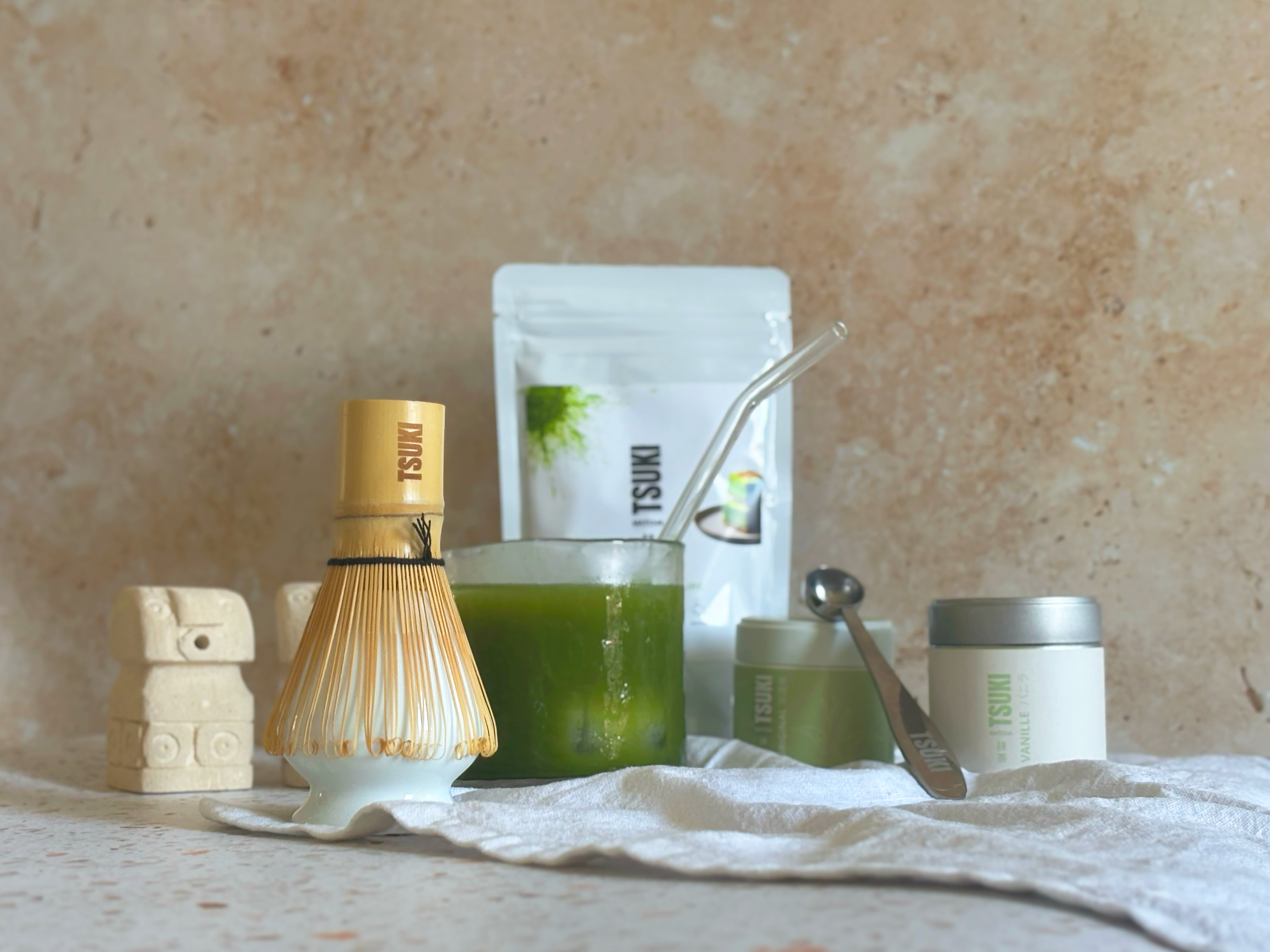
Preparation differs as much as taste. Matcha requires a bit of technique. Sift the powder, add water at 70 to 80 °C, then whisk in a W-shape with a bamboo whisk until a fine foam forms. The right technique changes everything, and a traditional bamboo whisk remains the ideal tool for achieving a silky texture.
Hojicha is much simpler. As leaves, it's steeped in water around 90 °C for one to two minutes. No whisk, no sifter. It's an effortless tea, which further adds to its relaxing appeal. In latte form, it can be mixed with hot plant-based milk for a cozy drink ideal in the evening.
And what about the benefits?
Both teas share the virtues of green tea, but at different intensities.
Matcha, consumed as a whole leaf, concentrates more antioxidants, particularly catechins, as well as L-theanine sought for its calming effect on mental alertness. It's the tea for gentle performance.
Hojicha retains some of these compounds, but roasting reduces their concentration. In return, its very low caffeine content makes it more digestible and gentler on the stomach, making it an excellent choice for sensitive people or for late consumption.
Neither is a cure. They are primarily pleasure drinks, whose benefits come as a bonus to a balanced lifestyle.
So, which one to choose?
The real answer is rarely one or the other. Matcha and hojicha don't compete; they complement each other. The first supports your moments of energy, the second your moments of calm. If you had to choose just one to start with, decide based on when you drink the most tea: morning leans towards matcha, evening towards hojicha.
To explore a matcha that truly reveals the aromatic richness of Japanese tea, the TSUKI premium matcha collection from Japan remains the best starting point for stable energy and an authentic taste.
Frequently asked questions
Does hojicha really contain less caffeine than matcha?
Yes, and the difference is significant. Hojicha's roasting process destroys a large part of the caffeine, often leaving less than 10 mg per cup. Matcha, on the other hand, contains between 30 and 70 mg, because the entire leaf is consumed.
Does hojicha come in powder form like matcha?
Yes. Powdered hojicha exists and is prepared somewhat like matcha, whisked in water or milk. But traditional hojicha is mostly consumed as leaves, in a simple infusion. Matcha, by definition, only exists in powder form.
Which is better for health?
Matcha concentrates more antioxidants and L-theanine because the entire leaf is consumed. Hojicha retains less after roasting, but its low caffeine content makes it gentler on the stomach. Neither is inherently superior; it all depends on what you're looking for.
Can you drink matcha in the evening?
It's not recommended if you are sensitive to caffeine, as its stimulating effect can disrupt sleep. For the evening, hojicha is much more suitable.
Does hojicha really have a roasted taste?
Yes, that's its signature. Roasting gives it notes of hazelnut, wood, and sometimes caramel, without bitterness. It's a soft and comforting drink, very different from the vegetal and vibrant profile of matcha.
Do you have to choose between the two?
Not necessarily. Many enthusiasts keep both at home: matcha for morning energy, hojicha for evening relaxation.

Want to start with a matcha that truly delivers on its promises? Discover TSUKI Japanese premium matcha, sourced from Shizuoka and Kagoshima, for stable energy from morning to early afternoon.


