

Kukicha: Origin, Benefits, and Comparison with Matcha
Kukicha is a unique Japanese green tea, made from stems and twigs rather than leaves. Low in caffeine, mild, and mineral-rich, it appeals to those seeking a soothing drink at any time of day. Here's its origin, benefits, preparation, and a comprehensive comparison with matcha to help you choose the tea that suits you.
Within the large family of Japanese green teas, kukicha holds a singular place. Where most teas value young leaves, kukicha celebrates the parts often left aside: the stems, petioles, and fine twigs of the plant. The result is a clear, mild, and naturally low-caffeine cup, very different from the intensity of matcha.
What is kukicha?
Kukicha is a Japanese tea made from the stems, twigs, and small branches of the Camellia sinensis, the same plant that yields green tea and matcha. Its name comes from the Japanese word "kuki," which means stem.

It is often nicknamed twig tea.
A tea made from stems and twigs
During the production of sencha or gyokuro, the leaves are sorted and the stems separated. These stems are not discarded: they are dried, sometimes lightly roasted, then blended to create kukicha. This composition explains its pale color, low bitterness, and mild, sometimes almost creamy, vegetal notes.
Since kukicha belongs to the same lineage as other Japanese green teas, it shares the botanical origin of sencha, gyokuro, and matcha, while offering a much lighter profile. It is naturally found alongside the family of Japanese green teas, from sencha to matcha, within the same tea culture.
Where does kukicha come from?
Kukicha originated in Japan's tea-producing regions, particularly around Shizuoka and Uji.
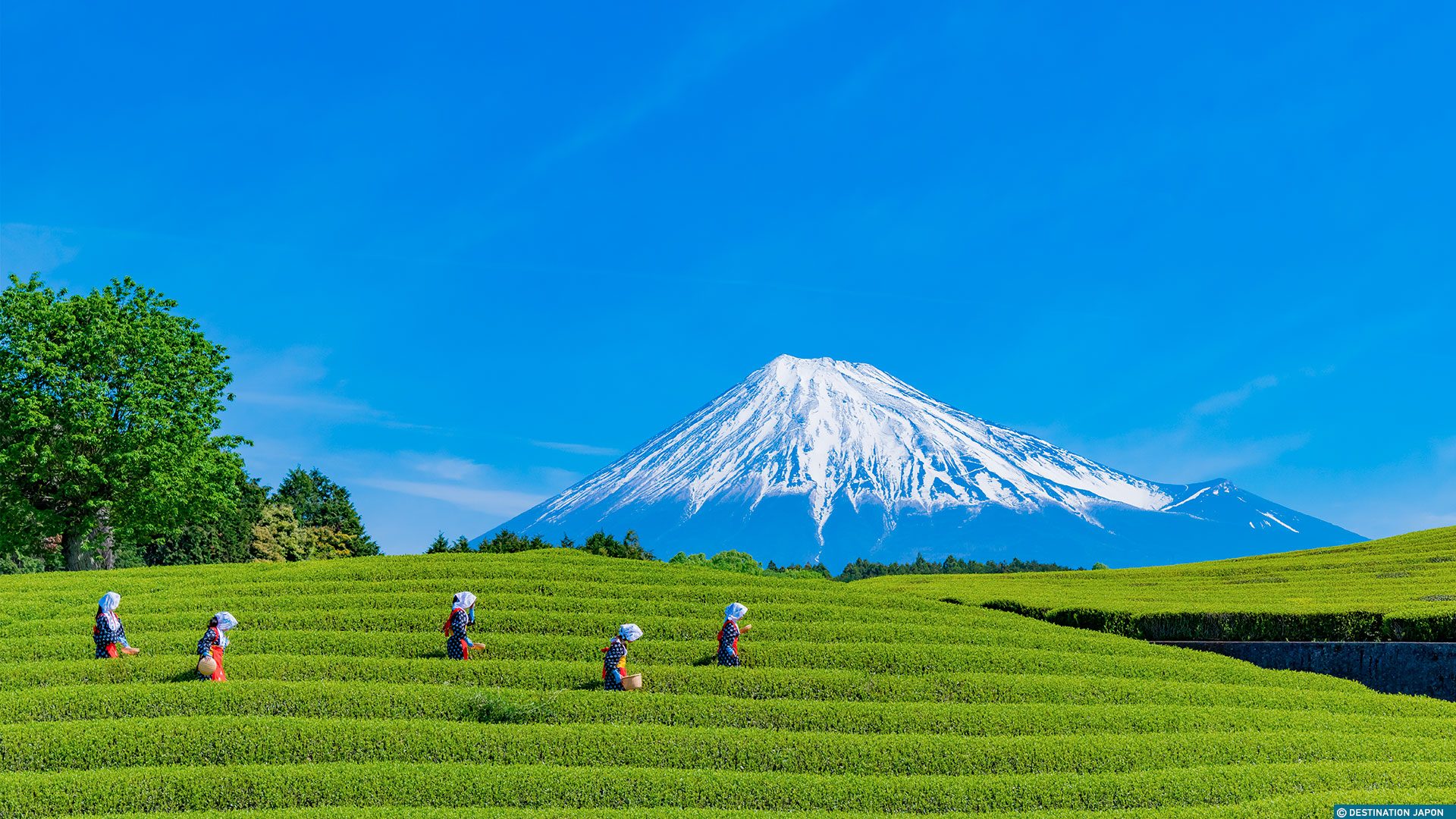
It is historically associated with macrobiotic cuisine, which appreciates it for its mild and alkalizing properties. When prepared from roasted stems, it takes on more toasted notes and thus approaches the world of roasted hojicha with toasted notes.
The benefits of kukicha
Kukicha combines several advantages that explain its success among lovers of mild teas. Its benefits mainly come from its low caffeine content, its richness in minerals, and its antioxidants.
Very low in caffeine
This is its main characteristic. Because it is made from stems and not young leaves, kukicha contains much less caffeine than other green teas, up to about 90 percent less than a classic green tea. This makes it an interesting drink for people sensitive to caffeine, for the evening, or simply to enjoy variety without excessive stimulation.
This characteristic clearly distinguishes it from teas rich in active ingredients. In comparison, a cup of matcha, on the contrary, concentrates a good dose of caffeine and the benefits specific to green tea, which meets a different need.
Rich in minerals and alkalizing
Tea plant stems are naturally concentrated in minerals. Kukicha provides calcium, among other things, which gives it a reputation as a nourishing tea in macrobiotic tradition. It is also credited with alkalizing properties, which would help balance the body's pH and support serene digestion.
Antioxidants and digestion
Like other green teas, kukicha contains antioxidants that help protect cells against oxidative stress. Its mildness and low bitterness make it an easy drink after meals, appreciated for aiding digestion without irritating the stomach.
How to prepare kukicha
Kukicha is a forgiving tea, hard to get wrong. Its preparation is simple and allows for small temperature variations.
Heat water to around 70 to 80 degrees Celsius, without bringing it to a boil. Use about one teaspoon of kukicha per cup, then steep for two to three minutes. Water that is too hot or steeping that is too long could harden its delicate aromas. The stems can be re-infused well, so you can use them two or three times.
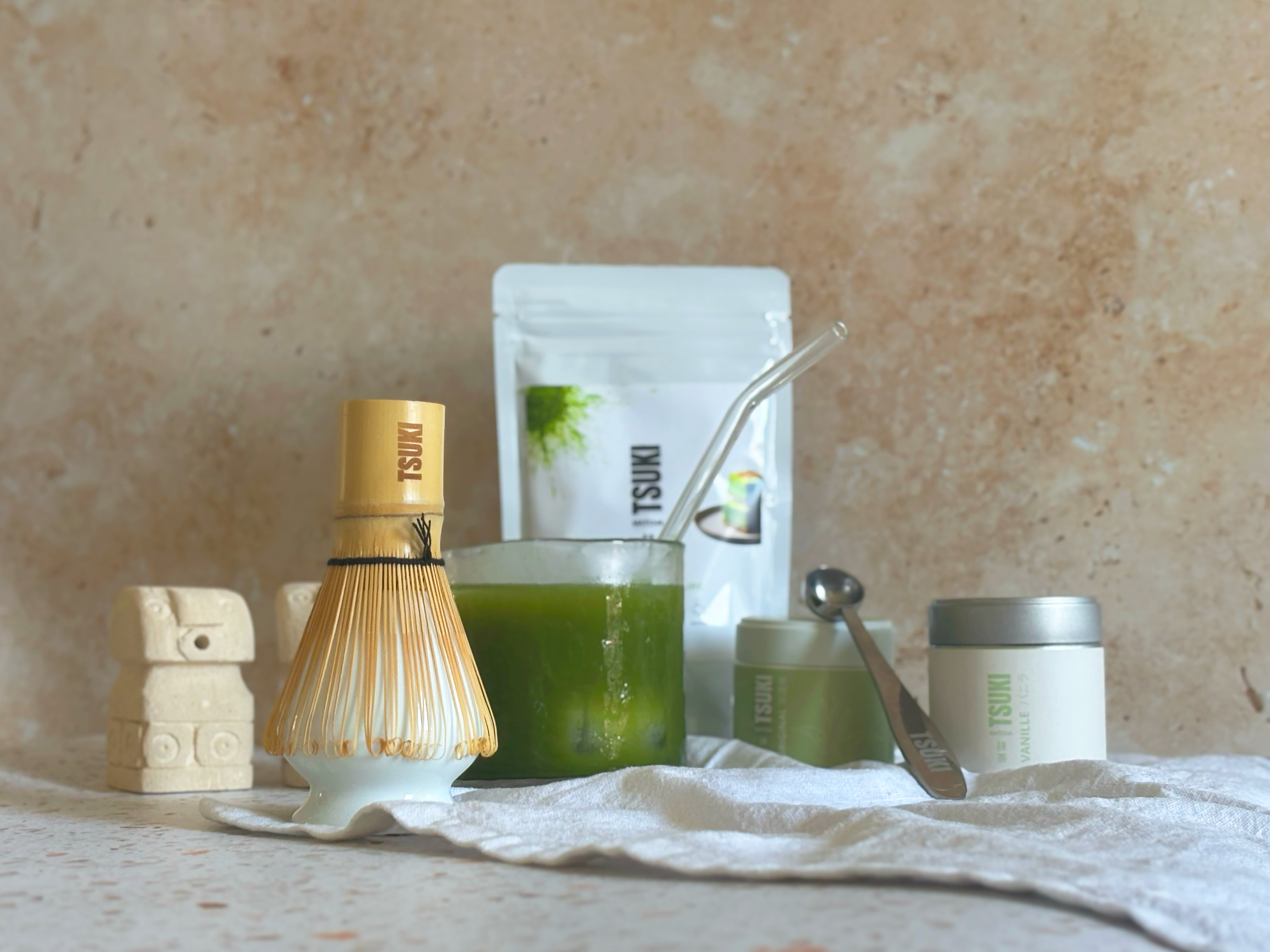
While kukicha is brewed with leaves and filtered, matcha is prepared quite differently, by whisking the powder directly into the water. This whisking gesture is part of a whole art of choosing between green tea, hojicha, matcha, or chai according to your desires.
Kukicha or matcha: which Japanese green tea to choose?
Kukicha and matcha come from the same plant, but they are completely different in the cup. One focuses on lightness and mildness, the other on intensity and concentration. The following table summarizes their differences to help you choose according to the moment and desired effect.
| Criterion | Kukicha | Matcha |
|---|---|---|
| Part used | Stems and twigs | Leaves ground into powder |
| Caffeine | Very low | High |
| Preparation | Leaf infusion, filtered | Powder whisked in water |
| Taste | Mild, light, vegetal | Intense, umami, distinctly vegetal |
| Desired effect | Soothing drink, evening and children | Stable energy and concentration |
| Ideal moment | Afternoon and evening | Morning and early afternoon |
The choice mainly depends on your objective. For a light drink, to enjoy late without disturbing sleep, kukicha is ideal. For a real gentle and lasting boost, a ceremonial grade matcha from Japan remains the best ally. Many enthusiasts keep both on hand, each for its own moment.
If roasting appeals to you more than vegetal lightness, another duel is worth exploring, between hojicha and matcha according to your preferences.
Frequently asked questions about kukicha
Does kukicha contain caffeine?
Yes, but very little. Made from stems rather than young leaves, it contains much less caffeine than sencha or matcha, up to about 90 percent less than a classic green tea. It is one of the mildest Japanese green teas in this regard.
Can you drink kukicha in the evening?
Its low caffeine content makes it a good choice for the end of the day. It is often drunk in the afternoon and evening, when a more stimulating matcha would be less suitable.
What is the difference between kukicha and matcha?
Kukicha is made from stems steeped as leaves, while matcha is made from leaves ground into powder and then whisked. The former is mild and low in caffeine, the latter intense and energizing. They come from the same plant but meet opposing needs.
Is kukicha good for digestion?
Its mildness and alkalizing properties make it a pleasant drink after meals. Low in bitterness, it is known to be easy to digest and well tolerated by sensitive stomachs.
How to properly prepare kukicha?
Use water at 70 to 80 degrees Celsius and steep about one teaspoon of tea for two to three minutes. Avoid boiling water, which would harden its aromas. The stems can handle two to three successive infusions well.
In summary
Kukicha is the tea of mildness: light, mineral, and naturally low in caffeine, it perfectly complements a varied tea ritual. Where matcha provides energy and concentration, kukicha offers a soothing break at any time of day. The two complement rather than oppose each other.

Want to discover the other face of Japanese green tea, more intense and vibrant? Explore the TSUKI premium matcha collection and find the grade that will accompany your mornings.


